Nude lipsticks are a staple in modern makeup routines—not because they’re trendy, but because they work. They offer elegance, versatility, and a polished finish that complements both minimal and bold looks. But despite their universal appeal, finding the perfect nude is far from one-size-fits-all. The key lies not in your skin tone alone, but in your skin’s underlying hue—your undertone.
Too many people settle for a \"close enough\" nude that ends up making them look washed out, sallow, or simply off. The difference between a flattering nude and one that dulls your complexion often comes down to undertone alignment. When matched correctly, a nude lipstick enhances your natural radiance, mimics your lips at their healthiest, and creates a seamless, sophisticated effect. Get it wrong, and even high-end formulas can fall flat.
This guide breaks down the science and art of selecting the ideal nude lipstick based on your unique undertone. You’ll learn how to identify your undertone with confidence, decode lipstick labels, avoid common pitfalls, and build a curated collection that works across seasons and occasions.
Understanding Undertones: The Foundation of a Perfect Nude
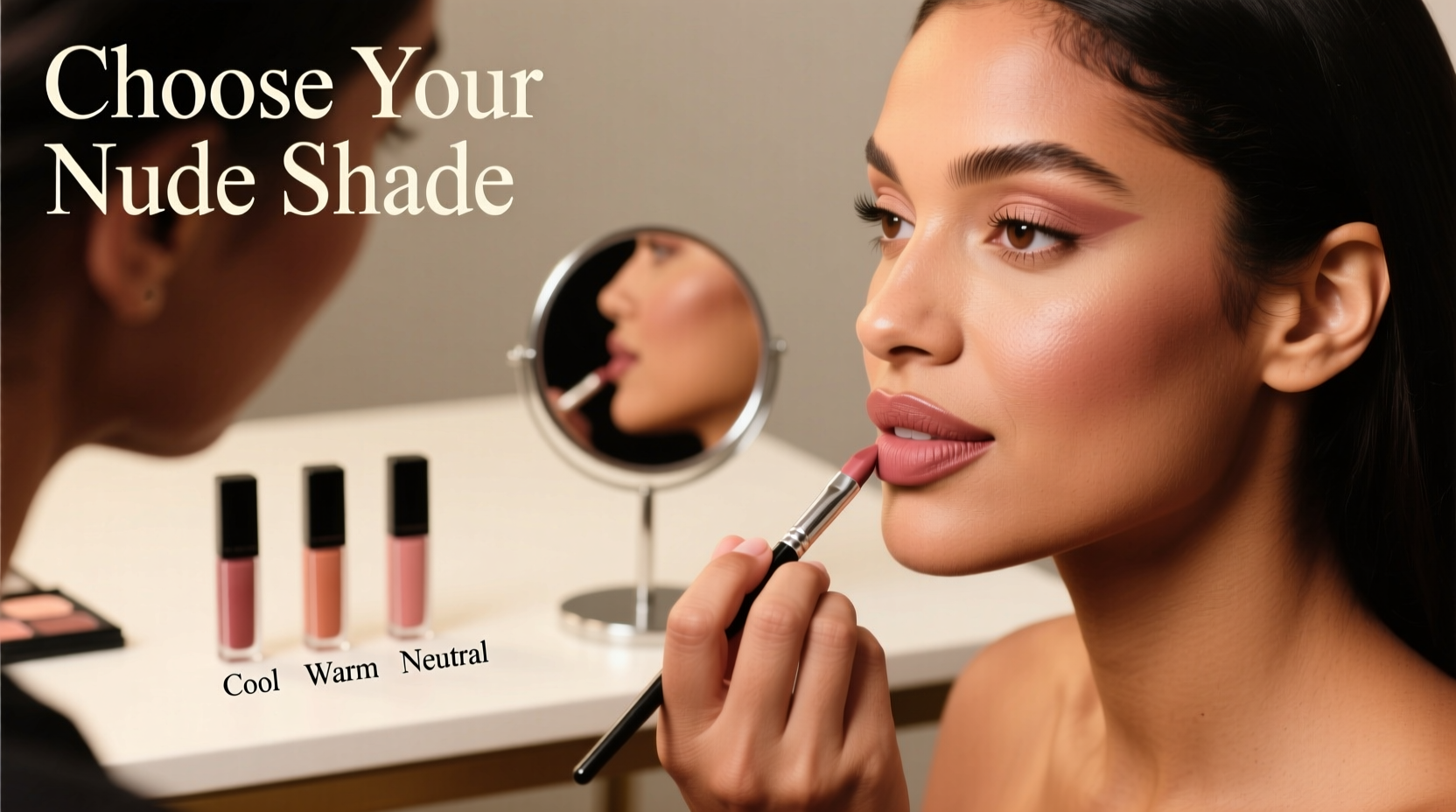
Your skin has two components: surface tone (the visible color) and undertone (the subtle hue beneath). While surface tone can change with sun exposure, undertone remains consistent throughout your life. It’s this hidden layer that dictates whether gold or silver jewelry flatters you more, and—crucially—whether peachy, beige, or caramel nudes will harmonize with your skin.
There are three primary undertones:
- Cool: Pink, red, or bluish undertones. Veins on the wrist appear blue or purple.
- Warm: Yellow, golden, or olive undertones. Veins look greenish.
- Neutral: A balance of cool and warm, or an undertone that’s neither distinctly warm nor cool. Veins may appear blue-green.
A fourth category—deep with warm or cool modifiers—applies to deeper skin tones, where undertones range from rich mahogany and espresso (warm) to cool ash or berry-based bases.
Mismatching your nude lipstick to your undertone leads to visual disharmony. For example, a cool-toned person wearing a warm, orange-leaning nude may appear jaundiced. Conversely, someone with warm undertones using a pinky-beige nude might look ashen. The goal is to select a nude that mimics the natural flush of your lips when you’re healthy and well-rested.
Tip: Test undertone by comparing your wrist against a white sheet of paper under natural light. If your skin casts a yellowish glow, you're likely warm; if it leans pink or blue, you're cool.The Nude Lipstick Spectrum: From Beige to Caramel
Nude lipsticks span a wide range, but they generally fall into four categories based on pigment and undertone compatibility:
| Undertone | Lipstick Shade Family | Key Pigments | Example Descriptors |
|---|---|---|---|
| Cool | Pinkish-nudes, rosy beige | Blue-pink base, mauve hints | Dusty rose, ballet slipper, cool taupe |
| Warm | Beige, peach, caramel | Yellow-orange base, honey tones | Toasted almond, honey nude, terracotta beige |
| Neutral | True beige, soft brown | Balanced pink-yellow base | Natural beige, soft tan, barely-there brown |
| Deep Skin Tones | Rich cocoa, warm espresso, berry nude | Red-brown, plum, warm chocolate | Spiced mocha, deep rosewood, warm fig |
It’s important to note that “nude” does not mean “light.” A nude is any shade that blends seamlessly with your natural lip color while enhancing your overall complexion. For deeper skin tones, nudes can be rich and pigmented—think deep browns with red or orange modifiers—while still appearing natural.
Decoding Lipstick Names and Labels
Brand descriptions can be misleading. Words like “natural,” “skin,” or “bare” don’t guarantee a good match. Instead, look for keywords that indicate undertone:
- Cool cues: “rosy,” “pink,” “mauve,” “ash,” “berry,” “plum”
- Warm cues: “honey,” “caramel,” “toasted,” “golden,” “peach,” “spice”
- Neutral cues: “beige,” “tan,” “soft brown,” “universal”
When in doubt, swatch on your lower lip—not your hand or wrist. Lighting matters: always test near a window with natural daylight. Artificial lighting, especially yellow bulbs, distorts color perception.
Step-by-Step Guide to Finding Your Perfect Nude
- Determine your undertone. Use the vein test, jewelry test, or compare your skin to neutral gray fabric. Do you look better in white or off-white? Cool tones suit stark white; warm tones shine in ivory.
- Assess your natural lip color. Are your lips naturally pink, brown, peach, or purple-tinged? This helps narrow down the base hue.
- Identify your skin depth. Fair, medium, tan, deep—this determines how light or saturated your nude should be.
- Select a starting shade family. Match your undertone to the table above. If neutral, try balanced beiges first.
- Swatch and observe. Apply a small amount to your lower lip. Wait two minutes for the formula to set. Does it disappear into your skin or stand out?
- Check in natural light. Step outside or near a window. The truest match will look like your lips—but better.
- Test longevity. Wear the shade for a few hours. Does it oxidize to an unflattering color? Does it emphasize dryness?
Common Mistakes and How to Avoid Them
Even seasoned makeup wearers make errors when choosing nudes. Here are the most frequent missteps—and how to correct them:
- Mistake: Matching only to skin tone, not undertone. A fair-skinned person with warm undertones may choose a pale pink nude (cool), resulting in a ghostly effect. Solution: Opt for warm beige or peachy nudes instead.
- Mistake: Using hand swatches for testing. The skin on hands is often darker and yellower than the face. Solution: Always swatch on your lips or jawline.
- Mistake: Ignoring lip liner. Without proper lining, even the best nude can bleed or appear uneven. Solution: Use a liner one shade deeper than your lipstick, matched to your undertone.
- Mistake: Assuming one nude fits all seasons. In winter, your skin may appear cooler; in summer, warmer due to sun exposure. Solution: Have two nudes—one slightly warmer, one cooler—for seasonal rotation.
“Choosing a nude lipstick isn’t about covering your lips—it’s about elevating them. The right shade should look like your lips at their most vibrant, not hidden.” — Lila Chen, Celebrity Makeup Artist
Real-Life Example: Sarah’s Nude Breakthrough
Sarah, a 34-year-old with medium olive skin and warm undertones, had long avoided nude lipsticks. She’d tried several “universal” shades labeled “naturale” or “skin tone,” only to find them turning her complexion sallow. After a makeup consultation, she learned her mistake: she was drawn to pinky nudes because they looked pretty on swatches, but they clashed with her golden undertone.
She switched to a warm terracotta-beige formula with honey undertones. The transformation was immediate—her skin appeared brighter, her features more defined. “It finally looked like my lips, just better,” she said. “I didn’t realize I’d been wearing the wrong nudes for ten years.”
Now, Sarah keeps two nudes: a slightly deeper caramel for winter and a lighter peach-beige for summer, both carefully chosen to harmonize with her warm base.
Your Nude Lipstick Checklist
Use this checklist before purchasing or applying a new nude lipstick:
- ✅ I know my skin’s undertone (cool, warm, neutral, or deep with modifier).
- ✅ I’ve tested the shade on my actual lips, not my hand.
- ✅ I’ve observed the color in natural daylight.
- ✅ The lipstick doesn’t make me look tired, washed out, or overly orange.
- ✅ It complements my everyday makeup and skin tone year-round—or I have seasonal options.
- ✅ I’m using a matching lip liner to define and prolong wear.
- ✅ The formula suits my lip texture (e.g., creamy for dry lips, matte for oily).
Frequently Asked Questions
Can I wear a cool nude if I have warm undertones?
Rarely. Cool nudes on warm skin often create a stark contrast that drains warmth from the face. If you love a cool-toned nude, try layering it lightly over a warm balm to soften the clash—but expect less harmony.
Why does my nude lipstick look gray on me?
Grayish nudes contain ash or blue modifiers, typically designed for cool or neutral-cool complexions. If you have warm or olive undertones, these shades will mute your natural warmth. Switch to a beige or peach-based nude with yellow or red undertones.
How do I find a nude lipstick for very dark skin?
Look for brands that specialize in inclusive ranges (e.g., Fenty Beauty, Pat McGrath Labs, Mented Cosmetics). Nudes for deep skin are often rich browns, red-chocolates, or berry-tinged shades. Avoid overly ashy or beige tones—they’ll appear chalky. Swatch in natural light and prioritize undertone: warm nudes will have red or orange bases; cool ones lean toward plum or blue-red.
Final Tips for Long-Term Success
Once you’ve found your ideal nude, maintain its performance with proper prep. Exfoliate lips weekly with a gentle scrub to prevent patchiness. Hydrate with a clear balm before application—especially for matte formulas. Blot once, then reapply for lasting color.
Consider building a small rotation: a daytime sheer balm, a midday satin nude, and an evening matte option—all within your undertone family. This ensures you’re always prepared without sacrificing harmony.
Remember, the perfect nude isn’t about following trends. It’s about understanding your skin and choosing shades that honor its natural beauty. With the right knowledge, you can confidently navigate the overwhelming array of options and find a nude that feels like second nature.
💬 Found your holy-grail nude? Share your shade name and undertone in the comments to help others discover their perfect match!








