
Dogs are more than pets—they're family. And just like any loved one, we want them to stay warm, dry, and safe during cold or wet walks. A well-chosen dog coat does more than protect from the elements; it supports mobility, enhances visibility, and integrates seamlessly with daily routines. When that coat includes a functional leash hole, it transforms from a seasonal accessory into an essential piece of gear. Yet not all coats with leash holes are created equal. The wrong fit, material, or design can lead to chafing, restricted movement, or even safety hazards. Choosing the right one requires understanding your dog’s needs, body type, and lifestyle.
Why a Leash Hole Matters More Than You Think
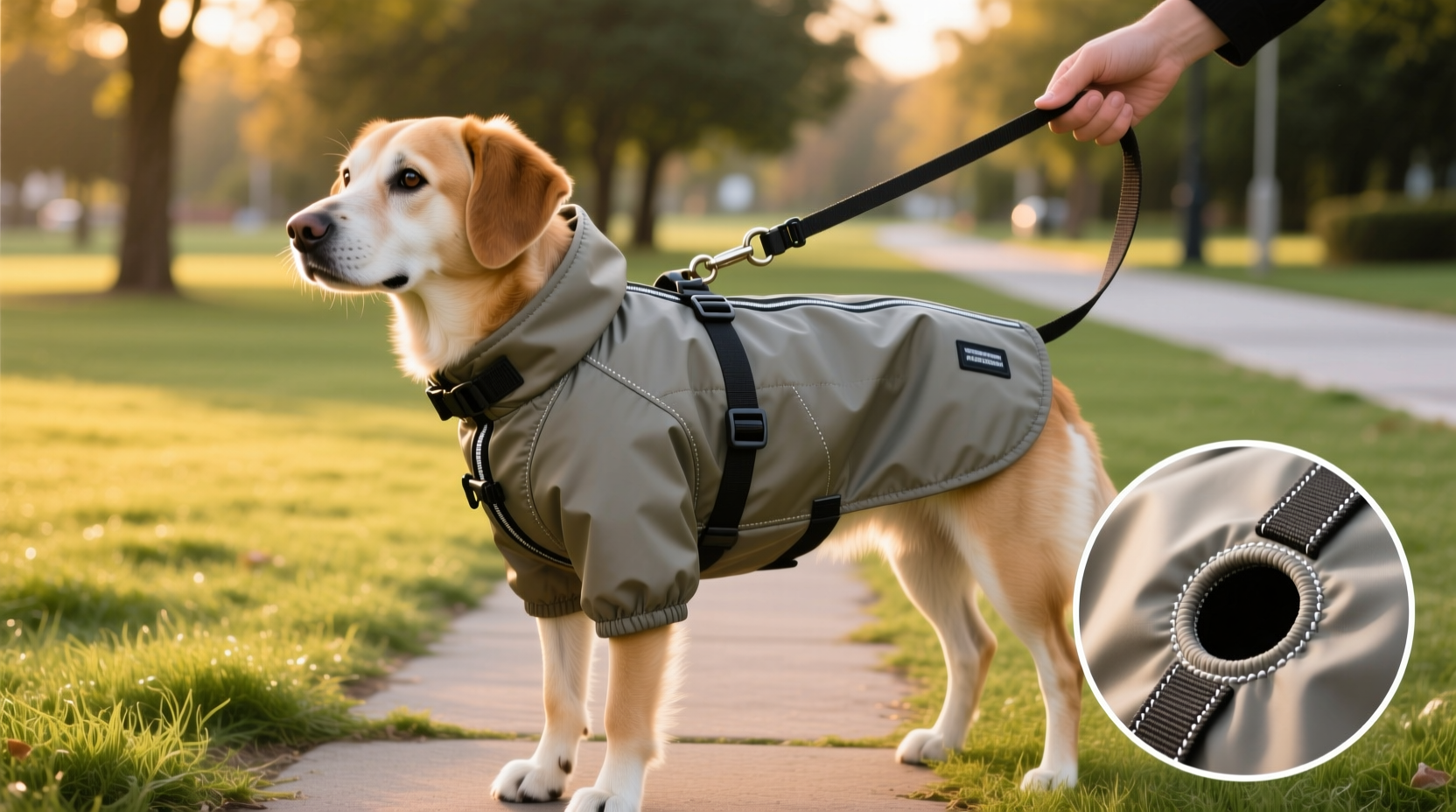
A leash hole isn’t just a convenience feature—it’s a functional necessity for practical winter wear. Without it, attaching a leash often means removing the coat entirely or threading the leash over the dog’s head, which defeats the purpose of keeping them warm. A properly placed leash hole allows you to clip on quickly while maintaining full coverage around the neck and shoulders.
The best leash holes are reinforced with durable stitching or rubber grommets to prevent tearing over time. They should sit precisely at the base of the neck or between the shoulder blades—where most harnesses and collars naturally align—so the leash doesn't pull the coat out of place. Poorly positioned holes can cause the garment to ride up, expose the belly, or create pressure points.
Tip: Always test the leash hole alignment by clipping on your dog’s regular harness before purchasing—ensure there's no strain or misalignment.Key Factors in Selecting the Right Dog Coat
Choosing a coat goes beyond color or brand. It’s about matching function to form. Consider these five core elements when evaluating options:
- Fit and Sizing: Measure your dog’s back length, chest girth, and neck size. Many manufacturers provide sizing charts—stick to them rather than guessing based on breed alone.
- Material Quality: Look for waterproof outer layers (like ripstop nylon) with insulated linings (fleece or thermal polyester). Avoid PVC or stiff plastics that limit movement.
- Mobility Design: Articulated seams, stretch panels, and ergonomic cuts allow natural motion. A rigid coat can inhibit walking, running, or even sitting.
- Closure System: Secure but easy-to-use fasteners—hook-and-loop, snaps, or zippers—should hold without pinching skin or catching fur.
- Visibility Features: Reflective strips or trim increase safety during early morning or evening walks.
Understanding Your Dog’s Climate Needs
A Chihuahua in Minnesota faces different challenges than a Labrador in coastal Oregon. Climate determines whether you need heavy insulation, wind resistance, or simply a water-resistant shell. Use this guide to match conditions with coat types:
| Climate Condition | Recommended Coat Type | Leash Hole Priority |
|---|---|---|
| Cold & Dry (e.g., inland winters) | Fleece-lined, insulated coat | Reinforced, centered hole |
| Wet & Mild (e.g., Pacific Northwest) | Waterproof shell with breathable lining | Sealed hole to prevent leaks |
| Snowy & Windy (e.g., mountain regions) | Full-coverage parka with high collar | Hole under collar flap for wind protection |
| Urban Environments (traffic, streetlights) | Hi-vis jacket with reflective details | Aligned with harness attachment point |
How to Test Fit and Functionality
Even the highest-rated coat won’t help if it doesn’t fit your dog properly. Follow this step-by-step process to ensure optimal comfort and performance:
- Measure Accurately: Use a soft tape measure. Back length = from base of neck to base of tail. Chest = widest part behind front legs.
- Check Mobility: Once on, let your dog walk, sit, and trot. Watch for pulling, lifting, or restriction near the legs or shoulders.
- Inspect the Leash Hole: Clip on the leash while the dog is wearing their usual harness. The connection should be smooth, with no tugging on fabric.
- Assess Comfort: Feel inside for seams that might rub. Check that the lining doesn’t irritate the undercoat.
- Wash and Re-test: After first wash, recheck fit and hole integrity—some materials shrink or warp.
“Many behavior issues during winter walks stem from discomfort—not disobedience. A poorly fitting coat can make dogs anxious, reluctant to move, or even aggressive when touched.” — Dr. Lena Peterson, DVM, Canine Behavior Specialist
Real-Life Example: From Reluctant Walker to Trail Explorer
Sophie, a 4-year-old French Bulldog in upstate New York, used to resist going outside in winter. Her owner, Mark, assumed she was just lazy. But after switching from a bulky, ill-fitting raincoat to a custom-fit thermal coat with a properly aligned leash hole, everything changed. The new coat didn’t restrict her short legs, stayed in place during play, and allowed quick leash attachment without fuss. Within two weeks, Sophie went from refusing walks to eagerly pulling toward hiking trails. “It wasn’t stubbornness,” Mark said. “She just couldn’t move comfortably before.”
Common Mistakes to Avoid
- Buying by breed size only: Individual dogs vary widely—even within breeds.
- Ignoring harness compatibility: Some harnesses attach higher or lower; mismatched holes cause dragging.
- Overlooking breathability: Overheating leads to restlessness and dehydration, especially in active dogs.
- Skipping closures: Coats that rely solely on elastic may slip off mid-walk.
- Forgetting maintenance: Dirty or matted linings reduce warmth and irritate skin.
Checklist: Choosing the Ideal Coat with Leash Hole
Before finalizing your purchase, go through this checklist:
- ✅ Measured my dog’s back, chest, and neck
- ✅ Confirmed compatibility with current harness/collar
- ✅ Verified leash hole placement and reinforcement
- ✅ Checked for reflective details or hi-vis panels
- ✅ Ensured full range of motion when worn
- ✅ Reviewed care instructions for long-term use
- ✅ Selected appropriate insulation level for climate
Frequently Asked Questions
Can I add a leash hole to a coat that doesn’t have one?
Technically yes, but not safely. Cutting fabric risks fraying, weakens structural integrity, and voids warranties. It also disrupts waterproof seals. Always buy a coat designed with a built-in, reinforced leash hole.
Should the leash go through the coat or over it?
The leash should always connect underneath the coat—through the leash hole. This keeps the dog warm and prevents the coat from slipping off. Never thread the leash over the head unless the coat lacks a proper opening, which indicates poor design.
My dog has a thick undercoat. Do they still need a coat?
Yes, especially in wet or windy conditions. Even double-coated breeds like Huskies can lose insulation efficiency when their fur gets soaked. A lightweight, breathable shell with a leash hole helps maintain core temperature without overheating.
Final Thoughts: Comfort, Safety, and Simplicity Combined
A dog coat with a leash hole isn’t a luxury—it’s a smart solution for modern pet ownership. When chosen thoughtfully, it supports your dog’s physical comfort, enhances safety during low-light walks, and simplifies your daily routine. The ideal coat feels like a second skin: protective, flexible, and invisible in its functionality. It should make winter walks easier, not harder. By focusing on precise fit, durable materials, and intelligent design—including a well-placed, reinforced leash hole—you invest in your dog’s health and happiness.
💬 Have a favorite dog coat brand or fitting tip? Share your experience below and help fellow pet owners find the perfect match for their furry companions!








