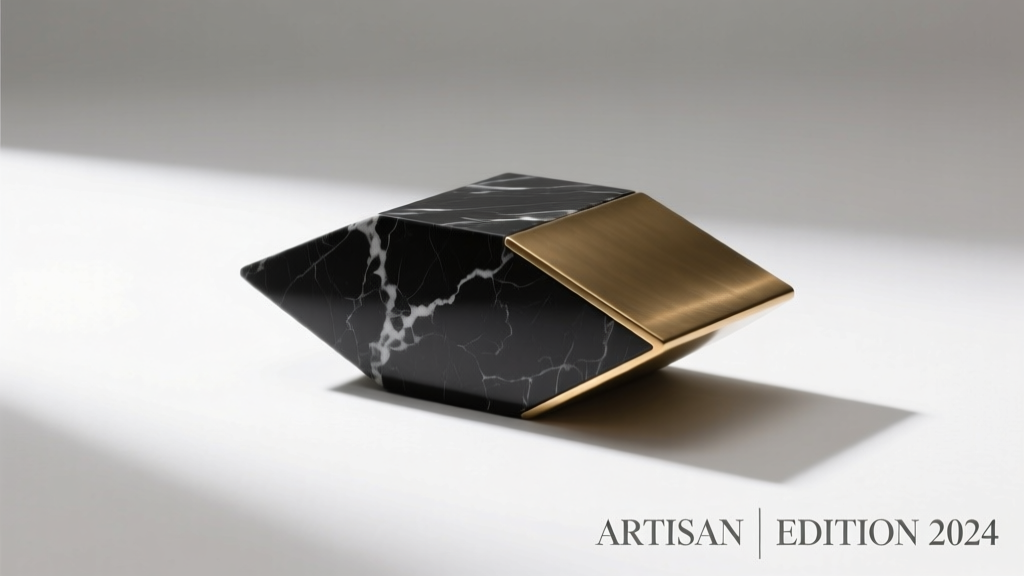
Geometric glass terrariums in rose gold have evolved from passing décor trends into considered design objects—blending minimalist architecture, botanical intentionality, and refined metallurgy. Yet not all “rose gold edition” terrariums deliver on their aesthetic promise. Many suffer from thin plating that tarnishes within months, uneven glass seams that compromise humidity control, or structural instability that risks both plants and surfaces. Choosing wisely means looking past the Instagrammable finish to assess thermal conductivity, frame integrity, glass clarity, and long-term maintenance feasibility. This guide distills insights from horticultural designers, metal finishing engineers, and interior stylists who’ve installed and maintained over 200 rose gold terrariums across residential and commercial spaces.
1. Decoding “Rose Gold”: Plating vs. Solid Metal & Why It Matters
Rose gold isn’t a single material—it’s an alloy (typically copper + gold + silver) with variable ratios affecting hue, hardness, and corrosion resistance. In terrarium frames, what you’re usually buying is *electroplated* brass or stainless steel—not solid rose gold. The thickness and quality of that plating determine longevity. Industry-standard electroplating for premium home goods ranges from 0.3 to 1.0 microns; anything under 0.5 microns will show wear within 6–12 months, especially at high-contact points like corners and base edges.
Reputable manufacturers disclose plating thickness and use a triple-layer process: copper undercoat (for adhesion), nickel barrier (to prevent copper migration), and final rose gold topcoat. Cheaper alternatives skip the nickel layer—leading to premature dulling and greenish oxidation where skin oils contact the frame.
Tip: Run a soft cotton swab lightly over a corner seam. If it picks up faint pinkish residue, the plating is too thin or poorly bonded—avoid it.2. Glass Integrity: Clarity, Thickness, and Seam Engineering
The glass isn’t just a vessel—it’s a microclimate regulator. For closed terrariums (ideal for ferns, mosses, and fittonia), glass must be non-porous, optically clear, and thermally stable. Standard soda-lime glass (3–4 mm thick) is common but prone to subtle warping under prolonged humidity and temperature shifts—especially in angular geometries like tetrahedrons or dodecahedrons where stress concentrates at vertices.
Top-tier rose gold terrariums use low-iron float glass (often labeled “ultra-clear”) at 5 mm minimum thickness. Its iron oxide content is below 0.01%, eliminating the faint green tint visible along edges in cheaper glass. More critically, precision-cut panels are joined using structural silicone—not decorative caulk—with seamless internal bead application. This creates a true vapor barrier, maintaining consistent 90–100% relative humidity without condensation pooling at seams.
A telltale sign of inferior construction: visible silicone extrusion on the *inside* surface. This creates micro-shelves for algae growth and disrupts airflow symmetry.
3. Geometry That Supports Plant Health—Not Just Aesthetics
Geometric form influences light diffusion, air circulation, and root space distribution. While octahedrons and rhombic dodecahedrons look striking, they often create shadowed dead zones and narrow access points that make pruning or moisture adjustment impractical. The most botanically functional shapes balance visual interest with horticultural logic:
- Cuboid with chamfered edges: Maximizes usable volume, allows even light penetration from multiple angles, and accommodates layered planting (moss base → fern mid-layer → trailing vine top).
- Hexagonal prism: Offers 360° visibility without sharp internal corners—reducing stagnant air pockets where fungal spores accumulate.
- Spherical dome on geometric base: Provides optimal light refraction and gentle condensation runoff—critical for moisture-sensitive species like jewel orchids.
Avoid acute-angle geometries (e.g., pyramids under 45° apex angles). They trap heat at the top, desiccate upper foliage, and limit substrate depth—compromising root development for even modest-sized specimens.
4. Real-World Performance: A Mini Case Study
In early 2023, landscape designer Lena Ruiz curated three identical setups for a Brooklyn co-living space: one terrarium from a mass-market retailer (brass frame, 3 mm green-tinted glass, 0.25-micron plating), one from a mid-tier artisan brand (stainless frame, 4.5 mm low-iron glass, 0.7-micron plating), and one custom commission (marine-grade stainless, 5 mm ultra-clear glass, 1.0-micron triple-layer plating).
All housed the same planting: Fissidens fontanus moss, Polypodium glycyrrhiza, and Pellaea rotundifolia, watered identically every 14 days. After 11 months:
- The mass-market unit showed visible plating loss at two base corners, developed persistent fogging between glass layers (indicating seal failure), and lost 40% of its moss density due to uneven humidity.
- The mid-tier unit retained its luster but required quarterly cleaning to remove mineral deposits from internal silicone seams—where water pooled and evaporated slowly.
- The custom unit maintained optical clarity, zero plating wear, and full plant vitality. Its wider base opening allowed easy misting without disassembling the structure.
Lena’s conclusion: “The upfront cost difference paid for itself in reduced replacement labor, plant loss, and guest perception. In shared spaces, reliability is aesthetics.”
5. Expert Insight: What Metal Finishing Engineers Prioritize
“The rose gold finish must pass the ‘salt-spray + sweat-accelerated test’—not just decorative durability. We simulate 5 years of hand contact by exposing plated samples to artificial perspiration (pH 4.7) for 96 hours, then salt fog for 48. Only finishes with nickel barriers and ≥0.8-micron gold layers survive without blistering or color shift. Anything marketed as ‘luxury’ without publishing these test results is marketing, not engineering.” — Aris Thorne, Materials Specialist, Lumina Foundry Co.
6. A Practical Selection Checklist
Before purchasing, verify each of these—either through product specifications, manufacturer correspondence, or third-party review documentation:
- ✅ Frame base material explicitly stated (e.g., “304 stainless steel” or “lead-free brass”—not just “metal”)
- ✅ Plating thickness disclosed in microns (minimum 0.7 µm recommended; 1.0 µm ideal)
- ��� Glass type confirmed as “low-iron” or “ultra-clear” (not “tempered” or “float” alone)
- ✅ Minimum glass thickness of 4.5 mm for closed systems; 5 mm preferred
- ✅ Seam method described as “structural silicone bonding” with no mention of “adhesive tape,” “glue,” or “caulk”
- ✅ Base width ≥ 60% of total height (ensures stability and substrate depth)
- ✅ Opening diameter ≥ 6 cm (allows hand access for planting, pruning, and cleaning)
7. Do’s and Don’ts: Long-Term Care for Rose Gold Terrariums
| Action | Do | Don’t |
|---|---|---|
| Cleaning | Wipe frame monthly with microfiber cloth dampened with distilled water + 1 drop pH-neutral soap. Dry immediately. | Use vinegar, lemon juice, or abrasive cleaners—even “natural” ones. Acid accelerates copper leaching beneath plating. |
| Placement | Position 1.5 meters from south/west windows; use sheer curtains to diffuse direct sun. Avoid radiators or HVAC vents. | Place directly on marble, concrete, or unsealed wood—condensation can stain or etch surfaces. |
| Planting | Select species with similar humidity/light needs. Layer substrate: drainage (leca) → activated charcoal → sphagnum → soilless mix. | Mix succulents/cacti with tropicals. Their water requirements are physiologically incompatible—even in “open” geometric designs. |
| Watering | Use a narrow-spout copper or glass watering can. Apply water to substrate only—not leaves—to prevent fungal hotspots. | “Mist daily” as a default. Over-misting encourages algae on glass and crown rot in ferns. |
8. Step-by-Step: Evaluating a Terrarium Before Purchase
- Examine the spec sheet: Identify frame material, plating thickness, glass type, and thickness. Reject if any are missing or vague.
- Zoom on product photos: Look for reflections in the glass. Distorted or wavy reflections indicate low-quality float glass or improper annealing.
- Check seam visibility: High-res images should show smooth, hairline joins—not raised, cloudy, or irregular lines.
- Review return policy: Reputable sellers offer ≥30-day returns with no restocking fee—acknowledging that real-world performance differs from studio lighting.
- Read owner reviews for longevity terms: Search for “tarnish,” “peel,” “fog,” “leak,” or “warp” in reviews older than 6 months. Recent reviews reflect initial impressions; older ones reveal durability.
9. FAQ
Can I use a rose gold terrarium for succulents or air plants?
Yes—but only in *open-top* geometric designs (e.g., hexagonal bowls or angular planters without lids). Closed rose gold terrariums maintain excessive humidity for drought-adapted species. For succulents, choose a frame with wide, unobstructed openings and pair with coarse, fast-draining substrate. Air plants thrive in open rose gold cages where airflow is unrestricted and light reaches all angles.
Does rose gold plating affect plant health or emit toxins?
No—when properly engineered. Nickel-barrier plating prevents copper or zinc leaching into substrate. Reputable units comply with EN71-3 (European toy safety standard for heavy metals) and CPSIA (U.S. consumer product safety). Avoid uncertified imports lacking RoHS compliance documentation.
How do I know if my terrarium is truly “geometric” or just marketed that way?
True geometric terrariums follow mathematical polyhedral principles: equal edge lengths, congruent faces, and symmetrical vertex arrangements. If the description uses terms like “modern shape,” “angular design,” or “contemporary silhouette” instead of naming the solid (e.g., “regular dodecahedron,” “truncated octahedron”), it’s likely stylized—not geometric. Authentic geometry enables predictable light behavior and structural integrity.
Conclusion
A rose gold geometric terrarium is more than décor—it’s a calibrated ecosystem framed in precision metallurgy. The best editions don’t shout for attention; they settle into a room with quiet authority, their clarity revealing nuanced textures of living moss, the subtle warmth of copper-infused gold catching morning light just so, and the enduring geometry supporting life in miniature. Choosing well means honoring both the craft behind the object and the biology within it. You don’t need five terrariums—you need one that breathes, endures, and evolves with your plants over years, not seasons. Measure twice, specify plating thickness, demand low-iron glass, and place your order only after verifying seam integrity. Then watch how something so precisely made becomes quietly, inevitably, essential.
💬 Your turn: Share which geometric shape you’ve found most resilient in practice—or ask a specific question about your current setup. Real experience builds better choices for everyone.








