Fireworks can transform a festive night into a terrifying ordeal for dogs. The sudden booms, flashes of light, and unpredictable nature of pyrotechnics trigger intense fear in many canines. While some owners turn to medication, numerous safe and effective non-pharmaceutical methods exist to soothe their pets. Understanding canine fear responses and applying proactive, compassionate strategies can make all the difference. With patience and consistency, you can help your dog feel secure—even when the sky lights up.
Understanding Why Dogs Fear Fireworks
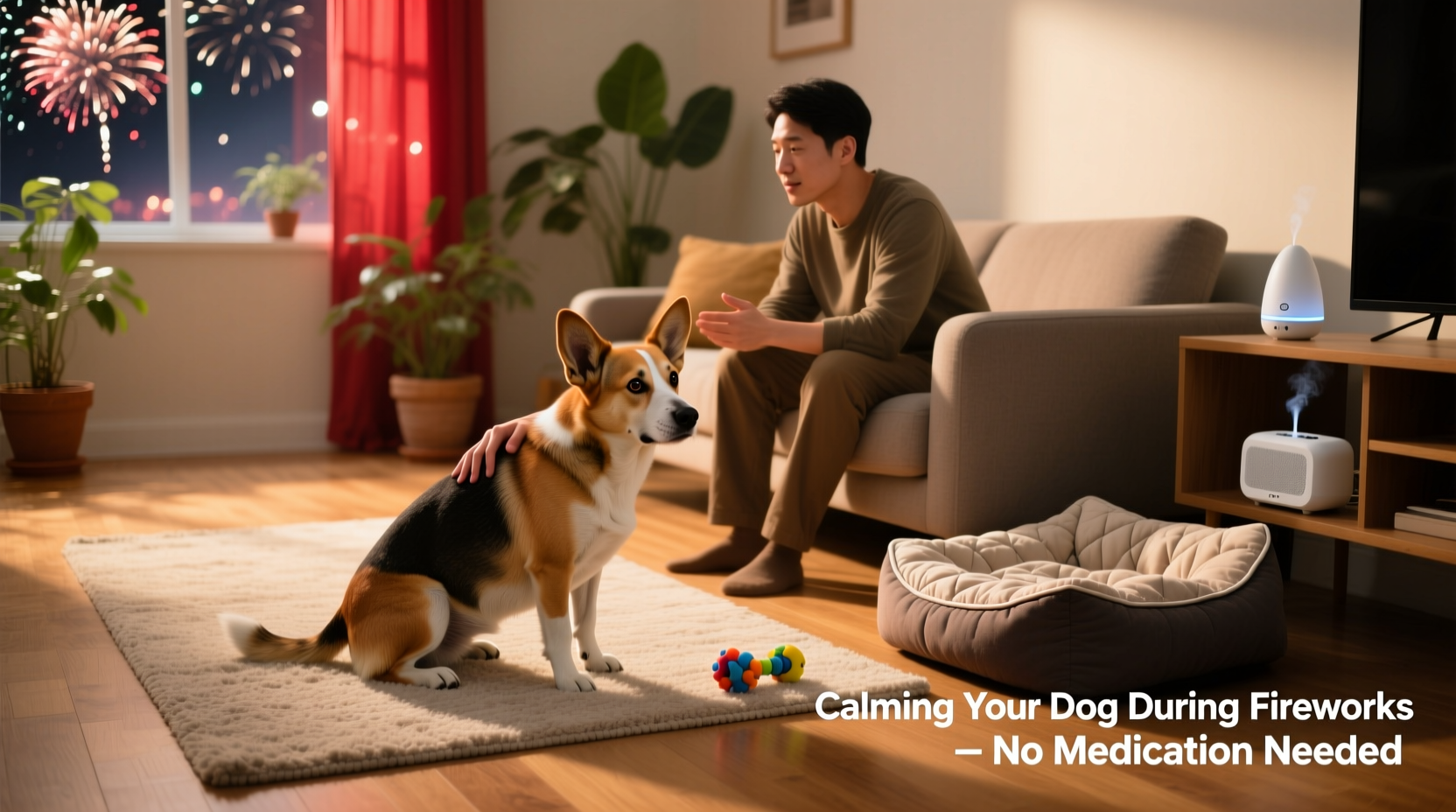
Dogs possess far more sensitive hearing than humans, capable of detecting frequencies up to 65,000 Hz—compared to our 20,000 Hz limit. This means firework blasts are not only louder but also sharper and more jarring to them. The suddenness and irregular timing of explosions prevent habituation, leaving dogs in a constant state of alert. Additionally, they cannot rationalize the sounds as celebratory; to them, it’s an unpredictable threat.
Stress manifests through behaviors like trembling, panting, pacing, hiding, barking, or attempting to escape. Chronic exposure to such stress can lead to long-term anxiety disorders. Recognizing these signs early allows for timely intervention. The goal isn’t just to manage symptoms during events, but to build resilience over time.
“Dogs don’t outgrow noise phobias—they often worsen without intervention.” — Dr. Karen Overall, Veterinary Behaviorist
Create a Safe Indoor Sanctuary
The foundation of a calm response begins with environment. A designated safe space gives your dog a retreat where they feel protected from overwhelming stimuli.
Choose an interior room with minimal windows—such as a bathroom, closet, or basement—to reduce both sound and visual input. Line the area with soft bedding, familiar toys, and items bearing your scent, like an unwashed t-shirt. Consider covering windows with blackout curtains and closing blinds to block flashes.
Tip: Introduce the safe space during calm moments so your dog associates it with comfort, not fear.White noise or background sound can mask firework blasts. Use a fan, air conditioner, or play specially designed calming audio. Music tailored for dogs—like classical compositions with slow tempos—has been shown to lower heart rates and reduce agitation.
Sound Therapy Options
- Through a Dog’s Ear: Classical music adapted for canine hearing ranges.
- Relax My Dog: App-based playlists combining piano, strings, and nature sounds.
- ThunderEase: Pre-recorded storm and noise desensitization tracks.
Desensitization and Counterconditioning Training
Long-term success relies on retraining your dog’s emotional response to loud noises. Desensitization involves gradual exposure to recorded firework sounds at low volumes, increasing intensity only when the dog remains relaxed.
Begin weeks or months before peak firework seasons (e.g., July or New Year’s). Play a firework audio track at a level barely audible to humans. Reward calm behavior with treats, praise, or play. Repeat daily, slowly increasing volume over days or weeks—never rushing the process.
Counterconditioning pairs the feared sound with positive experiences. For example, feed high-value treats like chicken or cheese only during playback sessions. Over time, the dog learns: “Fireworks mean good things happen.”
“We’re not trying to eliminate the noise, but change what it predicts for the dog.” — Sophia Yin, DVM, Applied Animal Behaviorist
Step-by-Step Desensitization Plan
- Obtain high-quality firework sound recordings (YouTube, apps, or CDs).
- Start at the lowest possible volume—inaudible or faint.
- Pair sound with treats, massage, or favorite games.
- Repeat daily for 10–15 minutes.
- After 3–5 days of consistent calm, increase volume slightly.
- If your dog shows tension, revert to the last comfortable level.
- Continue until full volume elicits no fear.
This process may take several weeks. Patience is essential—progress is measured in confidence, not speed.
Physical Comfort and Calming Aids
When fireworks begin, physical tools can provide immediate relief by mimicking comforting pressure or reducing sensory overload.
Thundershirts and Anxiety Wraps
These snug-fitting garments apply gentle, constant pressure around the torso, similar to swaddling an infant. Many owners report reduced trembling and pacing. While scientific evidence is mixed, anecdotal success is widespread.
Calming Caps and Muzzles
Blindfolds or mesh caps that limit vision can reduce distress caused by flashes. Ensure proper fit and never leave unattended. Avoid traditional muzzles unless needed for safety—focus on comfort, not restriction.
Weighted Blankets
For larger dogs, weighted blankets (designed for pets) can offer grounding pressure. Supervise use to prevent overheating or entanglement.
Tip: Test all gear during calm periods. Never introduce new equipment during a fireworks event.Distraction and Engagement Techniques
Mental engagement redirects focus away from fear. A tired dog is a calm dog—and cognitive stimulation can be more effective than physical exhaustion alone.
Use puzzle toys, treat-dispensing balls, or interactive games like “find the treat” to keep your dog occupied. Kong toys stuffed with peanut butter (xylitol-free), yogurt, or mashed banana and frozen overnight provide extended entertainment.
Teach simple commands during quiet times—sit, down, paw, spin—and practice them softly during fireworks. Success builds confidence and reinforces your role as a source of safety.
| Activity | Best For | Tips |
|---|---|---|
| Puzzle feeder | All breeds | Use strong-smelling treats to boost interest. |
| Nose work game | High-energy dogs | Hide treats under cups or in corners. |
| Chew session | Anxious chewers | Offer bully sticks or dental chews in safe space. |
| Massage | Trembling dogs | Focus on ears, base of tail, and shoulders. |
Preparation Checklist: What to Do Before Fireworks Begin
Success hinges on preparation. Waiting until the first explosion limits your options. Use this checklist to ensure readiness:
- ✅ Identify and prepare a safe indoor space.
- ✅ Stock up on high-value treats and favorite toys.
- ✅ Download firework sound training files for desensitization.
- ✅ Charge white noise machines or speakers.
- ✅ Practice using Thundershirts or calming gear.
- ✅ Schedule a pre-firework walk to burn energy.
- ✅ Close windows, draw curtains, and seal gaps to dampen noise.
- ✅ Stay home if possible—your presence is reassuring.
A Real-Life Example: Helping Luna Through the Fourth of July
Luna, a 3-year-old Border Collie mix, had spent two previous Fourth of Julys trembling under the bed, howling through every explosion. Her owner, Mark, decided to try a structured, medication-free approach starting in May.
He began daily desensitization sessions using a firework playlist at near-silent levels, pairing each session with cheese cubes and gentle brushing. Over six weeks, he gradually increased volume while monitoring her body language. By late June, Luna could tolerate realistic firework audio while lying calmly on her mat.
On the Fourth, Mark prepared her safe room with a frozen KONG, turned on classical music, and stayed nearby reading aloud. When fireworks started, Luna briefly startled but returned to her bed, focused on her treat. She whimpered once but never escalated. Mark considered it a breakthrough.
“She didn’t love it,” he said, “but she didn’t panic. That was huge for us.”
Common Mistakes to Avoid
Even well-meaning actions can reinforce fear. Be mindful of these pitfalls:
- Over-coddling: Excessive petting or soothing tones may signal that fear is justified. Instead, remain calm and neutral.
- Forcing exposure: Taking a fearful dog outside during fireworks intensifies trauma.
- Using punishment: Scolding for shaking or barking increases anxiety.
- Waiting until the event: Last-minute preparations rarely succeed.
- Ignoring early signs: Lip licking, yawning, or pinned ears indicate rising stress—act before escalation.
Frequently Asked Questions
Can I leave my dog alone during fireworks?
It’s best to avoid it. Dogs under stress may injure themselves trying to escape or develop deeper anxiety. If you must leave, ensure they’re in a secure, familiar space with calming aids and background noise. Consider hiring a pet sitter trained in anxiety management.
Do calming supplements work without medication?
Some natural supplements—like those containing L-theanine, chamomile, or CBD (with veterinary approval)—may support relaxation. However, they are not regulated like medications and vary in efficacy. Use them as part of a broader strategy, not a standalone solution.
How do I know if my dog’s fear is severe?
Severe signs include self-injury, uncontrollable shaking, vomiting, or destructive escape attempts. If your dog exhibits these, consult a veterinarian or certified animal behaviorist. While this guide focuses on non-medication methods, professional guidance may include short-term pharmaceuticals in extreme cases.
Conclusion: Building Confidence One Step at a Time
Calming a dog during fireworks without medication is entirely possible—but it requires understanding, preparation, and consistency. There is no single fix; instead, success comes from combining environmental control, behavioral training, and compassionate support. Every small victory—whether your dog rests quietly or simply doesn’t hide—builds toward greater resilience.
Start today, even if fireworks aren’t imminent. Desensitization takes time, but the effort pays off in a happier, more secure companion. Your dog looks to you for safety. By being proactive, informed, and patient, you become their anchor in the storm.
💬 Have a tip that helped your dog stay calm? Share your experience in the comments—your story could help another pet parent tonight.








