When selecting a toy horse for a child, gift recipient, or even home décor, two popular options stand out: the soft, cuddly horse plush and the classic wooden horse. While both evoke nostalgia and charm, they differ significantly in longevity, visual appeal, and practicality. Understanding these differences helps parents, collectors, and interior designers make informed decisions based on durability, style, and emotional value.
Durability: How Long Each Toy Really Lasts
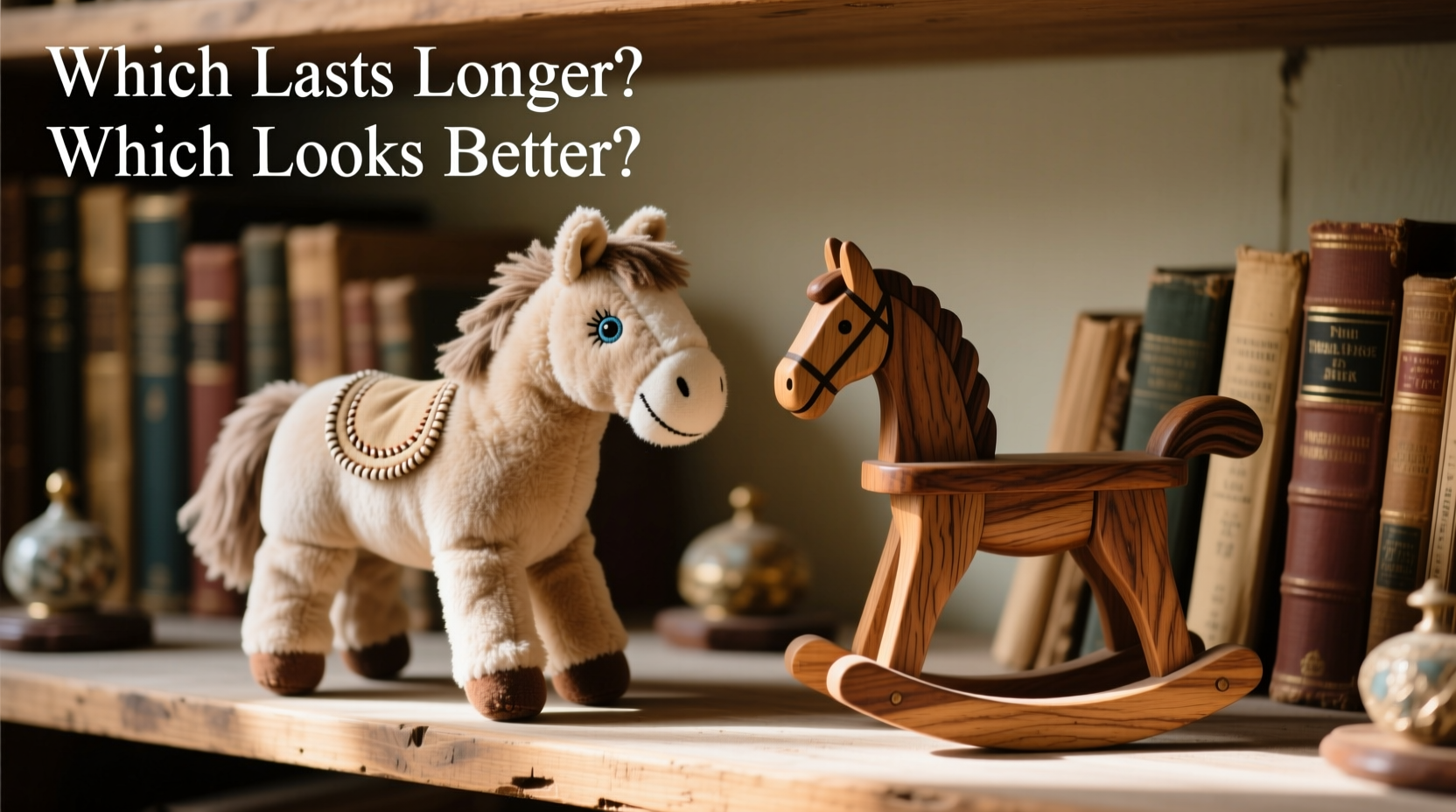
The lifespan of a toy depends on material resilience, usage patterns, and maintenance. Horse plush toys, typically made from polyester, cotton blends, or synthetic fur, are designed for comfort and hugging. However, their soft construction makes them vulnerable to wear. Seams can unravel, stuffing shifts over time, and fabric fades or stains—especially with frequent play or washing.
In contrast, wooden horses are built to endure. Crafted from hardwoods like maple, beech, or birch, these toys resist tearing, fading, and deformation. Even with daily use, a well-made wooden horse maintains structural integrity for decades. Unlike plush, wood doesn’t compress or lose shape. It can withstand drops, rough handling, and even outdoor exposure (if sealed properly).
Tip: Rotate plush toys regularly to reduce wear on a single piece and extend overall usability.Maintenance Comparison
Plush toys require regular cleaning—either machine washing or spot treatment—which can degrade fibers over time. Exposure to moisture risks mildew, while high heat during drying may shrink or distort the shape. Wooden horses need minimal upkeep: occasional dusting and wiping with a damp cloth. Some models benefit from light oiling to preserve grain and finish, but no deep cleaning is necessary.
“Wooden toys have a generational lifespan when cared for properly. I’ve seen 50-year-old rocking horses still in daily use.” — Daniel Reed, Toy Restoration Specialist
Aesthetic Appeal: Style Over Time
Visual appeal plays a crucial role in toy selection, especially for display or gifting. Plush horses offer immediate charm with expressive eyes, vibrant colors, and soft textures. They’re often styled after real breeds or cartoon characters, appealing to young children’s imaginations. However, this aesthetic degrades quickly. Stains, flattened ears, and matted fur diminish cuteness within months of heavy use.
Wooden horses, meanwhile, age gracefully. Their natural grain, hand-painted details, and smooth curves give them a timeless elegance. With time, wood develops a patina—a subtle sheen from handling—that enhances character without detracting from beauty. Many wooden models are crafted with artisanal detail, making them suitable not just as toys but as decorative heirlooms.
Interior Design Compatibility
In modern nurseries or minimalist homes, wooden horses blend seamlessly into curated spaces. Their neutral tones and organic materials complement Scandinavian, rustic, or Montessori-inspired interiors. Plush toys, while colorful, can appear cluttered or childish in refined settings unless carefully styled. For adults seeking nostalgic décor, a polished wooden horse adds sophistication; a worn plush may look outdated.
| Feature | Horse Plush | Wooden Horse |
|---|---|---|
| Lifespan (with care) | 2–5 years | 10+ years, often decades |
| Resistance to Stains | Poor – absorbs spills easily | Excellent – surface wipeable |
| Aesthetic Longevity | Fades, mats, loses shape | Develops patina, retains form |
| Suitability for Display | Limited to playful themes | Broad – fits many design styles |
| Repair Potential | Stitching fixes possible | Refinishing, repainting, sanding |
Real-Life Example: The Heirloom Test
Consider the case of the Thompson family. In 2008, they purchased a hand-carved wooden rocking horse as a first-birthday gift. Their son played on it daily until age six. Afterward, it was stored in a dry attic. In 2023, they brought it out for their granddaughter. With a fresh coat of non-toxic paint and tightened joints, it looked nearly new and passed safety checks. The same family owned a premium plush Shetland pony bought in 2010. By 2014, it had lost an eye, developed a musty smell, and was retired despite sentimental value. This contrast illustrates how material choice impacts intergenerational usability.
Care and Preservation Tips by Material
Maximizing toy life requires proactive care. While wooden horses are inherently durable, neglect can lead to splintering or finish degradation. Plush toys demand consistent hygiene but are more fragile under stress.
Wooden Horse Care Checklist
- Inspect monthly for loose parts or cracks
- Dust weekly with a microfiber cloth
- Wipe spills immediately with a damp (not wet) cloth
- Reapply food-safe beeswax or mineral oil annually
- Store indoors away from humidity and direct sunlight
Plush Horse Care Checklist
- Machine wash only if label permits; use gentle cycle
- Air dry flat to prevent warping
- Spot clean stains early with mild detergent
- Brush fur gently to restore fluffiness
- Rotate with other plush toys to reduce wear
Emotional and Developmental Value
Both toys offer emotional benefits, but in different ways. Plush horses provide tactile comfort, supporting attachment and imaginative play. Children often assign names and personalities, fostering empathy. However, the bond may weaken as the toy deteriorates physically.
Wooden horses encourage balance, motor skills, and spatial awareness—especially ride-on models. Their weight and stability teach cause and effect. Because they last longer, they become part of a child’s growth narrative. A toddler who rides a wooden hobby horse may later display it proudly as a teenager, symbolizing childhood milestones.
Tip: Pair a wooden horse with a removable plush saddle for added comfort without sacrificing durability.FAQ: Common Questions Answered
Can a plush horse last as long as a wooden one?
Under ideal conditions—limited use, careful storage, and meticulous cleaning—a high-quality plush horse might last 5–7 years. However, it will likely show visible wear and cannot match the structural permanence of solid wood, which often exceeds 20 years.
Are wooden horses safe for toddlers?
Yes, when sourced from reputable manufacturers. Look for rounded edges, non-toxic finishes, and ASTM or EN71 safety certifications. Avoid models with small detachable parts if the child is under three.
Which toy holds resale or collectible value?
Wooden horses, especially limited editions or handcrafted pieces, often appreciate in value. Brands like Leith, Hess, or custom artisans command collector interest. Plush toys rarely retain value unless unopened or from iconic lines like Steiff.
Final Verdict: Choosing for Longevity and Beauty
If the goal is long-term durability and enduring visual appeal, the wooden horse is the superior choice. It withstands time, adapts to evolving tastes, and transitions from toy to keepsake. Its natural elegance suits diverse environments, and its maintenance is simpler and less frequent.
The horse plush excels in immediate sensory appeal and emotional warmth. It’s ideal for young children who seek comfort and imaginative engagement. However, its lifespan is inherently limited by fabric fatigue and staining risks.
For those who want both qualities, consider combining them: a sturdy wooden frame with plush accessories, or rotating plush toys alongside a central wooden centerpiece. This hybrid approach balances softness with permanence.
“The best toys aren’t just fun—they grow with the child and outlive trends. Wood does that naturally.” — Dr. Lena Pruitt, Child Development Researcher
Take Action Today
Whether you're buying for a newborn, decorating a nursery, or searching for a meaningful gift, prioritize materials that honor both function and legacy. Choose wood for lasting structure and timeless beauty. Use plush thoughtfully—as a companion, not a cornerstone. By investing in quality craftsmanship and practicing simple care habits, you create experiences that endure far beyond playtime.
💬 Have a wooden or plush horse that’s stood the test of time? Share your story in the comments and inspire others to build lasting toy traditions.








