Bringing home a new puppy is an exciting milestone, but with that joy comes responsibility—especially when it comes to choosing the right gear for walking and training. One of the most overlooked yet critical decisions is whether to use a collar or a harness. For many puppies, especially small breeds prone to respiratory issues, this choice can have lifelong health implications. Tracheal collapse, a condition where the windpipe weakens and narrows, is increasingly common in dogs that have experienced repeated pressure on the neck during walks or leash corrections. The good news? It’s largely preventable with early intervention and proper equipment selection.
This guide dives deep into the science, safety, and practical considerations behind using harnesses versus collars during puppy training. You’ll learn how to protect your pup’s developing airway, recognize risk factors, and make informed choices that support both behavioral development and long-term physical health.
Understanding Tracheal Collapse in Puppies
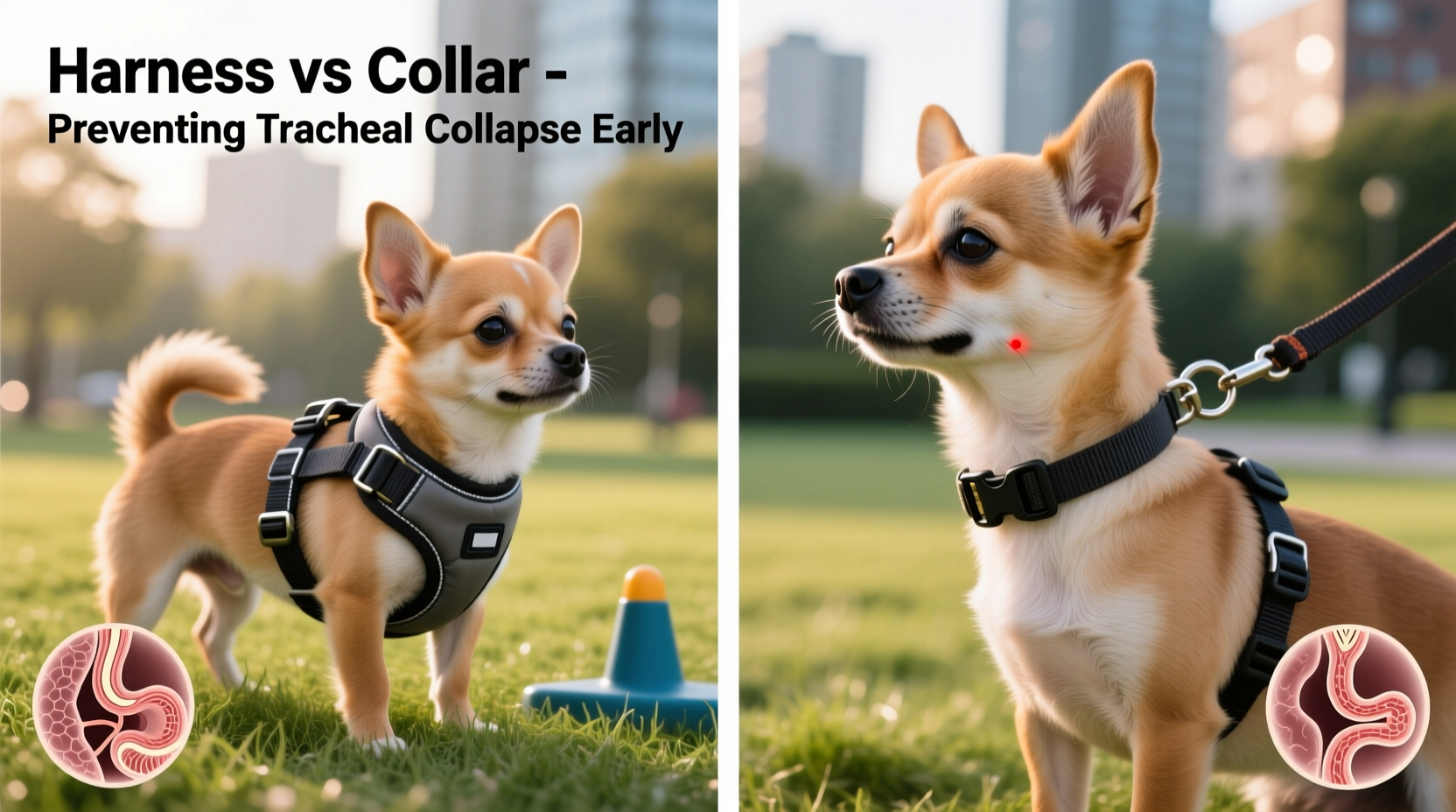
Tracheal collapse occurs when the cartilage rings that support the trachea (windpipe) weaken over time, causing the airway to flatten, especially during breathing or exertion. While more commonly diagnosed in middle-aged to senior toy breeds like Yorkshire Terriers, Pomeranians, and Chihuahuas, the damage often begins much earlier—sometimes as early as puppyhood.
The primary culprit? Repeated strain on the neck from pulling against a collar. Even mild tugging during excitement or distraction can create microtrauma in the delicate structures of a young dog’s throat. Over time, this cumulative stress contributes to inflammation, weakening of cartilage, and eventual collapse.
“Every yank on a puppy’s collar is a potential injury to their developing trachea. Prevention starts the moment you bring them home.” — Dr. Lena Patel, Veterinary Behaviorist & Canine Orthopedic Specialist
Symptoms of early-stage tracheal compromise may include honking coughs, gagging after play or walks, labored breathing, or reluctance to be leashed. These signs are often dismissed as “normal puppy behavior” or allergies, delaying diagnosis until irreversible damage has occurred.
Why Harnesses Are Safer for Puppies
A well-fitted harness distributes pressure across the chest and shoulders rather than concentrating force on the neck and throat. This shift in load-bearing significantly reduces the risk of tracheal injury, making harnesses the preferred choice for puppies under 6 months of age—and especially for small or brachycephalic breeds.
Beyond medical safety, harnesses also offer behavioral advantages. Front-clip harnesses, for example, gently redirect a puppy when they pull, discouraging leash tension without punishment. This supports positive reinforcement training methods by turning unwanted behavior into teachable moments.
Tip: Always adjust the harness snugly but allow two fingers to fit beneath each strap. Loose harnesses increase tripping risk; overly tight ones restrict movement and breathing.Some owners worry that harnesses encourage pulling because the dog feels less restriction. However, research shows that proper fit and consistent training—not the device itself—determine walking behavior. In fact, studies published in the Journal of Veterinary Behavior indicate that puppies trained with front-clip harnesses develop better leash manners earlier than those using traditional collars.
When (and How) Collars Might Still Be Appropriate
While harnesses excel during active training and walks, collars still serve important roles in puppy care. They are ideal for holding ID tags, vaccination records, and lightweight tracking devices. Some trainers also use flat collars for short indoor sessions focused on sit, stay, or recall commands—provided no tension is applied.
However, any situation involving external force—such as walking near traffic, navigating crowds, or managing reactivity—should involve a harness. Never attach a leash directly to a puppy’s collar unless under controlled, low-pressure conditions and only briefly.
Additionally, avoid certain collar types entirely during puppyhood:
- Choke chains – Cause direct trauma to the trachea and cervical spine.
- Prong collars – Inflict pain and increase anxiety, counterproductive to socialization.
- Electronic (shock) collars – Not appropriate for puppies due to developmental sensitivity.
Step-by-Step Guide: Transitioning Your Puppy to a Harness
Introducing a harness should be a gradual, positive experience. Follow this timeline to ensure comfort and confidence:
- Day 1–2: Let Them Explore
Place the harness near toys or meals. Allow sniffing and interaction without wearing it. Reward curiosity with treats. - Day 3: Touch & Treat
Touch the harness to different parts of the body while offering high-value rewards. Focus on desensitizing shoulder and chest areas. - Day 4: Brief Wear (No Clips)
Drape the harness over the back without fastening. Immediately reward. Remove after 10 seconds. - Day 5: Fasten One Clip
Secure one buckle while praising calmly. Unfasten and treat. Repeat 3–5 times per session. - Day 6: Full Wear, No Walk
Put on the full harness indoors for 5 minutes. Supervise play or feeding. Gradually extend duration. - Day 7+: Attach Leash Indoors
Use a lightweight leash inside the home. Practice following, stopping, and turning. Reward calmness. - Week 2: Short Outdoor Sessions
Begin brief walks in quiet areas. Monitor posture and breathing. End on a positive note—even if just one step.
Consistency matters more than speed. If your puppy resists at any stage, return to the previous step and reinforce positivity before progressing.
Comparison: Harness vs Collar for Puppy Use
| Feature | Harness | Collar |
|---|---|---|
| Pressure Distribution | Evenly spread across chest/shoulders | Concentrated on neck and trachea |
| Tracheal Risk | Very low (when properly fitted) | High, especially with pulling |
| Leash Training Support | Excellent (front-clip models discourage pulling) | Fair (only if used with gentle technique) |
| Escape Risk | Low (if adjusted correctly) | Higher (slip-out common in small breeds) |
| ID Tag Attachment | Limited (some models have loops) | Standard and secure |
| Breed Suitability | Ideal for all, essential for toy/small breeds | Risky for small or brachycephalic dogs |
Real Example: Bella the Yorkie’s Preventive Turnaround
Bella, a 12-week-old Yorkshire Terrier, was brought to a veterinary behavior clinic after her owner noticed frequent coughing during neighborhood walks. Initially diagnosed with “kennel cough,” antibiotics provided no relief. Upon examination, the vet observed redness around the neck and learned that Bella had been walked exclusively with a nylon collar since coming home.
The recommendation? Immediate switch to a padded front-clip harness and six weeks of collar-free living. The owner followed a structured introduction plan and incorporated loose-leash training techniques. Within three weeks, Bella’s coughing episodes dropped from five per walk to zero. At eight weeks post-transition, a follow-up exam showed reduced inflammation and no signs of structural damage.
Her veterinarian noted, “This wasn’t illness—it was mechanical irritation. With early detection and equipment change, we prevented what could have become chronic tracheal disease.”
Checklist: Safe Puppy Walking Gear Setup
- ✅ Choose a soft, adjustable harness with front and back leash attachment options
- ✅ Avoid tight neckbands or restrictive materials like chain or rope
- ✅ Fit the harness properly—two fingers should slide under each strap
- ✅ Use the collar only for ID tags, never for walking
- ✅ Begin harness acclimation within the first week at home
- ✅ Pair harness use with positive reinforcement training
- ✅ Monitor breathing and gait during walks; stop if coughing occurs
- ✅ Schedule a vet check if your puppy has breed-related respiratory risks
FAQ: Common Questions About Harnesses and Tracheal Health
Can a harness completely prevent tracheal collapse?
No single tool guarantees prevention, but using a harness drastically reduces the primary mechanical cause—neck trauma. Combined with avoiding smoke, obesity, and excessive barking, it forms a strong preventive strategy.
Is it too late to switch to a harness if my puppy is already 5 months old?
It’s never too late. While earlier adoption is ideal, switching even at 6–8 months can halt further damage and improve walking behavior. Introduce the harness gradually using the steps outlined above.
Do all harnesses protect the trachea equally?
No. Back-clip harnesses reduce neck strain but don’t deter pulling as effectively. Front-clip designs provide better control and redirection. Look for wide, cushioned straps and avoid narrow, restrictive styles.
Expert Insight: What Veterinarians Recommend
Leading veterinary organizations—including the American Animal Hospital Association (AAHA) and the American Veterinary Medical Association (AVMA)—now recommend harness use for all puppies during outdoor activity. Their joint position emphasizes proactive care: “Prevention of tracheal injury should begin at the onset of leash training, particularly in predisposed breeds.”
“The cost of a harness is negligible compared to the lifetime burden of chronic respiratory disease. We see too many cases where owners didn’t know there was a safer option.” — Dr. Marcus Tran, Small Animal Internal Medicine, Cornell University College of Veterinary Medicine
Experts also caution against outdated beliefs such as “collars build discipline” or “puppies need to get used to neck pressure.” There is no physiological or behavioral justification for exposing young dogs to avoidable health risks.
Conclusion: Protect Your Puppy’s Future with Smarter Choices
Selecting between a harness and a collar isn’t just about convenience or preference—it’s a decision that impacts your puppy’s respiratory health for years to come. Tracheal collapse is painful, progressive, and often irreversible, yet largely preventable through simple changes in daily routine. By choosing a well-fitted harness, introducing it positively, and reserving collars for identification only, you’re not just teaching good walking habits—you’re safeguarding your dog’s ability to breathe freely throughout life.
Start today. Re-evaluate your current gear. Consult your vet if you’re unsure about your puppy’s risk level. And remember: the safest leash walk is one where comfort, control, and compassion go hand-in-hand.
💬 Have questions about your puppy’s walking setup or want feedback on harness choices? Share your experience or ask for advice in the comments—your insights could help another pet parent make a healthier choice.








