
For owners of small-breed dogs—such as Chihuahuas, Pomeranians, Yorkshire Terriers, and Maltese—one critical decision can have lasting effects on their pet’s respiratory health: choosing between a collar and a harness. These breeds are genetically predisposed to tracheal weakness, particularly tracheal collapse, a painful and progressive condition that affects breathing. The way a dog is restrained during walks plays a direct role in the development and progression of this issue. While collars are traditional and widely used, increasing veterinary evidence suggests that harnesses may be far safer for protecting the delicate trachea in small dogs.
This article examines the anatomical vulnerabilities of small breeds, compares the biomechanics of collars versus harnesses, reviews clinical research, and offers actionable guidance for pet owners committed to long-term canine health.
Anatomy of the Small-Breed Trachea
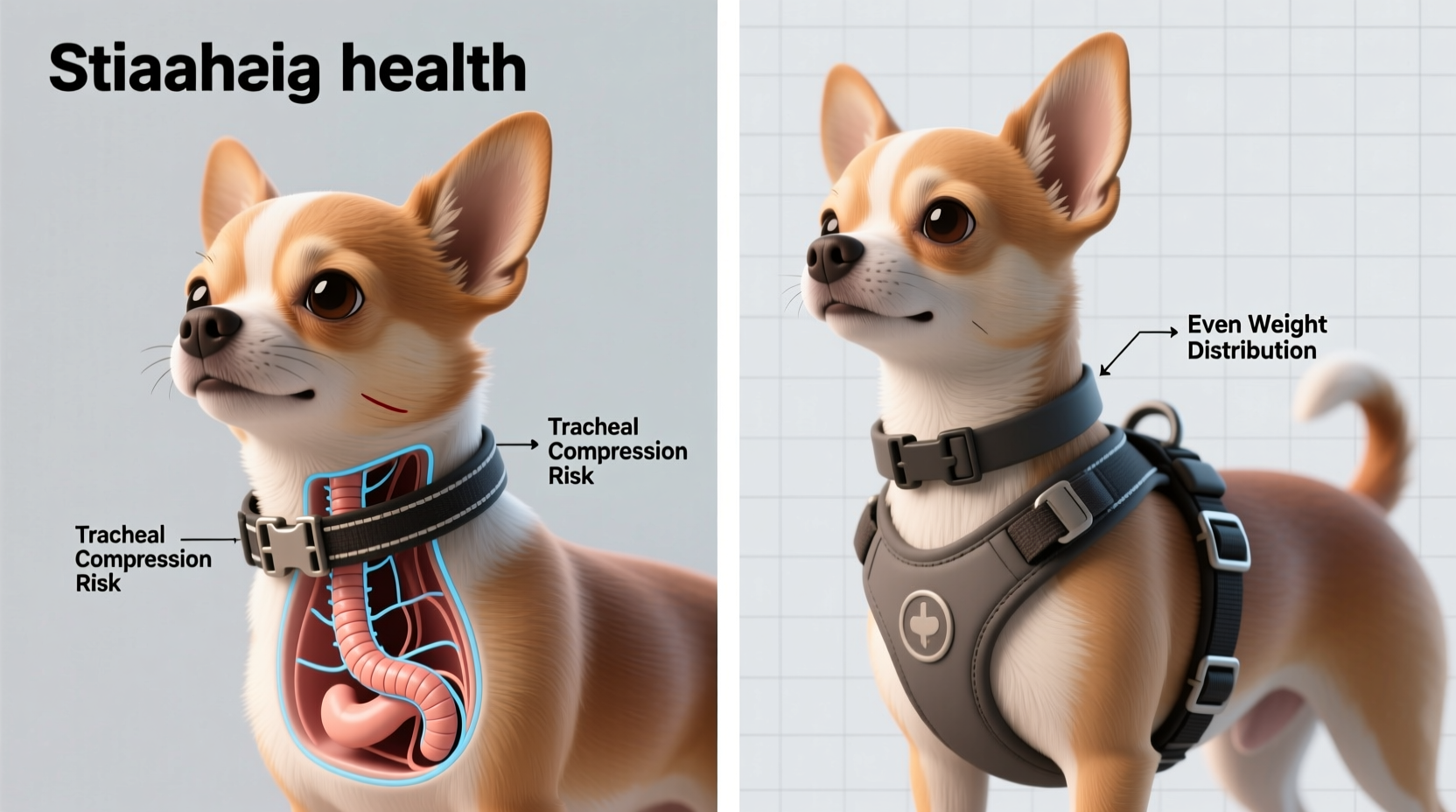
The trachea, or windpipe, is a tube made of cartilage rings and a membrane that carries air from the throat to the lungs. In healthy dogs, these C-shaped cartilage rings maintain rigidity while allowing flexibility. However, in many small breeds, these rings are prone to weakening due to a genetic condition known as tracheal hypoplasia or incomplete cartilage formation.
Over time, repeated pressure—especially from pulling against a collar—can cause inflammation, flattening of the trachea, and eventual collapse. Symptoms include honking coughs (often mistaken for “reverse sneezing”), labored breathing, exercise intolerance, and in severe cases, cyanosis (blue gums) due to oxygen deprivation.
“Small breed dogs are born with inherently weaker tracheal cartilage. Any external pressure from neck restraint accelerates degeneration.” — Dr. Lena Torres, DVM, Veterinary Internal Medicine Specialist
According to the American College of Veterinary Internal Medicine, tracheal collapse affects up to 6% of small-breed dogs, with Yorkshire Terriers showing the highest incidence. Early intervention—including switching from collars to harnesses—can delay or even prevent the onset of clinical signs.
How Collars Impact Tracheal Health
A traditional neck collar concentrates force directly onto the trachea, thyroid glands, lymph nodes, and cervical spine. When a dog pulls—even slightly—the pressure multiplies. Studies using pressure sensors have shown that brief tugs on a leash attached to a collar can generate over 500 mmHg of pressure on the trachea, far exceeding normal physiological limits.
Even gentle walking can pose risks:
- Chronic microtrauma: Daily pressure irritates tracheal tissues, leading to scarring and narrowing.
- Cough reflex activation: Pressure triggers the vagus nerve, causing coughing that further damages weakened cartilage.
- Reduced blood flow: Compression of jugular veins and carotid arteries impairs circulation to the brain.
Advantages of Harnesses for Tracheal Protection
Harnesses distribute pressure across the chest and shoulders rather than focusing it on the neck. Modern no-pull harnesses are designed with front-clip attachments that gently redirect a dog’s movement when they lunge forward, reducing strain on both dog and handler.
Key benefits include:
- Tracheal decompression: Eliminates direct pressure on the windpipe.
- Better control: Front-clip harnesses discourage pulling through steering mechanics, not punishment.
- Improved posture: Encourages natural head and neck alignment during walks.
- Safer emergency response: Dogs are less likely to slip out or suffer injury if startled.
A 2020 study published in the Journal of Small Animal Practice compared tracheal pressure in 32 small dogs wearing collars versus harnesses during controlled leash walks. The results showed a 78% reduction in peak tracheal pressure when using a well-fitted harness. Veterinarians involved in the study concluded that “routine use of harnesses should be standard care for all dogs under 15 pounds.”
Collar vs. Harness: A Direct Comparison
| Feature | Neck Collar | Harness |
|---|---|---|
| Pressure on Trachea | High – concentrated on neck | Minimal – distributed across torso |
| Risk of Tracheal Collapse | Increased with regular use | Significantly reduced |
| Control During Walks | Moderate – risk of choking if dog pulls | High – especially with front-clip design |
| Ease of Use | Easy to put on | Requires proper fit adjustment |
| Identification Access | Tags easily visible | May require separate collar for ID tags |
| Safety in Emergencies | Dog may slip out or sustain neck injury | Secure fit; reduces escape and injury risk |
While collars offer simplicity and are necessary for holding ID tags and rabies licenses, they should not be used as the primary attachment point for leashes in small breeds. Many owners now adopt a dual-system: a lightweight collar for identification and a harness for walking.
Real-World Example: Managing Early Tracheal Signs
Sophie, a 4-year-old Pomeranian, began coughing intermittently after walks. Her owner, Maria, initially dismissed it as seasonal allergies. After a vet visit, Sophie was diagnosed with early-stage tracheal collapse. Radiographs showed mild flattening of the trachea, and the veterinarian traced the likely cause to daily walks using a nylon collar.
Maria switched to a padded front-clip harness and adjusted her walking routine to avoid excitement-induced pulling. Within six weeks, Sophie’s coughing decreased by 80%. Follow-up X-rays six months later showed no progression of tracheal damage.
“I had no idea something as simple as a harness could make such a difference,” Maria said. “Now I tell every small-dog owner I meet to skip the collar for walks.”
Tip: Introduce a harness gradually. Let your dog wear it around the house with treats to build positive associations before using it on walks.Choosing the Right Harness: A Practical Checklist
Not all harnesses are created equal. Poorly designed models can cause chafing, restrict shoulder movement, or slip off. Use this checklist when selecting a harness for tracheal protection:
- ✅ Front-clip option: Allows leash attachment at the chest to discourage pulling.
- ✅ Padded chest and neckline: Prevents rubbing, especially important for dogs with thin coats.
- ✅ Adjustable straps: Ensure snug fit without restricting breathing or movement.
- ✅ Escape-proof design: Double buckles or secure closures reduce risk of slipping out.
- ✅ Reflective elements: Enhance visibility during early morning or evening walks.
- ✅ Lightweight material: Avoid bulky designs that overheat small dogs.
- ❌ No back-only clips for pullers: Back-clip harnesses can still encourage pulling behavior.
Popular vet-recommended brands include the PetSafe Easy Walk, 2 Hounds Design Freedom Harness, and Rabbitgoo No-Pull Harness—all noted for ergonomic fit and tracheal safety.
Step-by-Step Transition from Collar to Harness
Switching your dog from a collar to a harness doesn’t have to be stressful. Follow this timeline for a smooth transition:
- Day 1–3: Introduce the harness indoors. Let your dog sniff and explore it. Offer treats when near or touching it.
- Day 4–6: Put the harness on for short periods (5–10 minutes) while playing or feeding. Remove calmly; never force it.
- Day 7–10: Attach the leash inside the home. Practice walking through rooms with praise and rewards.
- Day 11–14: Begin short outdoor walks (5 minutes) using the harness only. Keep sessions positive and distraction-free.
- Week 3 onward: Gradually increase walk duration. Monitor for signs of discomfort or coughing.
If your dog resists, slow down the process. Patience ensures long-term acceptance.
Frequently Asked Questions
Can I still use a collar for ID tags if I switch to a harness?
Yes. Many owners keep a lightweight, breakaway collar with ID tags and rabies license while using a harness for walking. Just ensure the collar doesn’t rub against the harness or restrict movement.
Are there any situations where a collar is safer than a harness?
In rare cases—such as dogs with chest injuries, brachycephalic syndrome, or certain spinal conditions—a veterinarian may recommend avoiding harnesses. Always consult your vet before making changes, especially if your dog has pre-existing health issues.
Do harnesses really stop dogs from pulling?
Front-clip harnesses don’t eliminate pulling but significantly reduce it by redirecting the dog’s momentum toward the handler. Combined with positive reinforcement training, they are highly effective tools for teaching loose-leash walking.
Expert Consensus and Recommendations
The veterinary community increasingly supports harness use for small breeds. The World Small Animal Veterinary Association (WSAVA) states: “External pressure on the neck should be minimized in all dogs, but is especially critical in those predisposed to tracheal disease.”
“We see fewer cases of advanced tracheal collapse now—not because the genetics have changed, but because more owners are using harnesses early.” — Dr. Alan Kim, Board-Certified Veterinary Surgeon
Even in dogs without current symptoms, preventive measures matter. Starting with a harness from puppyhood reduces cumulative trauma and supports lifelong respiratory health.
Conclusion: Prioritizing Long-Term Tracheal Health
When it comes to trachea health in small-breed dogs, the choice between a harness and a collar isn’t just about preference—it’s a medical decision. Collars, while convenient, pose a measurable risk to fragile tracheal structures. Harnesses, particularly front-clip designs, offer a scientifically supported alternative that protects airways, improves control, and enhances quality of life.
You don’t need to wait for symptoms to act. Switching to a properly fitted harness is one of the simplest, most effective steps you can take to safeguard your small dog’s breathing and overall well-being. Your veterinarian will likely agree: when it comes to tiny necks and delicate windpipes, prevention starts with what you attach the leash to.
🚀 Take action today: Measure your dog’s chest and neck, research vet-approved harnesses, and begin the transition. Your small companion’s lungs will thank you for years to come.








