Dogs that pull on the leash are a common challenge for pet owners. While enthusiasm during walks is natural, constant tugging can strain your arms, damage your dog’s neck, and turn a relaxing outing into a stressful tug-of-war. The debate between using a harness or a collar often centers on comfort, safety, and effectiveness—especially when it comes to reducing or eliminating pulling behavior. But which option actually stops pulling faster? The answer isn’t always straightforward, but understanding how each tool works, combined with proper training techniques, reveals a clear path forward.
Unlike fashion accessories, leashes and walking gear serve a functional purpose: guiding your dog safely while reinforcing positive behavior. Choosing between a harness and a collar should be based on science, canine physiology, and behavioral psychology—not just convenience or tradition.
How Pulling Affects Dogs and Owners
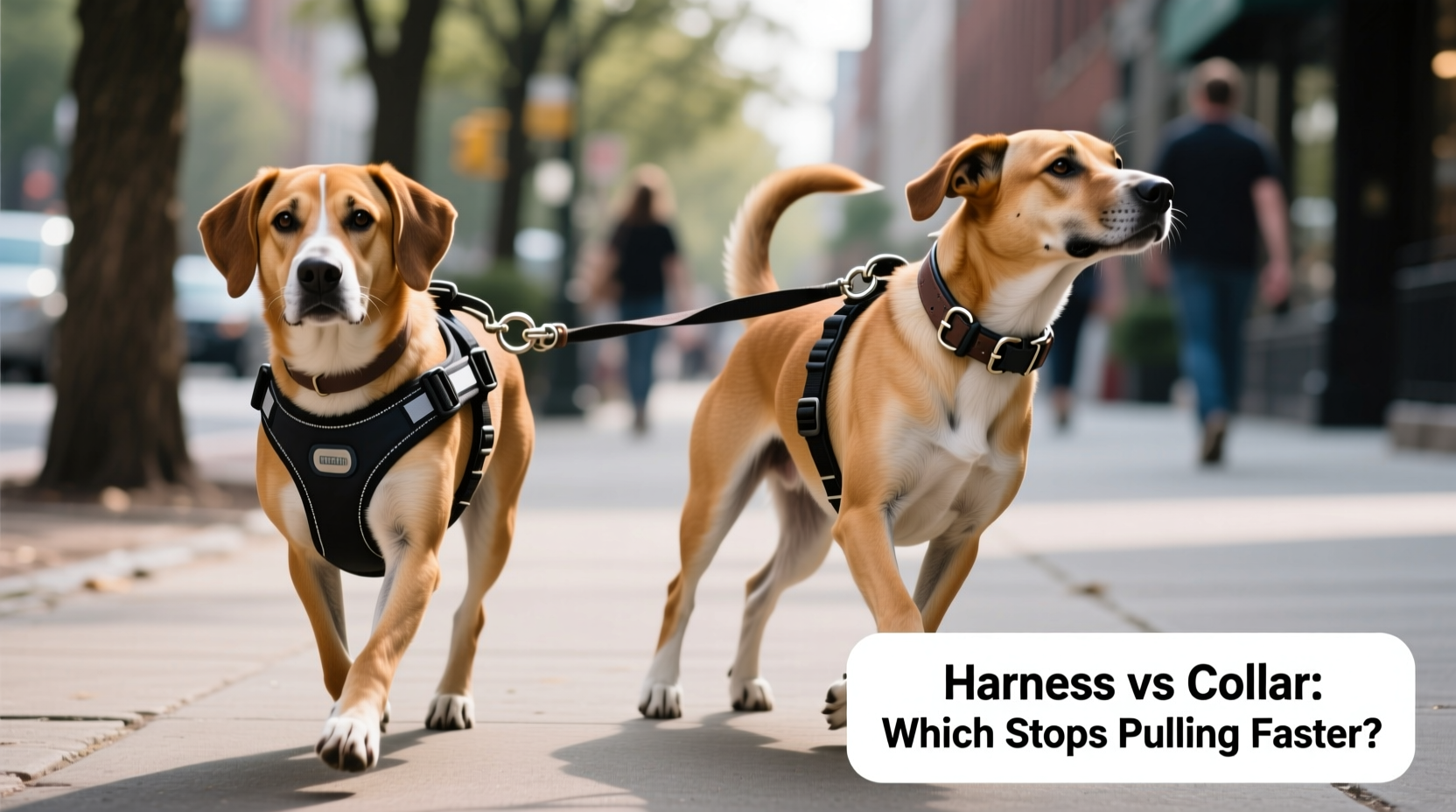
Pulling isn’t just inconvenient—it poses real risks. When a dog yanks against a traditional collar, pressure concentrates on the trachea, cervical spine, and delicate structures in the neck. Repeated strain can lead to respiratory issues, eye problems from increased intraocular pressure, and even long-term spinal misalignment. For owners, chronic pulling contributes to shoulder pain, wrist injuries, and reduced willingness to walk their dogs regularly.
From a behavioral standpoint, pulling is often self-reinforcing. Every time a dog lunges forward and reaches a scent, another dog, or an exciting destination, they’re rewarded. This reinforcement cycle makes pulling harder to break over time without intervention.
Tip: Never use a standard flat collar for dogs that pull heavily—opt for a front-clip harness or head halter if immediate control is needed.Harness vs Collar: Key Differences and Mechanisms
The fundamental difference lies in force distribution and leverage.
- Collars sit around the neck and transfer all pulling force directly to the throat area. Even martingale collars, designed to tighten gently, still apply pressure to sensitive regions.
- Harnesses distribute tension across the chest, shoulders, and back, reducing injury risk. More importantly, certain harness designs change how resistance feels to the dog, making pulling less effective.
There are two main types of anti-pull harnesses:
- Front-Clip Harnesses: The leash attaches at the dog’s chest. When the dog pulls, the harness turns them slightly toward you, disrupting forward momentum and encouraging attention.
- Rear-Clip Harnesses: Leash attaches on the back. These are better for general use but don’t inherently discourage pulling unless paired with training.
Meanwhile, specialized collars like head halters (e.g., Gentle Leader or Halti) guide the dog by the muzzle, giving the handler more control over direction. They function differently than both standard collars and harnesses and are often recommended for strong pullers.
Effectiveness Timeline: Which Stops Pulling Faster?
When measuring “faster” results in stopping pulling, we must distinguish between immediate mechanical control and long-term behavioral change.
| Tool | Immediate Control | Long-Term Behavior Change | Safety | Best For |
|---|---|---|---|---|
| Standard Collar | Low | Poor (can worsen pulling) | Low (neck strain) | Well-trained dogs who don’t pull |
| Front-Clip Harness | High | Good (when paired with training) | High | Dogs learning not to pull |
| Rear-Clip Harness | Moderate | Fair (requires consistent training) | High | Dogs with mild pulling tendencies |
| Head Halter | Very High | Good (if acclimated properly) | Moderate (misuse can cause imbalance) | Strong, reactive, or excitable dogs |
Based on this comparison, front-clip harnesses and head halters provide the fastest reduction in pulling due to their built-in resistance mechanics. However, neither replaces training. The tool creates opportunity; the handler creates lasting change.
“Dogs don’t pull because they’re dominant—they pull because they’ve learned it works. The right equipment interrupts that feedback loop so we can teach something better.” — Dr. Kendra Pope, Veterinary Behaviorist
Real-World Example: Transforming a Strong Puller in 3 Weeks
Max, a 1-year-old Labrador Retriever, pulled so hard on walks that his owner, Sarah, could barely manage him near other dogs or traffic. She initially used a standard collar and nylon leash, which only made Max cough and dig in harder.
At her vet’s suggestion, she switched to a front-clip harness (specifically the Freedom No-Pull Harness). On day one, Max still lunged, but instead of moving forward, he turned sideways. Confused, he paused. Sarah used treats to reward slack-leash moments. By day five, Max began glancing back when the leash tightened. After two weeks of daily 20-minute walks with consistent cues (“Let’s go” for forward motion, stopping immediately when tension appeared), Max walked with a loose leash 70% of the time. By week three, he rarely pulled—even off-leash in secure areas.
The harness didn’t train Max alone. It gave Sarah the mechanical advantage to reinforce desired behavior consistently. Without that edge, progress would have taken months.
Step-by-Step Guide to Stopping Pulling Using a Harness
If you're starting with a dog that pulls, follow this timeline to achieve results within 4–6 weeks:
- Week 1: Gear Up and Acclimate
- Choose a well-fitted front-clip harness.
- Let your dog wear it indoors with treats to build positive association.
- Practice short sessions (5 minutes) in low-distraction areas.
- Week 2: Teach Pressure Response
- Walk forward normally. When the leash tightens, stop completely.
- Wait for the dog to turn or look back, then mark (“Yes!”) and treat.
- Resume walking only when the leash is slack.
- Week 3: Add Directional Cues
- Use a verbal cue like “This way!” to lure your dog into turning with you.
- Change directions frequently to keep attention.
- Increase duration to 15-minute walks.
- Week 4+: Build Consistency
- Gradually introduce higher-distraction environments.
- Phase out treats as reliability improves, replacing them with praise or play.
- Monitor for regression and return to basics if needed.
Common Mistakes That Delay Progress
Even with the best tools, these errors undermine training:
- Inconsistent responses: Allowing pulling sometimes (e.g., when late) teaches the dog that persistence pays off.
- Using aversive tools incorrectly: Prong or choke collars may suppress pulling but often increase anxiety and don’t teach alternatives.
- Over-walking too soon: Long walks in high-stimulus areas overwhelm dogs still learning self-control.
- Neglecting fit: A poorly adjusted harness can rub, slip, or fail to redirect properly.
Avoid the temptation to multitask during training walks. Focus entirely on your dog’s leash manners for the first few weeks. Distractions like phones or conversations dilute your ability to respond instantly to tension.
Expert Insight: Why Equipment Is Just the Starting Point
While equipment plays a critical role, experts emphasize that lasting change comes from engagement, not restraint.
“The fastest way to stop pulling isn’t a gadget—it’s becoming more interesting than the environment. Dogs will choose to stay close when they learn that attention leads to rewards, safety, and fun.” — Rachel McLaughlin, Certified Professional Dog Trainer (CPDT-KA)
This means pairing equipment with positive reinforcement: rewarding eye contact, heel position, and automatic check-ins. Over time, the dog learns that staying near you is more rewarding than charging ahead.
Checklist: How to Choose and Use the Right Tool
Follow this checklist to ensure you’re set up for success:
- ✅ Assess your dog’s strength, reactivity, and current pulling habits.
- ✅ Rule out medical issues (e.g., joint pain, respiratory conditions) with a vet visit.
- ✅ Select a front-clip harness or head halter based on your dog’s size and temperament.
- ✅ Ensure proper fit: two fingers should fit under any strap.
- ✅ Begin training in a quiet environment with high-value treats.
- ✅ Commit to consistency: train daily for at least 10–15 minutes.
- ✅ Track progress weekly—note improvements in focus, response time, and walk duration.
- ✅ Transition to intermittent rewards once behavior is reliable.
Frequently Asked Questions
Can I use a harness and collar together?
Yes—many owners use a harness for walking and keep a separate collar for ID tags. Avoid attaching the leash to both simultaneously, as this can create uneven pressure and confusion. If your dog escapes collars, consider a martingale collar for tag attachment only.
Will a harness stop my dog from pulling completely?
A harness reduces pulling by altering the physical consequence of the behavior, but it won’t eliminate it without training. Think of it as training wheels: helpful at first, but not a permanent substitute for skill development.
Are head halters cruel?
No, when introduced gradually and used correctly, head halters are safe and humane. They do not cause pain. However, improper fitting or jerking the leash can lead to discomfort or fear. Always allow your dog to adjust slowly, using treats and praise.
Conclusion: Take Action Today for Calmer Walks Tomorrow
The question of whether a harness or collar stops pulling faster has a clear answer: front-clip harnesses and head halters produce faster results due to their design, which disrupts the pulling motion and gives handlers better control. But no tool works in isolation. Real transformation happens when equipment is paired with patience, consistency, and positive reinforcement.
You don’t need to wait months to enjoy peaceful walks. Start today by evaluating your current gear, selecting a proven anti-pull harness, and committing to just 10–15 minutes of focused training each day. Within weeks, you’ll notice fewer tugs, more eye contact, and a dog who walks beside you willingly—not because they have to, but because they want to.
💬 Have a pulling dog? Share your experience or ask questions in the comments—your journey could inspire another dog owner to make that first change.








