
Dogs that pull on the leash are a common challenge for pet owners. While it may seem like a simple behavioral issue, the equipment used during walks can significantly impact a dog's long-term health—especially when it comes to their neck and spine. The debate between using a harness versus a collar for dogs that pull centers on safety, comfort, and effectiveness. Understanding the physiological risks of pulling, how each tool distributes force, and what veterinary experts recommend can help you make an informed decision that protects your dog’s well-being.
The Risks of Pulling on a Collar
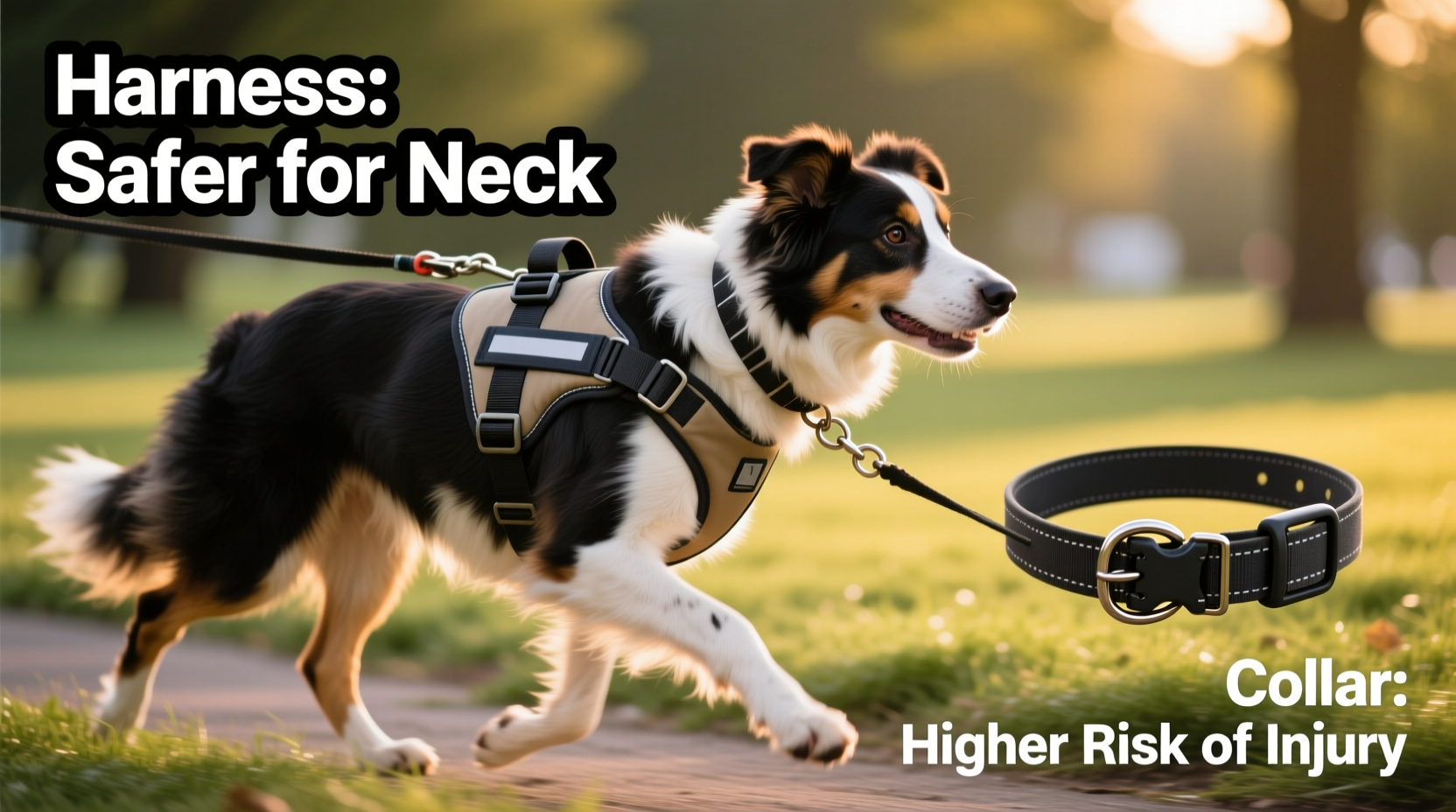
When a dog pulls while wearing a traditional neck collar, significant pressure is applied directly to sensitive structures in the neck. This includes the trachea, thyroid glands, cervical vertebrae, and major blood vessels such as the jugular vein and carotid artery. Repeated strain or sudden jerking can lead to both acute injuries and chronic conditions.
Tracheal collapse, a condition often seen in small breeds like Pomeranians or Yorkshire Terriers, can be exacerbated—or even caused—by constant collar pressure. Similarly, excessive force on the neck may contribute to intervertebral disc disease (IVDD), especially in predisposed breeds like Dachshunds and Corgis.
“Applying force directly to the neck can disrupt normal biomechanics and lead to serious neurological or respiratory complications over time.” — Dr. Lena Torres, Veterinary Neurologist
Even seemingly mild pulling accumulates stress with every walk. Over months or years, this repetitive trauma can result in inflammation, nerve damage, or ocular issues due to increased intraocular pressure from restricted blood flow.
Tip: If your dog coughs, gags, or shows hesitation when putting on a collar, these may be signs of discomfort or injury.How Harnesses Reduce Neck Strain
A well-fitted harness distributes pulling forces across the dog’s chest and shoulders rather than concentrating them on the neck. By redirecting tension away from delicate anatomical areas, harnesses offer a safer alternative for dogs prone to pulling.
There are several types of harnesses, but not all provide equal protection. Front-clip harnesses, where the leash attaches near the dog’s chest, encourage better posture and reduce forward momentum by gently steering the dog back toward the handler when they pull. This design promotes self-correction without pain or choking.
Rear-clip harnesses attach at the back and are more common, but they don’t discourage pulling as effectively unless combined with training techniques. However, even rear-clip models still prevent direct neck trauma compared to collars.
The key advantage lies in load distribution. Studies measuring force vectors during leash walking show that harnesses reduce peak pressure on the trachea by up to 70% compared to standard collars under identical pulling conditions.
Types of Harnesses and Their Impact
| Type | Attachment Point | Pulling Control | Neck Safety | Best For |
|---|---|---|---|---|
| Front-Clip Harness | Chest | High | Excellent | Dogs that pull strongly |
| Rear-Clip Harness | Back | Moderate | Good | Light pullers or trained dogs |
| No-Pull Harness | Front or dual-clip | Very High | Excellent | Training + safety focus |
| Standard Collar | N/A | None | Poor | ID tags, non-pullers |
Behavioral Considerations: Training vs. Equipment
While switching to a harness improves physical safety, it should not replace proper leash training. A harness reduces harm but doesn't automatically teach a dog not to pull. In fact, some dogs may pull harder when wearing a rear-clip harness because it functions similarly to a sled setup—encouraging forward motion.
Front-clip and no-pull harnesses act as management tools that support training efforts. They create immediate feedback: when the dog surges ahead, the harness turns them slightly inward, making pulling less efficient. This redirection helps handlers reinforce loose-leash walking through positive reinforcement.
Effective training involves consistency, timing, and rewards. Start in low-distraction environments and gradually increase difficulty. Pair harness use with treats, praise, or clicker training to shape desired behavior.
Tip: Always introduce a new harness gradually. Let your dog sniff and wear it indoors before attaching a leash.Step-by-Step Guide to Transitioning from Collar to Harness
- Evaluate your dog’s pulling habits: Observe intensity, frequency, and triggers (e.g., squirrels, other dogs).
- Choose the right harness type: Opt for front-clip if pulling is strong; rear-clip may suffice for mild cases.
- Ensure proper fit: Two fingers should fit snugly under any strap. Avoid chafing or restricted movement.
- Introduce the harness gradually: Allow your dog to wear it around the house with treats and play.
- Begin short walks: Use high-value rewards when the leash stays slack.
- Phase out collar use for walking: Reserve the collar only for ID tags unless advised otherwise by a vet.
- Maintain training consistency: Practice daily for at least 10–15 minutes over several weeks.
Real-World Example: Max the Labrador Retriever
Max, a two-year-old energetic Labrador, began pulling so hard on walks that his owner noticed frequent coughing after outings. His veterinarian diagnosed early signs of tracheal irritation and recommended eliminating collar use during exercise.
Max’s owner switched to a front-clip harness and enrolled in a six-week group obedience class. Initially, Max continued to lunge, but the harness redirected his momentum, allowing his handler to pause and reward calm behavior. Within three weeks, Max walked with a loose leash 70% of the time. After eight weeks, the coughing stopped entirely, and vet follow-up showed reduced inflammation.
This case illustrates how combining appropriate equipment with structured training leads to both improved safety and behavior.
Expert Recommendations and Scientific Support
Veterinary professionals increasingly advocate for harness use in dogs that pull. The American Animal Hospital Association (AAHA) guidelines emphasize minimizing cervical trauma during handling and restraint, extending this principle to everyday walking practices.
Dr. Alan Kimura, a veterinary orthopedic specialist, explains: “We see too many cases of chronic neck pain in dogs who’ve spent years pulling against collars. It’s preventable. A harness isn’t just a convenience—it’s a protective measure.”
“The safest walk is one where force is distributed across musculoskeletal structures designed for load-bearing, not concentrated on fragile neck tissues.” — Dr. Sarah Nguyen, Canine Rehabilitation Therapist
Research published in the *Journal of Veterinary Behavior* found that dogs walked with front-clip harnesses exhibited fewer signs of respiratory distress and lower heart rate variability during exertion compared to those using neck collars.
Common Misconceptions About Harnesses
- Myth: Harnesses encourage pulling. Reality: Poorly fitted or rear-clip-only harnesses may allow pulling, but properly chosen styles discourage it.
- Myth: Harnesses are only for small dogs. Reality: Large, powerful breeds benefit even more due to higher force generation.
- Myth: Collars are necessary for control. Reality: Control comes from training and proper equipment—not choking.
- Myth: Harnesses cause shoulder injury. Reality: No peer-reviewed evidence supports this; poorly designed or ill-fitting harnesses may restrict gait, but modern ergonomic models do not.
Checklist: Choosing a Safe, Effective Harness
- ✅ Adjustable straps at neck, chest, and girth
- ✅ Secure fasteners (preferably double-locking clips)
- ✅ Padding in high-friction areas
- ✅ Reflective elements for visibility
- ✅ Front attachment point for pulling dogs
- ✅ Freedom of shoulder movement (avoid Y-shaped designs that sit between shoulders)
- ✅ Easy to put on and take off
- ✅ Machine-washable material
When to Use a Collar—and When Not To
Collars still have a place in responsible dog ownership. They are ideal for holding ID tags, vaccination records, and license information. Some municipal laws require visible identification, which collars easily provide.
However, collars should not bear the brunt of leash tension. For walking, running, hiking, or training sessions, a harness is the safer choice—especially for puppies, seniors, brachycephalic breeds (like Bulldogs), or dogs with pre-existing health conditions.
If you choose to keep a collar on during walks, ensure it’s loose enough to prevent rubbing and never clip the leash to it if your dog pulls. Dual-equipment setups—collar for ID, harness for walking—are widely recommended by trainers and vets alike.
Frequently Asked Questions
Can a harness hurt my dog if it doesn’t fit properly?
Yes. An ill-fitting harness can cause chafing, restrict movement, or even lead to skin infections. Too loose, and the dog might slip out; too tight, and it can rub behind the elbows or constrict breathing. Always adjust according to manufacturer guidelines and recheck fit monthly.
Are head halters a good alternative to collars?
Head halters (like Gentle Leaders) apply pressure around the muzzle and neck base, offering excellent control. They are generally safer than standard collars but still apply some force near the cervical spine. Best used temporarily during training, not as a long-term solution for chronic pullers.
Do service dogs use harnesses or collars?
Most service and working dogs wear harnesses for safety and task functionality. These are often specialized models with handles, patches, or gear attachments. Their training ensures minimal pulling regardless of equipment.
Conclusion: Prioritizing Long-Term Health Over Convenience
Selecting between a harness and a collar for a dog that pulls isn’t just about managing behavior—it’s about safeguarding your dog’s physical health. Every tug on a collar transmits potentially damaging force through vital structures in the neck. Over time, this can lead to irreversible conditions that affect quality of life.
A well-designed harness offers a humane, effective solution that aligns with veterinary science and modern training principles. Combined with consistent positive reinforcement, it empowers owners to enjoy relaxed walks while protecting their dog’s long-term well-being.
💬 Have experience with harnesses or concerns about your dog’s walking gear? Share your story or ask questions in the comments—your insights could help another pet owner make a safer choice today.








