For dog owners who care about quality, safety, and style, choosing the right collar goes beyond aesthetics. It’s about comfort, durability, and ethical production. In recent years, handmade dog collars have surged in popularity—often priced significantly higher than their mass-produced counterparts. But is the premium justified? Or are machine-made collars just as good, if not better, for most dogs? This article examines both options from multiple angles to help you make an informed decision.
The Rise of Handmade Dog Collars
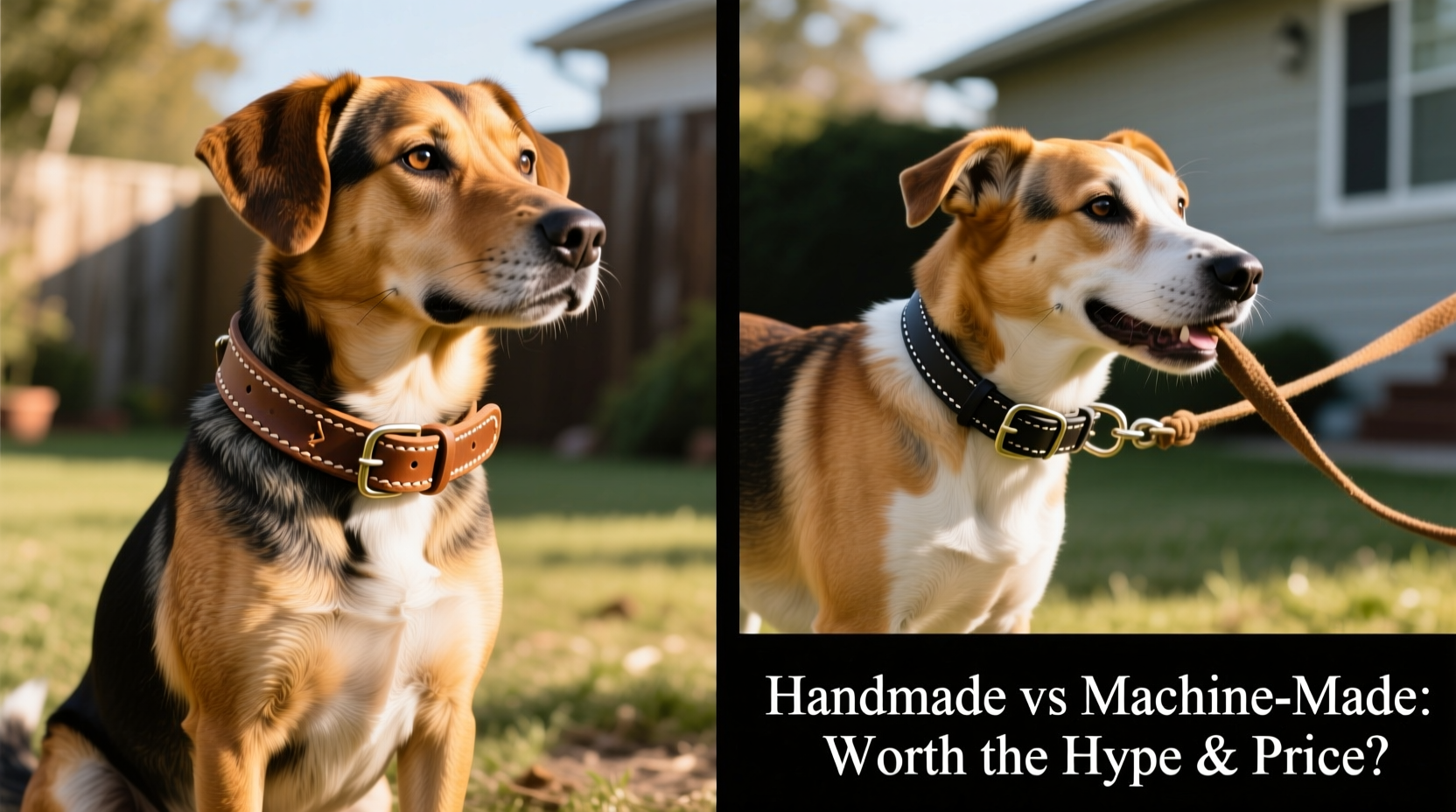
Artisanal dog collars have become a symbol of thoughtful pet ownership. Crafted by small businesses or independent designers, these collars often feature unique fabrics, hand-stitched details, and customizable elements like name tags or color combinations. The appeal lies in exclusivity and perceived craftsmanship. Many handmade brands emphasize sustainable materials, non-toxic dyes, and small-batch production, appealing to eco-conscious consumers.
Unlike factory lines that prioritize speed and volume, handmade collars are typically assembled with attention to detail—one at a time. This allows for tighter quality control and personalized adjustments. For example, a dog with a thick neck but narrow head might benefit from a custom-fit handmade collar that prevents slipping without being too tight.
Tip: When buying handmade, ask about thread type—bonded nylon thread resists fraying and UV damage better than standard polyester.Machine-Made Collars: Efficiency Meets Accessibility
Machine-made collars dominate the pet accessory market for good reason. They’re affordable, widely available, and consistently produced. Major brands use industrial sewing machines, automated cutting systems, and standardized sizing to deliver reliable products at scale. These collars undergo rigorous testing for strength, buckle integrity, and compliance with pet safety standards.
Many modern machine-made collars incorporate advanced materials such as biothane (a waterproof, odor-resistant synthetic), reflective stitching for nighttime visibility, and quick-release buckles. Because they’re produced in bulk, manufacturers can invest in research and development, leading to innovations like padded neoprene lining or chew-resistant webbing.
While some view machine-made collars as generic, many high-end pet supply brands now offer stylish, durable designs that rival handmade aesthetics—at a fraction of the cost.
Comparing Key Factors: A Side-by-Side Analysis
| Factor | Handmade Collars | Machine-Made Collars |
|---|---|---|
| Price Range | $25–$70+ | $8–$30 |
| Materials | Cotton, linen, leather, recycled fabrics; often organic or ethically sourced | Polyester, nylon, biothane, rubber-coated webbing |
| Durability | Varies—depends on stitch quality and fabric; may fray under heavy chewing | Generally high; industrial stitching and abrasion-resistant materials |
| Customization | High—names, colors, sizes, hardware choices | Limited—standard sizes and pre-designed prints |
| Ethics & Sustainability | Often transparent sourcing, small carbon footprint, supports artisans | Mixed—some brands use recycled materials; others rely on plastic-based synthetics |
| Consistency | Slight variations between pieces due to manual labor | Uniform quality across batches |
Expert Insight: What Do Pet Product Designers Say?
“Handmade doesn’t automatically mean better. What matters most is material choice and construction integrity. I’ve seen beautifully stitched cotton collars fail after three months of outdoor use because they weren’t designed for moisture resistance.” — Lena Torres, Pet Product Engineer and Designer
Torres emphasizes that function should drive form. “A well-engineered machine-made collar using biothane will outlast most fabric-based handmade versions, especially for active dogs. But for fashion-focused urban pets, a handmade collar made with breathable linen might be more comfortable and humane.”
Real Example: Max the Labrador and His Collar Journey
Max, a 2-year-old chocolate Lab from Portland, Oregon, loved hiking, swimming, and chewing anything within reach. His owner, Sarah, initially bought a $52 handmade collar featuring floral embroidery and soft cotton webbing. Max looked adorable—but within six weeks, the stitching unraveled near the D-ring after repeated exposure to lake water and mud.
Sarah then switched to a $24 machine-made biothane collar with reinforced stitching and a rust-proof clip. Despite daily swims and trail runs, it showed no signs of wear after nine months. “I still love handmade styles,” she said, “but for Max, function has to come first. Maybe I’ll get a cute one for weekends.”
When Handmade Makes Sense: A Practical Checklist
Handmade collars aren’t for every dog—or every budget. Use this checklist to determine if one is right for your pet:
- ✅ Your dog has sensitive skin and reacts to synthetic materials
- ✅ You want a fully customized fit (e.g., odd neck size, medical harness compatibility)
- ✅ You prioritize supporting small businesses and ethical labor practices
- ✅ The collar is primarily for light-duty use (e.g., city walks, indoor wear)
- ✅ You value unique design and limited-edition prints
- ❌ Your dog is a strong puller, swimmer, or aggressive chewer
- ❌ You need multiple collars for rotation or backup
Step-by-Step Guide: Choosing the Right Collar for Your Dog
- Assess your dog’s lifestyle: Is your dog a couch potato or an adventure hound? Active dogs need rugged, weather-resistant materials.
- Measure accurately: Use a soft tape measure behind the ears and around the neck where the collar sits. Add half an inch for comfort.
- Check material properties: Look for UV resistance, mildew prevention, and ease of cleaning. Biothane and nylon score high here.
- Evaluate hardware: Buckles should click securely. Metal D-rings should be welded, not soldered, to prevent breakage.
- Decide on purpose: Will it hold ID tags, attach a leash, or connect to a harness? Some collars are decorative only.
- Set a realistic budget: Consider how often you’ll replace it. A $60 handmade collar lasting four months costs more per month than a $20 machine-made one lasting two years.
- Read reviews: Look for long-term user feedback, especially regarding durability and safety incidents.
Frequently Asked Questions
Are handmade dog collars safer than machine-made ones?
Not inherently. Safety depends on construction quality, material strength, and proper fit. Some handmade collars use weaker threads or decorative elements that can snag or break. Always check for secure stitching and robust hardware regardless of production method.
Can I wash handmade collars the same way as machine-made ones?
Usually not. Many handmade collars use natural fabrics or glued embellishments that degrade in washing machines. Hand-wash with mild soap and air dry. Machine-made collars, especially those made from biothane or nylon, are often fully submersible and dishwasher-safe (top rack).
Do handmade collars last longer?
It depends. A well-crafted handmade collar using durable materials can last years with proper care. However, most are not built for extreme conditions. Machine-made collars often outperform them in longevity due to engineered materials and industrial-grade assembly.
Conclusion: Value Over Hype
The debate between handmade and machine-made dog collars isn’t about which is universally better—it’s about matching the product to your dog’s needs and your values. Handmade collars offer charm, individuality, and ethical appeal, making them ideal for fashion-forward owners with low-impact usage scenarios. Machine-made collars deliver reliability, innovation, and affordability, especially for working dogs, outdoor enthusiasts, or budget-conscious families.
The real value lies not in the label “handmade” but in thoughtful selection. Prioritize materials, fit, and function over marketing claims. Whether you choose artisan craftsmanship or industrial precision, the best collar is the one that keeps your dog safe, comfortable, and looking great—without costing more than it’s worth.
🚀 Ready to make a smarter choice? Re-evaluate your dog’s current collar using the checklist and guide above. Share your experience or favorite brands in the comments—your insight could help another pet parent avoid a costly mistake.








