
Bringing home a hamster is an exciting step, but choosing the right cage is one of the most critical decisions you’ll make as a new owner. While both bin cages and wire cages are popular options, they come with very different safety profiles—especially when it comes to escape risks. Hamsters are naturally curious, agile, and strong diggers, making them surprisingly adept at finding weak points in their enclosures. For inexperienced owners, understanding these differences isn’t just about comfort—it’s about preventing injury, stress, or even permanent loss of your pet.
This guide breaks down the structural and behavioral factors that influence escape risk in each cage type, backed by expert observations and real-world examples. Whether you're setting up your first habitat or reevaluating your current setup, this comparison will help you make a safer, more informed decision.
How Hamsters Escape: Understanding Their Behavior
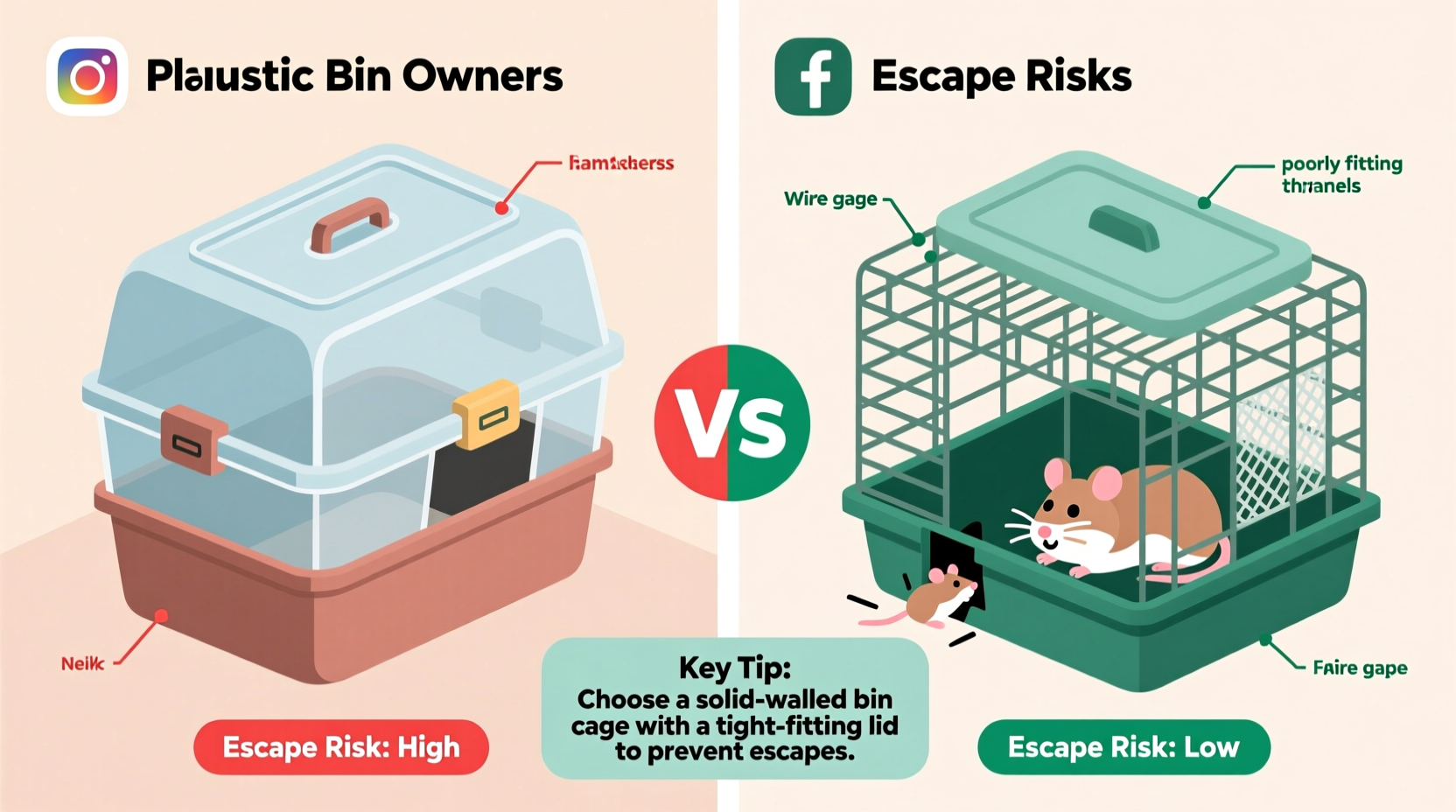
Before comparing cages, it's essential to understand *why* hamsters try to escape—and how they succeed. Contrary to myth, hamsters don't attempt escape out of dislike for their owners. Instead, their behavior stems from instinctual drives:
- Exploration: In the wild, hamsters cover large territories nightly in search of food.
- Burrowing: They dig tunnels to create complex underground systems for shelter and food storage.
- Climbing and squeezing: Despite their size, hamsters can contort through gaps as small as 0.5 inches (1.3 cm), especially Syrian hamsters with slender builds.
- Stress responses: Overcrowding, poor ventilation, loud noises, or dirty bedding can trigger escape attempts.
These behaviors mean that any cage with inadequate barriers, loose joints, or vertical bars becomes vulnerable. The design flaws in certain cages amplify these natural tendencies, turning routine activity into breakout scenarios.
Tip: Observe your hamster’s nighttime behavior using a night-vision camera. You may be surprised at how much climbing, digging, and testing of boundaries occurs when you’re asleep.Bin Cages: Strengths and Hidden Risks
Bin cages—typically made from large plastic storage containers with mesh lids—are increasingly favored in the hamster community for their depth, affordability, and excellent ventilation potential. A properly built bin cage offers deep bedding layers ideal for burrowing, which supports natural behavior and reduces stress.
However, not all bin cages are created equal. The primary escape risks stem from construction quality rather than design:
- Poorly secured lids: If the wire mesh top isn’t firmly attached with durable clips or screws, hamsters can push it open, especially during vigorous climbing.
- Gaps around corners: Cutouts for airflow or cable routing can leave openings if not sealed properly.
- Chewed plastic: Determined hamsters may gnaw at soft plastic edges, particularly near ventilation holes or where the lid meets the bin.
The deeper the bin, the less likely a hamster is to reach the top—but only if the lid remains intact. Many escape incidents occur not because the hamster climbs the walls (plastic is too smooth), but because they dislodge or exploit weaknesses in the lid structure.
“Over half the escape cases I’ve consulted on involved DIY bin cages with improperly fastened tops. The design works well, but execution matters.” — Dr. Lena Patel, Small Mammal Veterinarian & Exotic Pet Consultant
Wire Cages: Convenience vs. Escape Vulnerability
Wire cages, often sold in pet stores as “starter kits,” feature a plastic base with a wire frame and multiple levels connected by tubes or ramps. While marketed as spacious and interactive, they present significant escape risks that many new owners overlook.
The main danger lies in the cage’s vertical structure and bar spacing. Most commercial wire cages have bar gaps measuring 0.75 to 1 inch (1.9–2.5 cm)—more than enough for a dwarf hamster to slip through and for Syrians to squeeze through under pressure. Once outside, hamsters can quickly disappear into walls, under furniture, or behind appliances.
Additional problems include:
- Weak latches: Flip-top doors often lack secure locks and can be pushed open by persistent animals.
- Detachable components: Ramps, wheels, and shelves can shift over time, creating unintended gaps between levels.
- Bottom access: Some models allow removal of the entire base tray, which—if not fully snapped in—can slide out slightly and let a hamster crawl underneath and escape.
Moreover, wire cages encourage climbing, which increases the chance of falls and injuries. But more importantly, constant upward movement tests every joint and latch, accelerating wear and exposing structural flaws.
Comparing Escape Risks: Bin Cage vs Wire Cage
| Risk Factor | Bin Cage | Wire Cage |
|---|---|---|
| Bar/Gap Escape Risk | Low (solid walls); only risk is at lid or cutouts | High (wide bar spacing allows easy squeezing) |
| Lid Security | Depends on build quality; can be reinforced | Often weak latches; prone to accidental opening |
| Climbing Encouragement | Minimal (smooth plastic walls) | High (multiple levels and bars) |
| Digging Space | Excellent (deep bedding possible) | Poor (shallow base limits burrowing) |
| Ventilation Safety | Customizable with secure mesh | Good airflow but hard to modify safely |
| Common Escape Points | Lid edges, unsealed vents, chewed corners | Bar gaps, loose doors, shifting levels |
This comparison shows that while bin cages require more initial effort to assemble correctly, they offer far greater control over escape prevention. Wire cages, despite their convenience, are inherently compromised by design limitations that cannot be easily fixed after purchase.
Real-World Example: A Dwarf Hamster’s Midnight Escape
Sarah, a first-time owner in Ohio, purchased a standard wire cage from a major pet chain for her new Roborovski hamster, Milo. The cage included two levels, a wheel, and colorful accessories. Within three nights, Milo vanished.
After a frantic search involving flashlights and flour tracking, Sarah found him hiding behind her bedroom dresser. A careful inspection revealed that Milo had squeezed through the side bars near the upper level, where slight warping from temperature changes had widened the gap to nearly 1 inch. The latch on the top door was also loose, suggesting he might have exited there after falling or climbing out.
She switched to a 65-quart bin cage with a securely fastened hardware cloth lid. Two months later, Milo remains safely contained, actively burrowing in 12 inches of bedding—a behavior she hadn’t seen before due to the shallow base of the original cage.
Sarah’s experience reflects a common pattern: wire cages fail not because owners are negligent, but because their design doesn’t account for hamster strength, flexibility, and persistence.
Step-by-Step Guide to Building a Low-Risk Bin Cage
If you choose a bin cage—which experts widely recommend for minimizing escape risk—follow these steps to ensure maximum security:
- Select the right bin: Use a clear, rigid plastic container (e.g., 40–65 quart). Avoid bins with textured sides that could aid climbing.
- Cut a lid frame: Measure and trace a rectangle on the lid, leaving a 1–2 inch border for securing mesh.
- Attach fine mesh: Use galvanized hardware cloth (1/4 inch grid) or stainless steel mesh. Secure it with staples, screws, or rivets—never glue alone.
- Seal all edges: Wrap duct tape or silicone sealant around the outer seam where mesh meets plastic to eliminate pinch points and gaps.
- Add secure ventilation: Drill small holes (1/8 inch) low on the sides for airflow without creating chewable edges.
- Test stability: Shake the cage gently and check for mesh flexing or sharp protrusions. Trim excess metal carefully.
- Monitor daily: Check for signs of chewing, loosening fasteners, or warped sections, especially after cleaning.
Essential Checklist for Safe Hamster Housing
Use this checklist before finalizing your cage decision:
- ✅ Bar spacing less than 0.5 inches (for wire parts)
- ✅ Lid or roof securely fastened with screws/clips
- ✅ No accessible gaps between levels or accessories
- ✅ At least 10–12 inches of bedding depth for burrowing
- ✅ Chew-resistant materials around entry points
- ✅ Located away from drafts, direct sunlight, and noise
- ✅ Escape plan in place (search strategy, photos, contact list)
Frequently Asked Questions
Can a hamster really escape through wire cage bars?
Yes. Dwarf hamsters are small enough to pass through standard bar gaps (0.75+ inches) without difficulty. Even larger Syrian hamsters can compress their bodies and squeeze through openings that appear too narrow. This is one of the leading causes of lost-pet incidents among new owners.
Are bin cages legal or approved by animal welfare groups?
While no universal regulations govern hamster cages, organizations like the Royal Society for the Prevention of Cruelty to Animals (RSPCA) emphasize space, enrichment, and safety—criteria that well-built bin cages meet more effectively than most commercial wire models. Always verify local pet ownership guidelines, but rest assured that bin cages are widely used and endorsed by experienced keepers and veterinarians.
What should I do if my hamster escapes?
Act immediately. Close interior doors, place food and familiar bedding in quiet areas, and set humane traps (like a deep bucket with a ramp and treats inside). Search at night with a flashlight—hamsters are nocturnal. Notify neighbors and post on local social media groups with a clear photo. Most escaped hamsters are found within 72 hours if action is swift.
Final Thoughts: Prioritize Safety Over Convenience
Choosing between a bin cage and a wire cage isn’t just about cost or appearance—it’s about responsibility. Hamsters depend entirely on their owners for a secure environment. While wire cages may seem ready-to-use and visually appealing, their design often compromises safety in ways that aren’t obvious until it’s too late.
Bin cages, when properly constructed, offer superior containment, deeper bedding, and fewer escape vectors. The extra time invested in building one pays off in peace of mind, reduced stress for your pet, and long-term enjoyment of your tiny companion.
Your hamster won’t care about fancy ramps or glowing LED lights. What matters is a safe, enriching space where natural behaviors like digging, nesting, and exploring can happen without danger. Make the thoughtful choice today—your hamster’s life could depend on it.
💬 Have you experienced a hamster escape or successfully upgraded to a safer cage? Share your story in the comments to help other new owners avoid common pitfalls.








