For many people, a weekly hair mask is a non-negotiable step in their hair care routine. Whether you're dealing with dryness, frizz, breakage, or color-treated strands, a good mask can restore moisture, improve elasticity, and enhance shine. But a common question lingers: should you leave your hair mask on for just 20 minutes, or is it worth leaving it on overnight for deeper penetration? The answer isn't as simple as \"longer equals better.\" In fact, overdoing it can lead to product buildup, greasiness, or even weakened hair structure.
The effectiveness of a hair mask depends less on time and more on ingredients, hair porosity, and individual hair needs. Understanding this balance is key to avoiding damage while maximizing benefits. Let’s explore the science behind hair absorption, compare short versus extended treatments, and reveal when an overnight mask makes sense—and when it doesn’t.
How Hair Absorbs Moisture and Nutrients
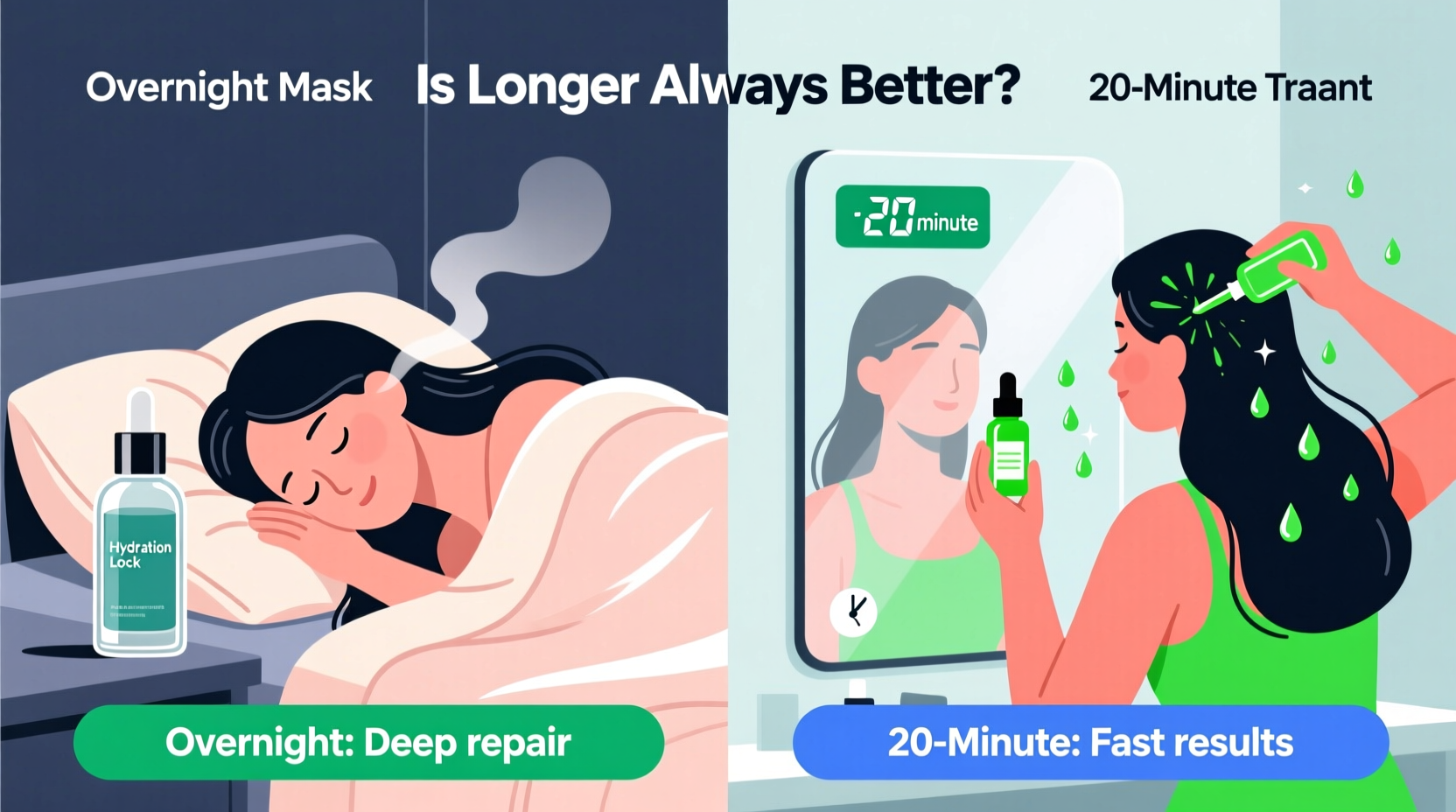
Hair is not alive like skin, but it still interacts with products through its outer layer—the cuticle. When you apply a hair mask, active ingredients penetrate the cuticle and reach the cortex, where they repair damage and replenish lost lipids and proteins. However, this process isn’t infinite. Research shows that most hair reaches maximum hydration within 20 to 30 minutes of exposure to conditioning agents.
Dr. Monique Jimenez, a dermatologist specializing in hair health, explains:
“Hair has a saturation point. After about 20–30 minutes, additional exposure doesn’t increase nutrient uptake—it just increases the risk of hygral fatigue, where hair swells too much from water absorption and becomes fragile.”
This means that simply leaving a mask on longer doesn’t guarantee better results. In fact, excessive moisture can disrupt the hair’s structural integrity, especially in fine or low-porosity hair types.
20-Minute Treatment: Science-Backed Efficiency
A 20-minute application aligns closely with the natural absorption window of most hair types. During this time, emollients like shea butter, oils, and silicones coat the hair shaft, while humectants such as glycerin draw in moisture. Proteins like keratin or hydrolyzed wheat protein begin repairing weak spots in the cortex.
For most people, especially those with normal to high porosity hair, 20 minutes is sufficient for noticeable softness, reduced frizz, and improved manageability. This duration also minimizes the chance of residue buildup or scalp irritation.
Tip: Use a warm towel or thermal cap during your 20-minute mask session—heat opens the cuticle slightly, enhancing ingredient penetration without extending time.Overnight Masks: Benefits and Risks
Overnight treatments involve applying a mask (or lighter oil-based serum) before bed and rinsing it out in the morning. Advocates claim deeper conditioning, prolonged nutrient delivery, and superior repair for severely damaged hair.
However, there are trade-offs:
- Pros: Extended contact time may benefit extremely dry, coarse, or chemically treated hair that struggles to retain moisture.
- Cons: Risk of scalp clogging, pillow transfer, and hygral fatigue if the product contains heavy humectants or water-based formulas left too long.
Overnight masks work best when they’re lightweight, silicone-based, or formulated specifically for leave-in use. Thick, creamy masks designed for rinse-out applications often contain ingredients that shouldn’t sit on the scalp for hours.
When an Overnight Mask Makes Sense
Certain situations justify extended wear:
- You have very low-porosity hair that resists moisture absorption.
- Your hair is heavily processed (bleached, permed, relaxed) and needs intensive restoration.
- You’re using a dedicated overnight repair serum, not a standard deep conditioner.
- You protect your hair with a silk cap to prevent friction and staining.
In these cases, slow, sustained delivery can be effective—but only if the formula is appropriate.
Comparing Results: Short vs Long Treatments
| Treatment Type | Best For | Time Required | Key Benefits | Potential Downsides |
|---|---|---|---|---|
| 20-Minute Rinse-Out Mask | All hair types, especially normal to high porosity | 15–30 minutes | Immediate softness, reduced frizz, easy rinsing | Limited impact on severely damaged hair |
| Overnight Deep Conditioning | Very dry, coarse, low-porosity, or damaged hair | 6–8 hours | Prolonged moisture retention, deeper repair | Greasy scalp, product buildup, possible hygral fatigue |
| Leave-In Overnight Serum | Fine to medium hair needing light nourishment | Overnight | No rinsing, protects ends, enhances shine | Can weigh down fine hair if over-applied |
The data suggests that treatment choice should be driven by hair condition and product formulation—not time alone.
Real Example: Sarah’s Transition from Over-Treating to Optimal Timing
Sarah, a 34-year-old with wavy, color-treated hair, used to apply a thick coconut-oil-based mask every Sunday night and leave it on until morning. She believed “more time = more repair.” Within months, her roots felt greasy by Monday morning, her scalp developed mild dandruff, and her waves lost volume.
After consulting a trichologist, she switched to a 20-minute protein-moisture balanced mask once a week, applied only from mid-lengths to ends. She used a warm towel wrap to boost absorption. Within three weeks, her hair felt lighter, bouncier, and healthier—without the weighed-down feeling.
“I realized I wasn’t healing my hair—I was suffocating it,” Sarah said. “Twenty minutes with heat worked better than eight hours under a beanie.”
Choosing the Right Mask for Your Hair Type
Not all hair responds the same way to treatment duration. Here’s how to match your routine to your hair profile:
- Fine or thin hair: Stick to 15–20 minute treatments with lightweight formulas. Avoid heavy butters or oils that can flatten strands.
- Curly or coily hair: Often benefits from longer exposure due to tighter curl patterns that resist moisture. A diluted mask or pre-shampoo oil treatment overnight can help, but avoid direct scalp application.
- Low-porosity hair: Resists moisture absorption. Try a 20-minute mask with gentle heat, or an overnight oil pre-wash (like jojoba or grapeseed), but never a thick cream mask left overnight.
- High-porosity hair: Absorbs quickly but loses moisture fast. A 20–30 minute mask with sealing agents (e.g., shea butter, silicones) locks in hydration effectively.
- Chemically treated hair: Needs protein support. Use a 20-minute reconstructive mask weekly. Reserve overnight treatments for monthly deep repairs with professional-grade serums.
Step-by-Step Guide: Optimizing Your Hair Mask Routine
Follow this sequence to get the most out of your treatment—regardless of duration:
- Clarify (once a month): Remove buildup with a clarifying shampoo so your mask can penetrate effectively.
- Detangle: Use a wide-tooth comb on damp hair before applying the mask to ensure even distribution.
- Apply Strategically: Focus on mid-lengths and ends. If using an overnight treatment, avoid the scalp unless the product is specifically designed for it.
- Add Heat (for 20-minute treatments): Cover hair with a warm, damp towel or a heated cap for 10–15 minutes to boost absorption.
- Rinse Thoroughly: Use cool water to seal the cuticle and enhance shine.
- Follow with Leave-In (if needed): Especially for curly or dry hair, a lightweight leave-in conditioner adds extra protection.
This method ensures optimal results without overloading your hair—making extended wear unnecessary in most cases.
Expert Insight: What Dermatologists Recommend
Board-certified dermatologist Dr. Alicia Nguyen emphasizes precision over duration:
“The idea that ‘more is better’ is one of the biggest myths in hair care. Over-conditioning can lead to protein overload or moisture imbalance. I recommend patients use time-efficient treatments and focus on ingredient compatibility instead of leaving products on all night.”
She advises checking labels for red flags: high concentrations of heavy oils, mineral oil, or occlusive silicones in rinse-out masks are not meant for extended wear.
Checklist: Is an Overnight Mask Right for You?
Answer these questions before attempting an overnight treatment:
- ✅ Is the product labeled as safe for extended use or as a sleep-in treatment?
- ✅ Do I have severely dry or damaged hair that doesn’t respond to regular masks?
- ✅ Am I protecting my pillow with a silk cap or scarf?
- ✅ Am I applying only to the lengths and ends, not the scalp?
- ✅ Have I done a patch test to check for irritation or greasiness?
If you answered “no” to any of these, a 20-minute treatment is likely safer and more effective.
Frequently Asked Questions
Can I leave a regular hair mask on overnight?
Not recommended. Most rinse-out masks contain concentrated ingredients that can cause buildup, scalp irritation, or hygral fatigue when left on too long. Only use products specifically formulated for overnight use.
Do overnight masks cause hair loss?
Not directly, but clogged follicles from heavy residue can inhibit growth over time. If you notice increased shedding after switching to overnight treatments, consider scaling back and cleansing more thoroughly.
Is 20 minutes enough for a hair mask to work?
Yes—for most hair types. Studies show peak absorption occurs within 20–30 minutes. Adding heat can further improve efficacy, making longer times unnecessary.
Final Thoughts: Duration Isn’t Everything
The belief that longer treatments automatically yield better results is outdated and potentially harmful. Modern hair science shows that timing must be matched to hair type, porosity, and product composition. For the majority of people, a well-formulated 20-minute mask with proper technique delivers excellent results without the risks of over-saturation.
Overnight masks have a place—but only as targeted solutions for specific concerns, not as a default upgrade. Using them indiscriminately can do more harm than good.
💬 Ready to optimize your routine? Reassess your current mask, check the label, and try a timed comparison this week. Share your results in the comments—your experience could help others find their perfect balance!








