Scented spaces have become a cornerstone of modern home wellness. Whether it’s the cozy warmth of vanilla or the crisp clarity of eucalyptus, fragrance plays a subtle yet powerful role in shaping mood and atmosphere. For years, wax melts have dominated the no-flame fragrance market—easy to use, widely available, and richly scented. But recently, gypsum diffusers have emerged as a sleek alternative, promising longer-lasting aroma, elegant design, and safer operation. So, is this new contender truly worth the switch, or is the hype just smoke and mirrors? Let’s cut through the marketing and examine what really matters: performance, safety, cost, and sustainability.
The Mechanics: How Each System Works
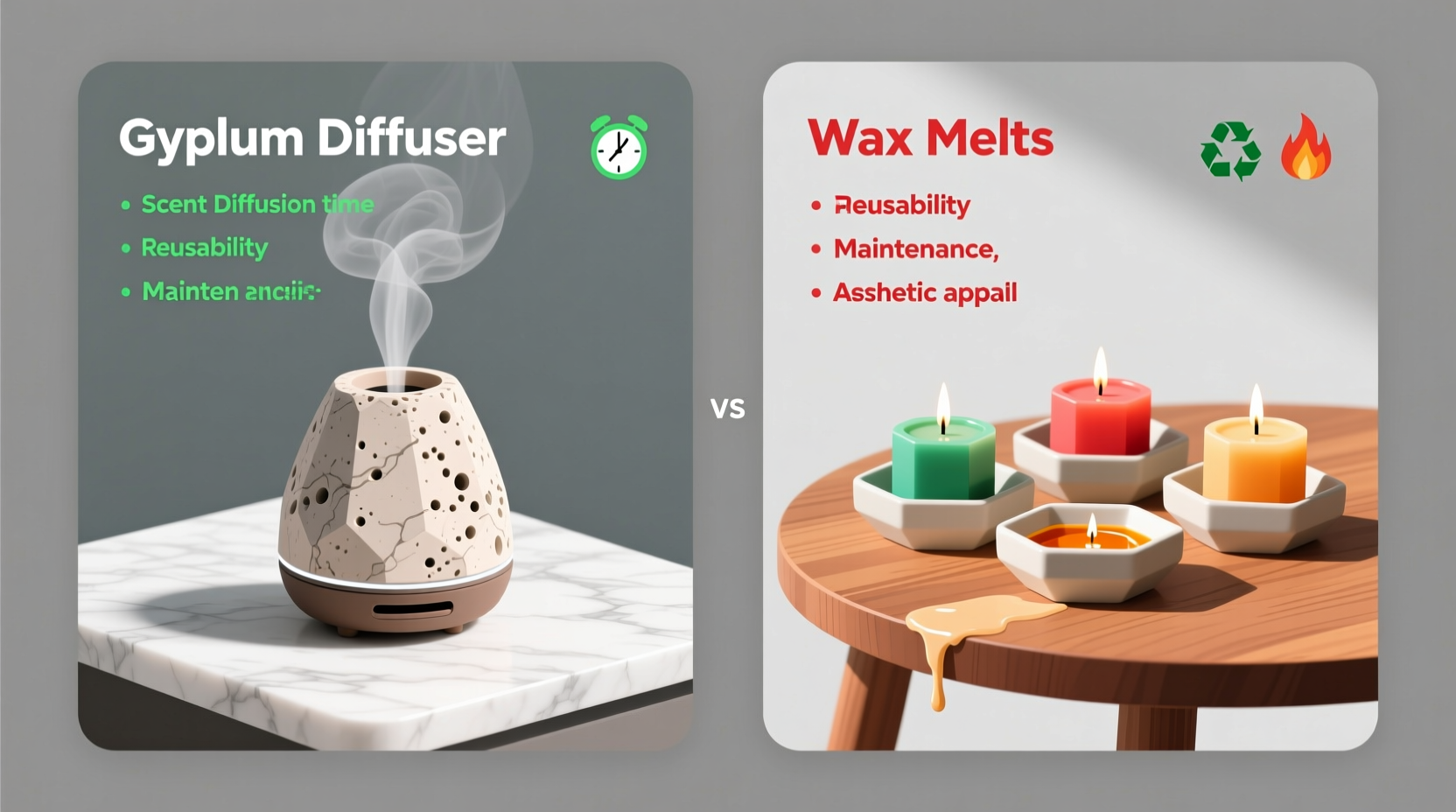
Understanding how each product disperses fragrance is key to evaluating their effectiveness.
Wax melts rely on heat to release scent. Typically, a tea light or electric warmer gently melts scented wax—usually paraffin, soy, or coconut blends—into a liquid pool that evaporates into the air. The intensity depends on temperature, wax quality, and room ventilation. Once cooled, the wax solidifies and can sometimes be reused, though scent strength diminishes over time.
Gypsum diffusers, on the other hand, use porous calcium sulfate (gypsum) infused with fragrance oil. No heat is involved. Instead, the gypsum naturally absorbs and slowly releases the oil through passive diffusion. Some designs include reed sticks to accelerate evaporation, while others rely solely on surface exposure. Because there’s no melting or burning, the scent profile tends to remain consistent over weeks or even months.
Tip: For stronger scent from a gypsum diffuser, flip the reeds weekly—or break off a small piece of the gypsum block to increase surface area.Performance Comparison: Scent Throw, Longevity, and Consistency
When comparing wax melts and gypsum diffusers, three factors dominate user experience: how far the scent travels (throw), how long it lasts, and how evenly it disperses.
| Feature | Wax Melts | Gypsum Diffusers |
|---|---|---|
| Scent Throw (Strength) | High – especially with warmers | Moderate to Low – gradual release |
| Longevity per Use | 4–8 hours per melt session | 3–8 weeks per infusion |
| Scent Consistency | Strong initially, fades quickly | Even, subtle throughout life cycle |
| Customization | Easy to mix scents | Limited once infused |
| Best For | Quick bursts, strong fragrance lovers | Continuous background scent |
Wax melts excel when immediate, intense fragrance is desired—ideal for welcoming guests or masking odors after cooking. However, they require active management: turning on the warmer, replacing wax, and cleaning residue. Gypsum diffusers offer a “set and forget” solution. While the scent may not fill a large room aggressively, it creates a gentle olfactory backdrop that persists for weeks without intervention.
Safety and Environmental Impact
Safety is a growing concern among fragrance users, particularly in homes with children, pets, or sensitive individuals.
Wax melts, especially those using paraffin wax and synthetic fragrances, can emit volatile organic compounds (VOCs) when heated. Though generally considered safe in moderation, prolonged exposure in poorly ventilated areas may trigger headaches or respiratory irritation. Electric warmers reduce fire risk compared to tea lights, but hot surfaces still pose a burn hazard.
Gypsum diffusers operate at room temperature, eliminating fire risk and thermal degradation of fragrance oils. Calcium sulfate is non-toxic and inert, making it safe around pets and kids. Additionally, many brands use eco-friendly, phthalate-free fragrance oils and recyclable packaging. From an environmental standpoint, gypsum diffusers often win due to lower energy use and less frequent replacement.
“Passive diffusion systems like gypsum eliminate combustion byproducts and are ideal for people with asthma or chemical sensitivities.” — Dr. Lena Patel, Indoor Air Quality Specialist
Cost Analysis Over Time
At first glance, wax melts appear cheaper. A pack of six cubes might cost $5–$8 and last for several uses. But frequency adds up. Using a wax warmer daily could mean replacing melts every 2–3 days, leading to monthly costs of $20–$30 depending on brand and usage.
Gypsum diffusers typically range from $25–$45 for the base unit, plus $12–$18 for refill oil kits. One oil bottle can re-infuse the block 3–4 times, stretching its lifespan to 3–4 months. After the initial investment, annual spending averages $60–$80, compared to $200+ for frequent wax users.
While the upfront cost is higher, gypsum diffusers offer better long-term value for continuous users. Occasional fragrance lovers may still prefer the flexibility and lower entry price of wax melts.
Real-World Example: A Home Office Experiment
Jamie, a remote worker in Portland, used wax melts for years to keep her home office smelling fresh. She burned lavender melts every evening to unwind, but found the scent inconsistent and the cleanup tedious. After switching to a minimalist gypsum diffuser with cedar-vanilla oil, she noticed immediate differences.
“I didn’t realize how much I was micromanaging my wax melts until I stopped,” Jamie said. “Now, I refill the diffuser once a month. The scent is softer, but it���s always there—calm, steady, no spikes. And I don’t worry about forgetting to turn off a warmer.”
Her only critique? The initial scent throw wasn’t strong enough for her living room during gatherings. For those moments, she keeps a wax warmer on hand as a supplement—a hybrid approach that balances convenience and impact.
Step-by-Step Guide: Transitioning from Wax Melts to Gypsum Diffusers
If you��re considering making the switch, follow this practical sequence:
- Assess your usage patterns: Do you want constant background scent or occasional bursts?
- Choose a starter kit: Look for reputable brands offering refillable gypsum blocks and high-quality oils.
- Prepare the gypsum: If new, let it air out for 24 hours to remove any manufacturing odor.
- Infuse with oil: Pour 10–15ml of fragrance oil evenly over the surface. Wait 2–4 hours before placing in open air.
- Place strategically: Position in a low-traffic area with natural airflow—avoid direct sunlight or humidity.
- Maintain regularly: Flip reeds weekly; re-infuse every 3–5 weeks based on scent fade.
- Recycle or repurpose: When spent, some gypsum blocks can be crushed and used in garden soil as a mild conditioner.
Frequently Asked Questions
Can I use essential oils in a gypsum diffuser?
Yes, but with caution. Pure essential oils are less viscous and evaporate faster than fragrance oils, reducing longevity. They also lack the fixatives that help scent linger. For best results, use blends specifically formulated for diffusers or mix essential oils with a carrier like dipropylene glycol.
Do wax melts lose potency over time if unopened?
Yes. Most wax melts retain peak scent for 12–18 months when stored in a cool, dark place. Exposure to heat, light, or air degrades fragrance molecules. Gypsum blocks, once infused, begin releasing scent immediately—but dry, unused gypsum has an indefinite shelf life.
Are gypsum diffusers suitable for bathrooms?
Only if the space is well-ventilated and not excessively humid. High moisture can saturate the gypsum, slowing oil release and potentially promoting mold. Use intermittently in bathrooms, or opt for sealed reed diffusers instead.
Final Verdict: Hype or Worth It?
The rise of gypsum diffusers isn’t mere trend-chasing—it reflects a shift toward sustainable, low-maintenance home wellness. They aren’t louder, bolder, or flashier than wax melts. But they are smarter for everyday use: safer, more economical over time, and environmentally considerate.
That said, wax melts still hold value. Their versatility, instant impact, and wide scent variety make them ideal for seasonal changes, parties, or quick refreshes. The truth is, most households don’t need to choose one over the other. A balanced approach—using gypsum for baseline ambiance and wax melts for targeted bursts—delivers the best of both worlds.
💬 Ready to rethink your home fragrance routine? Try a gypsum diffuser for one month and track your satisfaction. Then decide: is the quiet consistency worth the switch? Share your experience and help others navigate the scent revolution.








