
In recent years, grain-free dog food has surged in popularity, driven by marketing claims that it’s more natural, healthier, or better aligned with a dog’s ancestral diet. Golden retrievers, beloved for their loyalty and energy, are among the breeds frequently fed these diets. But concerns have emerged—particularly around dilated cardiomyopathy (DCM), a serious heart condition. Could removing grains from your golden retriever’s bowl be putting their heart at risk? The answer isn’t simple, but understanding the science, the FDA’s investigation, and breed-specific vulnerabilities can help pet owners make informed decisions.
The Rise of Grain-Free Diets and Why Owners Choose Them
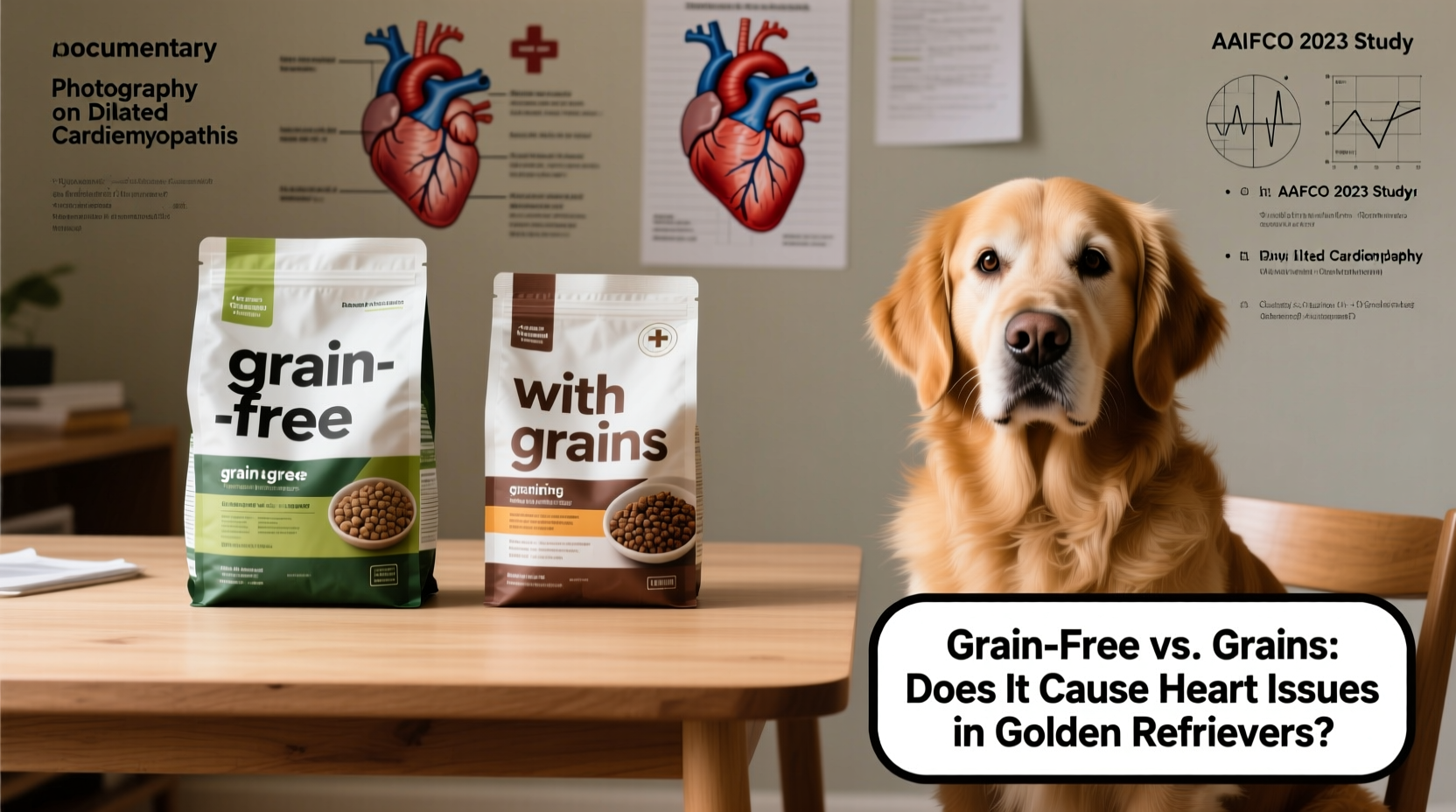
Grain-free dog foods typically replace common grains like corn, wheat, rice, and barley with alternative carbohydrate sources such as peas, lentils, potatoes, and chickpeas. These formulations were originally designed for dogs with diagnosed grain allergies—though true grain allergies are rare, affecting less than 5% of dogs according to veterinary dermatologists.
Despite this, many pet owners began opting for grain-free options believing they offer superior nutrition, higher protein content, or mimic a “wolf-like” diet. Marketing often emphasizes terms like “natural,” “ancestral,” or “clean label,” contributing to widespread adoption even among dogs without sensitivities.
Golden retrievers, prone to skin conditions and food sensitivities, became frequent candidates for grain-free diets. However, as anecdotal reports of heart disease increased, researchers and regulators began asking whether these dietary shifts might be doing more harm than good.
What Is Dilated Cardiomyopathy (DCM) and Why Are Golden Retrievers at Risk?
Dilated cardiomyopathy is a disease of the heart muscle that leads to weakened contractions and enlarged chambers. Over time, the heart struggles to pump blood efficiently, which can result in congestive heart failure. While DCM can be genetic—especially in breeds like Doberman pinschers and Great Danes—it has increasingly been observed in breeds not traditionally predisposed, including golden retrievers.
Historically, golden retrievers were not considered high-risk for inherited DCM. But starting around 2018, veterinarians noticed a spike in cases among otherwise healthy dogs eating grain-free commercial diets. This raised alarms and prompted the U.S. Food & Drug Administration (FDA) to launch an investigation into a potential link between diet and DCM.
“While genetics play a role, we’re seeing a concerning number of DCM cases in golden retrievers tied to nutritional imbalances—specifically in taurine metabolism and legume-rich diets.” — Dr. Lisa Freeman, Tufts University Clinical Nutritionist
The FDA Investigation: What the Data Shows
Between 2014 and 2023, the FDA collected over 1,100 case reports of DCM in dogs eating certain types of diets, particularly grain-free formulas containing high levels of legumes (peas, lentils, chickpeas) and potatoes as primary ingredients. About 90% of these cases involved breeds not genetically prone to DCM, with golden retrievers ranking among the top affected breeds.
The central hypothesis is that these legume-heavy formulations may interfere with taurine—a sulfur-containing amino acid essential for heart function. Although dogs can synthesize taurine from other amino acids (like cysteine and methionine), some appear to have difficulty doing so when their diets lack sufficient animal-based proteins or contain compounds that bind nutrients.
Not all grain-free diets lead to DCM, and not all dogs on these diets develop heart problems. However, patterns suggest that diets where legumes make up more than 25–30% of the ingredient list carry higher risk, especially when paired with exotic proteins (like kangaroo or duck) that may be lower in taurine.
Tip: Check the ingredient list—if legumes (peas, lentils, chickpeas) appear in the first five ingredients, consider discussing the diet with your veterinarian.Grain Free vs Grains: Nutritional Breakdown and Misconceptions
A common misconception is that grains are “fillers” with no nutritional value. In reality, whole grains like brown rice, oats, and barley provide fiber, essential fatty acids, and B vitamins. They also contribute to balanced kibble structure and digestibility.
Conversely, many grain-free diets substitute grains with starchy legumes and potatoes, which can alter nutrient bioavailability. For example:
- Legumes are high in lectins and phytates, which may inhibit mineral absorption.
- Potatoes have a high glycemic index, potentially affecting blood sugar in sensitive dogs.
- Some plant-based proteins lack optimal amino acid profiles compared to animal sources.
Moreover, while taurine deficiency was once thought to be rare in dogs, emerging evidence shows that certain diets—regardless of being grain-free—can induce functional deficiencies even if taurine isn’t listed as an ingredient.
Key Differences: Grain-Inclusive vs Grain-Free Diets
| Nutritional Factor | Grain-Inclusive Diet | Grain-Free Diet |
|---|---|---|
| Primary Carbohydrate Source | Rice, barley, oats, corn | Peas, lentils, potatoes, tapioca |
| Taurine Bioavailability | Moderate to high (with meat meals) | Variable; often reduced due to legume interference |
| Fiber Content | Balanced, from whole grains | High, but from different sources (may affect digestion) |
| Protein Quality | Often balanced animal + grain synergy | May rely on novel proteins; quality varies |
| Association with DCM | Low (in standard commercial diets) | Elevated in legume-heavy formulations |
Real-World Case: Max the Golden Retriever
Max, a six-year-old male golden retriever from Colorado, was brought to a veterinary cardiology clinic after collapsing during a walk. An echocardiogram revealed severe DCM with significantly reduced ejection fraction. His diet? A premium grain-free kibble featuring lamb and peas as the first two ingredients, fed exclusively for three years.
Blood tests showed borderline low taurine levels. After switching to a grain-inclusive, animal-protein-rich diet and supplementing with taurine, Max’s heart function improved within six months. Follow-up scans showed measurable recovery in cardiac strength—though full reversal wasn't possible.
His vet emphasized that early intervention likely saved his life. “This wasn’t a genetic case,” the cardiologist noted. “This was diet-induced DCM, entirely preventable with better nutritional awareness.”
How to Choose a Safer Diet for Your Golden Retriever
Choosing the right food doesn’t require eliminating entire food groups. Instead, focus on balance, transparency, and scientific backing. Here’s a step-by-step guide to evaluating your dog’s current or future diet:
- Review the ingredient list: Look for named animal proteins (e.g., “chicken meal,” “beef”) in the top three ingredients. Avoid diets where legumes dominate the first half of the list.
- Check for AAFCO compliance: Ensure the food meets Association of American Feed Control Officials standards for complete and balanced nutrition.
- Assess protein sources: Prioritize diets with conventional meats (chicken, beef, fish) over exotic or boutique proteins unless medically necessary.
- Consult your vet before switching: Especially if your dog has existing health conditions or is on medication.
- Monitor for symptoms: Lethargy, coughing, rapid breathing, or fainting could indicate heart issues—seek evaluation immediately.
Diet Safety Checklist for Golden Retriever Owners
- ✅ Named animal protein is the first ingredient
- ✅ Legumes (peas, lentils, etc.) appear below the top 5 ingredients
- ✅ No excessive use of potatoes or tapioca
- ✅ AAFCO statement confirms life-stage suitability
- ✅ Manufactured by a company with veterinary nutritionists on staff
- ✅ No history of recalls related to contamination or labeling errors
- ✅ Vet-approved, especially if dog has allergies or medical conditions
Expert Recommendations and Industry Response
Leading veterinary nutritionists now advise caution with grain-free diets, particularly for large-breed dogs like golden retrievers. The American College of Veterinary Nutrition (ACVN) states that there is “growing evidence of a connection between certain grain-free diets and the development of diet-associated DCM.”
Several major pet food manufacturers have reformulated their grain-free lines since 2020, reducing legume content and adding taurine supplementation. However, not all brands have followed suit, and consumer demand continues to drive availability of questionable formulations.
“The idea that grain-free equals healthier is a myth perpetuated by marketing. We need to prioritize science over trends when feeding our pets.” — Dr. Joseph Wakshlag, Cornell University Veterinary Medicine
Frequently Asked Questions
Can grain-free dog food directly cause heart disease in golden retrievers?
It’s not the absence of grains itself that causes heart disease, but rather the substitution of grains with high levels of legumes and potatoes, which may disrupt taurine metabolism and lead to diet-associated dilated cardiomyopathy (DCM). Golden retrievers appear particularly susceptible, though individual response varies.
Should I stop feeding grain-free food if my golden retriever seems healthy?
If your dog is on a grain-free diet, consult your veterinarian. Blood work—including taurine levels—and a cardiac screening (like an echocardiogram) may be recommended. If the diet contains high legume content, transitioning to a balanced, grain-inclusive formula may reduce long-term risk.
Are all grain-free diets dangerous?
No—not all grain-free diets are problematic. Some are well-formulated with appropriate protein sources and added taurine. The concern lies primarily with boutique brands using legume-heavy recipes without proper nutritional validation. Always research the manufacturer and look for veterinary oversight.
Conclusion: Making Informed Choices for Your Golden Retriever’s Heart Health
The debate over grain-free versus grain-inclusive dog food isn’t just about trends—it’s about long-term health outcomes. For golden retrievers, a breed now unexpectedly appearing in DCM statistics, the stakes are real. While grains themselves are not harmful and provide valuable nutrients, the replacement ingredients in many grain-free diets may pose unseen risks.
There is no one-size-fits-all diet, but there is a universal principle: choose food based on science, not slogans. Work with your veterinarian to evaluate your dog’s nutritional needs. Read labels critically. Prioritize transparency, balance, and proven safety over buzzwords like “grain-free” or “boutique.”
Your golden retriever depends on you to make smart choices—one of which starts at the bottom of their food bowl.
💬 Have you switched your golden retriever’s diet due to heart concerns? Share your experience or questions in the comments—your story could help another pet owner avoid a similar risk.








