In recent years, grain free dog food has surged in popularity, marketed as a more “natural” or “ancestral” option for canine diets. Many pet owners have switched their dogs to grain free formulas, believing they offer better digestion, fewer allergies, or improved overall health. However, growing concern from veterinary cardiologists and nutritionists has shifted the conversation—particularly around a potential link between grain free diets and canine dilated cardiomyopathy (DCM), a serious heart condition.
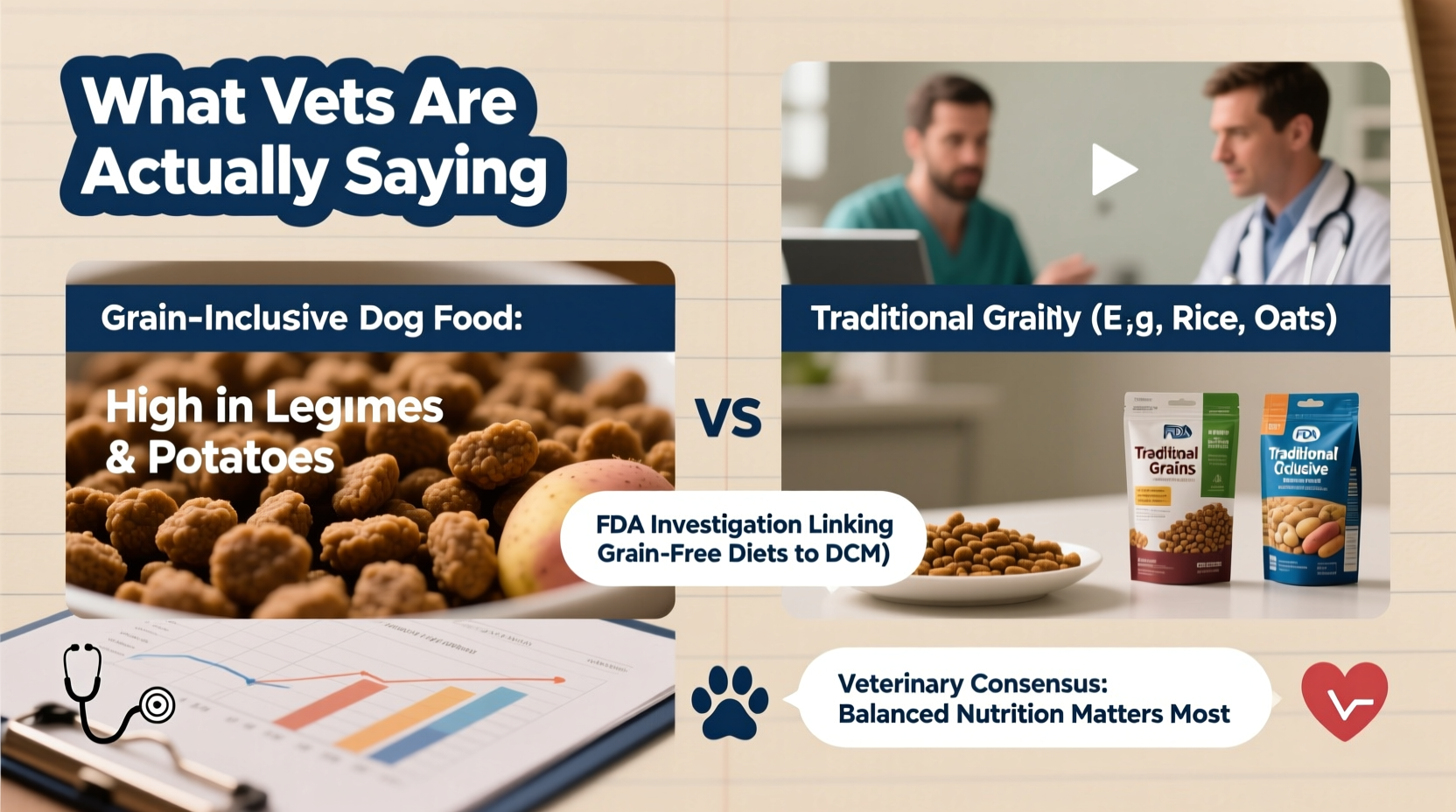
The U.S. Food and Drug Administration (FDA) began investigating this connection in 2018 after observing an unusual rise in DCM cases among dogs not genetically predisposed to the disease. Most of these dogs were eating grain free diets high in legumes and potatoes. Since then, veterinarians have been reevaluating dietary recommendations, urging caution and emphasizing science over marketing claims.
This article explores what veterinary professionals are actually saying about grain free versus grain inclusive dog foods, the latest research on heart health, and how you can make informed decisions for your dog’s long-term well-being.
The Rise of Grain Free Diets: Why They Became Popular
Grain free dog foods emerged as part of a broader human trend toward gluten-free and paleo-style eating. Pet food manufacturers capitalized on this movement, positioning grain free kibble and canned food as healthier alternatives. Marketing often suggests that dogs, like wolves, thrive without grains and that ingredients like corn, wheat, and soy are low-quality fillers that cause allergies or inflammation.
While some dogs do have true grain allergies (though rare, affecting less than 5% of dogs according to veterinary dermatologists), most tolerate grains well. In fact, whole grains like brown rice, barley, and oats provide essential nutrients including fiber, B vitamins, and complex carbohydrates that support sustained energy.
The real shift came when grain free formulations replaced grains with alternative carbohydrate sources such as peas, lentils, chickpeas, potatoes, and tapioca. These ingredients are now central to many popular grain free brands. But it's precisely this substitution that has raised red flags among veterinary experts.
Tip: Just because a food is labeled \"grain free\" doesn’t mean it’s lower in carbohydrates—it may simply replace grains with other starches.Canine Dilated Cardiomyopathy (DCM): A Growing Concern
Dilated cardiomyopathy (DCM) is a disease of the heart muscle that causes the chambers to enlarge and weaken, reducing the heart’s ability to pump blood effectively. It’s typically seen in large and giant breeds like Doberman Pinschers, Great Danes, and Boxers, where it has a known genetic component. However, starting in 2018, veterinarians began reporting DCM in atypical breeds—including Golden Retrievers, Miniature Schnauzers, and even Bulldogs—that had no family history of the disease.
Upon investigation, a common factor emerged: most affected dogs were fed grain free diets containing high levels of legumes and potatoes. The FDA collected over 1,100 case reports by 2023, with more than 90% of dogs eating grain free food. While correlation does not equal causation, the pattern was concerning enough to prompt further study.
One leading theory focuses on taurine deficiency. Taurine is an amino acid critical for heart function. Some dogs synthesize taurine adequately from other amino acids (like cysteine and methionine), but others—especially certain breeds—may require dietary taurine. Early studies found that some dogs with diet-associated DCM had low blood taurine levels, and in some cases, their heart function improved when taurine was supplemented and their diet changed.
However, not all dogs with DCM linked to grain free diets are taurine deficient, suggesting other mechanisms may be at play. Researchers are now examining whether plant-based ingredients affect nutrient bioavailability, gut microbiome balance, or lead to the formation of anti-nutritional factors that interfere with cardiac metabolism.
“We’re seeing dogs develop heart failure on diets that claim to be premium or holistic, but lack the nutritional rigor needed for long-term health. This isn’t just about taurine—it’s about formulation integrity.” — Dr. Lisa Freeman, Tufts University Veterinary Nutritionist
What Vets Are Actually Saying: Expert Consensus
Veterinarians and board-certified veterinary nutritionists emphasize that there is no one-size-fits-all diet for dogs. However, when it comes to grain free versus grain inclusive options, the professional consensus is clear: unless medically necessary, there is no proven benefit to avoiding grains—and there may be significant risks.
The American Veterinary Medical Association (AMVA) and the World Small Animal Veterinary Association (WSAVA) both stress that commercial diets should be formulated based on scientific evidence, not marketing trends. WSAVA’s nutritional assessment guidelines recommend feeding pets diets that have undergone full-life-cycle feeding trials, which many boutique grain free brands do not conduct.
Dr. Jennifer Larsen, a veterinary nutritionist at UC Davis, explains: “Grains are not the enemy. In fact, they contribute valuable nutrients. The problem arises when companies remove grains and replace them with large amounts of legumes and pulses without fully understanding the metabolic consequences.”
Vets also warn against the “boutique, exotic, grain free” (BEG) diet category—a term used to describe brands that use unconventional ingredients (like kangaroo or quinoa), avoid grains, and are often sold in pet stores or online rather than through veterinary clinics. These diets are disproportionately represented in the FDA’s DCM reports.
It’s important to note that not all grain free foods are dangerous, and not every dog on a grain free diet will develop heart issues. But the risk appears elevated, especially for dogs consuming diets where legumes constitute the first several ingredients.
Comparing Grain Free vs Grain Inclusive: A Practical Breakdown
| Factor | Grain Free Dog Food | Grain Inclusive Dog Food |
|---|---|---|
| Primary Carbohydrate Sources | Peas, lentils, potatoes, tapioca | Brown rice, oats, barley, millet |
| Taurine Levels | Often lower; may depend on protein source and processing | Typically adequate; better-studied profiles |
| Nutrient Bioavailability | Potentially reduced due to phytates and lectins in legumes | Generally high; grains are well-digested by dogs |
| Association with DCM | Higher incidence reported in FDA investigations | No increased risk identified |
| AAFCO Feeding Trials | Many lack full life-stage testing | More likely to have completed feeding trials |
| Vet Recommendation | Caution advised; not recommended for routine use | Preferred for most healthy dogs |
When Grain Free Might Be Appropriate
Despite the concerns, grain free diets can be appropriate in specific medical situations. For example:
- Dogs with confirmed allergies or sensitivities to specific grains (rare, but possible).
- Those with certain digestive disorders where grain tolerance is poor.
- Part of a prescription diet regimen under veterinary supervision.
In these cases, a veterinarian may recommend a grain free option—but likely one that is scientifically formulated, tested, and monitored. The key difference is medical necessity versus lifestyle choice.
For the average dog, however, a balanced, grain inclusive diet from a reputable brand remains the safest and most nutritionally sound option.
Action Plan: How to Choose a Heart-Healthy Diet
If you're concerned about your dog’s current food or want to make a proactive change, follow this step-by-step guide to ensure heart-healthy nutrition.
- Review the ingredient list. Look for diets where animal proteins (e.g., chicken, beef, fish) are the first ingredients. Avoid those listing peas, lentils, or potatoes in the top three.
- Check for AAFCO statements. Ensure the food meets nutritional adequacy standards for your dog’s life stage (e.g., “formulated to meet the nutritional levels established by the AAFCO Dog Food Nutrient Profiles for adult maintenance”).
- Prioritize brands that conduct feeding trials. Companies like Hill’s Science Diet, Royal Canin, and Purina Pro Plan test their diets in live animals over time, ensuring long-term safety and efficacy.
- Avoid “boutique” brands with exotic ingredients. Unless prescribed, steer clear of diets featuring kangaroo, fava beans, or other novel components lacking long-term research.
- Consult your veterinarian. Especially if your dog is on a grain free diet, schedule a wellness check. Blood work, including taurine levels, and a cardiac exam may be warranted.
- Transition slowly if changing food. Replace the old diet gradually over 7–10 days to avoid gastrointestinal upset.
Real-World Example: Max the Golden Retriever
Max, a 5-year-old Golden Retriever, was brought to a veterinary cardiology clinic after his owner noticed lethargy and coughing during walks. An echocardiogram revealed severe DCM with significantly reduced ejection fraction. Surprisingly, Max had no family history of heart disease.
His diet consisted of a popular grain free brand made with lamb, peas, and chickpeas as primary ingredients. Blood tests showed borderline low taurine levels. Max was started on heart medication and taurine supplementation, and his diet was switched to a grain inclusive, veterinarian-recommended formula.
After six months, follow-up imaging showed measurable improvement in heart function. His energy returned, and he resumed normal activity. While not all dogs respond this well, Max’s case illustrates how diet can play a reversible role in heart health when caught early.
Frequently Asked Questions
Is grain free dog food banned?
No, grain free dog food is not banned. However, the FDA continues to monitor reports of DCM and advises pet owners to be cautious, especially with boutique brands high in legumes and potatoes.
Should I stop feeding grain free food immediately?
If your dog is healthy and thriving on a grain free diet, an abrupt switch isn’t necessary. However, consult your vet to assess risk. If your dog is in a breed prone to heart issues or shows any symptoms like fatigue, coughing, or breathing difficulty, a diet change should be prioritized.
Are all grain free foods dangerous?
No—not all grain free foods pose a risk. The concern centers on specific formulations high in legumes and potatoes, particularly from brands that lack rigorous nutritional testing. Some grain free diets are well-formulated and safe, but they should be chosen carefully and ideally under veterinary guidance.
Final Thoughts: Prioritizing Science Over Trends
The debate over grain free versus grain inclusive dog food isn’t just about ingredients—it’s about responsibility. As pet owners, we want the best for our dogs, but marketing claims can cloud judgment. The veterinary community isn’t advocating for a return to low-quality, filler-laden kibble. Instead, they’re calling for diets grounded in nutritional science, transparency, and long-term safety.
Grains are not the enemy. In fact, they’ve been unfairly vilified in both human and pet nutrition. What matters most is the overall balance of nutrients, the quality of protein sources, and whether a diet has been tested for real-world outcomes.
If your dog is currently eating a grain free diet, take a close look at the ingredient list and brand reputation. Talk to your veterinarian about your dog’s individual needs. A simple diet change could prevent a life-threatening condition down the road.
💬 Your dog’s heart health starts with what’s in the bowl. Share this information with fellow pet owners, ask your vet about your dog’s diet, and make choices based on evidence—not hype.








