
In recent years, pet owners have increasingly scrutinized dog food labels, particularly regarding grain content. The debate between grain-free and ancient grain diets has intensified—especially after the U.S. Food and Drug Administration (FDA) launched an investigation into a potential link between grain-free diets and canine dilated cardiomyopathy (DCM), a serious heart condition. While marketing often paints grain-free as “cleaner” or more “natural,” emerging science suggests the reality is far more nuanced. This article examines the cardiac implications of both grain-free and ancient grain dog foods, evaluates the latest research, and offers actionable guidance for making informed dietary choices.
The Rise of Grain-Free Diets and the Heart Health Concern
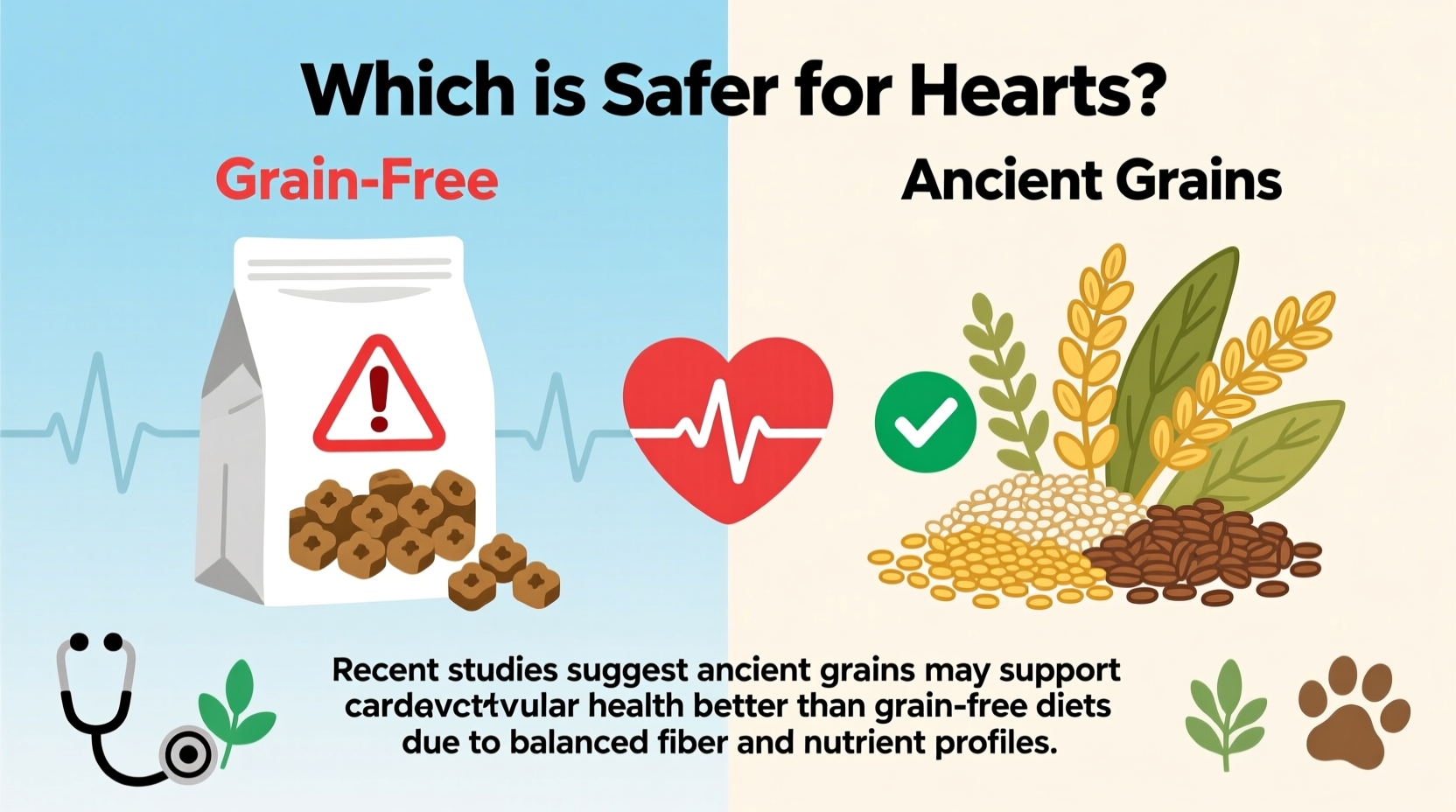
Grain-free dog foods gained popularity over the past decade due to consumer demand for “ancestral” or “Paleo-style” pet nutrition. These formulas typically replace grains like corn, wheat, and rice with legumes (such as peas, lentils, and chickpeas) and potatoes as primary carbohydrate sources. Proponents argue that dogs are carnivores at heart and don’t need grains. However, veterinary researchers now question whether removing grains—and replacing them with certain plant proteins—may inadvertently affect heart health.
In 2018, the FDA began investigating over 500 reports of DCM in dogs consuming grain-free diets, many of which were from otherwise healthy breeds not genetically predisposed to the disease. While no definitive causal relationship has been established, a strong statistical association emerged between grain-free diets high in legumes and taurine deficiency—a known contributor to DCM.
“While not all grain-free diets are problematic, those heavily reliant on legumes may interfere with taurine metabolism, potentially increasing cardiac risk in susceptible dogs.” — Dr. Lisa Freeman, Tufts University Clinical Nutritionist
Ancient Grains: A Safer Alternative?
Ancient grains such as quinoa, millet, sorghum, amaranth, and teff have entered the pet food market as nutrient-dense, digestible alternatives to modern refined grains. Unlike corn or wheat, these grains are often praised for their high fiber, protein, and antioxidant content. More importantly, they do not rely on legumes as fillers, reducing the risk of anti-nutritional factors that may impair amino acid absorption.
Unlike traditional grains that have undergone extensive hybridization, ancient grains remain closer to their original form. They offer complex carbohydrates with a lower glycemic index, supporting sustained energy without spiking insulin. From a cardiac standpoint, their inclusion in dog food may actually be protective due to better amino acid balance and reduced reliance on pulse ingredients linked to taurine depletion.
Tip: Look for dog foods where ancient grains are listed further down the ingredient panel—indicating they’re used as supplements rather than primary fillers.Comparing Nutritional Profiles: Grain-Free vs Ancient Grains
To understand the heart health implications, it’s essential to compare the core nutritional differences between these two diet types.
| Nutrient/Aspect | Grain-Free (Legume-Based) | Ancient Grain-Inclusive |
|---|---|---|
| Primary Carbohydrate Source | Peas, lentils, potatoes, tapioca | Quinoa, millet, sorghum, amaranth |
| Taurine Availability | Often low; may require supplementation | Generally adequate; better protein balance |
| Fiber Content | Moderate to high | High, with prebiotic benefits |
| Glycemic Index | Variable (potatoes = high) | Low to moderate |
| Digestibility | Lower in some dogs; gas common | Generally high; well-tolerated |
| Link to DCM Risk | Statistically associated (FDA data) | No current evidence of increased risk |
The table highlights a key concern: grain-free diets relying on legumes may compromise taurine synthesis even when meat is present. Taurine, an amino acid critical for heart function, is not synthesized efficiently by all dogs—particularly large breeds like Golden Retrievers, Labradors, and Great Danes. When legumes dominate the formula, they can bind sulfur-containing amino acids (methionine and cysteine), precursors to taurine, reducing bioavailability.
Real-World Case: Max, the Golden Retriever
Max, a 4-year-old male Golden Retriever, was fed a premium grain-free kibble featuring lamb and peas as primary ingredients. Despite regular vet visits and no genetic history of heart disease, he began showing lethargy, coughing, and difficulty breathing during walks. An echocardiogram revealed early-stage dilated cardiomyopathy. Blood tests confirmed low plasma taurine levels.
His veterinarian recommended switching to a diet containing animal-based proteins and ancient grains, along with taurine supplementation. Within six months, Max’s heart function improved significantly, and his taurine levels normalized. His owner noted better stool quality and sustained energy. While Max’s case isn’t proof of causation, it aligns with a growing number of similar cases reported in veterinary literature.
What Experts Are Saying About Diet and Canine Heart Health
Veterinary nutritionists emphasize that the issue isn’t necessarily grains themselves—but rather the substitution strategy used in grain-free formulations. The problem arises when legumes and potatoes make up 20–40% of the total recipe, displacing animal protein and altering amino acid profiles.
“We’ve seen dogs develop DCM on grain-free diets that are otherwise labeled ‘premium’ or ‘holistic.’ The missing piece is often taurine metabolism, influenced by ingredient sourcing, not just macronutrients.” — Dr. Jennifer Larsen, UC Davis Veterinary Medicine
Research from Tufts University indicates that breed, individual metabolism, gut microbiome, and cooking processes all influence how a dog utilizes nutrients. Some dogs thrive on grain-free diets; others deteriorate within months. There is no one-size-fits-all answer—but the precautionary principle suggests minimizing legume-heavy formulas unless medically necessary.
Action Plan: How to Choose a Heart-Safe Dog Food
Selecting the right food involves more than reading marketing claims. Follow this step-by-step guide to reduce cardiac risk while meeting your dog’s nutritional needs.
- Review the ingredient list: Avoid foods where peas, lentils, or potatoes appear in the top three ingredients. These suggest a legume-heavy base.
- Check for taurine: Even if not supplemented, look for whole animal proteins (beef, chicken, fish) as first ingredients, which naturally contain taurine.
- Look for ancient grains: Quinoa, millet, and sorghum are excellent sources of balanced amino acids and fiber without legume dependency.
- Consult your vet: Especially if your dog is a large or giant breed, ask about baseline taurine testing before switching diets.
- Monitor long-term: Watch for signs of fatigue, breathing issues, or exercise intolerance—early indicators of cardiac strain.
FAQ: Common Questions About Grain-Free and Ancient Grains
Is grain-free dog food bad for all dogs?
No—not all dogs will develop heart issues on grain-free diets. However, those consuming legume-heavy formulas, especially large breeds, are at higher risk. Dogs with existing heart conditions or taurine deficiency should avoid such diets unless under veterinary supervision.
Can ancient grains cause allergies?
True grain allergies in dogs are rare—less than 1% of skin and digestive issues are linked to grains. Most “grain sensitivities” are misdiagnosed; the real culprit is often protein sources like beef or dairy. Ancient grains are generally hypoallergenic and easier to digest than corn or wheat.
Do I need to supplement taurine if I feed ancient grains?
Not usually. Balanced diets with quality animal protein and ancient grains typically provide sufficient taurine. However, if your dog has a history of DCM or belongs to a high-risk breed, consult your vet about testing and supplementation.
Checklist: Evaluating a Heart-Healthy Dog Food
- ✅ Animal protein is the first ingredient (e.g., deboned chicken, salmon)
- ✅ Legumes (peas, lentils) are not in the top 3 ingredients
- ✅ Includes ancient grains like quinoa, millet, or sorghum
- ✅ No artificial preservatives or fillers (e.g., BHA, corn syrup)
- ✅ Manufactured by a company with in-house veterinary nutritionists
- ✅ AAFCO-compliant for life stage (adult, puppy, etc.)
- ✅ Positive track record with no recalls related to formulation issues
Conclusion: Prioritizing Heart Health Without Fear-Mongering
The debate between grain-free and ancient grain dog foods isn't about demonizing one category—it's about understanding nutritional trade-offs. While grain-free diets were marketed as superior, evidence now suggests they may pose unintended risks to heart health, particularly when formulated with excessive legumes. Ancient grains, by contrast, offer a balanced, digestible, and biologically appropriate source of carbohydrates that support overall wellness without compromising cardiac function.
There is no single “best” diet for every dog. But for most pets—especially those in high-risk categories—choosing a diet with high-quality animal protein, minimal legumes, and the inclusion of ancient grains represents a safer, science-backed approach to long-term heart health. Always consult your veterinarian before making major dietary changes, and consider periodic blood work to monitor taurine and cardiac markers.
💬 Your dog’s diet impacts more than just energy—it affects their heart. Share this information with fellow pet owners and start a conversation about smarter feeding choices today.








