Grain free dog food has surged in popularity over the past decade, often marketed as a healthier or more “natural” alternative to traditional kibble. Many pet owners believe that removing grains improves digestion, boosts energy, or even prevents allergies. But how much of this is supported by science—and what do veterinarians actually think?
The reality is complex. While grain free diets can benefit certain dogs, they are not universally superior. In fact, some studies suggest potential risks associated with long-term use. This article separates myth from fact, drawing on veterinary expertise, clinical research, and real-world outcomes to help you make informed decisions about your dog’s nutrition.
Myth 1: Dogs Are Carnivores and Can’t Digest Grains
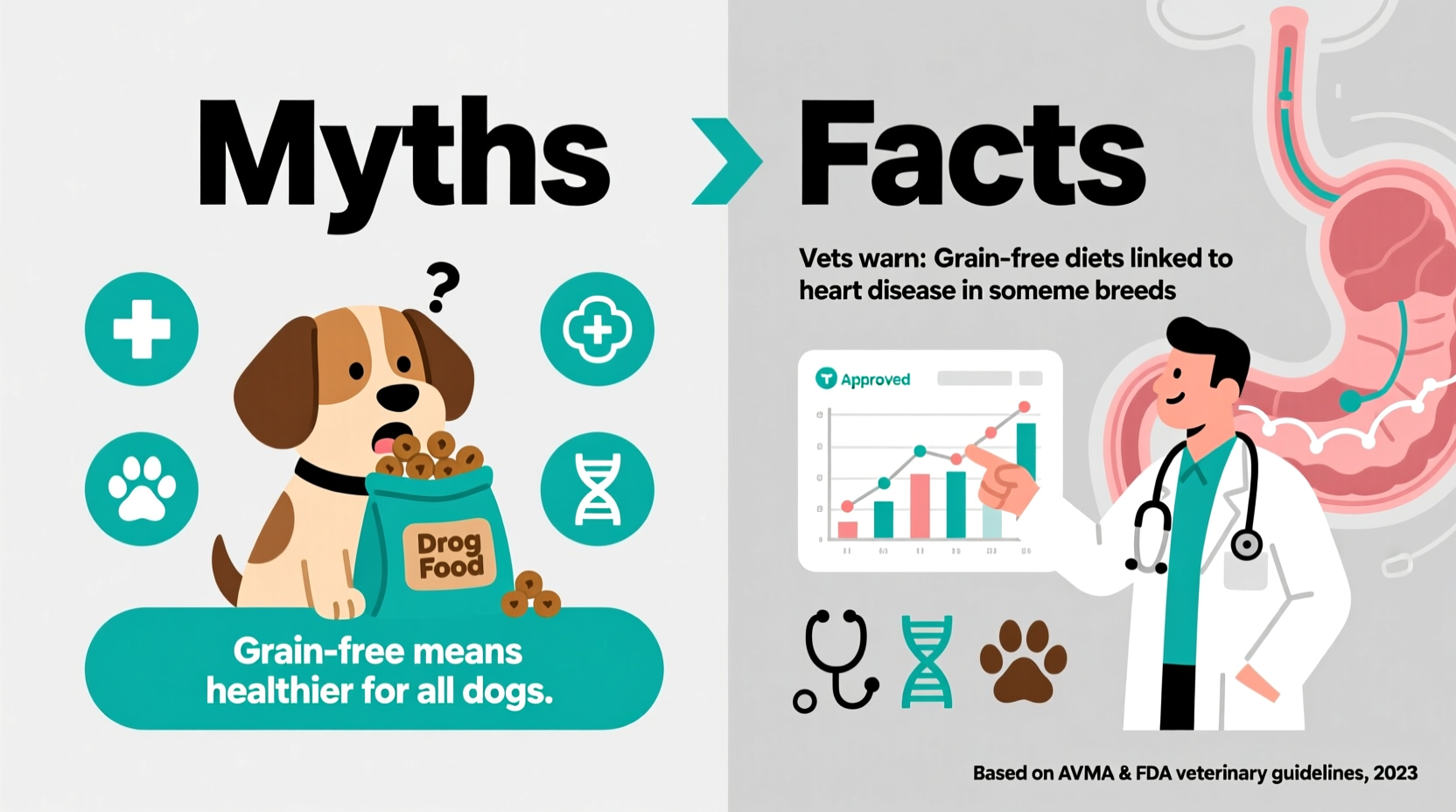
One of the most persistent myths is that dogs are obligate carnivores like cats and therefore cannot digest plant-based ingredients such as corn, wheat, or rice. This belief underpins the idea that grains are unnatural and harmful to canine health.
The truth is that dogs are omnivores with digestive systems well adapted to process both animal and plant matter. Thousands of years of domestication have led to genetic changes that enhance their ability to break down starches. A landmark study published in *Nature* identified that modern dogs possess multiple copies of the AMY2B gene, which produces an enzyme essential for starch digestion—something wolves (their ancestors) lack.
“Dogs evolved alongside humans, eating scraps that included bread, potatoes, and grains. Their biology reflects that adaptation.” — Dr. Sarah Thompson, DVM, Board-Certified Veterinary Nutritionist
Grains like brown rice, barley, and oats provide valuable carbohydrates, fiber, and essential nutrients such as B vitamins and iron. When properly cooked and formulated, they are highly digestible and contribute to balanced canine nutrition.
Tip: If your dog tolerates grains well, there's no nutritional need to eliminate them. Focus on overall diet quality, not just ingredient labels.Myth 2: Grain Free Diets Prevent Allergies
Many pet owners switch to grain free food believing it will resolve skin irritation, itching, or gastrointestinal issues caused by food allergies. However, veterinary dermatologists emphasize that true grain allergies in dogs are rare.
According to the American College of Veterinary Dermatology, less than 10% of canine food allergies involve grains. The most common allergens are proteins—particularly beef, dairy, chicken, and eggs. A dog reacting to commercial food may be sensitive to a meat ingredient, not the grain.
In many cases, symptoms attributed to grain intolerance are actually due to poor-quality fillers, artificial additives, or inconsistent formulations—not the presence of grains themselves.
A proper diagnosis requires an elimination diet lasting 8–12 weeks, supervised by a veterinarian. Jumping to a grain free option without diagnostic testing can delay identifying the real culprit.
Common Food Allergens in Dogs (Ranked by Prevalence)
| Allergen | Estimated Prevalence |
|---|---|
| Beef | 34% |
| Dairy | 17% |
| Chicken | 15% |
| Eggs | 11% |
| Wheat | 6% |
| Soy | 5% |
| Corn | 4% |
Fact: Some Dogs Benefit from Grain Free Diets
While most dogs tolerate grains well, there are specific medical conditions where a grain free or low-grain diet may be beneficial:
- Diagnosed grain sensitivity: Rare but possible. Requires veterinary confirmation via elimination diet.
- High-energy working dogs: May benefit from higher protein and fat content found in some grain free formulas.
- Carbohydrate-responsive diarrhea: A small subset of dogs with chronic GI issues may improve on low-fiber, grain free diets.
Veterinarians sometimes recommend grain free food for dogs with confirmed inflammatory bowel disease (IBD) or those needing a novel protein diet. However, the key factor isn’t the absence of grains—it’s the overall formulation and digestibility.
The FDA Investigation: Grain Free Food and Canine Dilated Cardiomyopathy (DCM)
In 2018, the U.S. Food and Drug Administration (FDA) began investigating a potential link between grain free diets and an increased incidence of dilated cardiomyopathy (DCM), a serious heart condition previously considered rare in non-genetic cases.
As of 2023, the FDA has collected over 1,100 reports of DCM in dogs eating grain free foods, many containing legumes (like peas and lentils) and potatoes as primary ingredients. While no definitive cause has been proven, the pattern raises concern among veterinary cardiologists.
The current theory is that certain grain free formulations may lead to taurine deficiency—an amino acid critical for heart function—even in breeds not genetically predisposed to DCM. Taurine is naturally found in animal tissues, and some plant-based ingredients may interfere with its absorption or synthesis.
“We’ve seen otherwise healthy golden retrievers develop heart failure linked to diet. When we switch them back to a balanced, grain-inclusive food and supplement taurine, some show improvement.” — Dr. James Lee, DVM, Veterinary Cardiologist
It’s important to note that not all grain free foods carry this risk. The issue appears tied more to ingredient sourcing and formulation than the mere absence of grains. However, the association has prompted many vets to caution against routine use of grain free diets without medical justification.
Myth 3: Grain Free Means Higher Protein and Better Quality
Marketing often portrays grain free kibble as being packed with premium meats and superior nutrition. In reality, removing grains doesn’t automatically mean higher quality. To maintain texture and binding in kibble, manufacturers often replace grains with starchy legumes and potatoes—which can be high in carbohydrates and low in essential amino acids.
Some grain free brands rely heavily on plant-based proteins that don’t provide the full spectrum of amino acids dogs need. Meanwhile, high-quality grain-inclusive foods may offer better protein balance using real meat, moderate grains, and added supplements.
Nutritional adequacy should be judged by AAFCO compliance, ingredient bioavailability, and clinical outcomes—not marketing claims.
Tip: Look beyond the bag label. Check if the food meets AAFCO nutrient profiles and whether the company employs veterinary nutritionists.Choosing the Right Diet: A Step-by-Step Guide
Selecting the best food for your dog shouldn't be based on trends or fear-driven marketing. Follow this evidence-based approach:
- Assess your dog’s health status. Is there a history of allergies, digestive issues, or heart conditions? Consult your vet before making major dietary changes.
- Review current symptoms. Itching, gas, loose stools, or lethargy may indicate food intolerance—but not necessarily to grains.
- Read the full ingredient list. Prioritize named animal proteins (e.g., “chicken meal,” not “meat meal”) and avoid excessive legumes or unnamed fillers.
- Check for AAFCO statement. Ensure the food is formulated to meet nutritional standards for your dog’s life stage.
- Monitor response over time. Give any new food at least 6–8 weeks to evaluate changes in coat, energy, stool quality, and weight.
- Re-evaluate periodically. Nutritional needs change with age, activity level, and health conditions.
Mini Case Study: Max, the Golden Retriever with Heart Issues
Max, a 5-year-old male golden retriever, was brought to a specialty clinic after collapsing during a walk. An echocardiogram revealed severe dilated cardiomyopathy (DCM), unusual for his breed outside of known genetic lines.
His diet consisted of a popular grain free brand featuring lamb and peas as main ingredients. Blood tests showed critically low taurine levels. After switching to a grain-inclusive, taurine-rich diet and starting supplementation, Max’s heart function improved significantly within six months.
His veterinarian concluded that the legume-heavy formula likely contributed to taurine deficiency, triggering DCM. This case highlights how well-intentioned feeding choices can have unintended consequences when not guided by science.
Checklist: Questions to Ask Before Choosing a Grain Free Diet
- Has my dog been diagnosed with a grain allergy or sensitivity?
- Does the food contain high levels of peas, lentils, or potatoes?
- Is the brand transparent about sourcing and testing?
- Does the manufacturer employ board-certified veterinary nutritionists?
- Has my vet approved this diet given my dog’s breed and health history?
- Is the food AAFCO-compliant for my dog’s life stage?
- Am I choosing this food because of symptoms—or because of marketing?
Frequently Asked Questions
Can grain free dog food cause heart problems?
Potential links exist between certain grain free diets—especially those high in legumes and potatoes—and dilated cardiomyopathy (DCM). While not all grain free foods pose a risk, the FDA and veterinary cardiologists advise caution, particularly for breeds like golden retrievers, cocker spaniels, and whippets.
Are grains bad for dogs with diabetes?
Not inherently. Some grains have a lower glycemic index than alternatives like white potato. What matters most is the overall carbohydrate content, fiber level, and consistency of meals. Veterinarians often manage diabetic dogs effectively with balanced grain-inclusive diets tailored to blood glucose control.
Should I switch my dog to grain free if they have itchy skin?
Not without veterinary guidance. Itchy skin is more commonly caused by environmental allergies or protein sensitivities than grains. An unguided switch may mask symptoms without solving the root problem. A proper elimination diet under veterinary supervision is the gold standard for diagnosing food-related skin issues.
Conclusion: Let Science, Not Hype, Guide Your Choice
Grain free dog food isn’t inherently dangerous, nor is it a miracle solution. For most dogs, a well-formulated, balanced diet that includes grains is safe, nutritious, and cost-effective. The decision to go grain free should be based on medical need—not marketing narratives.
Veterinarians consistently emphasize that individualized care, ingredient quality, and scientific validation matter far more than buzzwords on a bag. If your dog has specific health concerns, work with your vet to choose a diet that addresses those needs—with evidence, not assumptions.
💬 Have experience with grain free diets—good or bad? Share your story in the comments to help other pet owners make informed choices.








