Choosing the right family dog involves more than just looks or popularity. For many households, shedding and trainability are two of the most critical factors—especially when balancing cleanliness, time commitment, and compatibility with children. Golden Retrievers and Labrador Retrievers consistently rank among the top family dogs in North America and Europe, but how do they really compare when it comes to shedding and training?
While both breeds share a reputation for friendliness, intelligence, and loyalty, subtle yet significant differences exist in their grooming needs and learning styles. Understanding these distinctions can help families make an informed decision based on lifestyle, patience level, and long-term maintenance.
Shedding: Coat Structure and Grooming Demands
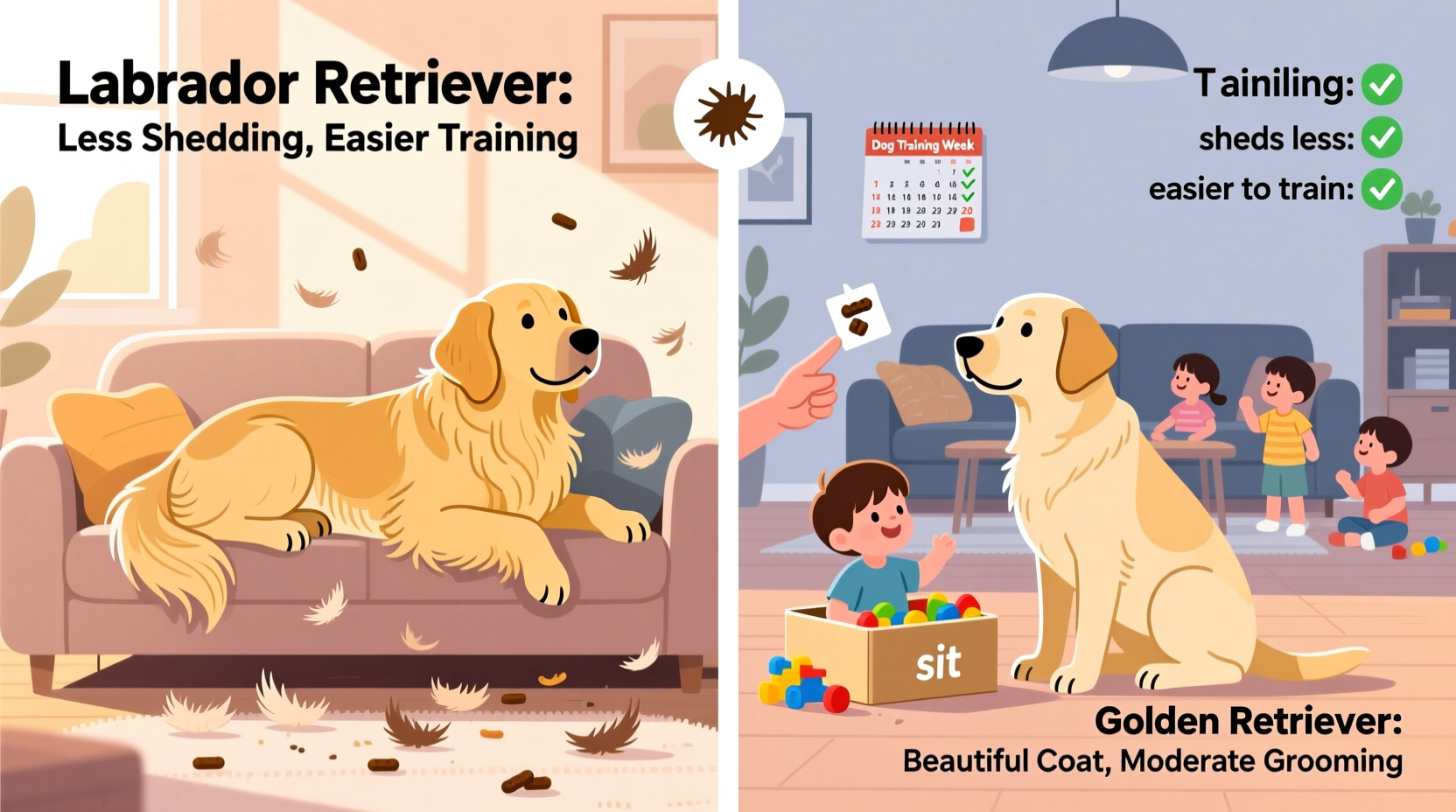
The amount a dog sheds is primarily determined by coat type, undercoat density, and seasonal shedding patterns. Both Golden Retrievers and Labradors have double coats designed for water resistance and temperature regulation, but their textures and maintenance requirements differ noticeably.
Golden Retrievers possess a long, flowing outer coat with a dense, soft undercoat. This luxurious fur provides excellent insulation but also traps loose hair, leading to significant year-round shedding. During spring and fall, they \"blow\" their undercoat—shedding heavily over several weeks. Without daily brushing, tangles and mats form quickly, especially behind the ears, under the legs, and along the belly.
In contrast, Labradors have a shorter, denser outer coat that lies flat against the body. Their undercoat is thick but not as profuse as a Golden’s. While Labs do shed—particularly during seasonal changes—their shorter hair is less prone to matting and easier to manage. Most owners find that weekly brushing suffices during non-shedding periods, though bi-weekly sessions are recommended during peak shedding seasons.
Tip: Use a deshedding tool like the FURminator twice a week during heavy shedding seasons to reduce loose hair by up to 90%.Shedding Comparison Table
| Feature | Golden Retriever | Labrador Retriever |
|---|---|---|
| Coat Length | Long, wavy | Short, straight |
| Undercoat Density | Dense, full | Moderately dense |
| Year-Round Shedding | High | Moderate to high |
| Seasonal Blowout | Pronounced (spring/fall) | Moderate (spring only) |
| Brushing Frequency | Daily recommended | 2–3 times per week |
| Bathing Needs | Every 6–8 weeks | Every 6–10 weeks |
Despite common misconceptions, neither breed is hypoallergenic. Both produce dander and saliva proteins that trigger allergies. However, because Golden Retriever hair tends to stick to furniture and clothing more visibly due to its length, many perceive them as shedding more—even if the actual volume of lost fur is comparable.
Trainability: Intelligence, Focus, and Motivation
When evaluating trainability, experts consider responsiveness to commands, willingness to please, consistency in learning, and ability to focus amid distractions. Both Golden Retrievers and Labradors excel in obedience and are frequently used as service, therapy, and search-and-rescue dogs—proof of their cognitive capabilities.
According to the American Kennel Club (AKC), both breeds rank in the top 10 for working intelligence. However, subtle behavioral tendencies influence how smoothly training progresses in a home environment.
Golden Retrievers are known for their sensitivity and eagerness to please. They respond exceptionally well to positive reinforcement, such as praise, treats, and play. However, this sensitivity means harsh corrections or inconsistent handling can lead to anxiety or withdrawal. Goldens tend to mature mentally around 2–3 years of age, so early training requires patience and repetition.
Labs, while equally intelligent, often display a bolder, more energetic demeanor during puppyhood. They are highly food-motivated, making them ideal candidates for reward-based training. Many trainers note that Labs pick up basic commands faster than Goldens, particularly in group classes or distracting environments. That said, their enthusiasm can sometimes manifest as impulsivity—jumping, mouthing, or pulling on leash—requiring firm but kind guidance.
“Labradors often learn ‘sit’ and ‘stay’ quicker, but Goldens maintain focus longer once trained. It’s not about intelligence—it’s about temperament driving performance.” — Dr. Karen Becker, Veterinary Behaviorist
Real-Life Training Scenario: The Park Test
Consider a real-world example: Two families begin training at six months old. The Golden Retriever, Max, learns “come” reliably in the backyard but hesitates at the park when squirrels appear. His owner uses a long leash and gradual exposure, reinforcing recall with high-value treats. After eight weeks, Max responds 85% of the time off-leash in low-distraction areas.
The Labrador, Bella, masters “come” within four weeks, even in mild distractions. But she occasionally ignores the cue when excited, requiring consistent follow-through. Her owner implements a “check-in” habit—rewarding eye contact every few minutes—which improves reliability. By five months post-training, Bella achieves 90% compliance.
This scenario illustrates that Labs may progress faster initially, but Goldens often develop steadier long-term habits with consistent practice. The difference lies not in capability, but in approach and energy management.
Step-by-Step Guide to Early Obedience Training (Ages 8–20 Weeks)
Regardless of breed, early socialization and foundational training are essential. Follow this timeline to build good habits from the start:
- Weeks 8–10: Begin housebreaking using a crate and scheduled potty breaks. Introduce name recognition and “sit” using small treats.
- Weeks 11–12: Start leash walking indoors. Practice “sit” and “stay” for 3–5 seconds. Expose your puppy to new sounds, surfaces, and people safely.
- Weeks 13–16: Enroll in a positive-reinforcement puppy class. Teach “leave it” and “drop it” to prevent resource guarding. Continue socialization with vaccinated dogs.
- Weeks 17–20: Practice recall in fenced yards. Increase “stay” duration to 10 seconds. Begin grooming routines (brushing, nail trims) to build tolerance.
For Golden Retrievers, keep sessions short (5–10 minutes) and calm to avoid overwhelming their sensitive nature. For Labs, incorporate movement and games into training to channel their energy productively.
Tip: End every training session on a positive note—even if it means going back to an easy command your dog knows well.Grooming Checklist: Maintaining a Clean, Healthy Coat
To minimize shedding and keep your dog comfortable, follow this practical checklist:
- ✔ Brush your Golden Retriever daily; use a slicker brush and metal comb to remove tangles.
- ✔ Brush your Labrador 2–3 times weekly with a rubber curry brush or deshedding tool.
- ✔ Bathe only when necessary—over-bathing strips natural oils and increases shedding.
- ✔ Trim nails monthly to prevent discomfort and gait issues.
- ✔ Clean ears weekly, especially after swimming, to prevent infections.
- ✔ Use a high-quality diet rich in omega-3 fatty acids to support skin and coat health.
- ✔ Vacuum living areas frequently and invest in a HEPA-filter vacuum to reduce airborne dander.
Professional grooming every 8–12 weeks can help manage shedding, particularly for Goldens. While some owners opt for clipping, veterinarians generally advise against shaving double-coated breeds, as it disrupts thermoregulation and may cause permanent coat damage.
Family Fit: Matching Dog Traits to Household Dynamics
Ultimately, the choice between a Golden Retriever and a Labrador should align with your family’s daily routine, activity level, and tolerance for mess.
Families with young children often appreciate the gentle, patient nature of Golden Retrievers. Their calm demeanor makes them excellent companions for quiet play and reading time. However, their higher grooming demands mean someone must commit to daily brushing—a potential challenge for busy parents.
Labs thrive in active homes. They love outdoor adventures, swimming, and fetch games. Their lower-maintenance coat suits families who want a dog that’s easy to clean up after. However, their boisterous puppy phase can be overwhelming for very small children unless properly managed through training.
One consideration often overlooked is coat color. Light-colored Goldens show dirt and mud more easily than darker Labs, influencing perceived cleanliness. Black Labs, in particular, hide outdoor messes better, making them a favorite among rural and suburban families.
Frequently Asked Questions
Do Labradors shed less than Golden Retrievers?
Yes, Labradors generally shed less in terms of visible maintenance. While both breeds shed year-round, the Labrador’s shorter coat releases hair more cleanly and doesn’t mat as easily. Goldens require more frequent brushing to control shedding and prevent tangles.
Which breed is easier to potty train?
There is little difference in innate ability to be housebroken. Success depends more on consistency, routine, and supervision than breed. Both respond well to crate training and positive reinforcement. Some owners report Labs catch on slightly faster due to their food motivation, but individual personality plays a larger role than breed-wide trends.
Can either breed live in an apartment?
Both breeds can adapt to apartment living if their exercise and mental stimulation needs are met. However, without daily walks, play sessions, and enrichment activities, they may become destructive. Labs may be slightly better suited due to their lower grooming demands, but space alone shouldn’t be the deciding factor—lifestyle fit matters more.
Conclusion: Making the Right Choice for Your Home
The debate between Golden Retrievers and Labradors isn’t about which breed is superior, but which aligns best with your family’s priorities. If minimizing shedding and reducing grooming time is essential, the Labrador has a clear edge. Their short, water-resistant coat is simpler to maintain and less likely to leave clumps of fur on furniture.
When it comes to training, both breeds are highly capable, but their paths to success differ. Labs often learn faster in structured settings, while Goldens shine in consistency and emotional attunement. A patient, gentle household may find the Golden’s sensitivity a strength; an active, playful family might prefer the Labrador’s exuberance.
No dog is truly low-shedding, and no puppy is perfectly obedient from day one. What matters most is commitment—to brushing, to training, to understanding your pet as an individual. With the right care, both breeds will bring years of joy, loyalty, and unforgettable moments to your family.
💬 Have experience with a Golden or Lab? Share your insights below. Your story could help another family make the perfect choice.








