Choosing a family dog is one of the most thoughtful decisions a household can make—especially when young children are involved. Among the most popular breeds in North America, Golden Retrievers and Labrador Retrievers consistently top adoption lists. Both are known for their friendliness, intelligence, and loyalty. Yet beneath their similar reputations lie subtle but meaningful differences in temperament that can significantly impact family life.
Understanding these distinctions helps parents match a dog’s personality with their home environment, parenting style, and children’s ages. While both breeds are excellent with kids, how they interact, respond to stress, and adapt to household dynamics varies in ways that matter over time. This guide explores those nuances, offering practical insights for families deciding between a Golden Retriever and a Labrador Retriever.
Temperament Overview: Key Similarities
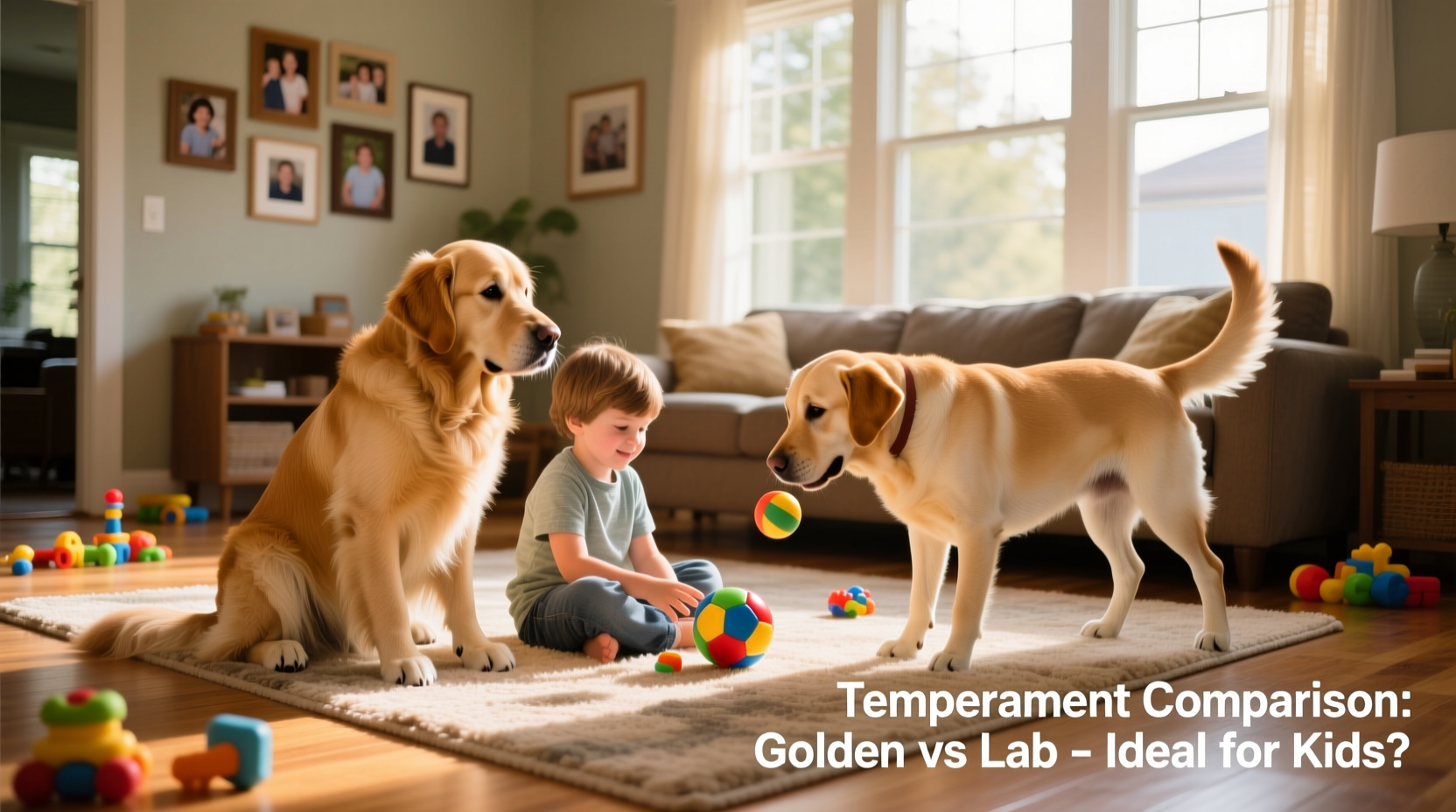
Before diving into differences, it's important to recognize what unites these two breeds. Both Goldens and Labs are classified as gun dogs or sporting breeds, originally bred for retrieving game during hunts. Their shared working background contributes to several overlapping traits:
- Sociable nature: Both breeds thrive on human interaction and rarely show aggression toward people.
- High trainability: They rank among the most intelligent dog breeds, eager to please and quick to learn commands.
- Patience with children: When properly socialized, both tolerate rough handling from toddlers and younger kids better than many other breeds.
- Playfulness: They maintain a puppy-like energy well into adulthood, making them ideal companions for active families.
These commonalities make either breed an outstanding choice for homes with children. However, subtle behavioral tendencies begin to surface when observing how each breed responds to stimuli, handles excitement, and bonds with family members.
Golden Retriever Temperament: Gentle and Sensitive
Golden Retrievers are often described as “soft-hearted.” Their emotional sensitivity is one of their defining characteristics. They form deep attachments to family members and are acutely attuned to emotional shifts in the household. A Golden may nuzzle a crying child or quietly follow a parent who seems upset.
This emotional intelligence makes them exceptional therapy dogs and intuitive companions for children with anxiety or special needs. However, this same sensitivity means they can be easily overwhelmed by loud environments, inconsistent discipline, or chaotic routines. Sudden yelling, frequent changes in schedule, or overly boisterous play can stress a Golden more than a Lab.
Tip: Golden Retrievers respond best to positive reinforcement. Harsh corrections or raised voices can damage trust and lead to withdrawal.Goldens also tend to mature emotionally at a slower pace. While they may look like full-grown dogs by one year old, many don’t settle into calm behavior until age two or three. During this extended puppyhood, they require consistent training and mental stimulation to prevent boredom-related chewing or attention-seeking behaviors.
Labrador Retriever Temperament: Energetic and Resilient
Labs are often characterized as the “clowns” of the dog world—full of boundless energy, curiosity, and resilience. Bred for long hours in the field under challenging conditions, they possess a natural toughness and adaptability that serves them well in busy households.
Where Goldens might retreat from loud noises or sudden movements, Labs typically investigate with enthusiasm. They’re less likely to be startled by a toddler’s shriek or a slammed door. This makes them a strong fit for homes with very young children or unpredictable daily rhythms.
However, their high drive and love of food can lead to impulsivity. Labs are notorious for jumping up, snatching food off counters, or barreling through open doors. Without firm boundaries early on, these behaviors can become problematic as the dog grows larger and stronger.
“Labradors have a ‘go with the flow’ attitude that makes them adaptable, but they need structure. Without it, their enthusiasm can turn into chaos.” — Dr. Karen Becker, Veterinary Behaviorist
While equally affectionate, Labs often express love through physical engagement—fetching, nudging, or leaning against people—whereas Goldens lean toward quiet companionship. This difference shapes how each breed interacts with kids: Labs initiate play; Goldens wait to be invited.
Comparing Family Compatibility
The ideal match depends on your family’s lifestyle, tolerance for activity level, and ability to provide consistent training. The following table summarizes key temperament traits relevant to homes with children:
| Trait | Golden Retriever | Labrador Retriever |
|---|---|---|
| Energy Level | Moderate to high (peaks in adolescence) | Consistently high (requires daily outlet) |
| Sensitivity to Noise | Higher – may startle or withdraw | Lower – generally unfazed |
| Response to Discipline | Best with gentle correction | Responds well to clear rules |
| Kid Interaction Style | Calm, patient, follows lead | Initiates play, enthusiastic |
| Trainability | Excellent with consistency | Excellent, but easily distracted |
| Independence | Low – prefers constant companionship | Moderate – can handle short alone periods |
| Grooming Needs | High – regular brushing required | Moderate – sheds heavily seasonally |
This comparison highlights that while both breeds are kid-friendly, they suit different types of homes. A quieter, structured household may find a Golden’s calm demeanor more harmonious. A lively, outdoor-oriented family might appreciate a Lab’s ruggedness and zest for adventure.
Real-Life Scenario: Choosing Based on Temperament
The Thompson family had two young boys, ages 3 and 5, and lived near a lake where they spent weekends boating and swimming. They wanted a dog that could join outdoor activities and handle the noise and movement of active kids. After researching both breeds, they chose a yellow Labrador named Scout.
Scout adapted quickly to the energetic household. He loved retrieving sticks from the water, playing chase in the yard, and even sitting calmly in the boat. His thick coat handled wet conditions well, and his resilient temperament meant he wasn’t startled when the boys ran up shouting or dropped toys near him.
In contrast, the Rivera family, with a 7-year-old daughter diagnosed with mild anxiety, opted for a Golden Retriever named Daisy. Daisy formed an immediate bond with the girl, often lying beside her during homework or resting her head on the child’s lap when she seemed upset. The family appreciated Daisy’s gentle presence and noted that she avoided overwhelming situations instinctively.
Neither choice was objectively better—the right fit depended on the family’s unique dynamics. These examples illustrate how temperament influences day-to-day life beyond basic obedience or cuteness.
Action Plan: How to Choose the Right Breed for Your Kids
Selecting between a Golden and a Lab shouldn’t be based solely on popularity or appearance. Follow this step-by-step process to ensure long-term compatibility:
- Assess your household’s energy level. Is your home generally calm or constantly active? High noise and movement favor Labs; quieter homes may suit Goldens better.
- Evaluate your children’s ages and behavior. Toddlers may unintentionally provoke sensitive dogs. If you have very young kids, consider whether your chosen breed can handle unpredictability.
- Consider training commitment. Both breeds need early socialization and obedience training, but Labs require more boundary-setting due to their impulsivity.
- Think about outdoor access. Do you hike, swim, or spend time outdoors? Labs excel in water-based activities; Goldens enjoy walks and games but may lack the same endurance.
- Meet actual dogs of both breeds. Visit breeders, shelters, or dog parks to observe real-world behavior. Interact with adult dogs and puppies to gauge reactions to children.
- Discuss long-term care. Goldens need more grooming; both breeds are prone to hip issues. Factor in veterinary costs and time investment.
Frequently Asked Questions
Which breed is better for toddlers?
Both breeds are safe with toddlers when supervised, but Labrador Retrievers tend to be more tolerant of unpredictable movements and loud noises. Their sturdier build and higher pain threshold make them slightly more resilient to accidental bumps or pulls. That said, Golden Retrievers are equally patient if raised with young children and trained early.
Do Golden Retrievers get along better with older kids?
Yes, especially in homes where emotional connection matters. Older children often appreciate the loyal, affectionate nature of Goldens. These dogs thrive in relationships built on mutual respect and quiet companionship, which aligns well with pre-teens and teens.
Are Labs harder to train than Goldens?
Not necessarily harder, but different. Labs are just as intelligent but more easily distracted by food and activity. They benefit from shorter, high-reward training sessions. Goldens are more focused and responsive to praise, making them slightly easier for first-time dog owners.
Checklist: Preparing for Your Family Dog
- ✔ Research reputable breeders or rescue organizations
- ✔ Schedule meet-and-greets with parent dogs (if applicable)
- ✔ Puppy-proof your home (secure cords, lock cabinets)
- ✔ Enroll in puppy kindergarten classes
- ✔ Establish a feeding and walking routine
- ✔ Designate a quiet space for the dog to retreat
- ✔ Teach children how to approach and pet gently
- ✔ Set up vet visits for initial vaccinations and checkups
Final Thoughts: It’s About Fit, Not Perfection
No single breed is universally ideal for families with kids. The difference between a Golden Retriever and a Labrador Retriever isn’t about superiority—it’s about alignment with your family’s rhythm, values, and lifestyle. One isn’t calmer, smarter, or kinder across the board. Instead, each offers a distinct flavor of companionship.
Golden Retrievers bring emotional depth and serene loyalty. They enrich homes that value quiet connection and consistent routines. Labrador Retrievers offer joyful resilience and endless enthusiasm, perfect for families embracing mess, motion, and outdoor adventure.
Regardless of breed, the most important factors remain the same: early socialization, consistent training, and a commitment to meeting the dog’s physical and emotional needs. When those foundations are in place, both Goldens and Labs grow into devoted, trustworthy members of the family.
💬 Have experience with a Golden or Lab in a family setting? Share your story in the comments to help others make informed decisions.








