
Rhinestone brooches are timeless accessories—elegant, expressive, and often sentimental. Whether passed down through generations or recently acquired from a vintage boutique, these pieces deserve careful attention. Over time, dust, oils, and environmental exposure can dull their brilliance. While professional cleaning is an option, many delicate rhinestone pins can be safely cleaned at home with the right approach. The key lies in using gentle, non-abrasive methods that preserve both the stones and the metal base. This guide provides practical, tested techniques to restore your brooch’s sparkle without risking damage.
Understanding Your Rhinestone Brooch
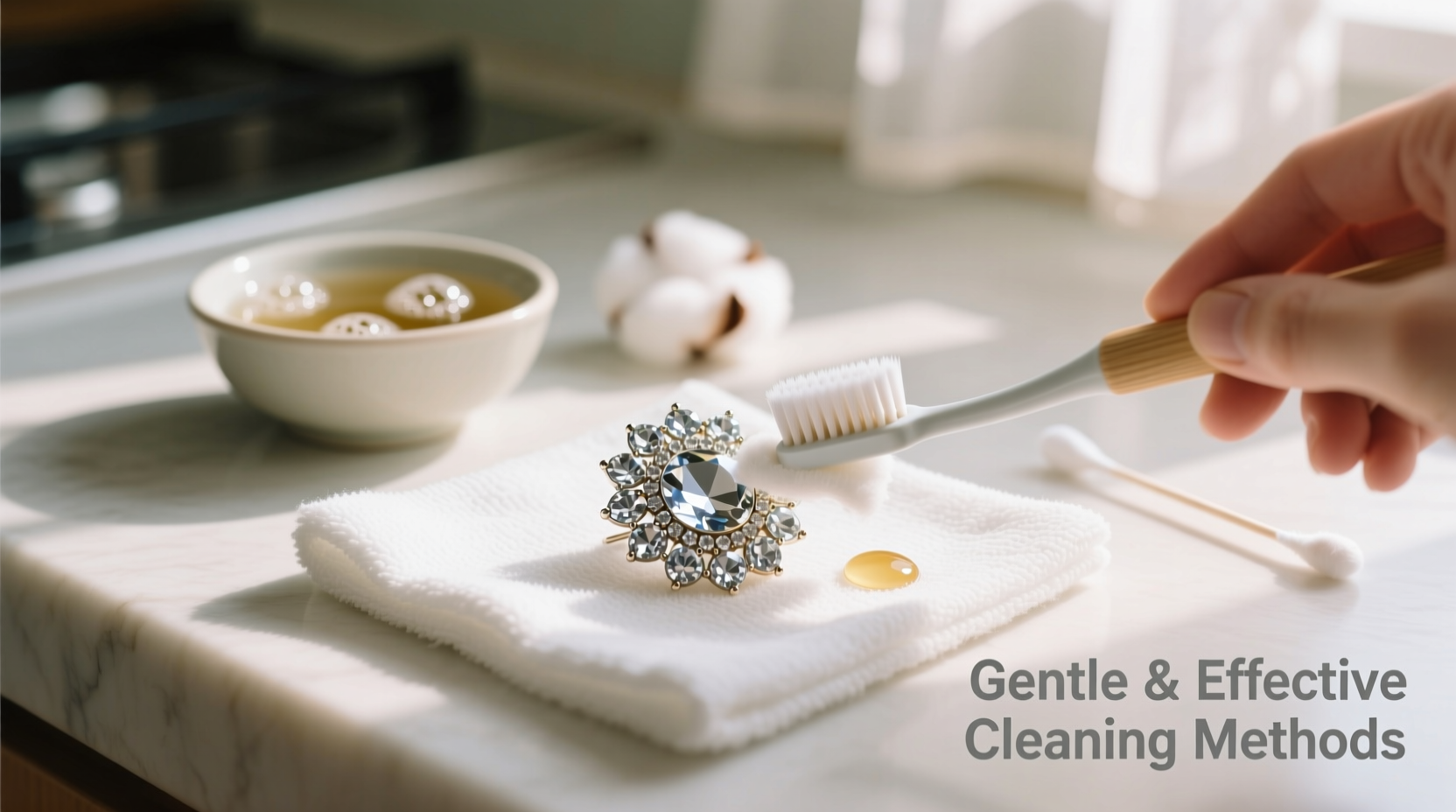
Before cleaning, it's essential to understand what you're working with. Rhinestones may be made from glass, acrylic, or crystal (such as Swarovski), each with different sensitivities. The setting—whether silver, gold-plated, brass, or base metal—also affects how the piece should be handled. Older brooches may have glued-in stones or fragile backings, making them more vulnerable to moisture and pressure.
Additionally, some vintage rhinestones are coated with aurora borealis (AB) finishes that refract light in rainbow hues. These coatings can wear off if exposed to harsh chemicals or excessive scrubbing. Recognizing these variables helps you choose the safest cleaning method.
“Many antique jewelry restorers emphasize that over-cleaning causes more damage than under-cleaning. Patience and precision matter most.” — Lila Chen, Vintage Jewelry Conservator
Step-by-Step Guide: Safe Home Cleaning Process
Cleaning a delicate rhinestone brooch requires a slow, deliberate process. Rushing or using aggressive tools can loosen settings or cloud stones. Follow this timeline for best results:
- Inspect the brooch: Use a magnifying glass to check for loose stones, cracks, or corrosion on the metal. If any structural issues are present, avoid submerging the piece.
- Prepare your workspace: Lay down a soft towel on a clean, dry surface. Have all supplies ready before beginning.
- Dust gently: Use a clean, dry microfiber cloth or a soft makeup brush to remove surface dust. Avoid paper towels or rough fabrics.
- Create a mild cleaning solution: Mix one cup of lukewarm distilled water with two drops of pH-neutral dish soap (avoid lemon-scented or degreasing formulas).
- Spot-clean with a cotton swab: Dip a cotton swab into the solution, then squeeze out excess liquid. Gently wipe around each stone and along crevices. Never soak the brooch unless you’re certain all components are stable.
- Rinse minimally: Dampen a second swab with plain distilled water and lightly go over cleaned areas to remove soap residue.
- Dry thoroughly: Use a lint-free cloth to pat dry. Let air-dry upright on a tissue for 30 minutes, ensuring no moisture remains beneath the setting.
Do’s and Don’ts: Best Practices for Delicate Care
| Do | Don't |
|---|---|
| Use soft brushes like toothbrushes labeled \"extra soft\" | Use ultrasonic cleaners—vibrations can dislodge glued stones |
| Clean infrequently—once every 6–12 months is sufficient | Soak brooches with glued-in stones; moisture weakens adhesives |
| Store in padded boxes away from humidity | Wear while applying perfume, lotion, or hairspray |
| Test cleaning solutions on a small area first | Use ammonia, bleach, vinegar, or alcohol-based cleaners |
| Handle by the metal frame, not the stones | Scrub aggressively—even soft bristles can scratch coatings |
Real Example: Restoring a Heirloom Brooch
Maria inherited a 1950s rhinestone peacock brooch from her grandmother. Though beautiful, it appeared cloudy and lacked luster. Fearing damage, she avoided cleaning it for years. After researching safe methods, she followed the spot-cleaning technique using distilled water and a single drop of Dawn Free & Clear detergent. Using a brand-new extra-soft toothbrush, she carefully brushed around each stone, taking nearly 45 minutes for the entire piece. She dried it meticulously with a spectacles-cleaning cloth. The result? A dramatic restoration of brilliance—without dislodging a single stone. Maria now cleans it lightly every eight months and stores it in a lined jewelry box with a silica gel packet to control moisture.
Alternative Methods for Different Materials
Not all rhinestone brooches respond to the same treatment. Consider these tailored approaches based on construction:
- Acrylic rhinestones: More sensitive to heat and solvents. Stick to dry brushing or minimal damp wiping. Never use steam.
- Crystal stones (e.g., Swarovski): Can tolerate slightly more moisture but still require gentle handling. Avoid soaking.
- Gold or silver plated settings: Prone to tarnishing. Do not use polishing cloths directly on stones. Instead, clean metal areas with a jewelry-safe pen only on exposed surfaces.
- Fabric-backed brooches: These often contain glued stones and should never get wet. Use a dry microfiber cloth or static-reducing brush.
Essential Care Checklist
Keep your rhinestone brooch looking its best with this simple maintenance checklist:
- ☐ Inspect for loose stones monthly
- ☐ Dust gently with a microfiber cloth weekly
- ☐ Perform deep cleaning every 6–12 months
- ☐ Store flat in a padded, anti-tarnish box
- ☐ Include a desiccant pack to reduce humidity
- ☐ Remove before swimming, showering, or exercising
- ☐ Avoid stacking with other jewelry to prevent scratches
FAQ: Common Questions About Rhinestone Brooch Care
Can I use jewelry wipes on my rhinestone brooch?
Only if they are specifically labeled safe for costume jewelry and do not contain alcohol or acetone. Even then, avoid direct contact with the stones. It's safer to use a dry microfiber cloth instead.
Why does my brooch look cloudy after cleaning?
Cloudiness may result from mineral deposits (if tap water was used), residual soap film, or a degraded coating on older rhinestones. Always rinse with distilled water and ensure complete drying. If cloudiness persists, the finish may be worn and irreversible.
How can I tell if my rhinestones are glued in?
If the stones sit flush within a flat metal rim and lack visible prongs, they’re likely glued. You might also notice slight gaps or adhesive seepage under magnification. When in doubt, assume glue is present and avoid moisture.
Preserving Beauty Through Mindful Maintenance
A rhinestone brooch is more than an accessory—it’s a blend of artistry and memory. With thoughtful care, its radiance can endure for decades. The methods outlined here prioritize preservation over quick fixes, recognizing that gentleness yields longer-lasting results than force. By understanding your piece’s materials, following a careful cleaning routine, and storing it properly, you honor both its craftsmanship and emotional value.
💬 Have a cherished brooch you’ve successfully cleaned at home? Share your story in the comments and inspire others to care for their heirlooms with confidence.








