When it comes to embellishing garments, accessories, or home décor, the choice between flower appliques and rhinestones can dramatically influence the final aesthetic. Both elements bring texture, dimension, and personality to a design—but they do so in fundamentally different ways. While rhinestones are celebrated for their brilliance and light-catching properties, flower appliques offer softness, depth, and organic charm. Understanding how each contributes to “sparkle”—both literal and stylistic—is key to making an informed creative decision.
The Nature of Sparkle: Defining What Shines
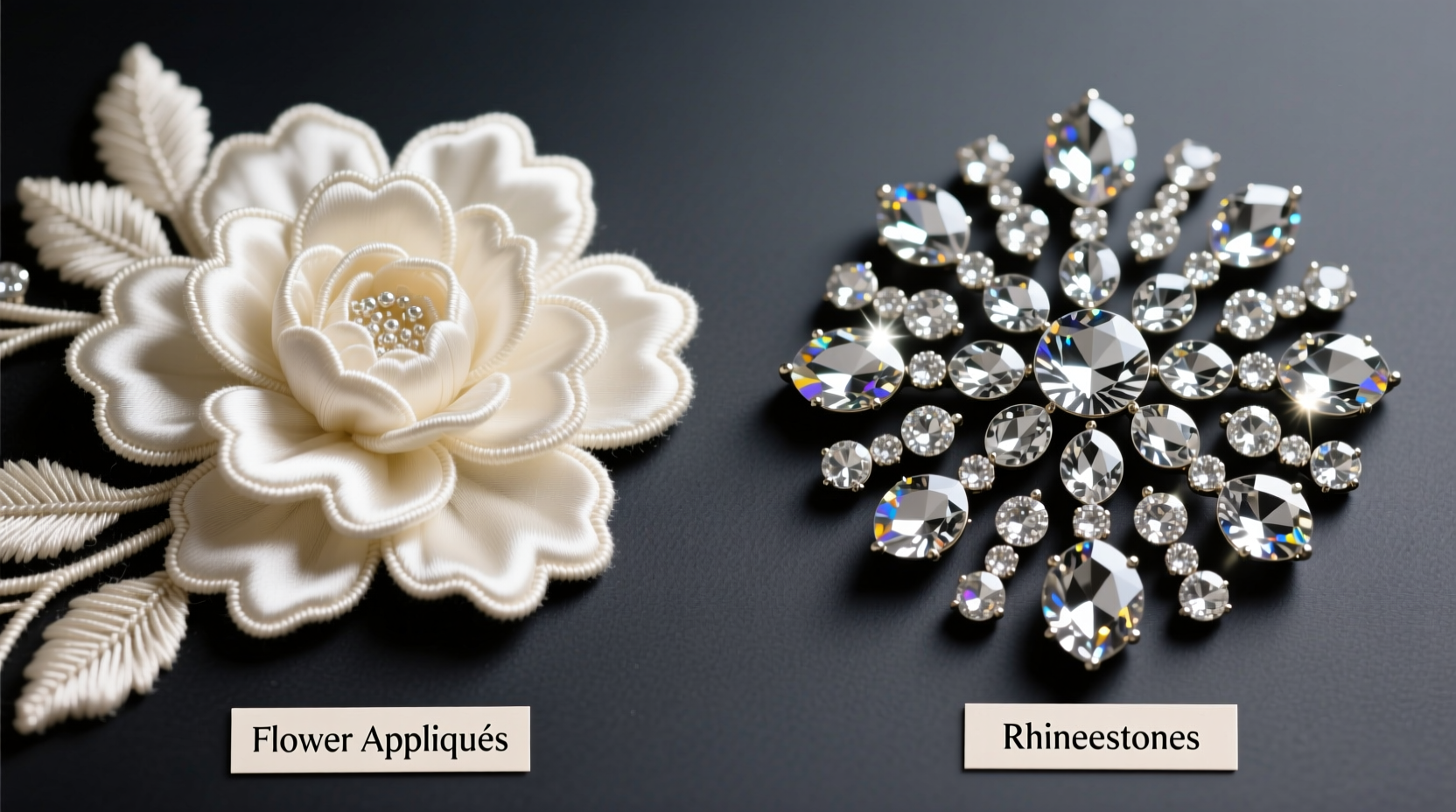
“Sparkle” is often associated with glitter, shine, and reflection, but in design, it extends beyond mere luminosity. It encompasses visual interest, movement, and emotional impact. Rhinestones deliver sparkle through refracted light, creating a dazzling, jewel-like effect. Flower appliques, on the other hand, generate sparkle through contrast, layering, and tactile variation—especially when made with metallic threads, sequins, or iridescent fabrics.
In high-glamour contexts like evening wear or stage costumes, rhinestones dominate due to their immediate visual punch. Yet in bohemian, romantic, or vintage-inspired designs, floral appliques can evoke a subtler kind of radiance—one that draws the eye not just through shine, but through intricate detail and craftsmanship.
Material & Construction: How Each Is Made
Rhinestones are typically made from glass, acrylic, or crystal and are designed to mimic gemstones. They come in various cuts (round, navette, pear) and finishes (aurora borealis, flatback, hotfix). Their reflective coating allows them to scatter light across multiple angles, producing consistent shimmer regardless of lighting conditions.
Flower appliques are crafted from fabric (satin, tulle, organza), felt, or synthetic materials, often layered to create petals and centers. Some include embedded beads or mini-rhinestones at the center to enhance their luminosity. Unlike rhinestones, their sparkle is contextual—it depends on fabric sheen, stitching technique, and dimensional structure.
Tip: For maximum sparkle, combine matte flower appliques with a few strategically placed rhinestones at the center or petal edges.Visual Impact Comparison
| Feature | Rhinestones | Flower Appliques |
|---|---|---|
| Light Reflection | High – reflects light aggressively | Low to moderate – depends on fabric |
| Dimension | Flat or slightly raised | Highly three-dimensional |
| Coverage Efficiency | Excellent for large-scale coverage | Bulkier; better as focal points |
| Texture Contrast | Smooth, hard surface | Soft, layered, tactile |
| Durability (Washing/Wear) | Moderate – can fall off if not set properly | Good – especially sewn-on fabric types |
The table illustrates a critical distinction: rhinestones win in raw reflectivity, while flower appliques excel in textural complexity. A gown covered in rhinestones will catch every spotlight, but a dress adorned with embroidered floral appliques may command attention through artistry rather than flash.
Application Scenarios: Where Each Shines Best
Rhinestones are ideal for bold, modern statements. Think dancewear, bridal belts, or denim jackets where the goal is to attract attention under artificial lighting. Their precision placement allows for geometric patterns, logos, or all-over shimmer without adding significant weight.
Flower appliques thrive in softer, narrative-driven designs. Wedding veils, children’s clothing, and artisanal handbags often use floral motifs to convey elegance and warmth. When stitched with silk thread or accented with tiny pearls, these appliques create a luminous quality—not from direct reflection, but from fine craftsmanship and material richness.
“Sparkle isn’t always about shine. Sometimes it’s about soul. A well-placed flower applique can glow with meaning, even in dim light.” — Lena Torres, Textile Designer & Educator
Mini Case Study: Bridal Gown Embellishment
A bridal designer faced a challenge: create a dreamy, ethereal wedding dress that sparkled subtly under candlelight. She considered full rhinestone beading but feared it would feel too flashy. Instead, she opted for hand-sewn organza flower appliques along the bodice and train, each with a single AB-finish rhinestone at its center.
The result was a gown that shimmered softly as the bride moved—light catching the delicate fabric folds and the pinpoint flashes from the stones. Guests described it as “glowing from within.” This hybrid approach proved that sparkle can be nuanced, emotional, and deeply personal.
Step-by-Step Guide: Choosing the Right Embellishment
- Define Your Design Goal: Are you aiming for dramatic impact or subtle elegance?
- Analyze Lighting Conditions: Will the piece be seen under bright lights (favor rhinestones) or natural/soft light (favor textured appliques)?
- Consider Fabric Base: Delicate fabrics may not support heavy rhinestone heat-setting; structured materials handle appliques better.
- Test Samples: Create small swatches with both options on your actual fabric.
- Evaluate Maintenance Needs: Rhinestones may require re-gluing; appliques may need gentle hand-washing.
- Assess Cost & Time: Rhinestones can be applied quickly with adhesive; handcrafted appliques take longer but add unique value.
Combining Both: The Best of Two Worlds
Many top designers don’t choose between flower appliques and rhinestones—they use both. Strategically placing rhinestones within or around a floral applique enhances its visibility and adds micro-sparkle. For example:
- Outline a satin rose with micro-rhinestones for a halo effect.
- Replace the center of a fabric daisy with a cluster of clear crystals.
- Stitch rows of alternating appliques and scattered rhinestones for rhythmic sparkle.
This layered approach maximizes visual interest and ensures the design sparkles from multiple distances—up close, the details impress; from afar, the overall shimmer captivates.
Frequently Asked Questions
Can flower appliques be as sparkly as rhinestones?
Not in the same way, but they can achieve comparable visual impact when made with shiny fabrics (like lamé or holographic tulle) or enhanced with embedded beads and sequins. Their sparkle is more dynamic and changes with movement and angle.
Which lasts longer on frequently worn garments?
Sewn-on flower appliques generally outlast glued rhinestones, especially after repeated washing. However, machine-set or iron-on rhinestones with proper backing can also be durable. Always reinforce adhesive applications with stitching for longevity.
Are rhinestones suitable for children’s clothing?
Use caution. Small rhinestones can pose a choking hazard if they detach. For kids’ wear, opt for securely stitched fabric appliques or larger, safety-backed rhinestones designed for children’s apparel.
Final Recommendations & Checklist
Choosing between flower appliques and rhinestones ultimately depends on your project’s purpose, audience, and environment. Use this checklist to guide your decision:
Checklist: Selecting Your Embellishment- ☑ Determine the primary setting (stage, wedding, casual wear)
- ☑ Assess fabric compatibility and weight tolerance
- ☑ Decide on handcraft vs. mass-production methods
- ☑ Test washability and durability of sample pieces
- ☑ Consider safety, especially for wearable items
- ☑ Plan for long-term maintenance and repair access
Conclusion
Rhinestones offer undeniable, high-intensity sparkle—the kind that grabs attention instantly. But flower appliques bring a deeper, more enduring radiance rooted in texture, form, and artistry. The most compelling designs often embrace both, balancing flash with finesse. Whether you’re crafting a show-stopping costume or a heartfelt handmade gift, remember that true sparkle isn’t just about light reflection—it’s about intention, craftsmanship, and the emotion your creation evokes.
🚀 Ready to elevate your next project? Experiment with a mixed-media swatch today—combine a floral applique with a few accent rhinestones and see how light transforms your design.








