When it comes to protecting pets from fleas, two of the most widely used solutions are flea collars and topical flea treatments. Both promise a full month of protection, but in practice, results vary. For pet owners seeking reliable, long-lasting defense against infestations, understanding how these products perform over time is critical. While marketing claims often suggest consistent coverage for 30 days, real-world performance depends on formulation, application accuracy, pet behavior, and environmental factors. This article examines the science behind each method, compares their actual longevity, and provides actionable insights to help you choose the right solution for your pet.
How Flea Collars Work and Their Duration Claims
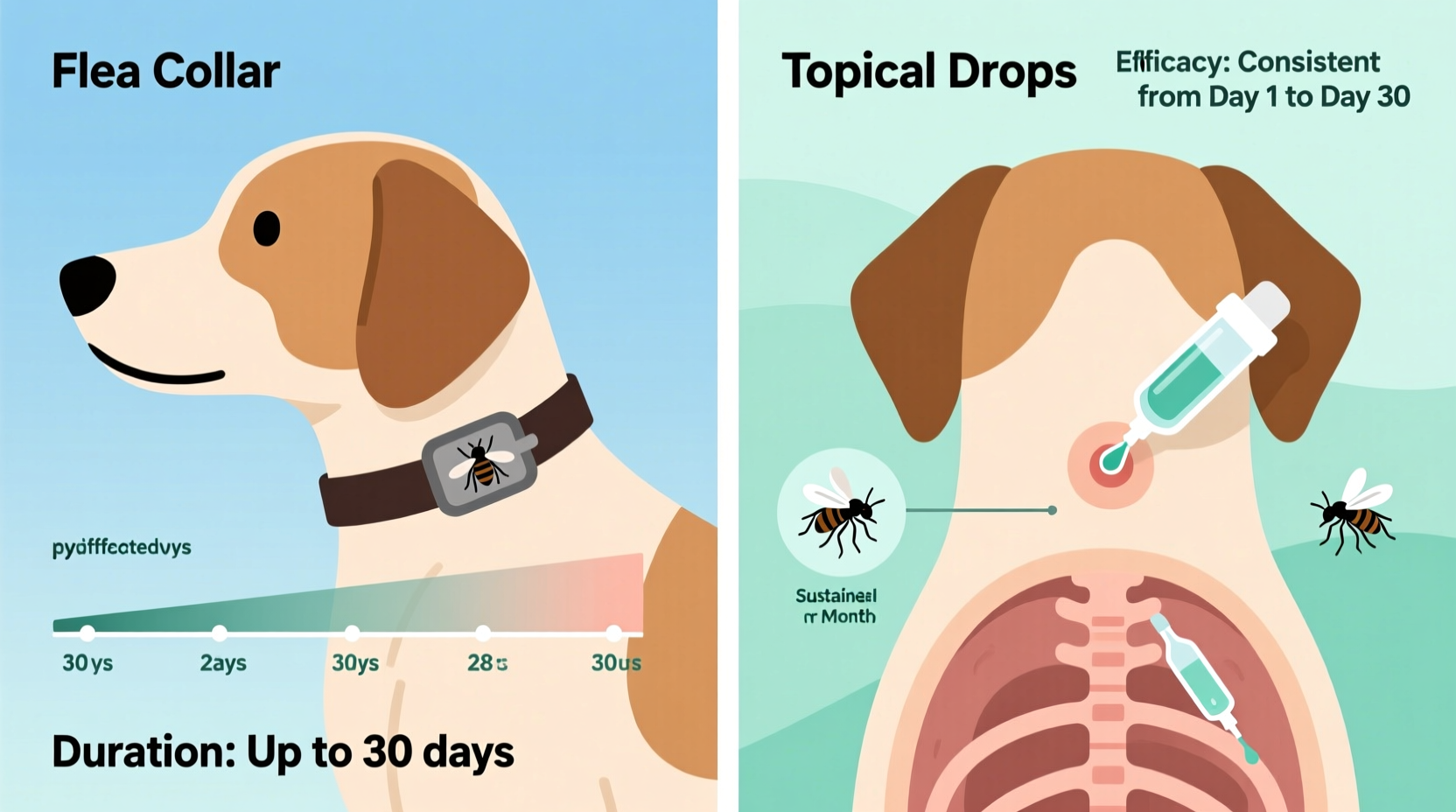
Flea collars release active ingredients—either through slow diffusion or vaporization—that spread across the pet’s skin and coat. Common chemicals include imidacloprid, flumethrin, and tetrachlorvinphos. Manufacturers of modern collars, such as Seresto, claim up to eight months of continuous protection. However, most standard collars are labeled for one-month efficacy.
The mechanism varies by product. Some collars emit a low concentration of insecticide into the air around the pet’s head and neck, creating a protective zone. Others rely on oil-based transfer, where the chemical moves via natural skin oils from the neck outward. This distribution can be uneven, especially in pets with thick coats or those that swim frequently.
Studies show that while some high-end collars maintain effective concentrations for four weeks, many lose potency after 2–3 weeks, particularly if exposed to water, shampooing, or excessive friction. A 2021 study published in *Parasites & Vectors* found that certain collars dropped below therapeutic levels by day 21 in dogs regularly bathed or swimming.
Tip: Avoid frequent bathing or swimming when using flea collars, as water exposure can significantly reduce their effectiveness and shorten lifespan.Topical Flea Treatments: Application and Real-World Longevity
Topical drops, applied directly to the skin between the shoulder blades or at the base of the skull, absorb into the sebaceous glands and distribute through the oil layer of the skin. Brands like Frontline Plus, Advantage II, and Revolution use fipronil, imidacloprid, or selamectin as primary actives. These compounds target adult fleas, larvae, and sometimes eggs, depending on the formula.
Most topicals claim full-month protection under ideal conditions. In controlled studies, fipronil maintains lethal concentrations against fleas for 30 days. However, real-world variables affect performance. Bathing within 48 hours of application can reduce absorption, and monthly reapplication is necessary even if no fleas are visible.
A key advantage of topicals is consistency. Because they are absorbed systemically (to varying degrees), their distribution is less dependent on friction or positioning than collars. That said, heavy shedding, oily skin, or improper dosing can diminish efficacy before the 30-day mark.
“Topical treatments generally offer more predictable coverage because they integrate into the skin’s lipid layer. But timing and proper application are non-negotiable for full-month results.” — Dr. Laura Simmons, DVM, Veterinary Parasitology Specialist
Comparative Analysis: Flea Collar vs Topical Drops
To determine which option truly lasts a full month, several factors must be weighed: active ingredient stability, resistance to washing, ease of use, pet compliance, and cost-effectiveness. The table below summarizes key differences.
| Feature | Flea Collar | Topical Drops |
|---|---|---|
| Duration Claim | 1–8 months (varies by brand) | 30 days |
| Actual Full Efficacy (Typical) | 2–3 weeks (standard); up to 30 days (premium) | 30 days (when applied correctly) |
| Water Resistance | Moderate to poor (degrades with swimming/bathing) | Good (if allowed to dry fully) |
| Distribution Across Body | Inconsistent (weaker on hind legs/abdomen) | Even (via skin oils) |
| Pet Comfort | Some pets chew or scratch at collars | Minimal discomfort after drying |
| Cost per Month | $5–$15 (one-time purchase) | $10–$25 (monthly) |
| Risk of Accidental Removal | Yes (especially in active dogs) | No |
While premium collars like Seresto may deliver close to 30 days of protection under optimal conditions, most budget-friendly options fall short. Topicals, despite requiring monthly effort, consistently outperform collars in sustained flea knockdown, especially in humid climates or homes with recurring infestations.
Real-World Case: The Johnson Family’s Experience
The Johnsons adopted a rescue dog named Max during summer. Living near a wooded area, they quickly noticed flea bites on both Max and their toddler. They tried a $12 flea collar from a local store, following instructions carefully. Within two weeks, fleas reappeared. After consulting their vet, they switched to a prescription topical (Revolution). Despite weekly swims in the lake, Max remained flea-free for the entire season.
Upon review, their vet explained that the collar likely lost potency due to moisture exposure and inadequate dispersion across Max’s thick double coat. The topical, though requiring monthly application, provided systemic protection that wasn’t compromised by water. This case highlights how environment and pet lifestyle influence treatment success—even when initial choices seem cost-effective.
Step-by-Step Guide to Ensuring Full-Month Protection
Regardless of the product chosen, maximizing duration requires proper protocol. Follow this timeline to ensure your flea treatment lasts the full month:
- Day 1 – Choose the Right Product: Select based on your pet’s species, weight, lifestyle (indoor/outdoor/swimming), and any sensitivities. Consult your vet for recommendations.
- Day 1 – Correct Application: For topicals, part the fur and apply directly to the skin. For collars, ensure snug fit (you should fit two fingers beneath) and trim excess.
- Days 2–7 – Avoid Water Exposure: Do not bathe, swim, or use shampoos for at least 48 hours with topicals; avoid prolonged wetness with collars.
- Weekly – Monitor for Fleas: Use a flea comb weekly to check for live fleas or “flea dirt” (black specks that turn red when wet).
- Day 28 – Reapply on Schedule: Don’t wait until you see fleas. Consistent monthly dosing prevents resistance and breaks the flea life cycle.
- Every 3 Months – Evaluate Effectiveness: If fleas return early, consider switching products or treating the environment (carpets, bedding, yard).
Common Myths About Flea Treatment Longevity
Misinformation often leads pet owners to believe their pets are protected when they’re not. Below are three persistent myths:
- Myth: “If I don’t see fleas, the treatment is working.”
Reality: Fleas can lay eggs before being killed. Absence of visible pests doesn’t mean the product is lasting the full month. - Myth: “One size fits all with collars.”
Reality: Over-sized collars reduce contact with skin; under-sized ones restrict movement and blood flow. Proper fit is essential for release efficiency. - Myth: “Natural collars last just as long as chemical ones.”
Reality: Herbal or citronella-based collars typically offer only 1–2 weeks of mild repellency and do not kill fleas or eggs.
Checklist: Choosing Between Collar and Topical
Use this checklist to decide which treatment aligns best with your pet’s needs and your routine:
- ☐ Is your pet prone to swimming or frequent baths? → Choose topical
- ☐ Does your pet chew or scratch at collars? → Topical preferred
- ☐ Are you looking for a set-and-forget solution? → Premium collar possible
- ☐ Do you have multiple pets or a history of infestations? → Topical + environmental control recommended
- ☐ Is cost a primary concern? → Basic collar may suffice in low-risk areas
- ☐ Can you commit to monthly reminders? → Topical requires consistency
Frequently Asked Questions
Can I use a flea collar and topical together?
Yes, in some cases, veterinarians recommend combining treatments for severe infestations. However, never mix products without professional guidance, as overlapping chemicals (e.g., pyrethroids) can cause toxicity. Safer combinations include an oral medication with a collar or topical.
Why does my pet still get fleas after using a monthly treatment?
This could indicate incomplete coverage, incorrect dosing, environmental reinfestation, or product resistance. Flea eggs can survive in carpets and furniture for months. Treat both pet and home simultaneously for best results.
Do topical treatments expire faster in hot weather?
Not necessarily. Once absorbed, most topicals remain stable. However, storing the bottle in extreme heat can degrade the solution before use. Always keep unused doses in a cool, dry place.
Final Verdict: Which Lasts the Full Month?
Based on clinical data and practical outcomes, **topical flea treatments are more likely to provide consistent, full-month protection** compared to most flea collars. Their ability to integrate into the skin’s oil layer ensures even distribution and sustained release of active ingredients. Premium collars like Seresto can come close, but their performance declines with moisture, friction, and coat density.
For pets in high-risk environments—wooded areas, multi-pet homes, or regions with year-round flea seasons—topicals offer superior reliability. Budget-conscious owners in low-exposure settings may find value in long-lasting collars, but should monitor closely for early failure.
Ultimately, no single product works perfectly for every pet. The key to lasting protection lies not just in the choice of treatment, but in correct application, environmental management, and adherence to a strict schedule.
💬 Ready to make the switch or fine-tune your flea strategy? Share your experience or ask questions in the comments—your insights could help another pet owner avoid a frustrating infestation.








