When it comes to protecting pets from fleas, timing matters. A fast-acting solution can mean the difference between a minor irritation and a full-blown infestation. Flea collars and topical drops are two of the most widely used preventive treatments, each with distinct advantages and limitations. But if speed is your priority—how quickly the treatment begins killing fleas—the choice isn't always straightforward. Understanding how each product works, how fast it acts, and what factors influence its performance helps pet owners make informed decisions that protect their animals efficiently.
How Flea Treatments Work: Mechanisms of Action
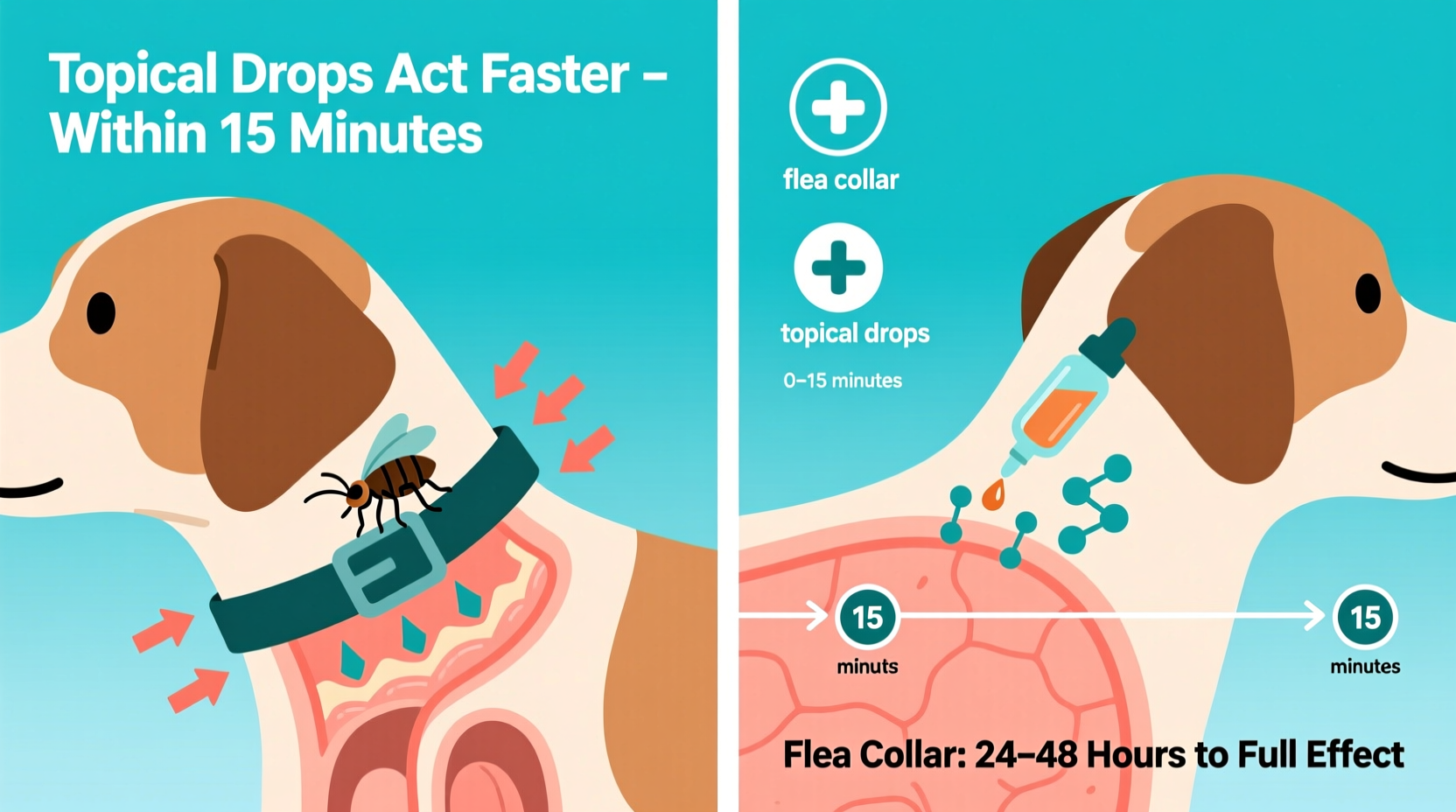
Flea collars and topical drops rely on different delivery systems and active ingredients to eliminate fleas. Their speed of action depends largely on these mechanisms.
Flea collars release insecticides slowly over time through diffusion. These chemicals either vaporize into a protective zone around the pet’s head and neck or transfer via skin contact as the pet moves. Modern collars often use polymer matrices that control the release rate, ensuring long-term protection—sometimes up to eight months. However, this controlled release means they may not act immediately after application.
In contrast, topical drops are applied directly to the skin, usually between the shoulder blades. The active ingredients are absorbed into the sebaceous glands and distributed across the skin and coat via natural oils. This process typically takes 24 to 48 hours for full coverage, but some products begin affecting fleas within hours of application.
The key difference lies in onset time. While both aim for sustained protection, topical treatments generally deliver faster initial results due to quicker absorption and distribution.
Tip: For immediate relief during an active flea problem, topical drops are usually more effective than collars due to faster activation.Speed Comparison: Onset and Kill Time
To determine which method works faster, it's essential to distinguish between onset of action (when the product starts working) and time to kill (how long until fleas are eliminated).
| Treatment Type | Onset of Action | Time to Kill First Fleas | Full Body Coverage |
|---|---|---|---|
| Flea Collar (Traditional) | 24–72 hours | 24–48 hours | Limited to neck/upper body initially |
| Flea Collar (Advanced Vapor-Releasing) | 6–12 hours | 12–24 hours | Around head and shoulders only |
| Topical Drops (e.g., fipronil, selamectin) | 4–12 hours | 12–30 hours | Within 24–48 hours |
Recent studies show that certain topical treatments like those containing spinosad or sarolaner can kill adult fleas within 30 minutes to 12 hours post-application. In one clinical trial published by the *Veterinary Parasitology* journal, dogs treated with a topical isoxazoline-based product had a 98% reduction in flea counts within six hours.
Meanwhile, even advanced flea collars such as Seresto® begin repelling fleas within 24 hours but do not achieve maximum efficacy until about 48 hours. While they offer longer duration (up to eight months), their initial response lags behind topicals.
“Topical formulations have a clear edge when rapid flea knockdown is required. For households dealing with existing infestations, we often recommend starting with a topical before transitioning to long-term collar use.” — Dr. Laura Nguyen, DVM, Board-Certified Veterinary Dermatologist
Real-World Scenario: A Household Outbreak
Consider a family in suburban Texas who adopted a rescue dog in late summer. Within days, they noticed fleas jumping on furniture and biting their children. They purchased a flea collar at their local pet store and placed it on the dog immediately. Over the next 48 hours, flea activity remained high. Concerned, they visited their veterinarian, who recommended switching to a fast-acting topical treatment.
After applying the topical drop formula, flea sightings dropped dramatically within 12 hours. By day three, no new fleas were observed. The vet explained that while the collar would eventually help prevent reinfestation, it wasn’t designed for rapid elimination. The family later reintroduced the collar once the environment was under control, using it as a maintenance tool alongside regular vacuuming and washing of pet bedding.
This case illustrates a common misunderstanding: equating prevention with immediate treatment. Flea collars excel at long-term defense but often fall short when urgent action is needed.
Factors That Influence Speed and Effectiveness
Several variables affect how quickly either method works in real-life conditions.
- Pet size and coat type: Thick fur can delay the spread of topical solutions, while small pets may absorb chemicals more rapidly.
- Bathing and swimming: Frequent water exposure can wash away topical residues or interfere with collar emissions.
- Product formulation: Not all collars or drops are created equal. Some contain newer-generation actives like flumethrin and imidacloprid, which act faster than older pyrethroids.
- Environmental infestation level: Heavy flea loads in carpets and furniture require faster-killing agents to break the life cycle quickly.
Additionally, age and health status matter. Puppies, kittens, and elderly animals may metabolize chemicals differently, affecting both onset time and safety.
Tip: Avoid bathing your pet for at least 48 hours before and after applying topical drops to ensure optimal absorption and effectiveness.Step-by-Step Guide: Choosing Based on Speed Needs
If your primary concern is speed, follow this decision-making timeline:
- Assess the situation (Day 0): Are fleas already present? If yes, prioritize fast-acting treatment. Choose a topical with proven rapid kill data (e.g., products containing spinosad or sarolaner).
- Apply treatment (Hour 0): Apply topical drops precisely as directed. Part the fur and apply directly to the skin. For collars, ensure snug fit without restricting breathing.
- Monitor first 24 hours: Watch for visible reductions in scratching or flea movement. Topicals should show effects within half a day; collars may take two days.
- Re-evaluate at 48 hours: If no improvement, consult a vet. Consider combining treatments (e.g., oral medication + topical) under professional guidance.
- Transition to maintenance (Day 5+): Once the infestation is under control, switch to a long-lasting method like a flea collar if preferred for convenience.
This phased approach ensures immediate impact while setting up sustainable protection.
Checklist: Fast Flea Control Action Plan
Use this checklist to respond quickly and effectively to flea problems:
- ☐ Confirm flea presence (check ears, base of tail, under legs)
- ☐ Read labels: Verify onset time and active ingredients
- ☐ Choose a fast-acting topical if fleas are currently visible
- ☐ Apply treatment correctly—skin contact is critical
- ☐ Treat all pets in the household simultaneously
- ☐ Wash bedding and vacuum thoroughly
- ☐ Reassess after 24 and 48 hours
- ☐ Schedule follow-up dose per product instructions (usually every 30 days)
Safety and Side Effects: Speed vs. Risk
While speed is important, it must be balanced against safety. Rapid-acting neurotoxins used in some topicals can cause adverse reactions in sensitive animals, especially cats exposed to dog-specific products.
Cats lack certain liver enzymes needed to metabolize specific compounds like permethrin, commonly found in dog-focused topicals. Exposure—even through grooming a treated dog—can lead to tremors, seizures, or death. Always verify species-specific labeling.
Flea collars, though slower, tend to release lower concentrations over time, reducing acute toxicity risk. However, some pets develop skin irritation at the contact site, particularly if the collar is too tight or worn too long.
Consult your veterinarian before combining treatments. Using a fast topical alongside an oral chewable might accelerate results but increases the chemical load on your pet’s system.
“We’ve seen cases where well-meaning owners doubled up on preventives, leading to neurological symptoms. Faster isn’t always safer. Match the treatment to the threat level.” — Dr. Alan Prescott, Veterinary Pharmacologist
FAQ: Common Questions About Speed and Efficacy
Do flea collars work instantly?
No flea collar works instantly. Even the fastest models take at least 6–12 hours to begin repelling fleas, with peak effectiveness reached after 24–48 hours. They are not ideal for emergency situations.
Can I use a topical drop and a flea collar together?
In some cases, yes—but only under veterinary supervision. Combining methods may increase risk of side effects. Most modern topicals provide full-body coverage and fast action, making additional collar use unnecessary unless advised.
Which kills fleas faster: oral chews or topical drops?
Oral medications like nitenpyram (Capstar) can kill fleas within 30 minutes, making them the fastest option available. However, their effect lasts only 24–48 hours. Topical drops act slightly slower but offer sustained protection for a month.
Conclusion: Prioritize Speed When It Matters Most
When faced with an active flea problem, speed is crucial. Topical drops generally outperform flea collars in terms of onset and initial kill rate, making them the better choice for immediate intervention. Flea collars serve best as long-term preventive tools, offering months of steady protection with minimal effort.
The right decision depends on context: Is this a routine safeguard or an urgent response? For peace of mind and maximum efficiency, consider starting with a fast-acting topical during outbreaks, then transitioning to a durable collar for ongoing defense. Pair any medical treatment with environmental hygiene—vacuuming, laundering, and treating living spaces—to fully break the flea life cycle.
🚀 Take action today: If you're seeing fleas now, reach for a proven fast-acting topical. Your pet will stop scratching sooner—and your home will thank you.








