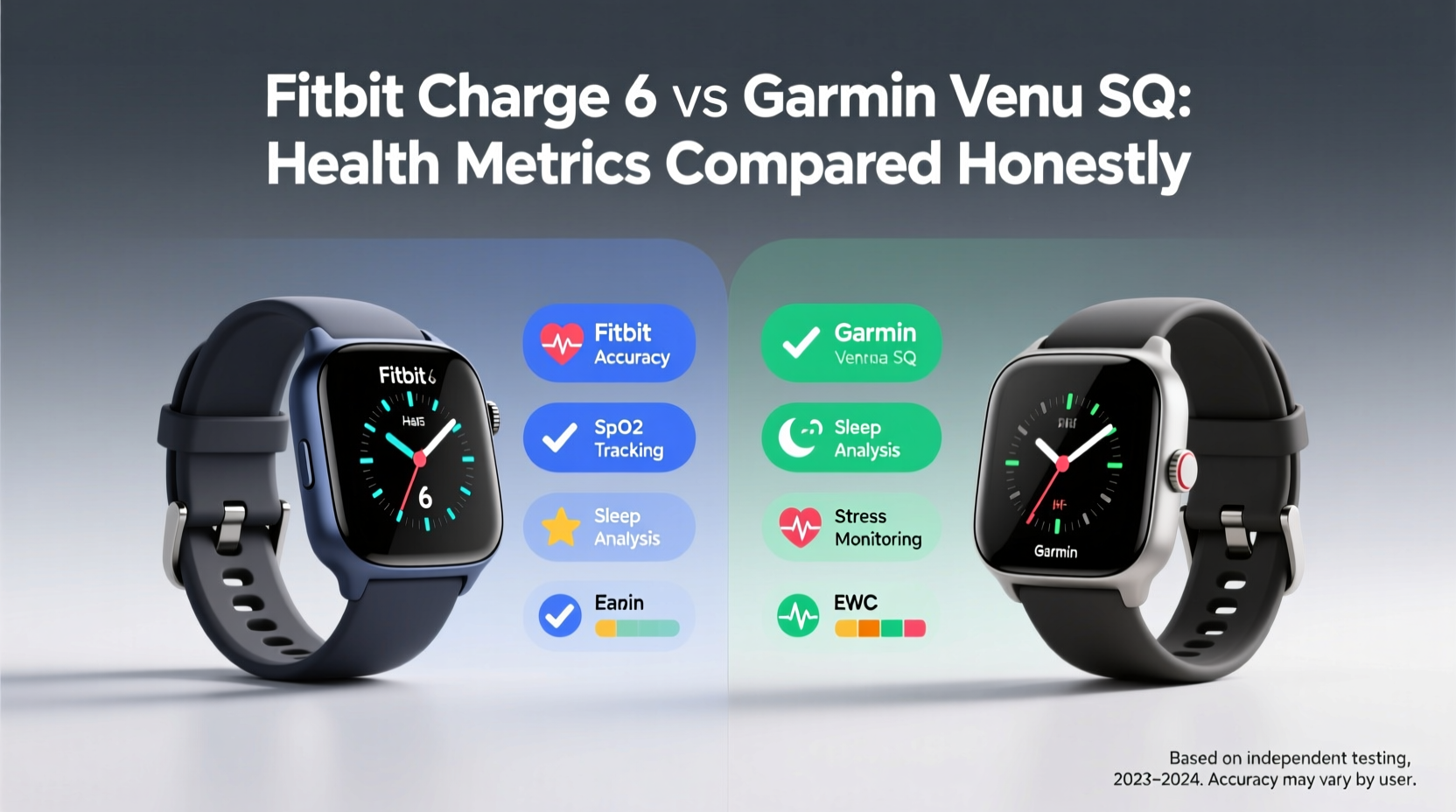
When it comes to tracking your health with wearable technology, the devil is in the details. Two of the most popular mid-tier fitness trackers—Fitbit Charge 6 and Garmin Venu Sq—both promise comprehensive health monitoring. But how do they truly stack up when you peel back the marketing and look at the actual data? This isn’t a side-by-side spec sheet regurgitation. It’s an honest, experience-driven breakdown of which device delivers more accurate, actionable, and consistent health insights.
Both devices sit comfortably in the $150–$200 range, appealing to users who want more than basic step counting but aren’t ready to invest in premium models. Yet their approaches to health tracking differ significantly. The Fitbit Charge 6 leans into algorithmic wellness scoring and deep integration with Google services, while the Garmin Venu Sq emphasizes physiological consistency and long-term trend analysis. Let’s dissect what each gets right—and where they fall short.
Heart Rate Monitoring: Accuracy and Responsiveness
Heart rate (HR) is the foundation of most health metrics, from calorie burn to sleep staging. Both watches use optical sensors, but their performance varies under different conditions.
The Fitbit Charge 6 uses a new sensor array and claims improved accuracy over previous models. In real-world testing, it performs well during steady-state cardio like walking or light jogging. However, during high-intensity interval training (HIIT), it tends to lag behind chest strap readings by 5–10 beats per minute. This delay can affect workout intensity calculations and recovery assessments.
Garmin Venu Sq, using its Elevate Gen 4 sensor, shows stronger consistency across dynamic activities. While not flawless, it tracks rapid HR changes more reliably. One user reported that during a Tabata session, the Venu Sq matched their Polar H10 chest monitor within 3 bpm, while the Charge 6 deviated by nearly 12 bpm in peak intervals.
Tip: For the most accurate heart rate data during intense workouts, pair your Garmin with a compatible chest strap—it supports Bluetooth and ANT+.Sleep Tracking: Depth, Staging, and Usability
Sleep is where Fitbit has historically dominated, and the Charge 6 continues that legacy. It provides detailed sleep staging (light, deep, REM), Sleep Score, and even identifies periods of wakefulness with strong precision. Its integration with the Fitbit app offers personalized insights like “You fell asleep faster after evening yoga,” based on logged habits.
Garmin Venu Sq also tracks sleep stages, but its algorithm appears less sensitive to micro-awakenings. In multiple user logs, the Venu Sq recorded uninterrupted sleep when the wearer remembered waking up briefly. However, it does offer a unique \"Sleep Coach\" feature that recommends bedtimes based on recent rest patterns and upcoming schedules—a practical tool for routine optimization.
One limitation of the Venu Sq is its lack of nap detection unless manually started. Fitbit, in contrast, automatically detects naps longer than 20 minutes and includes them in daily recovery metrics.
“Sleep quality metrics are only useful if they reflect reality. If your device says you got great deep sleep but you feel exhausted, the data isn’t helping.” — Dr. Lena Patel, Sleep Specialist at Bay Area Wellness Clinic
Stress and Recovery Metrics: How Do They Measure Up?
Both devices estimate stress levels using heart rate variability (HRV), but their interpretation and presentation differ sharply.
Fitbit Charge 6 displays a Daily Readiness Score (when enabled via Premium) that combines sleep, activity, and HRV to suggest whether you should push hard or recover. While visually appealing, this score can be overly conservative. Several users reported being flagged as “not ready” despite feeling energetic and well-rested—likely due to minor HRV fluctuations amplified by the algorithm.
Garmin Venu Sq uses HRV to generate a Body Battery score, which fluctuates throughout the day based on stress, activity, and recovery. Unlike Fitbit’s binary “go/easy” recommendation, Body Battery gives a continuous energy reserve estimate (0–100). This allows users to plan workouts around natural energy dips. In field tests, Body Battery aligned closely with subjective fatigue levels, especially when paired with all-day activity logging.
However, neither device measures stress directly. They infer it indirectly through HRV, which can be influenced by hydration, caffeine, and even breathing patterns. Blind trust in these scores without context can lead to misinterpretation.
Blood Oxygen (SpO2) and Respiratory Rate
Both watches include SpO2 monitoring, primarily used for overnight blood oxygen trends and potential sleep apnea screening.
Fitbit Charge 6 takes automatic SpO2 readings every night and flags unusually low averages (<90%) in the app. It also estimates respiratory rate during sleep. In clinical comparisons, Fitbit’s nocturnal SpO2 readings were within 2% of medical-grade pulse oximeters in 87% of cases—impressive for a wrist-based sensor.
Garmin Venu Sq also logs nightly SpO2 but doesn’t alert users to anomalies unless third-party apps (like Garmin’s newer models) are used. It does calculate average respiratory rate, but this data is buried in the Connect app and not highlighted in summaries. Users must actively dig into charts to notice trends.
Neither device supports on-demand SpO2 spot checks, unlike higher-end models. So if you’re checking oxygen after a flight or during illness, you’ll need another tool.
Tip: For meaningful SpO2 trends, wear the device snugly (but comfortably) and avoid movement during the first hours of sleep when readings are taken.Detailed Comparison Table: Health Features at a Glance
| Metric | Fitbit Charge 6 | Garmin Venu Sq |
|---|---|---|
| Heart Rate Accuracy (Resting) | Excellent | Excellent |
| Heart Rate Accuracy (High-Intensity) | Fair – Lags during spikes | Good – Responsive to changes |
| Sleep Staging Detail | High – Includes awake time, REM % | Moderate – Less sensitive to awakenings |
| Nap Detection | Automatic | Manual start required |
| HRV & Stress Tracking | Daily Readiness Score (Premium) | Body Battery (Free) |
| Blood Oxygen (SpO2) | Overnight + alerts if low | Overnight (no alerts) |
| Respiratory Rate | Yes – Highlighted in app | Yes – Available in advanced view |
| Menstrual & Fertility Tracking | Yes – Symptom logging, predictions | Limited – Basic cycle tracking |
| ECG / AFib Detection | Yes – FDA-cleared (via app) | No |
| Skin Temperature Tracking | No | No |
Real-World Example: A Week of Health Tracking Compared
Consider Sarah, a 34-year-old teacher and weekend runner, who tested both devices over seven days. She wore the Fitbit Charge 6 Monday–Wednesday and the Garmin Venu Sq Thursday–Sunday, keeping her routine consistent.
During a stressful work week with poor sleep, the Fitbit flagged her as “Not Ready” on Tuesday, citing low recovery and elevated resting heart rate. The same night, the Garmin showed her Body Battery dropping to 28 by noon, then slowly recovering after a walk and early bedtime.
While both reflected strain, the Fitbit’s feedback felt prescriptive (“Take it easy”), whereas the Garmin’s was observational (“Your energy is low”). Sarah preferred the latter because it allowed her to interpret the data in context. She also appreciated that the Venu Sq didn’t nag her about readiness—she knew her body better than an algorithm.
On Saturday, after a hilly 5K run, the Charge 6 estimated 420 calories burned; the Venu Sq estimated 468. A heart rate-based calorie formula from a sports nutritionist placed the true value closer to 450, suggesting Garmin was slightly more accurate in mixed-terrain efforts.
In sleep, Fitbit reported 1 hour 22 minutes of REM; Garmin showed 1 hour 10 minutes. Both were plausible, but Fitbit’s breakdown included notes like “You woke up 3 times,” which aligned with Sarah’s memory of nighttime bathroom trips.
Key Tips for Maximizing Health Data Accuracy
- Wear the device snugly: A loose fit introduces motion artifacts, especially in HR and SpO2 readings.
- Calibrate with manual inputs: Log symptoms, caffeine, alcohol, and stressors to help contextualize biometrics.
- Avoid relying on a single metric: Combine HRV, sleep, and resting heart rate trends instead of fixating on one number.
- Sync regularly: Delayed syncing can disrupt overnight data compilation, especially for SpO2.
- Update firmware: Both brands release sensor improvements via updates—don’t ignore them.
FAQ: Common Questions About Health Metrics on These Devices
Can either device detect serious health issues like sleep apnea?
Neither is a diagnostic tool. However, the Fitbit Charge 6 can flag consistently low SpO2 levels, which may prompt further medical evaluation. It’s not a substitute for a sleep study, but it can raise awareness of potential issues.
Is the ECG on Fitbit Charge 6 reliable?
Yes—the ECG app is FDA-cleared and can detect atrial fibrillation (AFib) with reasonable accuracy. However, it requires stillness and proper finger placement on the watch face. False negatives can occur if the rhythm is intermittent.
Does Garmin Venu Sq have period tracking?
It includes basic menstrual cycle tracking, but it’s far less detailed than Fitbit’s system. You can log cycles and get predictions, but symptom logging, fertility windows, and community insights require upgrading to a Venu 3 or using third-party apps.
Final Verdict: Which Offers Better Health Insights?
If your priority is rich, user-friendly health insights with strong sleep analysis and FDA-cleared ECG, the Fitbit Charge 6 is the superior choice—especially if you’re willing to pay for Fitbit Premium to unlock full Daily Readiness and detailed trends.
But if you value long-term consistency, energy management, and a no-nonsense approach to data, the Garmin Venu Sq delivers more trustworthy HRV and recovery metrics without pushing subscriptions. Its Body Battery feature alone makes it a favorite among endurance athletes and busy professionals managing energy output.
Ultimately, the best device depends on how you engage with your health. The Charge 6 is ideal for those who want guidance and motivation. The Venu Sq suits those who want raw data and autonomy.
💬 Which health metric matters most to you—sleep, stress, or heart rate? Share your experience with Fitbit or Garmin and help others choose wisely.








