Aquarium enthusiasts know that clean water is the foundation of a thriving fish tank. But when it comes to maintaining water quality, confusion often arises between two common devices: filters and bubblers. While both contribute to a healthy aquatic environment, they serve fundamentally different purposes. Understanding their roles — and limitations — is essential for minimizing maintenance while keeping your tank’s ecosystem stable.
A filter actively removes physical debris, chemical impurities, and harmful biological waste from the water. A bubbler, on the other hand, primarily increases oxygen levels by agitating the surface. Though bubblers can support water movement, they do not filter contaminants. This article breaks down the differences in performance, maintenance demands, and overall impact on water cleanliness, helping you make an informed decision for your aquarium setup.
Understanding the Core Functions
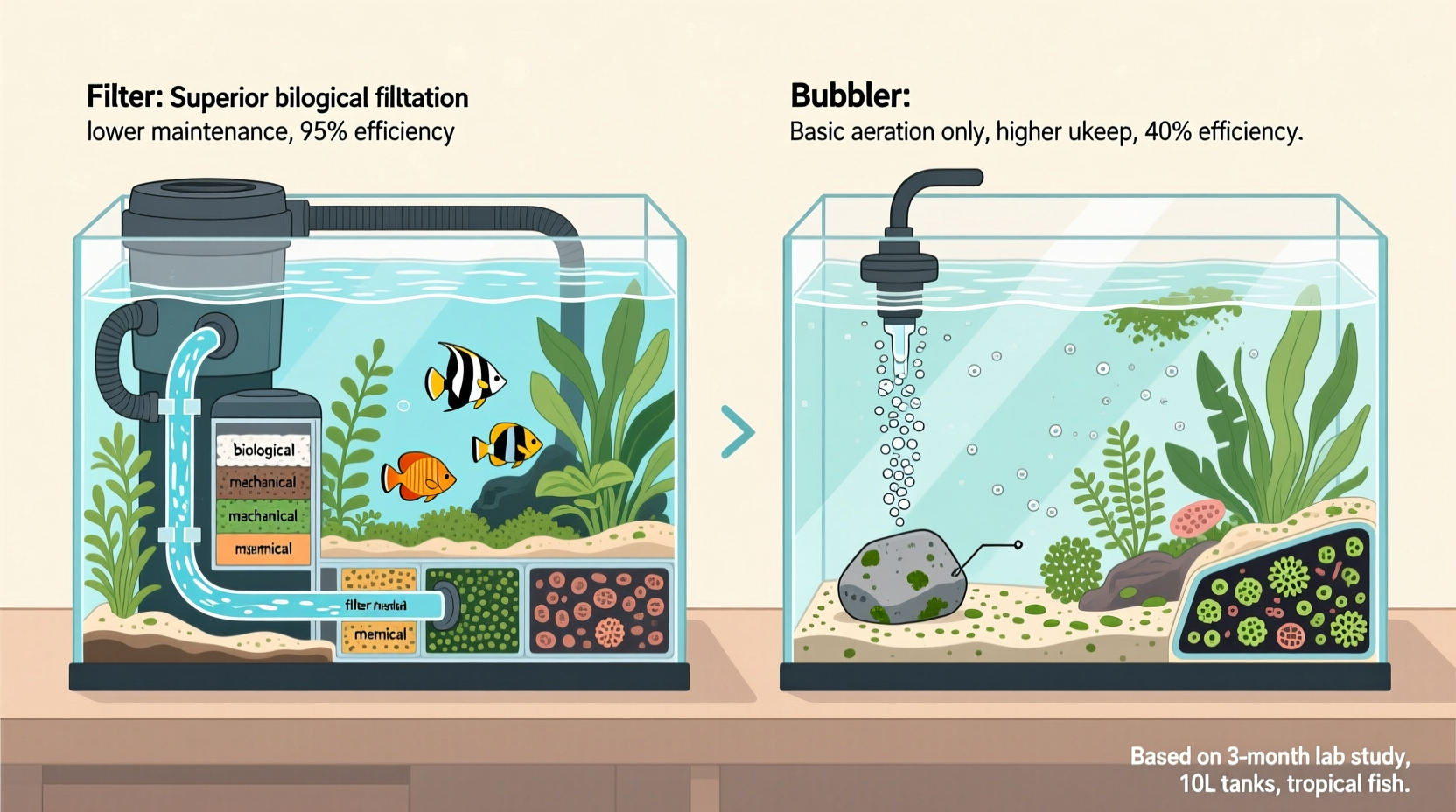
Before comparing effectiveness, it's crucial to clarify what each device actually does.
Fish Tank Filter: The Full-Cycle Cleaner
A fish tank filter performs three types of filtration:
- Mechanical Filtration: Traps visible debris like uneaten food, fish waste, and plant fragments using sponges or filter floss.
- Chemical Filtration: Removes dissolved pollutants such as tannins, medications, and odors via activated carbon or resins.
- Biological Filtration: Hosts beneficial bacteria that convert toxic ammonia (from fish waste) into nitrite, then into less harmful nitrate.
This multi-stage process directly improves water clarity and reduces harmful compounds, making filters indispensable for long-term tank health.
Bubbler: Oxygenator, Not Purifier
A bubbler — also known as an air stone or aerator — releases streams of tiny bubbles from the bottom of the tank. As these bubbles rise, they increase surface agitation, enhancing gas exchange. This process:
- Releases excess carbon dioxide.
- Introduces more oxygen into the water column.
- Improves circulation in stagnant zones.
While valuable in low-flow environments or heavily stocked tanks, a bubbler does nothing to remove solid waste, chemicals, or toxins. It supports respiration but doesn’t cleanse the water.
Tip: Never rely solely on a bubbler for water cleanliness. Pair it with a proper filtration system for optimal results.Which Keeps Water Cleaner?
The answer depends on how you define “clean.” If clarity and absence of pollutants are your goals, a filter is the clear winner. If you're focused only on oxygen levels and surface movement, a bubbler helps — but falls short of true cleaning.
Water Clarity and Debris Removal
Filters physically pull particles out of the water column. Within hours of installation, most mechanical filters reduce cloudiness caused by fine particulates. Over time, chemical media further polish the water by removing discoloration and odors.
In contrast, a bubbler may stir up settled debris, temporarily making the water look dirtier. Without a filter to capture those suspended particles, they remain in circulation.
Toxin Management and Biological Stability
This is where filters truly shine. Beneficial bacteria colonize porous media inside the filter (like ceramic rings or bio-balls), forming the backbone of your tank’s nitrogen cycle. These microbes break down ammonia — which is lethal even at low concentrations — into safer compounds.
Bubblers offer no such biological support. While increased oxygen can help aerobic bacteria thrive in the substrate or on surfaces, they don't provide dedicated space or flow conditions needed for robust bacterial colonies.
“Filtration isn’t optional in a closed aquarium system. Without it, ammonia spikes become inevitable, especially in tanks with more than one or two small fish.” — Dr. Alan Reyes, Aquatic Biologist and Aquarium Systems Consultant
Maintenance Comparison: Effort Over Time
One common misconception is that bubblers require less work because they lack complex parts. While this is partially true, it overlooks the downstream consequences of skipping proper filtration.
| Feature | Fish Tank Filter | Bubbler |
|---|---|---|
| Cleaning Frequency | Every 2–4 weeks (rinsing media, replacing carbon) | Rarely — mainly unclogging air stones every 4–8 weeks |
| Part Replacement | Sponge, floss, carbon, impeller (every few months to years) | Air stone (every 3–6 months), airline tubing (as needed) |
| Water Changes Required | 20–30% every 2–4 weeks (due to effective pre-filtration) | 30–50% weekly (to compensate for lack of filtration) |
| Failure Consequences | Ammonia spike within 24–48 hours if neglected | Low oxygen; fish gasping at surface, but water still dirty |
| Overall Maintenance Burden | Higher per session, lower frequency | Lower per session, much higher frequency due to poor water quality |
At first glance, a bubbler seems easier to maintain. But without a filter, you’ll spend more time doing large, frequent water changes to manually remove toxins and debris. In reality, relying on a bubbler alone increases your total maintenance workload over time.
Mini Case Study: Two Identical Tanks, Two Different Outcomes
Consider a real-world example from a hobbyist in Portland who set up two identical 10-gallon tanks, each housing three zebra danios and live plants.
- Tank A: Equipped with a hang-on-back filter and no bubbler.
- Tank B: Fitted with a strong bubbler but no filter.
After four weeks:
- Tank A had crystal-clear water, stable ammonia readings (0 ppm), and required only a 25% water change monthly.
- Tank B developed cloudy water by day 10, registered 1.0 ppm ammonia by week three, and demanded 40% water changes twice a week just to keep fish alive.
The owner eventually added a sponge filter to Tank B. Within ten days, water clarity improved, and ammonia dropped to safe levels. This case illustrates that while bubblers assist in gas exchange, they cannot replace filtration when it comes to sustained cleanliness and reduced labor.
When to Use Each — And How to Combine Them
The best aquarium setups often use both devices together — not as substitutes, but as complementary tools.
Use a Filter If You Have Any Fish
Any tank containing fish should have a dedicated filtration system. Even low-waste species produce enough ammonia to become dangerous without biological processing. Options include:
- Sponge Filters: Ideal for small tanks or breeding setups; excellent biological filtration with gentle flow.
- Hang-On-Back (HOB): Popular choice for medium tanks; combines all three filtration types efficiently.
- Canister Filters: Best for larger or heavily stocked tanks; high capacity and customizable media trays.
Use a Bubbler When Extra Aeration Is Needed
Bubblers are beneficial in specific scenarios:
- Tanks with high temperatures (warm water holds less oxygen).
- Overstocked or high-metabolism fish (e.g., goldfish, cichlids).
- Planted tanks during nighttime when plants respire instead of photosynthesize.
- Poorly circulated tanks where dead zones develop.
Even well-filtered tanks can benefit from added surface agitation, especially in warmer climates or densely populated systems.
Combining Both for Optimal Results
Many filters create laminar flow patterns that leave corners untouched. Adding a bubbler in a quiet corner enhances circulation, preventing detritus buildup and promoting even oxygen distribution. Some advanced aquarists position air stones beneath sponge filters to increase uplift and improve mechanical trapping efficiency.
Tip: Place your bubbler near the back wall opposite the filter outlet to create cross-tank circulation without disrupting fish.Step-by-Step Guide: Setting Up Low-Maintenance Cleanliness
Follow this sequence to ensure your tank stays clean with minimal upkeep:
- Choose the Right Filter: Select a unit rated for at least 1.5x your tank’s volume (e.g., a 15-gallon filter for a 10-gallon tank). This provides headroom for waste processing.
- Install and Cycle Properly: Run the filter continuously for 4–6 weeks before adding fish. Add a source of ammonia (like pure ammonium chloride or a hardy fish) to establish bacterial colonies.
- Add a Bubbler Only If Needed: Monitor fish behavior. If they frequently hover near the surface, especially in warm water, introduce an air stone.
- Maintain Media Correctly: Rinse mechanical media in old tank water (never tap water) every 2–4 weeks. Replace chemical media monthly. Leave biological media undisturbed for 6+ months unless clogged.
- Monitor Water Parameters: Test weekly for ammonia, nitrite, and nitrate. Stable readings mean your system is working efficiently.
- Perform Scheduled Water Changes: Stick to 20–30% every 3–4 weeks. With good filtration, you shouldn’t need more.
Frequently Asked Questions
Can I use just a bubbler instead of a filter in a betta tank?
No. While bettas can breathe atmospheric air via their labyrinth organ, they still produce waste that pollutes the water. A sponge filter is ideal — it provides gentle flow and full biological filtration without endangering the betta’s delicate fins.
Do internal filters eliminate the need for a bubbler?
Often, yes. Many internal filters (especially box or sponge types) agitate the surface sufficiently to maintain oxygen levels. However, in warm or crowded tanks, adding a bubbler remains a smart precaution.
Is filtered water safer for sensitive fish like tetras or shrimp?
Absolutely. Species like neon tetras and dwarf shrimp are highly sensitive to ammonia and pH swings. A mature filter stabilizes water chemistry, reducing stress and disease risk significantly.
Checklist: Achieving Cleaner Water with Less Work
- ✅ Install a filter appropriate for your tank size and bioload.
- ✅ Allow 4–6 weeks for the nitrogen cycle to complete before adding fish.
- ✅ Use a combination of mechanical, chemical, and biological media.
- ✅ Add a bubbler only if oxygen levels are low or circulation is poor.
- ✅ Clean filter media in dechlorinated tank water to preserve beneficial bacteria.
- ✅ Test water weekly during cycling, then monthly once stable.
- ✅ Limit water changes to 20–30% every 3–4 weeks with proper filtration.
Conclusion: Prioritize Filtration for True Cleanliness
When comparing a fish tank filter versus a bubbler, the verdict is clear: only a filter actively cleans the water by removing debris, neutralizing chemicals, and processing biological waste. A bubbler improves oxygenation and aids circulation but does nothing to purify the water. Relying on it alone leads to dirtier tanks, unstable conditions, and more frequent maintenance.
For aquarium owners seeking cleaner water with less effort, investing in a reliable filtration system is non-negotiable. Pair it strategically with a bubbler when extra aeration is needed, and you’ll create a balanced, low-maintenance environment where fish thrive.
💬 Ready to upgrade your tank’s cleanliness? Start by checking your current setup — do you have real filtration, or just surface bubbles? Share your experience or questions below and join the conversation among fellow aquarists!








