
Maintaining crystal-clear aquarium water isn’t just about aesthetics—it’s a vital component of fish health and ecosystem stability. While many factors influence water clarity, the filter you choose plays the most decisive role. Not all filters are created equal. Some excel at removing visible debris, others support beneficial bacteria growth, and a few combine multiple functions to deliver long-term clarity. Understanding how each type performs—and how long they keep your water pristine—can make the difference between a thriving aquarium and one that requires constant maintenance.
This guide compares the five primary fish tank filter types—hang-on-back (HOB), canister, sponge, internal, and undergravel—evaluating their effectiveness in delivering sustained water clarity. We’ll explore real-world performance, maintenance demands, and expert insights to help you select the best option for lasting results.
Hang-On-Back (HOB) Filters: Balanced Performance with Routine Maintenance
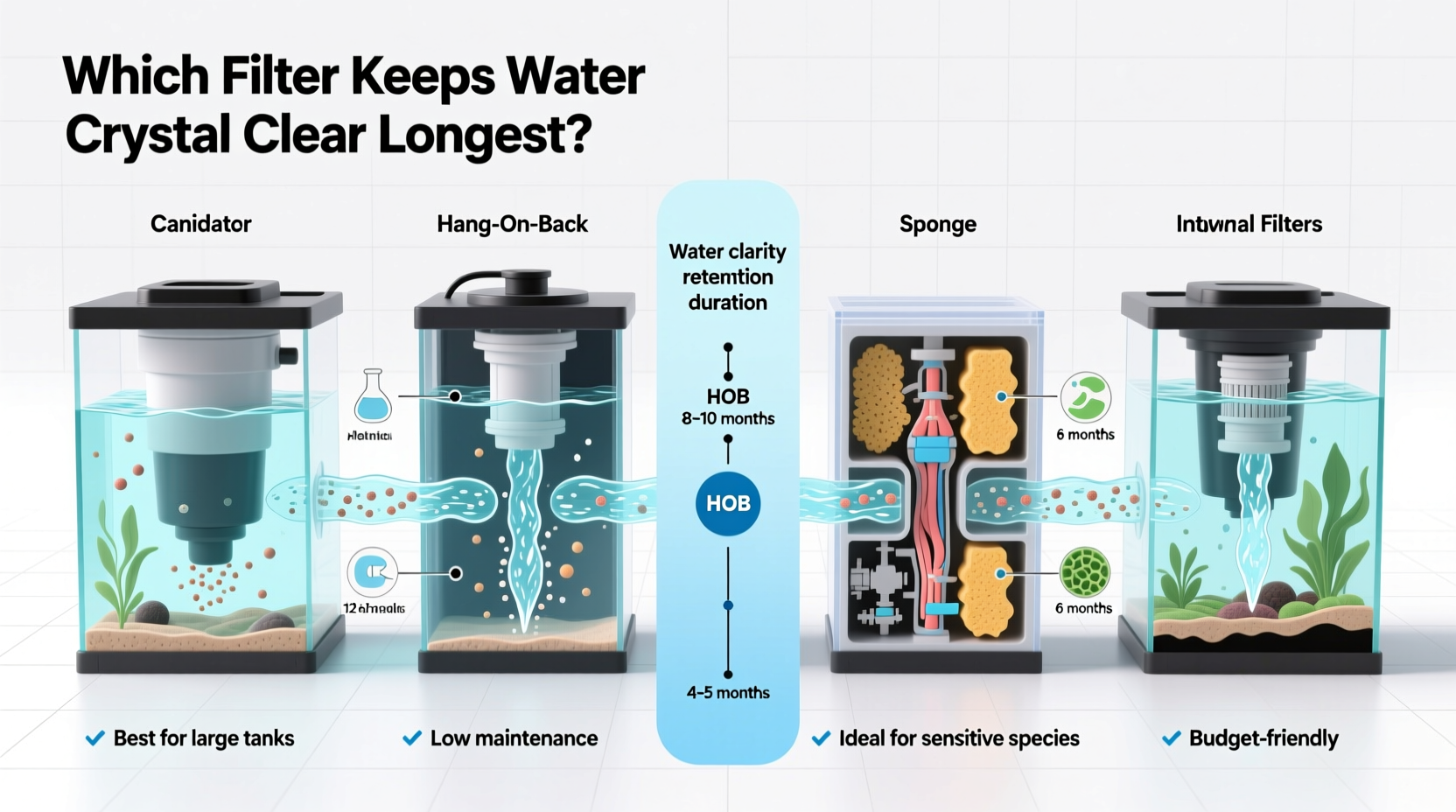
HOB filters are among the most popular choices for beginner and intermediate aquarists. They attach to the back rim of the tank, drawing water up through an intake tube, passing it through various media stages, and returning clean water via a spillway. Their strength lies in combining mechanical, biological, and chemical filtration in a single unit.
Mechanical filtration captures floating particles like uneaten food and plant debris. Biological filtration occurs on porous media such as bio-wheels or ceramic rings, where nitrifying bacteria convert toxic ammonia into less harmful nitrates. Chemical filtration often uses activated carbon to remove dissolved impurities and odors.
While HOB filters provide good short-term clarity, their effectiveness diminishes over time if not maintained regularly. The filter cartridges clog after 2–4 weeks, reducing flow rate and allowing particulates to recirculate. Without timely cleaning or replacement, water begins to cloud within 3–5 weeks.
Tip: Rinse mechanical media in dechlorinated tank water (not tap water) every two weeks to preserve beneficial bacteria while maintaining flow.Canister Filters: Long-Term Clarity Champions
For sustained water clarity, canister filters consistently outperform other types. Positioned beneath the tank, these sealed units use powerful pumps to draw water through multiple chambers filled with customizable media. Because they operate under pressure, they maintain high flow rates even as media loads accumulate.
What sets canister filters apart is their capacity. A typical canister holds significantly more biological media than HOBs or internal filters, supporting larger colonies of nitrifying bacteria. This means stable biological filtration over extended periods—often months without degradation in performance.
Additionally, the modular design allows precise layering: coarse sponges trap large debris first, followed by fine floss for polishing, then biomedia for bacterial colonization, and finally chemical resins or carbon for odor and discoloration control. This multi-stage process removes both visible and invisible contaminants, resulting in water that stays visibly clear for 6–8 weeks or longer under normal stocking conditions.
“With proper media selection and quarterly maintenance, a quality canister filter can deliver near-lab-grade water clarity for over two months.” — Dr. Alan Reyes, Aquatic Systems Biologist
Sponge Filters: Biological Powerhouses with Limited Polishing
Sponge filters rely on air pumps to draw water through a porous foam block. As water passes through, physical debris is trapped, and beneficial bacteria colonize the sponge’s vast surface area. These filters shine in biological filtration, making them ideal for breeding tanks, quarantine setups, or tanks housing sensitive species.
However, sponge filters fall short in delivering long-term *visual* clarity. While they effectively manage ammonia and nitrite, they do little to remove fine particulates or yellowing tannins. Without supplemental chemical filtration, water may appear slightly hazy after 3–4 weeks, even if parameters remain stable.
They’re also prone to clogging in heavily stocked tanks, requiring weekly rinsing. Though gentle on beneficial microbes, frequent disruption can slow bacterial maturity. In low-waste environments, sponge filters maintain acceptable clarity for up to a month—but rarely beyond.
Internal Power Filters: Compact but High-Maintenance
Submersible internal filters sit inside the tank and use small impellers to move water through integrated media cartridges. They’re commonly used in smaller aquariums (under 30 gallons) where space or aesthetics limit external options.
Their compact size limits media volume, especially for biological support. Most models include a single cartridge combining foam, carbon, and sometimes ceramic bits. While convenient, this setup leads to rapid saturation. Mechanical clogging reduces flow within 2–3 weeks, and carbon loses efficacy after 3–4 weeks.
As flow declines, dead spots form in the tank, promoting detritus buildup and algae blooms. Without biweekly cartridge changes, clarity deteriorates noticeably by week four. Even with regular upkeep, internal filters struggle to match the sustained performance of HOB or canister systems.
Undergravel Filters: Outdated Design, Limited Longevity
Once standard in the hobby, undergravel filters (UGFs) consist of a perforated plate placed beneath the substrate, connected to uplift tubes powered by air stones or water pumps. Water is drawn down through the gravel, where biological filtration occurs.
In theory, UGFs offer excellent biological processing due to the massive surface area of the substrate. In practice, they are inefficient at mechanical removal. Debris accumulates on top of the gravel, decaying and clouding the water unless manually vacuumed weekly. Over time, the spaces beneath the plate fill with sludge, creating anaerobic pockets that release harmful gases when disturbed.
Water clarity typically starts declining within 3–4 weeks unless paired with a secondary filter. Modern alternatives have rendered UGFs largely obsolete for clear-water goals, though some planted tank enthusiasts still use them in modified setups.
Comparison Table: Filter Types and Clarity Longevity
| Filter Type | Avg. Clarity Duration | Best For | Maintenance Frequency |
|---|---|---|---|
| Hang-On-Back (HOB) | 3–5 weeks | Beginners, medium tanks | Every 2–4 weeks |
| Canister | 6–8+ weeks | Heavily stocked, large tanks | Every 6–12 weeks |
| Sponge | 3–4 weeks | Breeding, quarantine tanks | Weekly rinse |
| Internal Power | 2–4 weeks | Small tanks, temporary setups | Every 2–3 weeks |
| Undergravel | 3–4 weeks* | Low-tech, planted tanks (modified) | Monthly vacuum + plate check |
*Clarity duration assumes regular gravel vacuuming; otherwise, decline begins within 2 weeks.
Step-by-Step Guide to Maximizing Filter Performance
To extend the time your water stays crystal clear, follow this proven routine:
- Choose the right filter for your tank size: Match flow rate (GPH) to tank volume. Aim for a turnover rate of 4–6 times per hour. For a 50-gallon tank, select a filter rated for at least 200 GPH.
- Layer your media strategically: Place coarse sponge first, then fine floss, followed by biomedia (ceramic rings or bio-balls), and finish with chemical media like activated carbon or phosphate remover.
- Rinse mechanical media every 2 weeks: Use old tank water to avoid killing beneficial bacteria. Replace only when disintegrating.
- Replace chemical media monthly: Carbon loses adsorption capacity after 3–4 weeks. Resins for nitrate or phosphate removal should be replaced per manufacturer guidelines.
- Clean impellers and intakes quarterly: Buildup reduces efficiency. Disassemble and rinse components to restore optimal flow.
- Monitor water clarity weekly: Note any haziness, color shifts, or reduced flow. Early intervention prevents full system decline.
Mini Case Study: Canister vs. HOB in a 75-Gallon Community Tank
Mark, an intermediate aquarist, maintained a 75-gallon community tank with tetras, corydoras, and angelfish. Initially, he used a high-end HOB filter rated for 70 gallons. Within three weeks, he noticed slight cloudiness and increased surface film. Despite changing cartridges every month, clarity never fully returned.
After switching to a pressurized canister filter with custom media trays, Mark observed immediate improvement. The water remained glass-clear for 7 weeks before any visual change. Flow remained strong throughout, and nitrate levels rose more slowly. With only one thorough cleaning at 8 weeks, he restored full performance. The canister reduced his maintenance frequency by half while delivering superior clarity.
Frequently Asked Questions
Can I combine filter types for better clarity?
Yes. Many advanced setups use a primary filter (e.g., canister) with a secondary sponge filter to boost biological capacity and add redundancy. This combination extends clarity duration and improves safety during power outages or maintenance.
Why does my water turn yellow even with a good filter?
Yellowing is usually caused by tannins from driftwood or organic decay. Activated carbon or specialized resin (like Purigen) effectively removes discoloration. Replace or recharge the media every 4–6 weeks for consistent results.
How do I know if my filter is undersized?
Signs include persistent cloudiness, visible debris accumulation, low flow, and frequent algae outbreaks. Upgrade if your filter’s GPH rating is less than 4x your tank volume. For example, a 30-gallon tank needs at least 120 GPH.
Expert Tips for Lasting Crystal Clear Water
- Don’t overstock your tank—more fish mean more waste and faster filter saturation.
- Avoid overfeeding; excess food breaks down into dissolved organics that cloud water.
- Use a gravel vacuum during water changes to remove detritus before it decomposes.
- Consider adding a pre-filter sponge on intake tubes to reduce clogging in HOB or internal filters.
- Test water weekly for ammonia, nitrite, and nitrate to catch biological imbalances early.
Conclusion: Choose Smart, Maintain Consistently
When it comes to keeping aquarium water crystal clear the longest, canister filters stand out as the most effective solution. Their superior media capacity, high flow retention, and customizable design allow them to maintain exceptional clarity for 6–8 weeks or more with minimal intervention. While HOB and internal filters serve well in smaller or budget-conscious setups, they require more frequent upkeep to prevent decline.
No filter works indefinitely without care. Even the best system will fail if neglected. Pairing the right equipment with disciplined maintenance—rinsing media, replacing spent carbon, and monitoring flow—is essential for long-term success.
🚀 Ready to transform your aquarium’s clarity? Evaluate your current filter, consider upgrading to a canister system if needed, and implement a consistent maintenance schedule. Share your experience or ask questions in the comments—your journey to perfectly clear water starts today.








