When it comes to canine companionship, size can make a statement—but more importantly, it brings responsibility, space considerations, and a unique kind of loyalty. The largest dog breeds are not just impressive in stature; they often possess gentle dispositions, deep devotion, and an innate sense of protection. From towering guardians to family-friendly giants, these breeds blend strength with affection in ways that surprise many first-time owners.
Choosing one of the biggest dog breeds means committing to proper training, nutrition, exercise, and long-term care. But for those with enough space, patience, and love, these dogs offer unmatched companionship. Below is a detailed look at the top 10 largest dog breeds, their traits, care needs, and why they might be the perfect fit for your home—and your heart.
1. English Mastiff: The Gentle Titan
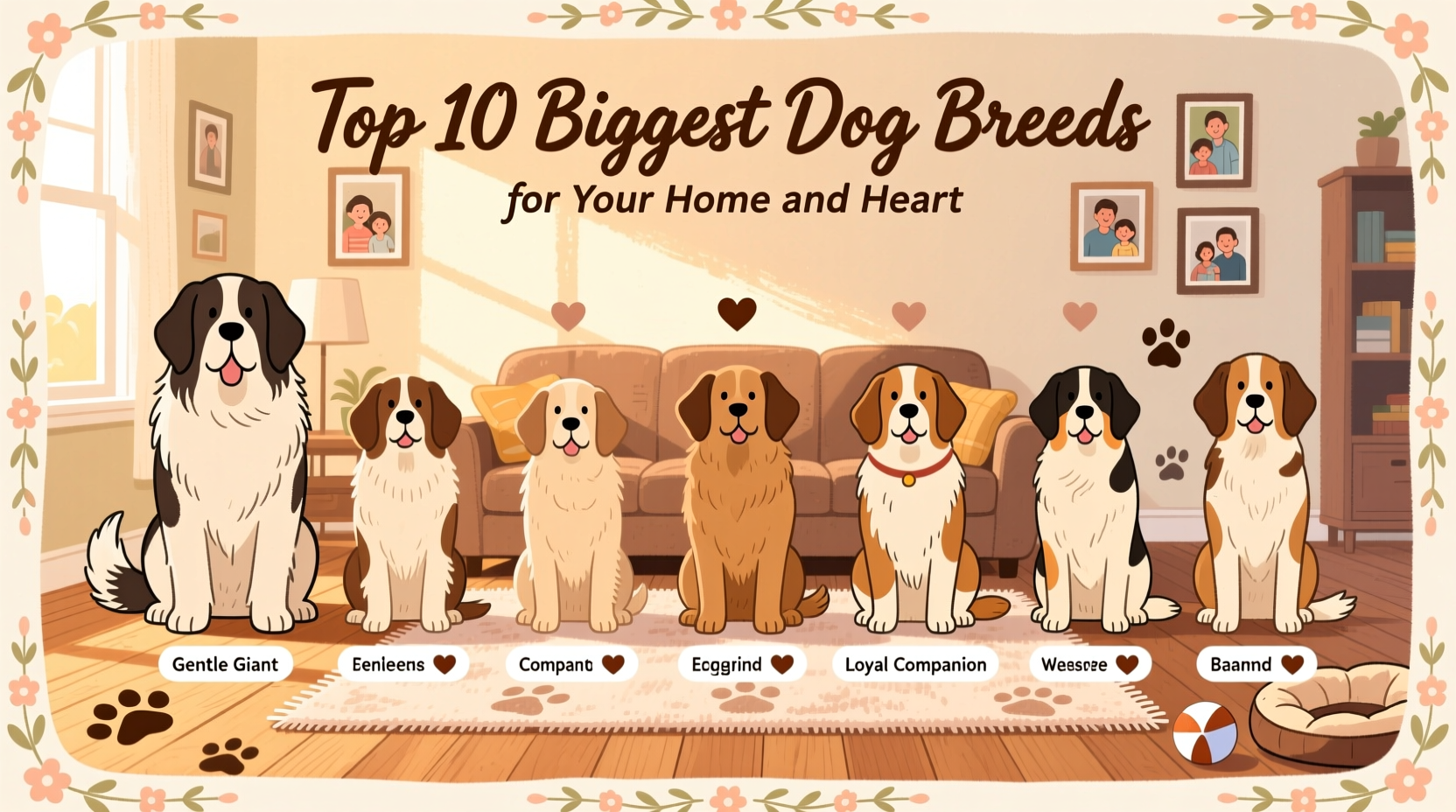
The English Mastiff reigns as one of the heaviest dog breeds in the world, with males often exceeding 200 pounds. Despite their imposing size, they are famously calm, patient, and deeply affectionate with family members. Originally bred as estate guardians, they are naturally watchful but rarely aggressive without cause.
Mastiffs thrive in quiet homes with secure yards. They require early socialization and consistent training due to their sheer mass—even playful jumping can knock over small children or furniture.
Tip: Begin leash training early. A full-grown Mastiff may be difficult to manage if not accustomed to walking politely on a lead.2. Saint Bernard: Rescue Hero Turned Family Favorite
Famous for their life-saving exploits in the Swiss Alps, Saint Bernards combine strength, intelligence, and warmth. Weighing between 140–180 pounds, they are powerful yet remarkably gentle with children.
Their thick double coat requires regular brushing, especially during shedding seasons. While they adapt well to cold climates, owners in warmer regions must provide shade, hydration, and limited outdoor activity during heatwaves.
“Saint Bernards have a natural instinct to nurture. Many will gravitate toward infants or unwell family members, standing guard quietly.” — Dr. Lena Torres, Canine Behavior Specialist
3. Great Dane: The Apollo of Dogs
Towering up to 32 inches at the shoulder, the Great Dane holds the title of tallest dog breed. Despite their regal appearance and resemblance to ancient war dogs, they are known as “gentle giants” who prefer lounging on the sofa beside their humans rather than asserting dominance.
Great Danes are deeply sensitive and respond best to positive reinforcement. Due to their rapid growth rate, proper diet management during puppyhood is essential to prevent joint and bone issues like hip dysplasia.
4. Newfoundland: The Water-Rescuing Gentleman
Built for cold waters and rugged terrain, Newfoundlands boast webbed feet, water-resistant coats, and extraordinary swimming ability. Males typically weigh 130–150 pounds and carry themselves with dignified calm.
They form strong emotional bonds and are exceptionally good with children—earning nicknames like “nanny dog.” However, their dense fur demands weekly grooming to avoid matting and overheating.
5. Irish Wolfhound: Elegance and Endurance
Standing even taller than Great Danes, Irish Wolfhounds are the tallest of all purebred dogs. Historically used for hunting wolves and large game, today’s wolfhounds are peaceful, reserved, and deeply loyal.
Unlike some giant breeds, they are moderately active indoors but appreciate daily walks. Their lifespan tends to be shorter—typically 6–8 years—making every moment with them precious.
Comparison of the Top 5 Largest Breeds
| Breed | Avg. Weight (lbs) | Height (inches) | Temperament | Lifespan |
|---|---|---|---|---|
| English Mastiff | 160–230 | 27–30 | Calm, loyal, protective | 6–10 years |
| Saint Bernard | 140–180 | 26–30 | Friendly, patient, alert | 8–10 years |
| Great Dane | 120–200 | 28–34 | Gentle, sensitive, affectionate | 7–10 years |
| Newfoundland | 100–150 | 26–28 | Sweet, calm, nurturing | 9–12 years |
| Irish Wolfhound | 110–180 | 30–35 | Reserved, noble, loyal | 6–8 years |
6. Leonberger: The Lion-Hearted Companion
Hailing from Germany, the Leonberger was bred to resemble a lion, complete with a majestic mane-like ruff. Weighing 110–170 pounds, they are intelligent, trainable, and eager to please. Often used in search-and-rescue roles, they excel in obedience and water work.
Families appreciate their balanced energy—they play vigorously when young but mature into serene household members by age three or four.
7. Caucasian Shepherd: The Ultimate Guardian
One of the most powerful livestock guardian breeds, the Caucasian Shepherd (or Ovcharka) weighs up to 170 pounds and possesses fearless confidence. Bred to fend off predators in the mountains of Eastern Europe and Central Asia, they are highly territorial and require experienced handling.
While not ideal for novice owners, they are fiercely loyal and calm within their trusted circle. Early and continuous socialization is non-negotiable.
8. Anatolian Shepherd: Independent Protector
With roots in ancient Turkey, the Anatolian Shepherd is built for endurance and independence. Standing 27–29 inches tall and weighing 80–150 pounds, they are lighter than other giants but no less formidable.
They bond closely with their family but maintain a watchful distance from strangers. Best suited for rural homes with large property lines, they thrive when given a job—like guarding livestock or patrolling boundaries.
9. Neapolitan Mastiff: Wrinkled Loyalty
Instantly recognizable by their heavy folds of skin and massive frame, Neapolitan Mastiffs weigh between 110–150 pounds. Calm and deliberate in movement, they are extremely protective and intuitive to human emotions.
Owners must commit to cleaning facial wrinkles regularly to prevent infection. Though low-energy, they need consistent training to ensure control in public settings.
10. Dogue de Bordeaux: France’s Noble Brute
The Dogue de Bordeaux, or French Mastiff, combines power with a surprisingly playful spirit. With a broad head and muscular build, they average 110–150 pounds and project authority effortlessly.
Loyal to a fault, they do poorly when left alone for long periods. Early exposure to people, pets, and environments helps them become stable, confident adults.
Real-Life Example: Life with a Great Dane
Sarah Thompson of Colorado adopted Bruno, a male Great Dane, at eight weeks old. At first, she underestimated how quickly he’d grow—within six months, he could rest his head on kitchen counters. She adapted by installing sturdier baby gates, using a harness designed for large breeds, and switching to orthopedic bedding.
Bruno became a beloved figure in the neighborhood, greeting children at the park with careful tail wags. When Sarah fell ill last winter, Bruno refused to leave her side, sleeping outside her bedroom door each night. “He’s not just big,” she says. “He feels everything.”
Essential Checklist Before Adopting a Giant Breed
- ✅ Confirm your living space allows large dogs (check HOA rules or rental agreements)
- ✅ Budget for higher food, medical, and supply costs (giant breeds eat 6–10 cups of food daily)
- ✅ Secure a fenced yard or access to safe walking areas
- ✅ Commit to early and ongoing training (enroll in puppy classes)
- ✅ Research veterinarians experienced with large-breed health concerns
- ✅ Purchase durable gear: harness, crate, elevated feeder, orthopedic bed
Frequently Asked Questions
Are giant dog breeds good with children?
Most giant breeds, such as Newfoundlands, Saint Bernards, and Great Danes, are excellent with children when properly socialized. Their calm demeanor and tolerance make them natural family protectors. However, supervision is always recommended due to their size—even playful nudges can be overwhelming.
Do large dogs live shorter lives?
Unfortunately, yes. Most giant breeds live between 6–10 years. Rapid growth contributes to health challenges like hip dysplasia, bloat, and heart conditions. However, advances in veterinary care and improved breeding practices are gradually extending lifespans.
Can I keep a giant breed in an apartment?
It depends on the breed and lifestyle. Some, like the more sedentary Mastiff, can adapt to apartment living if exercised sufficiently. Others, such as the energetic Leonberger or working Anatolian Shepherd, need space and purpose. Always assess individual temperament and activity needs before deciding.
Caring for Your Giant: A Timeline Approach
- Puppyhood (8–16 weeks): Focus on socialization, basic commands, and vet visits. Avoid forced exercise to protect developing joints.
- Adolescence (4–18 months): Continue training, introduce leash manners, and feed a controlled-growth large-breed puppy formula.
- Adulthood (2–7 years): Maintain routine vet checks, monitor weight, and provide mental stimulation through games or tasks.
- Senior Years (7+ years): Switch to senior-formula food, add joint supplements, schedule biannual health screenings, and adjust exercise for mobility.
Final Thoughts: Love That Comes in Large Packages
The biggest dog breeds are not merely about scale—they represent depth of character, unwavering loyalty, and a unique capacity for emotional connection. While they demand more space, food, and attention, the return on that investment is immeasurable. These dogs don’t just fill a room—they fill hearts.
If you’re ready to welcome a giant into your life, do so with eyes wide open. Research breeders, meet adult dogs, and prepare your home. Because when you choose one of these magnificent animals, you're not just gaining a pet—you're gaining a legacy of love written in paws too big to ignore.
💬 Have experience with a giant breed? Share your story below and help others understand what it truly means to live with a gentle giant.








