Folding a dog crate doesn’t have to be a frustrating chore. Whether you’re preparing for a weekend getaway, storing the crate between uses, or rearranging your home, knowing how to fold it quickly and correctly makes all the difference. Many pet owners struggle with tangled mechanisms, misaligned panels, or damaged latches simply because they lack a clear, reliable method. This guide breaks down the entire process into simple, repeatable steps—ensuring your crate remains in top condition while saving you time and effort.
Why Proper Crate Folding Matters
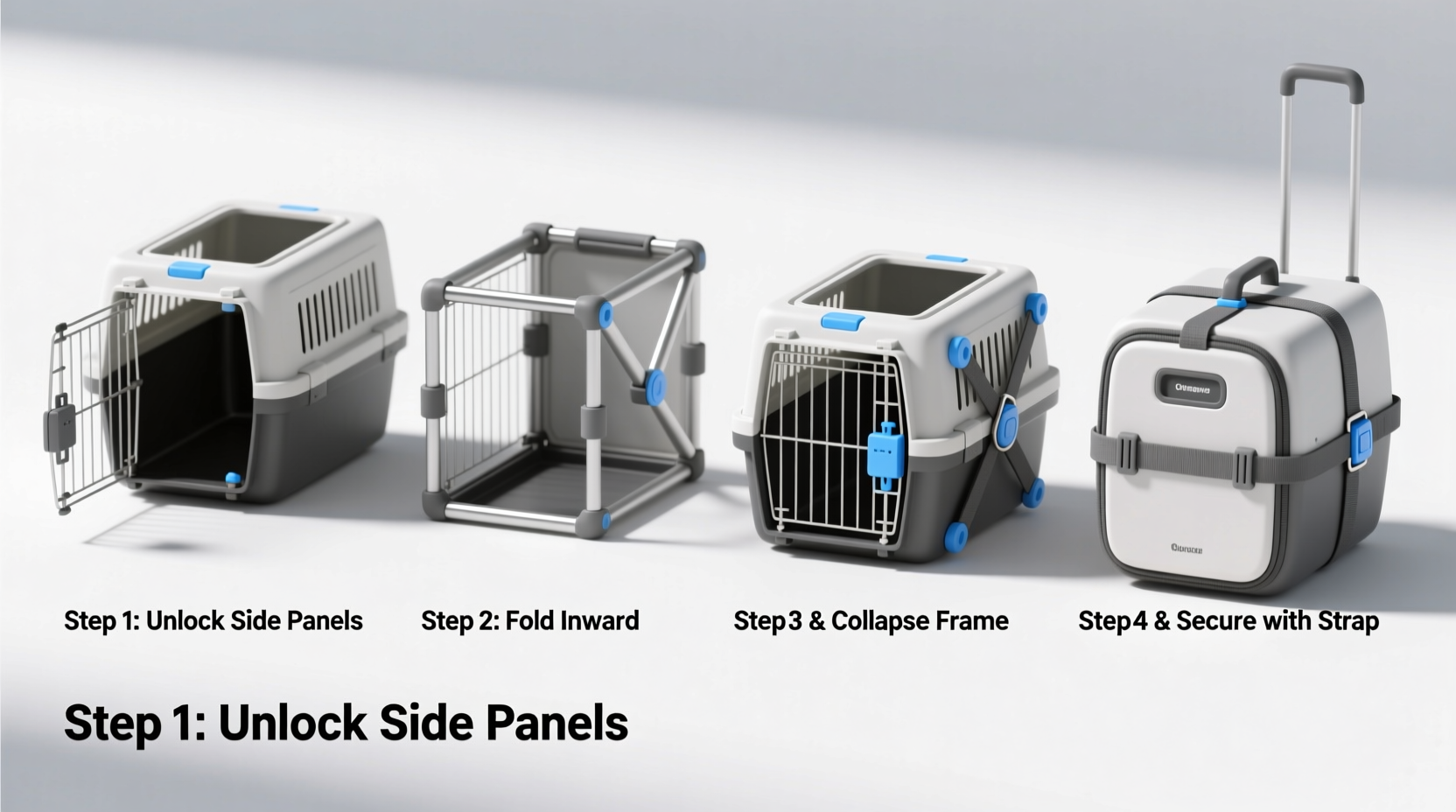
A well-maintained folding dog crate extends its lifespan and ensures safety during transport. Incorrect folding can lead to bent wires, weakened hinges, or even accidental unfolding during transit. Beyond durability, proper technique enhances convenience. A neatly folded crate takes up minimal space in a garage, closet, or car trunk—making it ideal for urban dwellers, frequent travelers, or anyone managing limited storage.
Additionally, crates designed for air travel or vehicle use must meet specific safety standards when assembled and disassembled. Following manufacturer-recommended procedures helps maintain compliance and protects your pet.
Tip: Always consult your crate’s instruction manual before folding—designs vary significantly between brands and models.Step-by-Step Guide to Effortless Dog Crate Folding
The following sequence applies to most wire-style collapsible dog crates, which are the most common type used for travel and temporary housing. These typically feature interlocking panels, a latch mechanism, and folding sides secured by pins or clips.
- Remove All Accessories
Take out bedding, bowls, toys, and any attached accessories. This prevents damage and allows full access to moving parts. - Open the Door Fully
Unlatch and swing open the door completely. Most folding mechanisms require the door to be in the open position to release side panels. - Release the Latch Mechanism
Locate the primary latch—usually at the top front of the crate. Press or slide it according to the model’s design to unlock the structure. - Push Down on the Top Panel
Gently press downward on the center of the top panel. As pressure is applied, the side walls should begin to collapse inward. Use even force to avoid bending one side more than the other. - Guide the Sides Inward
As the top lowers, guide the left and right panels toward each other. Keep your hands on the outer edges to control alignment and prevent pinching. - Secure the Folded Position
Once fully collapsed, engage the locking clips (if present) or insert retaining pins to hold the crate in its compact form. Some models automatically lock when fully compressed. - Store or Transport Safely
Place the folded crate in a dry area away from moisture. If transporting, secure it so it won’t shift or reopen unexpectedly.
Common Mistakes to Avoid
- Forcing the crate shut when resistance is felt—this may damage hinges or frame joints.
- Folding with the door closed or partially latched, which jams internal mechanisms.
- Leaving bolts or clips loose over time, leading to instability during future setups.
- Storing the crate with dirt or debris inside, promoting corrosion and odor buildup.
Do’s and Don’ts of Crate Maintenance
| Do | Don't |
|---|---|
| Clean the crate monthly with mild soap and water | Use abrasive cleaners that scratch metal surfaces |
| Lubricate hinge points annually with silicone spray | Expose the crate to prolonged outdoor weather without cover |
| Inspect for bent wires or worn latches regularly | Over-tighten adjustable bolts beyond recommended tension |
| Label folded crates with size and pet name for quick identification | Stack heavy items on top of stored crates |
Real-World Example: Traveling with Two Dogs
Sarah Thompson, a pet owner from Colorado, frequently drives her two rescue dogs—a husky and a beagle—to national parks. She uses two medium-sized folding crates that she stores flat behind her SUV’s rear seats. “I used to spend five minutes wrestling with each crate,” she says. “One time, I even bent a hinge trying to force it.” After learning the correct folding technique—especially the importance of starting with the door fully open—she now folds both crates in under two minutes. “It’s changed how I plan trips. I don’t dread setup anymore.”
Her routine includes wiping down each crate after every trip and checking the latches before reassembly. This habit has kept both crates functional for over three years despite frequent use.
“Proper folding isn’t just about convenience—it’s a safety practice. A compromised crate can unfold during sudden stops.” — Dr. Marcus Lin, Veterinarian & Pet Travel Safety Advocate
Essential Checklist for Every Crate Owner
Checklist: Before Folding Your Dog Crate- ✅ Remove all bedding and food/water bowls
- ✅ Unlock and fully open the door
- ✅ Clear debris or hair from hinge tracks
- ✅ Verify no pets are inside
- ✅ Stand the crate on a flat, stable surface
- ✅ Engage safety locks once folded
Frequently Asked Questions
Can I fold my dog crate with the tray still inside?
No. The plastic bottom tray found in many crates must be removed before folding. Leaving it in place restricts movement and can crack the tray or warp the frame due to compression.
How often should I inspect my folding crate for wear?
Conduct a visual inspection before each use. Look for bent wires, stiff hinges, or cracked latches. Perform a deeper mechanical check every three months, especially if used weekly or for travel.
Are all folding crates the same?
No. While most follow a similar collapse principle, designs differ across brands like MidWest Homes, AmazonBasics, and SturdiProducts. Some use push-button releases, others rely on manual pin removal. Always refer to your specific model’s manual.
Maximizing Space and Efficiency
Folded dog crates are remarkably space-efficient. A standard 36-inch crate typically compresses to just 8–10 inches thick—less than the width of a shoebox. When storing multiple crates, stack them vertically only if the manufacturer approves stacking and if each is securely locked in place.
For apartment living or RV owners, consider mounting wall hooks or using an overhead garage rack to suspend folded crates out of the way. Just ensure the storage environment is dry; prolonged humidity accelerates rust on steel frames.
Tip: Wrap the folded crate in a breathable cotton cover to protect against dust and minor impacts during storage.Final Thoughts: Make Folding Second Nature
Mastery of dog crate folding transforms what was once a cumbersome task into a seamless part of pet care. With consistent practice and attention to detail, you’ll preserve your crate’s integrity, enhance portability, and reduce physical strain. Whether you're prepping for a vet visit, road trip, or seasonal storage, the ability to collapse and set up your crate efficiently supports both your lifestyle and your dog’s comfort.
Start today by reviewing your current folding method. Compare it to the steps outlined here. Small adjustments can yield significant improvements in speed, safety, and equipment longevity.
💬 Have a folding hack or troubleshooting tip? Share your experience in the comments below and help fellow pet owners streamline their routines!








