Dogs bark for many reasons—territorial instinct, excitement, fear, or alerting their family to a perceived threat. When the doorbell rings and a delivery driver appears, your dog may react with intense barking. While this behavior is natural, it can be disruptive, stressful, and even escalate over time if not properly managed. The good news? You don’t need harsh tools like shock collars to address this issue. With patience, consistency, and positive reinforcement, you can teach your dog to remain calm when visitors arrive.
This guide explores science-backed, humane strategies that focus on understanding your dog’s triggers, modifying their environment, and reshaping their response through training. These methods are not only effective but also strengthen the bond between you and your pet.
Understanding Why Dogs Bark at Delivery Drivers
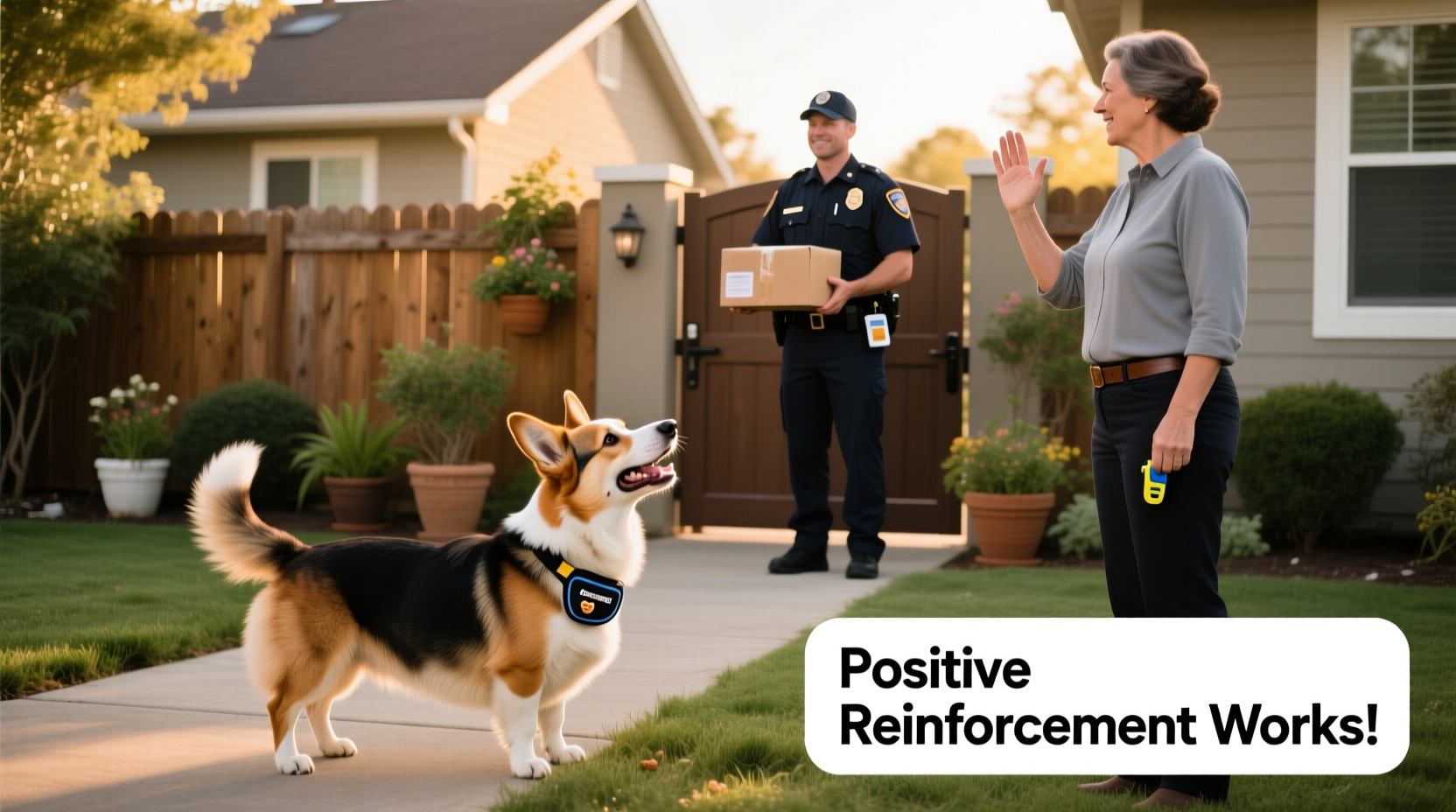
Barking at delivery personnel is one of the most common behavioral challenges reported by dog owners. It often stems from a combination of territorial instincts and lack of exposure to frequent, non-threatening strangers. For many dogs, the sudden appearance of someone approaching the front door—especially someone who doesn't enter or interact—is confusing and alarming.
- Territorial guarding: Dogs naturally protect their home and family. A person approaching the door may trigger a defensive response.
- Startle reaction: The knock or doorbell creates a sudden auditory cue that excites or alarms the dog.
- Lack of socialization: Dogs not accustomed to regular visits from strangers may perceive them as threats.
- Reinforced behavior: If barking causes the person to leave (even temporarily), the dog learns that barking works.
Addressing the root cause—not just the symptom—is essential for long-term success. Shock collars may suppress barking temporarily, but they do nothing to resolve the underlying anxiety or confusion. Worse, they can increase fear and aggression. Positive, reward-based methods offer a safer, more sustainable solution.
Tip: Observe your dog’s body language before and during barking episodes. Is the tail high and stiff? Ears forward? That suggests reactivity. Crouched posture or tucked tail may indicate fear.Step-by-Step Training Plan to Reduce Doorstep Barking
Changing your dog’s reaction to delivery drivers takes time and repetition. The goal isn’t silence—it’s calm behavior in the presence of triggers. Follow this structured approach over several weeks.
- Control the environment initially. Use curtains, window film, or baby gates to block your dog’s view of the front door during deliveries. This reduces exposure while you begin training.
- Teach an alternative behavior. Train your dog to go to a designated “settle spot” (e.g., a mat in another room) and stay there calmly when the doorbell rings. Use treats and praise to reinforce the behavior.
- Simulate the trigger. Record the sound of your doorbell or a knock. Play it at a low volume while rewarding calm behavior. Gradually increase volume as your dog remains relaxed.
- Add movement. Have a friend mimic a delivery by walking up the driveway or ringing the bell, then leaving. Reward your dog for staying quiet and focused on you.
- Practice with real deliveries. Begin with predictable services (like a daily food delivery) and use high-value treats to redirect attention indoors.
- Maintain consistency. Everyone in the household must respond the same way—no yelling or reinforcing barking by giving attention.
Progress may be slow, especially for highly reactive dogs. Patience is key. Sessions should be short (5–10 minutes) and end on a positive note.
Environmental Management and Preventive Strategies
While training is crucial, managing your dog’s environment can prevent rehearsal of unwanted behaviors. Every time your dog barks aggressively at the door, the habit becomes stronger. Prevention helps break the cycle.
| Strategy | How It Helps | Implementation Tips |
|---|---|---|
| Block visual access | Prevents arousal before training begins | Use opaque window decals, close blinds, or install frosted glass film |
| Create a safe retreat area | Reduces stress and offers an alternative to guarding | Set up a cozy space with toys, water, and calming music away from the front door |
| Use white noise or music | Muffles doorbell and outside sounds | Play classical or specially designed dog-calming playlists during peak delivery hours |
| Install a delivery-safe zone | Keeps dog separated during actual visits | Use a baby gate or closed door to confine dog safely without isolation |
Environmental adjustments buy you time to implement training without setbacks. Think of them as part of a comprehensive behavior plan, not a standalone fix.
Mini Case Study: Reducing Reactivity in a Border Collie
Sophie, a 3-year-old Border Collie in suburban Denver, barked frantically every time a package arrived. Her owner, Mark, tried scolding and even used a vibration collar, but the behavior worsened. Sophie began barking at shadows and distant movements.
After consulting a certified dog trainer, Mark implemented a three-part strategy: he installed window film to block Sophie’s view, trained her to go to a “chill mat” in the living room when the doorbell sounded, and practiced desensitization using recorded doorbell sounds. Over six weeks, with daily 10-minute sessions, Sophie learned to lie down quietly when the bell rang. Real-life deliveries were introduced gradually, with Mark offering chicken treats each time she stayed calm.
Today, Sophie still perks up at the doorbell but immediately looks to Mark for a treat instead of charging the door. “It’s amazing what patience and positive reinforcement can do,” Mark says. “She’s happier, and I’m no longer embarrassed when someone drops something off.”
Expert Insight: What Professionals Recommend
Leading animal behaviorists emphasize that punishment-based tools like shock collars can damage trust and increase anxiety. Instead, they advocate for functional assessments and reward-based learning.
“Dogs aren’t misbehaving out of defiance—they’re communicating. Using aversive tools shuts down communication. We want dogs to feel safe, not silenced.” — Dr. Karen Becker, DVM, Certified Animal Behaviorist
Another expert, Sarah Wilson, a professional dog trainer with over 15 years of experience, stresses consistency: “The number one mistake owners make is being inconsistent. One day they reward calmness, the next they yell. Dogs thrive on predictability. Clear, kind rules work better than fear.”
Do’s and Don’ts: Quick Reference Guide
| Do | Don’t |
|---|---|
| Use high-value treats (like boiled chicken or cheese) during training | Yell at or physically correct your dog for barking |
| Practice daily, even when no deliveries are expected | Allow barking to continue unchecked, assuming it will fade |
| Gradually increase exposure to real-world triggers | Force your dog to confront fears without preparation |
| Involve all household members in the training plan | Use shock collars or other aversive devices |
| Consult a certified trainer if progress stalls | Assume the behavior is “just how your dog is” |
Frequently Asked Questions
Can older dogs learn to stop barking at delivery people?
Yes. While puppies are generally easier to train due to greater neuroplasticity, adult and senior dogs can absolutely learn new behaviors. The process may take longer, but consistency and positive reinforcement are equally effective regardless of age.
What if my dog is aggressive, not just barking?
If your dog lunges, growls, or shows signs of aggression, consult a certified veterinary behaviorist or a force-free trainer immediately. Aggression indicates heightened fear or reactivity, and improper handling can make it worse. A professional can design a safety-focused behavior modification plan.
Are there any tools that help besides training?
Yes—some tools support training without causing harm. Examples include:
- Automatic treat dispensers triggered by motion near the door.
- White noise machines to mask outdoor sounds.
- Window blockers to limit visual stimulation.
Final Checklist: Your Action Plan
- Observe your dog’s barking pattern and identify triggers.
- Block visual access to the front door during deliveries.
- Choose a calm-down spot and begin training your dog to go there on cue.
- Desensitize your dog to doorbell sounds using recorded audio at low volume.
- Practice with simulated deliveries using a friend or family member.
- Gradually introduce real-life scenarios with high-value rewards. <7>Involve all household members in consistent responses.
- Seek professional help if needed.
Conclusion: Build Calm, Not Fear
Stopping your dog from barking at delivery drivers isn’t about suppression—it’s about teaching confidence and self-control. Humane, reward-based methods not only solve the problem but also deepen your relationship with your dog. By replacing fear and reactivity with calm anticipation, you create a home where both you and your pet feel secure.
You don’t need shock collars or intimidation to shape behavior. What you need is time, consistency, and a willingness to understand your dog’s perspective. Start today with one small step—blocking the view, practicing a new cue, or simply observing without reacting. Progress builds momentum.
💬 Have a success story or challenge with doorstep barking? Share your experience in the comments—your insight could help another dog owner find peace at the front door.








