
Cat owners know the joy of watching their feline companions eat with enthusiasm—but that joy often comes with scattered kibble, spilled water, and paw prints on the feeding mat. While some mess is inevitable, a consistently dirty feeding area can attract pests, harbor bacteria, and create unnecessary cleaning stress. The good news: with thoughtful setup and consistent habits, you can maintain a clean, hygienic, and efficient feeding zone. These strategies go beyond basic tidying—they address behavior, environment, and product choices to create a truly mess-free mealtime experience.
Choose the Right Feeding Surface
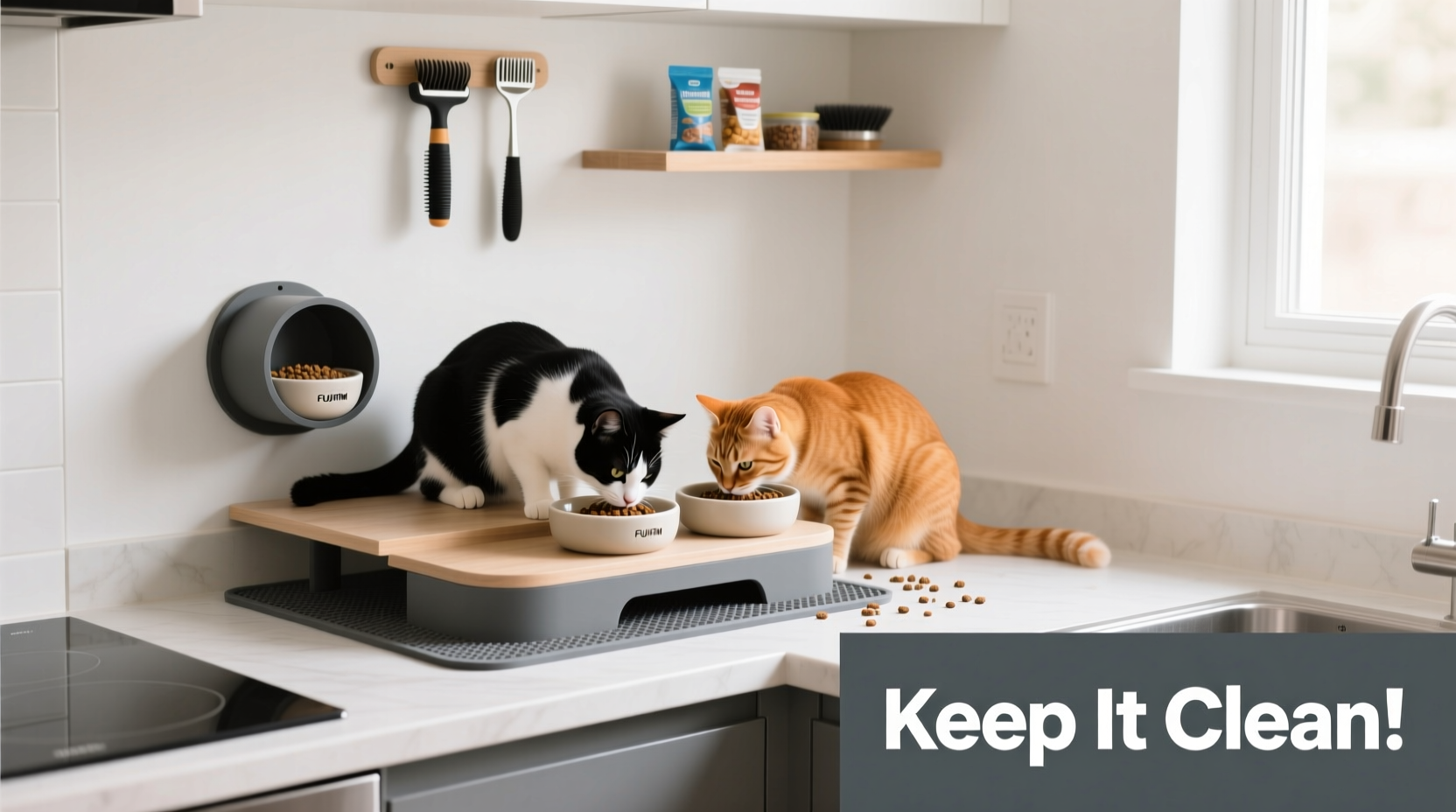
The surface where your cat eats plays a major role in how much mess spreads. Hard floors like tile or hardwood are easier to clean than carpets, but even on these surfaces, stray kibble and tracked moisture can become problematic. A well-designed feeding station begins with containment.
Tip: Use a non-slip, washable feeding mat at least 24 inches wide to catch spills and prevent bowl movement.Opt for mats made from silicone or rubber—they’re easy to wipe down and resist bacterial growth. Avoid fabric mats unless they’re machine-washable and used with raised bowls to minimize direct food contact. For multi-cat households, consider a larger mat or individual zones to reduce competition and scatter-eating behavior.
Select Appropriate Bowls and Placement
Bowl design directly influences cleanliness. Many cats dip their whiskers into food, causing discomfort and leading them to push food out. This “whisker fatigue” results in kibble scattering and reluctance to finish meals.
| Bowl Type | Pros | Cons |
|---|---|---|
| Shallow ceramic | Non-porous, stable, prevents whisker stress | Can be heavy; may tip if not weighted |
| Raised stainless steel | Easy to clean, ergonomic for posture | Metal noise may scare sensitive cats |
| Plastic | Affordable, lightweight | Scratches easily, harbors bacteria, causes chin acne |
Place bowls against a wall or in a corner to limit outward spillage. If your cat tends to fling food, position the set-up where walls naturally contain debris. Avoid placing food near litter boxes or high-traffic areas, which can cause anxiety and rushed eating.
“Cats are fastidious by nature. A messy eating environment can discourage proper hydration and nutrition.” — Dr. Lena Torres, Feline Behavior Specialist
Control Portion Sizes and Feeding Schedule
Free-feeding dry food may seem convenient, but it often leads to overeating, obesity, and increased mess from playful pawing. Scheduled meals give you control over quantity and timing, reducing waste and encouraging cleaner habits.
Use a kitchen scale or measuring cup to portion food accurately based on your cat’s weight and activity level. Most adult cats need 2–3 small meals per day. Wet food should be served fresh and removed after 30 minutes to prevent spoilage.
Step-by-Step Feeding Routine
- Measure the correct portion using a dedicated scoop or scale.
- Place food in a clean, shallow bowl on a feeding mat.
- Supervise the first few minutes to monitor eating behavior.
- Remove uneaten wet food within 30 minutes.
- Wipe the bowl and mat immediately after the meal.
- Store leftover dry food in an airtight container away from light and moisture.
Prevent Water Spills and Bacterial Growth
Water bowls are often overlooked sources of mess. Cats may paw at water, dip toys, or splash while drinking—especially if the bowl is too full or poorly positioned. Stagnant water also breeds algae and bacteria, which can deter cats from drinking enough.
- Use a weighted or non-tip water bowl to reduce spills.
- Fill water only halfway to minimize splashing.
- Clean the bowl daily with hot, soapy water and rinse thoroughly.
- Consider a cat water fountain: moving water encourages hydration and reduces stagnation.
Fountains should be disassembled and cleaned weekly. Replace filters as recommended by the manufacturer. Position the fountain on the same mat as the food bowl, but far enough to avoid cross-contamination.
Real-Life Example: From Chaos to Calm Feeding
Sarah, a pet owner in Portland, struggled with her two cats turning mealtime into a kibble battlefield. One cat would aggressively guard the food, while the other knocked bowls over in frustration. After consulting her vet, she implemented a few changes: she switched to shallow ceramic bowls, placed them in separate corners of the kitchen, and introduced timed feedings using automatic dispensers.
Within two weeks, both cats adjusted to the new routine. Sarah added silicone mats under each station and began removing uneaten food promptly. Not only did the mess decrease dramatically, but both cats gained healthier weights and showed less stress during meals.
Essential Cleanliness Checklist
To maintain long-term cleanliness, follow this daily and weekly checklist:
- Daily: Wash food and water bowls with mild soap.
- Daily: Wipe down the feeding mat and surrounding floor.
- Daily: Refill water with fresh, filtered water.
- Weekly: Deep-clean mats, bowls, and feeding trays with diluted vinegar or pet-safe disinfectant.
- Weekly: Inspect storage containers for moisture or pests.
- Monthly: Replace worn mats or cracked bowls.
Common Mistakes That Increase Mess
Avoid these pitfalls that sabotage even the best intentions:
- Using oversized bowls – Too much space encourages pawing and scattering.
- Placing bowls on unstable surfaces – Wobbly tables lead to tipping.
- Ignoring behavioral cues – Some cats dislike certain textures or heights, leading to food rejection.
- Overfilling water bowls – Increases splash radius and invites paw play.
- Storing food improperly – Open bags attract insects and degrade faster.
FAQ
Why does my cat kick food out of the bowl?
This behavior often stems from whisker fatigue, instinctual burying habits, or dislike of bowl material. Try a wider, shallower bowl made of ceramic or stainless steel to reduce discomfort.
How can I stop my cat from tracking water across the floor?
Position the water bowl on a thick, absorbent mat and fill it only halfway. Alternatively, use a covered water fountain with a splash guard to contain droplets.
Is it safe to use bleach to clean cat bowls?
Yes, but only when properly diluted (1 tablespoon of bleach per gallon of water) and thoroughly rinsed. Residual bleach is toxic. For routine cleaning, mild dish soap and hot water are safer and sufficient.
Final Thoughts
A clean feeding area isn’t just about aesthetics—it supports your cat’s health, reduces household stress, and strengthens trust between pet and owner. By selecting the right equipment, establishing routines, and addressing behavioral triggers, you can transform chaotic mealtimes into calm, hygienic rituals. Small changes add up: a non-slip mat today, a measured portion tomorrow, and soon, a spotless kitchen becomes the norm.
💬 What’s your best trick for a mess-free cat meal? Share your experience and help fellow cat lovers keep their homes clean and their pets happy!








