Cat owners know the joy of sharing their homes with feline companions—but few escape the reality of tracked litter. Clumping litter, while excellent for odor control and easy scooping, has a tendency to stick to cats’ paws, forming hard clumps that can be uncomfortable or even painful if left unattended. Beyond discomfort, these clumps scatter across floors, embedding in carpets and getting stepped on by bare feet. The good news is that with the right techniques and preventive habits, you can keep your cat’s paws clean and your home tidy without stress or struggle.
Understanding Why Litter Sticks to Paws
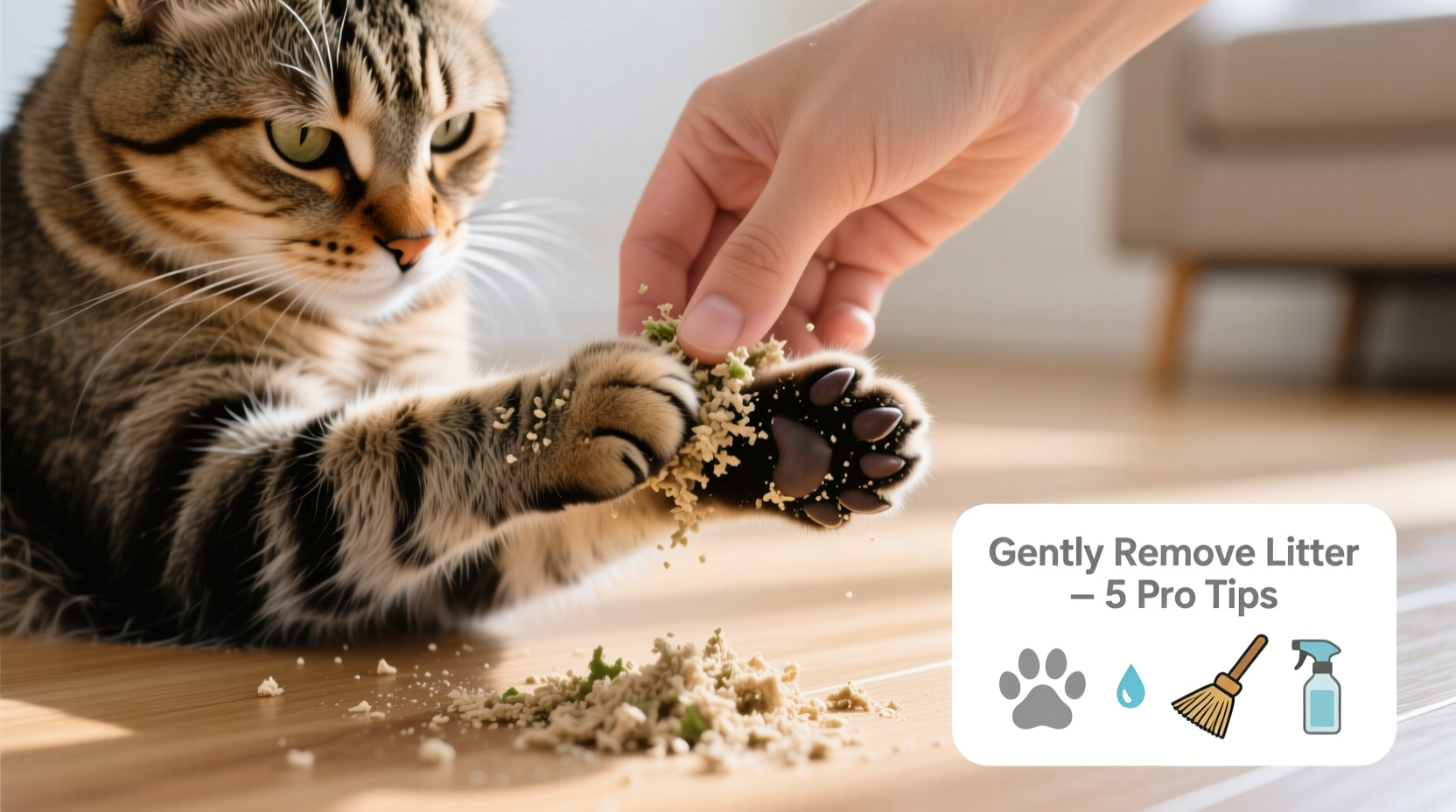
Clumping litter absorbs moisture rapidly, which is great for trapping odors but problematic when it comes into contact with damp paws. Cats naturally groom themselves, often stepping in the litter box shortly after using it. If their paws are slightly moist—either from humidity, sweat glands in their footpads, or grooming—they pick up litter particles that quickly harden into clumps.
Long-haired cats are especially prone to this issue. Fur between the toes acts like a net, catching litter granules that then absorb moisture and form stubborn clumps. Even short-haired cats aren’t immune, particularly if the litter is fine-grained or overly dusty.
“Litter accumulation between paw pads isn’t just messy—it can lead to irritation, cracked skin, or even infections if not addressed regularly.” — Dr. Lena Torres, DVM, Feline Wellness Specialist
Gentle Methods to Remove Clumped Litter from Paws
Removing litter safely is crucial. Forcing off hardened clumps can hurt your cat and damage delicate skin. The key is patience and gentle handling.
Step-by-Step Guide: Safe Litter Removal
- Inspect the paws calmly: Wait until your cat is relaxed—after napping or eating. Gently lift one paw at a time and examine between the pads.
- Soften the clump: Use a warm, damp washcloth (not dripping) to gently press against the clump for 20–30 seconds. This softens the outer layer of the clump without shocking your cat with cold water.
- Loosen carefully: After softening, use your fingers or tweezers (with extreme care) to break apart loose edges. Never pull or yank.
- Brush out residue: For long-haired cats, use a fine-tooth comb to gently work through fur between the toes once the main clump is gone.
- Dry thoroughly: Moisture left behind can attract more litter. Pat dry with a soft towel.
Preventive Strategies to Minimize Litter Tracking
Prevention is far more effective—and less stressful—than cleanup. A combination of environmental adjustments and product choices can drastically reduce litter sticking to paws.
Choose the Right Litter
Not all clumping litters behave the same. Larger granules tend to shed more easily from fur and don’t compact as tightly between toes. Dust-free, plant-based litters (like those made from corn, wheat, or pine) are less likely to adhere to damp paws than traditional clay-based formulas.
| Litter Type | Sticks to Paws? | Ease of Cleanup | Paw-Friendly? |
|---|---|---|---|
| Clay Clumping (Fine Granules) | High | Difficult | No |
| Clay Clumping (Large Granules) | Moderate | Moderate | Somewhat |
| Wood Pellets | Low | Easy | Yes |
| Wheat-Based Clumping | Low-Moderate | Easy | Yes |
| Silica Gel Crystals | Very Low | Very Easy | Yes |
Use a Litter Mat Strategically
A high-quality, ridged litter mat placed under or just outside the litter box traps granules before they spread. Deep grooves catch litter while allowing paws to walk through comfortably. Look for mats with raised edges to contain debris.
Tip: Shake or vacuum the mat weekly to prevent buildup that could get kicked back onto paws.Trim Fur Between Paws
For long-haired breeds like Persians or Maine Coons, regular trimming of the hair between footpads significantly reduces litter retention. Use rounded-tip scissors and only trim when your cat is calm—or consider professional grooming every 6–8 weeks.
Real Example: How Sarah Reduced Litter Mess by 80%
Sarah adopted a long-haired domestic shorthair named Milo, who quickly became notorious for tracking litter throughout her apartment. Despite daily scooping and using a top-entry litter box, clumps regularly formed between his toes, leading to scattered granules and one incident where Milo limped due to an embedded clump.
She implemented a three-part solution: switched to a wheat-based clumping litter with larger granules, placed a dual-layer rubber litter mat (one under the box, one extending outward), and began trimming the fur between Milo’s paws every two weeks. Within a month, litter tracking dropped dramatically. She now checks his paws during evening petting sessions and removes any minor buildup before it hardens.
“It’s not about perfection,” Sarah says. “It’s about consistency. Now, I hardly notice the litter anymore.”
Essential Checklist for Paw & Home Cleanliness
- ✔️ Switch to low-tracking, large-grain, or plant-based clumping litter
- ✔️ Place an anti-tracking litter mat with deep ridges
- ✔️ Regularly trim fur between your cat’s toes (especially for long-haired cats)
- ✔��� Inspect paws weekly for early signs of clumping
- ✔️ Keep a warm, damp cloth handy for quick softening of stuck litter
- ✔️ Vacuum around the litter area at least twice a week
- ✔️ Reward your cat after paw handling to encourage cooperation
Frequently Asked Questions
Can I use baby wipes to clean my cat’s paws?
No. Most baby wipes contain alcohol, fragrances, or chemicals that can irritate your cat’s sensitive skin or be toxic if ingested during grooming. If you must wipe paws, use wipes specifically labeled as safe for cats, or a damp cloth with plain water.
How often should I check my cat’s paws for litter clumps?
Once a week is sufficient for most cats. However, if you have a long-haired breed or notice frequent tracking, inspect every 3–4 days. Early detection prevents discomfort and makes removal easier.
Is it normal for cats to hate having their paws touched?
Yes. Many cats are sensitive about their paws due to the concentration of nerve endings. Start with brief touches during calm moments and pair them with treats. Gradually increase handling time to build trust.
Final Thoughts: Small Changes, Big Results
Dealing with clumping litter on your cat’s paws doesn’t have to be a daily battle. By understanding how and why litter sticks, applying gentle removal techniques, and adopting smart preventive habits, you create a cleaner, more comfortable environment for both you and your cat. It’s not about eliminating mess entirely—that’s unrealistic with cats—but about minimizing it through thoughtful care.
The best solutions are simple, consistent, and kind. Whether it’s swapping litter types, adding a quality mat, or scheduling a quick paw check, each small action adds up. Your cat will walk more comfortably, your floors will stay cleaner, and your peace of mind will improve.
💬 Have a tip that worked for your cat? Share your experience in the comments—your insight could help another cat owner solve their litter dilemma.








