
Dogs exhibit a wide range of behaviors during mealtime, some of which can be puzzling or even frustrating for pet owners. One such behavior is lifting or moving the food bowl—pushing it across the floor, nudging it into another room, or flipping it entirely. While it may seem harmless at first, this habit can lead to messes, food waste, and even safety hazards if the bowl damages flooring or injures the dog. More importantly, it may signal underlying anxiety, instinctual drives, or learned behaviors that need addressing. The good news is that with consistent training, environmental adjustments, and a deeper understanding of canine psychology, this behavior can be effectively managed and often eliminated.
Understanding Why Dogs Move Their Food Bowls
Before implementing corrective strategies, it’s essential to understand the root causes behind this behavior. Dogs don’t act out of defiance; their actions are responses to internal or external stimuli. Common reasons include:
- Instinctual hoarding: In the wild, dogs may move food to a safer or more private location to avoid competition.
- Environmental discomfort: A noisy, high-traffic, or poorly lit feeding area may make dogs feel vulnerable.
- Breed tendencies: Herding or working breeds like Border Collies or Huskies may nudge or push objects as part of natural instincts.
- Playfulness or boredom: Some dogs treat the bowl like a toy, especially if they’re under-stimulated.
- Medical issues: Dental pain or neck discomfort might cause a dog to reposition the bowl to eat more comfortably.
Identifying the trigger is the first step toward long-term resolution. Observe when and where the behavior occurs, and consider consulting a veterinarian to rule out physical discomfort.
Tip: Record a short video of your dog during mealtime to analyze body language and context clues.Step-by-Step Training Plan to Stop Bowl Movement
Changing ingrained behavior requires patience and structure. Use this six-phase approach to gradually modify your dog’s response to mealtime.
- Phase 1: Assess the feeding environment
Select a quiet, low-traffic area free from distractions. Ensure the floor surface provides traction—a slippery tile floor may encourage sliding the bowl. - Phase 2: Switch to a non-slip bowl
Use a heavy ceramic or rubber-bottomed bowl that resists movement. Alternatively, place the bowl inside a silicone mat or on a non-slip placemat. - Phase 3: Introduce the “stay” command during meals
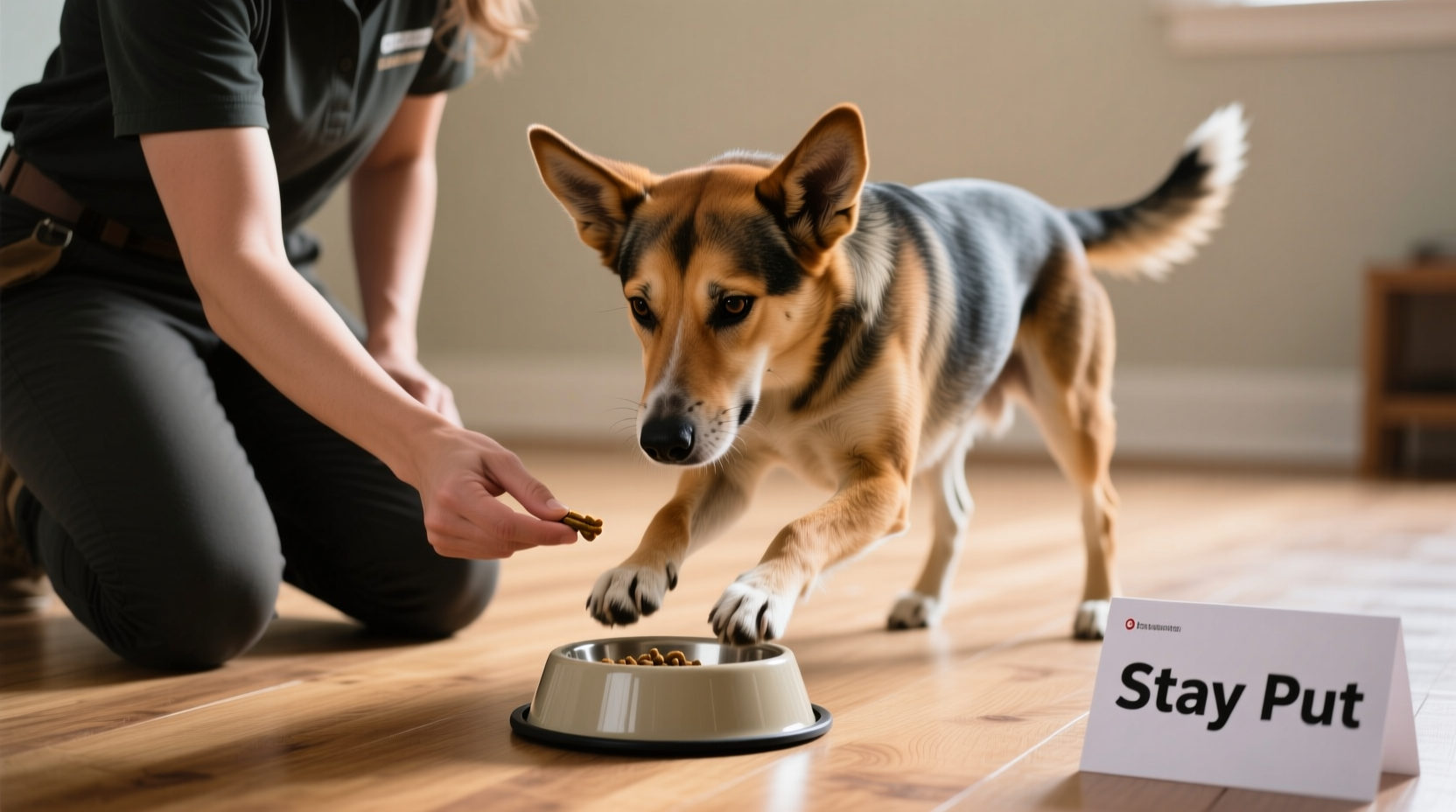
Ask your dog to sit and stay before placing the bowl down. If they lunge or paw at it, remove the bowl and repeat. Reward calm behavior with verbal praise and a small treat. - Phase 4: Practice controlled feeding sessions
Feed in short intervals (5–10 minutes). Remove the bowl if they attempt to move it. This teaches that disruptive behavior ends mealtime. - Phase 5: Desensitize to triggers
If noise or presence distracts them, gradually reintroduce those elements while rewarding calm eating. - Phase 6: Reinforce consistently
All household members must follow the same rules. Inconsistency undermines progress.
Consistency over weeks is critical. Most dogs show improvement within 2–4 weeks when protocols are followed diligently.
Effective Tools and Equipment
The right equipment can significantly reduce the likelihood of bowl displacement. Consider these options based on your dog’s size, breed, and behavior.
| Product Type | Best For | Pros | Considerations |
|---|---|---|---|
| Weighted Ceramic Bowls | Medium to large dogs | Stable, durable, dishwasher-safe | Fragile if dropped |
| Rubber-Bottomed Bowls | Dogs on hard floors | Prevents sliding, affordable | May wear over time |
| Slow-Feeder Bowls | Fast eaters or playful dogs | Engages focus, reduces movement | Requires cleaning crevices |
| Bowl Anchors / Mounts | Dogs who flip bowls | Secures bowl permanently | Less portable |
Expert Insight: Addressing Canine Anxiety Around Food
Food-related behaviors often stem from emotional states rather than mere mischief. Dr. Karen Becker, a proactive veterinary specialist, emphasizes the importance of emotional security during feeding:
“Dogs that move their food are often trying to control their environment. If a dog feels unsafe while eating, they’ll seek a ‘safer’ spot—even if it’s just three feet away. Creating a predictable, interruption-free mealtime builds confidence.” — Dr. Karen Becker, DVM, Integrative Veterinary Care
This insight underscores the need to evaluate not just the physical setup but also the emotional tone of feeding. Avoid hovering, loud conversations, or allowing children or other pets to approach during meals. Over time, a calm routine fosters trust and reduces displacement behavior.
Mini Case Study: Resolving Bowl Movement in a Rescue Terrier
Milo, a 3-year-old Jack Russell Terrier, was adopted from a shelter and began pushing his stainless steel bowl from the kitchen into the hallway every evening. His owner initially thought it was playfulness, but the behavior persisted despite scolding. After consultation with a trainer, they discovered two key factors: Milo had been fed in a crowded shelter kennel and associated eating with competition. Additionally, the kitchen’s echoey tile amplified household sounds.
The solution involved switching to a heavy ceramic bowl placed on a rubber mat in a quieter corner of the dining room. The owner implemented a 10-minute feeding window and used positive reinforcement when Milo ate without moving the bowl. Within three weeks, the behavior stopped completely. The case illustrates how past experiences and environment shape present actions—and how targeted changes yield results.
Checklist: How to Prevent Your Dog From Moving Their Food Bowl
Use this actionable checklist to address the behavior systematically:
- ✅ Rule out medical issues with a vet visit
- ✅ Choose a quiet, secure feeding location
- ✅ Use a non-slip or weighted food bowl
- ✅ Train the “sit” and “stay” commands before feeding
- ✅ Feed in controlled, timed sessions
- ✅ Reward calm eating with praise or treats
- ✅ Eliminate distractions during meals
- ✅ Ensure all family members follow the same rules
- ✅ Monitor progress weekly and adjust as needed
FAQ
Is it normal for puppies to move their food bowls?
Yes, especially in younger dogs. Puppies explore the world with their mouths and paws, and bowl movement may be part of play or curiosity. However, early intervention helps prevent the behavior from becoming habitual.
Can punishment stop my dog from moving the bowl?
No. Yelling or physical correction increases anxiety and can worsen food-related stress. Positive reinforcement and environmental management are far more effective and humane.
Should I hand-feed my dog to stop this behavior?
Hand-feeding can build trust but should be used sparingly. Overuse may lead to dependency or resource guarding. It’s better to focus on creating a calm, independent eating routine.
Conclusion
Stopping your dog from lifting or moving their food bowl isn’t about dominance—it’s about understanding, consistency, and thoughtful training. By identifying the cause, modifying the environment, and reinforcing desired behaviors, you create a mealtime experience that’s peaceful for both you and your pet. Every small step you take builds a foundation of trust and routine that extends beyond feeding into overall obedience and well-being.
💬 Have you successfully trained your dog to stop moving their bowl? Share your story or tips in the comments—your experience could help another pet owner find peace at dinnertime!








