Spraying indoors is one of the most frustrating behaviors cat owners face—especially when it involves a female cat, as many assume only males exhibit this behavior. In reality, unspayed and even spayed females may spray due to stress, territorial concerns, or medical issues. Left unaddressed, this habit can damage your home and strain your relationship with your pet. The good news is that with the right approach, indoor spraying can be managed and often eliminated entirely. This guide provides actionable, veterinarian-supported strategies to help you understand why your female cat sprays and how to stop it effectively.
Understanding Why Female Cats Spray
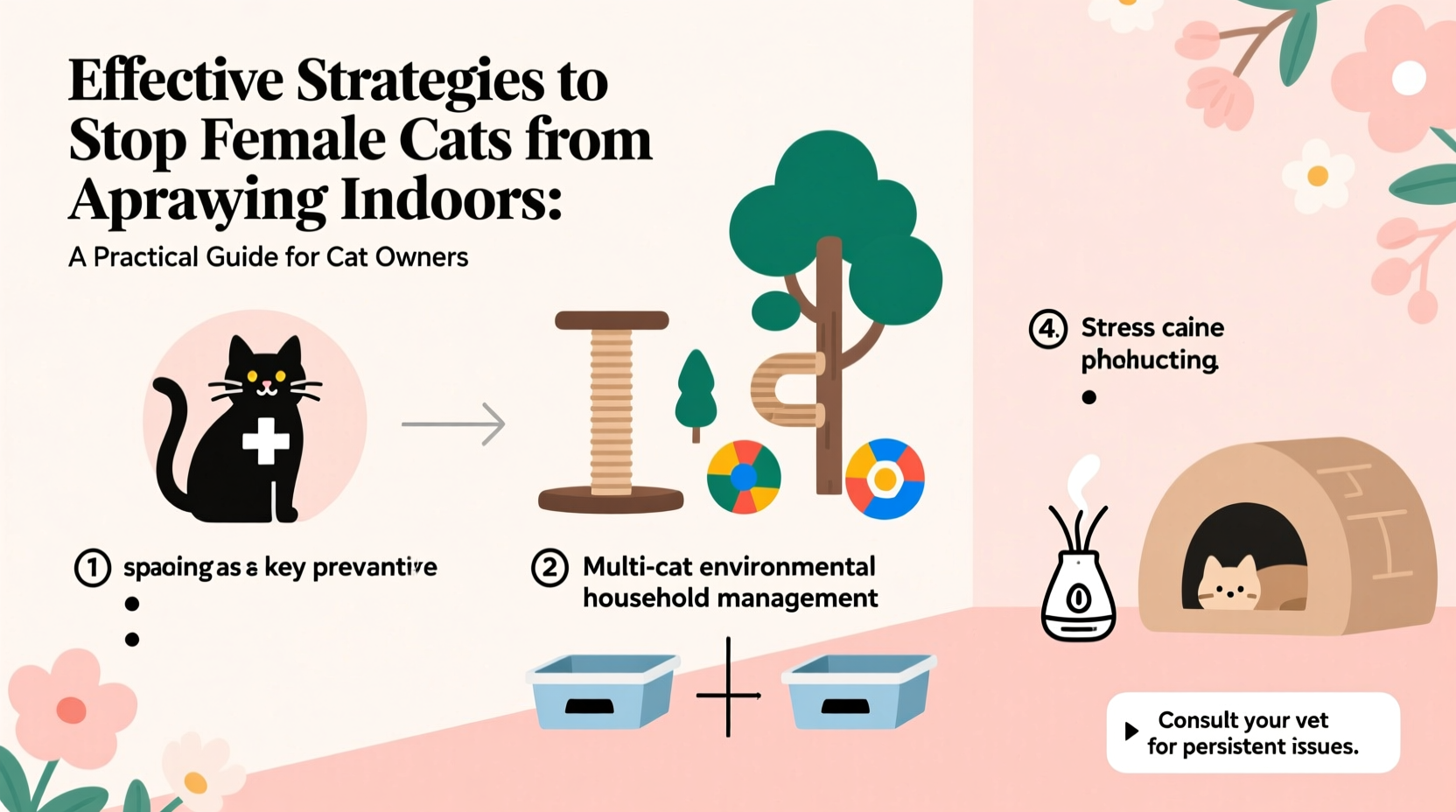
Cat spraying is distinct from regular urination. When a cat sprays, she stands upright, lifts her tail, and releases a small amount of urine onto vertical surfaces like walls, furniture, or doors. This behavior is primarily communicative—a way for cats to mark their territory using scent glands in their urine.
While male cats are more commonly associated with spraying, female cats—particularly those who are unspayed—engage in this behavior too. Common causes include:
- Hormonal influences: Unspayed females may spray during heat cycles to signal availability to males.
- Stress or anxiety: Changes in the household, new pets, or loud environments can trigger spraying.
- Inter-cat conflict: Even subtle tensions between cats in multi-cat homes can lead to marking.
- Medical conditions: Urinary tract infections, bladder stones, or kidney issues may cause inappropriate elimination that mimics spraying.
- Environmental insecurity: Lack of safe spaces, insufficient litter boxes, or poor litter hygiene can prompt marking behavior.
“Spraying in female cats is rarely about defiance—it’s usually a sign of distress or a physiological need. Addressing the root cause is far more effective than punishment.” — Dr. Lena Torres, DVM, Feline Behavior Specialist
Step-by-Step Guide to Stop Indoor Spraying
Eliminating spraying requires a structured, patient approach. Follow these steps in order to maximize success:
- Rule out medical issues. Schedule a veterinary exam to check for urinary tract infections, cystitis, or hormonal imbalances. A simple urinalysis can detect underlying problems.
- Spay your cat if not already done. Spaying significantly reduces or eliminates spraying in up to 95% of cases, especially when performed before sexual maturity.
- Identify and reduce stressors. Observe when and where spraying occurs. Note recent changes: new pets, visitors, construction, or altered routines.
- Provide environmental enrichment. Offer climbing shelves, hiding spots, scratching posts, and daily interactive play to reduce anxiety.
- Use pheromone diffusers. Products like Feliway mimic calming facial pheromones and have been clinically shown to reduce stress-related spraying by up to 90% over six weeks.
- Thoroughly clean sprayed areas. Use enzymatic cleaners (not ammonia-based products) to break down odor molecules. Repeat cleaning if necessary.
- Block access to previous spray sites. Temporarily cover walls with plastic, aluminum foil, or double-sided tape to discourage re-marking.
- Ensure adequate resources. Follow the “+1 rule”: provide one more litter box than the number of cats. Place them in quiet, accessible locations.
Do’s and Don’ts: Managing Spraying Behavior
| Do’s | Don’ts |
|---|---|
| Spay your female cat early (ideally by 5–6 months) | Delay spaying hoping the behavior will resolve on its own |
| Use enzymatic cleaners on soiled areas | Use bleach or ammonia-based cleaners (they mimic urine scent) |
| Install Feliway diffusers in high-stress zones | Yell at or rub your cat’s nose in urine |
| Provide multiple litter boxes in separate locations | Place all litter boxes in one room (creates competition) |
| Introduce changes gradually (e.g., new pets, furniture) | Rearrange the home abruptly without acclimation periods |
Real-Life Example: Solving Bella’s Spraying Problem
Bella, a 3-year-old spayed domestic shorthair, began spraying near the front door three weeks after her owners adopted a second cat, Milo. The owner initially assumed Bella was jealous and tried scolding her, which only increased the frequency of spraying.
After consulting a veterinarian behaviorist, they discovered Bella felt insecure due to lack of personal space. The solution included:
- Adding a second litter box on the opposite side of the apartment.
- Installing a Feliway diffuser in the hallway where spraying occurred.
- Creating a dedicated “safe zone” for Bella with elevated perches and toys.
- Implementing parallel play sessions to build positive associations between the cats.
Within four weeks, the spraying stopped completely. The key was addressing Bella’s emotional needs rather than focusing solely on cleanup.
Essential Checklist for Cat Owners
Use this checklist to systematically address and prevent spraying:
- ✅ Schedule a vet visit to rule out medical causes
- ✅ Confirm your cat is spayed (if applicable)
- ✅ Count litter boxes—do you have enough?
- ✅ Clean past spray sites with enzymatic cleaner
- ✅ Install a pheromone diffuser in common areas
- ✅ Evaluate household stressors (noise, new people, pets)
- ✅ Increase vertical space and hiding spots
- ✅ Monitor interactions between cats for signs of tension
- ✅ Maintain consistent daily routines
- ✅ Reward calm, appropriate bathroom behavior with treats or affection
Frequently Asked Questions
Can a spayed female cat still spray?
Yes, though it's less common. Even spayed females may spray due to stress, illness, or social conflict. If spraying persists post-spaying, investigate environmental or medical triggers.
How long does it take to stop a cat from spraying?
With consistent intervention, improvement is often seen within 2–6 weeks. However, full resolution may take longer, especially in multi-cat households or cases involving deep-seated anxiety.
Are there medications for spraying behavior?
In severe cases, veterinarians may prescribe anti-anxiety medications such as fluoxetine (Prozac) temporarily while behavioral modifications take effect. These should only be used under professional guidance and alongside environmental changes.
Conclusion: A Calm Home Starts with Understanding
Stopping a female cat from spraying isn’t about dominance or discipline—it’s about empathy and environment. By identifying the underlying cause, whether medical, hormonal, or psychological, you can implement targeted solutions that restore peace to your home and well-being to your cat. Success comes not from quick fixes but from consistent care, thoughtful adjustments, and patience. Every cat deserves to feel safe, and once that sense of security is established, spraying naturally fades away.
💬 Have you successfully stopped your female cat from spraying? Share your story or tips in the comments—your experience could help another cat owner find relief!








