Birdwatching is a peaceful and rewarding pastime, but it can quickly turn distressing when outdoor cats begin targeting the very birds you're trying to attract. Domestic and feral cats are responsible for billions of bird deaths annually in North America alone, according to the American Bird Conservancy. While cats are natural hunters, their presence near feeders creates undue stress for birds and disrupts local ecosystems. The good news is that with thoughtful planning and practical interventions, you can enjoy vibrant bird activity while keeping both birds and neighborhood cats safe.
Protecting birds doesn’t mean declaring war on cats. Instead, it’s about creating a balanced environment where wildlife can thrive without becoming prey. This guide outlines proven, humane, and sustainable strategies to safeguard your bird feeder from prowling cats—without resorting to harmful or aggressive measures.
Elevate Feeders Beyond Cat Reach
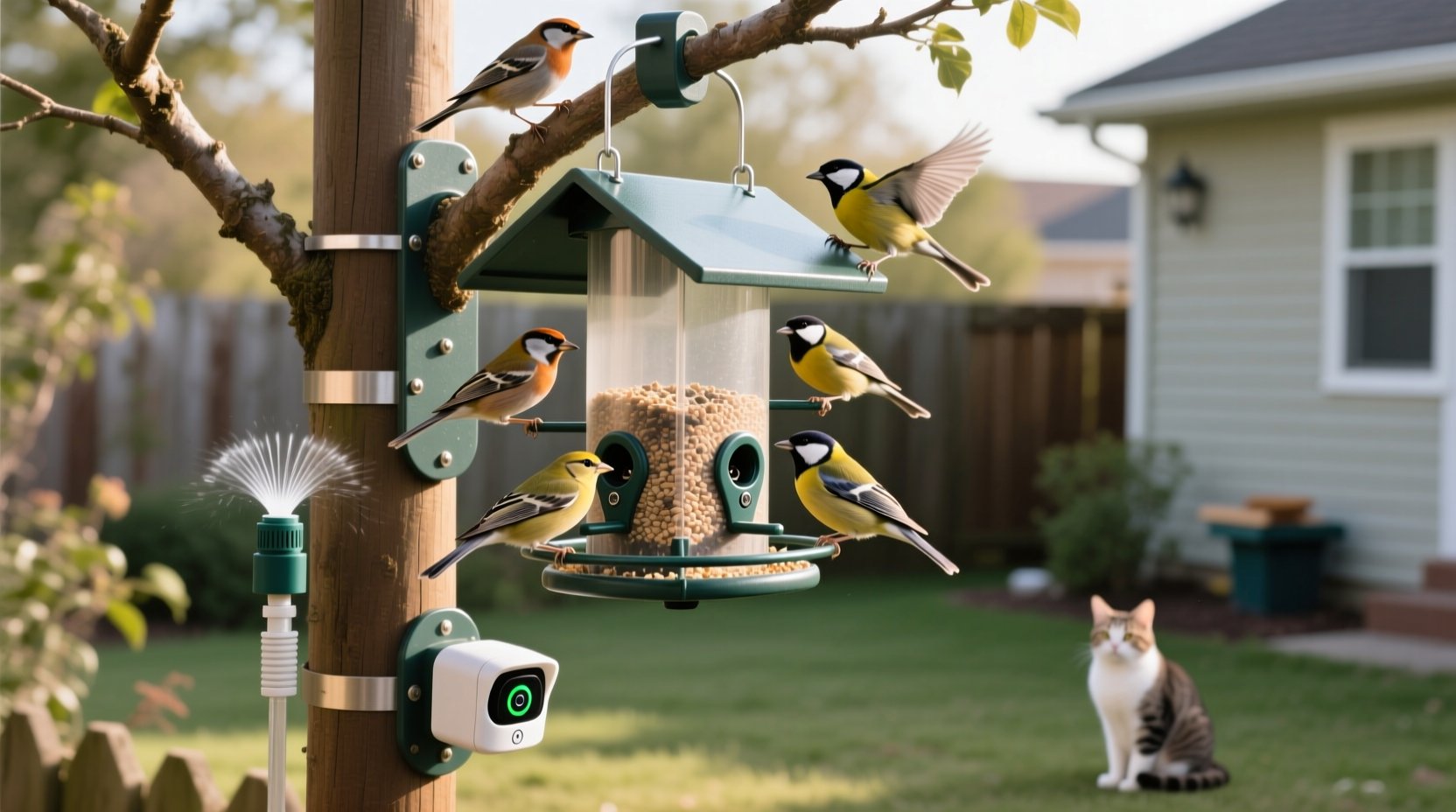
One of the simplest and most effective deterrents is height. Cats typically cannot jump higher than six feet from a standing position, and they struggle to climb smooth, vertical poles. Placing your bird feeder at least seven to eight feet above the ground significantly reduces the risk of ambush.
Use a dedicated pole system designed for bird feeders. These often come with baffles and are constructed from slick materials like metal or PVC that resist climbing. Avoid placing feeders near trees, fences, or structures that cats can use as launch points. A distance of at least 10 feet from any climbable surface ensures cats can't pounce from cover.
Tip: Use a shepherd’s hook pole made of metal or thick plastic, securely anchored in concrete or a weighted base to prevent tipping.Install Physical Barriers and Baffles
Baffles are dome-shaped or cylinder-style shields that prevent cats from climbing up or dropping down onto feeders. There are two main types:
- Top-mounted baffles: Installed above the feeder, these block cats from jumping down from tree branches.
- Bottom-mounted baffles: Placed below the feeder on the pole, these stop cats from climbing upward.
Cone-shaped baffles should slope at a 45-degree angle or greater and be at least 17 inches in diameter to be effective. For cylindrical models, ensure the baffle is smooth and extends fully around the pole. Regular inspection is important—over time, debris or wear can reduce effectiveness.
“Baffles are one of the most cost-effective tools in bird-friendly landscaping. When properly installed, they can reduce predation by over 80%.” — Dr. Laura Bennett, Urban Wildlife Ecologist
Strategic Feeder Placement and Landscaping
The location of your feeder matters just as much as its height. Birds need clear sightlines to spot approaching predators. Place feeders in open areas, away from dense shrubs or tall grasses where cats can hide. At the same time, provide nearby escape routes—such as native bushes or small trees—within 3 to 5 feet of the feeder. This gives birds a quick refuge if threatened, without giving cats a hiding spot.
Avoid placing feeders directly against house walls or decks where cats might lurk under railings. Instead, use freestanding poles in the middle of a yard or lawn. If you must place a feeder near a window, consider using window decals to prevent bird collisions while maintaining visibility for monitoring cat activity.
| Feeder Placement | Recommended | Avoid |
|---|---|---|
| Height | 7–8 feet high | Below 6 feet |
| Distance from Structures | 10+ feet from trees/fences | Near climbable surfaces |
| Surrounding Vegetation | Open area with nearby escape shrubs | Dense brush or tall grass |
| Ground Surface | Grass or mulch (visible) | Thick ground cover |
Use Motion-Activated Deterrents
Technology offers several non-harmful ways to discourage cats from lingering near feeders. Motion-activated sprinklers, ultrasonic sound emitters, and flashing lights can startle cats without injuring them. These devices detect movement and respond instantly, creating an unpleasant experience that teaches cats to avoid the area.
Sprinklers are particularly effective because they combine surprise with discomfort—most cats dislike water. Devices like the ScareCrow or Orbit Enforcer activate within seconds of detecting motion and cover a 10-foot radius. Ultrasonic repellers emit high-frequency sounds only audible to animals, which many cats find irritating.
While these tools work well, rotate their use periodically. Cats may habituate to consistent stimuli, so alternating between water, sound, and light-based deterrents maintains effectiveness.
Collaborate with Neighbors and Promote Responsible Pet Ownership
Many outdoor cats are owned pets allowed to roam freely. While some owners believe this is natural behavior, free-roaming cats face higher risks of injury, disease, and shortened lifespans. They also contribute to wildlife decline. Engaging with neighbors respectfully can lead to meaningful change.
Share information about the impact of outdoor cats on local bird populations. Offer resources on indoor enrichment for cats or suggest catios—secure outdoor enclosures that allow feline access to fresh air without hunting freedom. Some communities have successfully implemented “Cats Indoors!” campaigns supported by local wildlife groups and veterinarians.
Tip: Provide printed flyers from the American Bird Conservancy or Alley Cat Allies to help educate neighbors without confrontation.Mini Case Study: The Greenfield Neighborhood Initiative
In suburban Greenfield, residents noticed a sharp decline in chickadee and finch populations over two breeding seasons. After installing cameras near feeders, they discovered two neighborhood cats were frequent visitors. Rather than blaming individuals, a community meeting was organized. Residents shared footage and data from the Cornell Lab of Ornithology on cat predation.
Together, they launched a pilot program: five households installed catio enclosures, three adopted motion-sensor sprinklers, and all agreed to elevate feeders. Within six months, bird visits increased by 70%, and the cats remained healthy and active indoors. The success inspired a township-wide “Safe Havens for Birds” initiative.
Step-by-Step Guide to Cat-Proofing Your Feeder
- Assess the current setup: Observe feeder location, height, and surrounding landscape for cat access points.
- Relocate the feeder: Move it to an open area at least 7 feet high and 10 feet from climbable structures.
- Install a baffle: Choose a cone or cylinder model and mount it below or above the feeder on a smooth pole.
- Add motion-activated deterrents: Set up a sprinkler or ultrasonic device aimed at common approach paths.
- Engage neighbors: Share findings and solutions respectfully, focusing on shared goals like bird conservation and pet safety.
- Monitor and adjust: Watch bird activity and cat behavior weekly; tweak placement or deterrents as needed.
FAQ
Will feeding birds attract more cats?
Yes, active feeders can draw cats looking for easy prey. However, with proper placement and deterrents, you can minimize this risk. The key is not to eliminate feeding, but to do it safely.
Are bell collars effective for outdoor cats?
Some studies show bells reduce bird kills by about 50%, but cats can learn to stalk silently despite the noise. Bells are better than nothing, but physical barriers and habitat design offer stronger protection.
Can I legally stop my neighbor’s cat from coming into my yard?
Laws vary by region, but most municipalities classify cats as personal property. While you can deter cats humanely, trapping or harming them is illegal in many areas. Focus on exclusion methods rather than confrontation.
Final Checklist: Protecting Birds from Cats
- ☑ Elevate feeder to at least 7 feet
- ☑ Install a top or bottom baffle
- ☑ Position feeder away from trees, fences, and dense shrubs
- ☑ Add motion-activated sprinkler or sound deterrent
- ☑ Provide nearby escape vegetation for birds
- ☑ Talk to neighbors about keeping cats indoors or in catios
- ☑ Monitor regularly and make adjustments
Conclusion
Creating a safe haven for birds doesn’t require eliminating outdoor cats—it requires smart, compassionate planning. By combining elevation, physical barriers, technology, and community awareness, you can maintain a thriving bird-feeding station that supports local biodiversity without becoming a hunting ground. Every small adjustment contributes to a larger effort to coexist with nature responsibly.
💬 Have a strategy that worked in your yard? Share your experience in the comments and help others protect birds while respecting all animals in our shared spaces.








