Cat ownership brings joy, companionship, and a certain level of chaos—especially when accidents happen. One of the most persistent challenges pet owners face is cat urine odor. Unlike other household odors, cat urine contains uric acid crystals that can bond with porous surfaces, leading to lingering smells that return even after cleaning. Left unaddressed, these odors can deter cats from using their litter boxes and compromise indoor air quality. The good news is that with the right approach, you can both prevent future incidents and completely eliminate existing odors.
Understanding Why Cat Urine Smells So Strong
Cat urine isn’t just unpleasant—it’s chemically complex. It contains urea, ammonia, and uric acid, which crystallize when dried and reactivate in humid conditions. This reactivation is why you might suddenly smell urine weeks after an incident, especially during summer or rainy seasons. Additionally, cats use scent marking as a form of communication. Stress, territorial disputes, or changes in routine can trigger spraying behavior, particularly in multi-cat households.
Standard household cleaners like vinegar or bleach may temporarily mask the smell but often fail to break down uric acid. In fact, bleach can react with ammonia in urine to produce toxic fumes. To truly eliminate the odor, you need enzymatic cleaners specifically formulated to digest organic compounds.
“Enzymatic cleaners are essential because they don’t just cover up the smell—they destroy the source by breaking down the proteins and crystals responsible for the odor.” — Dr. Laura Thompson, DVM, Feline Behavior Specialist
Step-by-Step Guide to Eliminating Existing Cat Urine Odor
Immediate and thorough action is critical when dealing with fresh or old urine stains. Follow this timeline to ensure complete odor removal:
- Blot the Area Immediately (Fresh Stains): Use paper towels or a clean cloth to absorb as much liquid as possible. Press down firmly; do not rub, as this spreads the urine deeper into fibers.
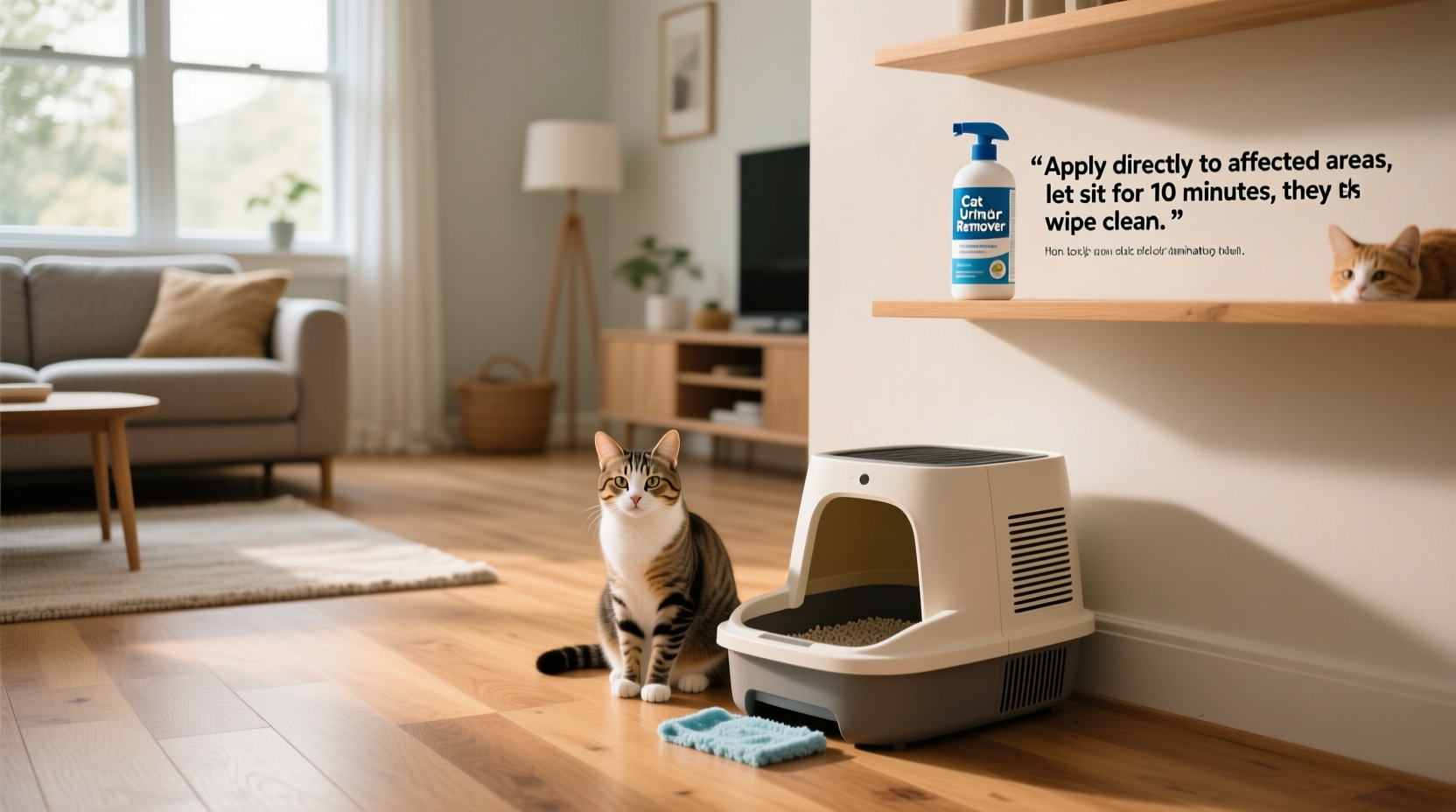
- Apply an Enzymatic Cleaner: Choose a product containing live enzymes (e.g., Nature's Miracle, Rocco & Roxie). Saturate the area completely, ensuring penetration into carpet padding or subfloor if necessary.
- Cover with Plastic Wrap (Optional for Carpets): For deep absorption, cover the treated area with plastic wrap for 4–6 hours. This prevents evaporation and allows enzymes more time to work.
- Avoid Heat Until Fully Dry: Do not use steam cleaners or hair dryers prematurely. Heat can set the stain and lock in odor.
- Repeat if Necessary: For older or repeated stains, a second application may be required. Allow 24–48 hours between treatments.
- Vacuum After Drying: Once fully dry, vacuum the area thoroughly to lift any residual particles.
Preventing Future Incidents: Litter Box Best Practices
Most inappropriate urination stems from litter box dissatisfaction. Cats are fastidious creatures and avoid boxes that are dirty, poorly located, or shared under stressful conditions.
- Follow the “One Plus One” Rule: Provide one litter box per cat, plus one extra. For three cats, have four boxes.
- Place Boxes Strategically: Distribute boxes on different floors and away from loud appliances or high-traffic areas.
- Scoop Daily: Remove waste at least once every 24 hours. Clumping litter should be changed entirely every 2–3 weeks.
- Avoid Scented Litters: Many cats dislike perfumed additives. Opt for unscented, clumping clay or natural alternatives like corn or walnut-based litters.
- Respect Privacy: Ensure each box is in a quiet, accessible location where the cat won’t be startled.
Common Litter Box Mistakes
| Mistake | Why It’s a Problem | Better Alternative |
|---|---|---|
| Only one box for multiple cats | Leads to competition and avoidance | Add extra boxes in separate locations |
| Using liners in covered boxes | Liners can trap odors and make cleaning harder | Use uncovered boxes or skip liners |
| Placing boxes next to noisy washers/dryers | Frightens cats during use | Relocate to quieter, low-traffic zones |
| Changing litter type abruptly | Cats may reject unfamiliar textures/scents | Mix new litter gradually over 7–10 days |
Behavioral and Environmental Adjustments
Sometimes, odor issues stem from stress rather than poor hygiene. Changes such as a new pet, moving furniture, or construction noise can cause anxiety-driven marking. Identifying triggers is key.
In multi-cat homes, conflicts often go unnoticed. One cat may dominate access to resources, forcing others to eliminate elsewhere. Video monitoring can help identify subtle aggression or avoidance behaviors.
Consider using pheromone diffusers like Feliway Classic or Feliway MultiCat. These mimic natural facial pheromones cats use to mark safe spaces, reducing stress and spraying tendencies.
Tip: If your cat suddenly starts urinating outside the box, consult your vet first. Medical issues like UTIs, diabetes, or kidney disease can cause inappropriate elimination.Mini Case Study: Resolving Recurring Bathroom Issues
Sarah, a cat owner in Portland, noticed her two-year-old tabby, Milo, had started urinating on the bathroom rug. Despite daily scooping and using a premium litter, the behavior persisted. She tried vinegar solutions and air fresheners, but the smell returned within days.
After consulting her veterinarian, Sarah learned Milo had no medical issues. A home assessment revealed the litter box was tucked behind the washing machine—a space that became noisy and intimidating when appliances ran. She relocated a second box to a quiet hallway closet and installed a Feliway diffuser nearby. Within a week, the accidents stopped. She then treated the original spot with an enzymatic cleaner over two applications, eliminating the odor permanently.
Essential Prevention Checklist
To maintain a fresh, odor-free home, follow this actionable checklist:
- ✅ Inspect your home monthly for hidden urine spots using a blacklight
- ✅ Use enzymatic cleaner on all suspected areas, even if no visible stain exists
- ✅ Maintain at least one litter box per cat, plus one extra
- ✅ Scoop waste daily and replace litter regularly
- ✅ Avoid ammonia-based or bleach cleaners on urine stains
- ✅ Introduce environmental enrichment (scratching posts, climbing shelves)
- ✅ Monitor for signs of stress or conflict in multi-cat homes
- ✅ Schedule annual vet checkups to rule out medical causes
Frequently Asked Questions
Can I use vinegar to remove cat urine smell?
Vinegar can neutralize ammonia in fresh urine but does not break down uric acid crystals. While it may reduce the smell temporarily, it won’t prevent reactivation. For long-term results, use an enzymatic cleaner after vinegar treatment.
How do I find old urine stains I can’t see?
Use a UV blacklight in a dark room. Old urine stains will glow yellow-green under ultraviolet light. Mark these areas for targeted cleaning.
Will steam cleaning remove cat urine odor?
Steam cleaning alone can set the odor by baking uric acid into fibers. Only steam clean after treating the area with an enzymatic solution and allowing it to dry completely.
Take Control of Your Home Environment
Eliminating cat urine odor isn’t just about cleaning—it’s about understanding your cat’s needs and creating a stress-free environment. With consistent litter box maintenance, the right cleaning products, and attention to behavioral cues, you can enjoy a harmonious home free from lingering smells. Don’t wait for odors to become entrenched. Address accidents immediately, invest in enzymatic solutions, and observe your cat’s habits closely.
💬 Have a tip that worked for your home? Share your experience in the comments and help fellow cat owners breathe easier.








