Maintaining a stable aquarium water temperature is one of the most critical factors in ensuring the health and longevity of your fish. Unlike mammals, fish are ectothermic—meaning their body temperature is regulated by their environment. Even minor fluctuations can stress fish, weaken their immune systems, and make them susceptible to disease. A well-maintained thermal environment supports proper metabolism, digestion, and breeding behavior. Yet, many aquarium owners overlook subtle changes until it's too late. This guide outlines proven, science-backed strategies to stabilize and monitor aquarium temperature effectively, helping you create a thriving aquatic ecosystem.
Understanding Fish Temperature Needs
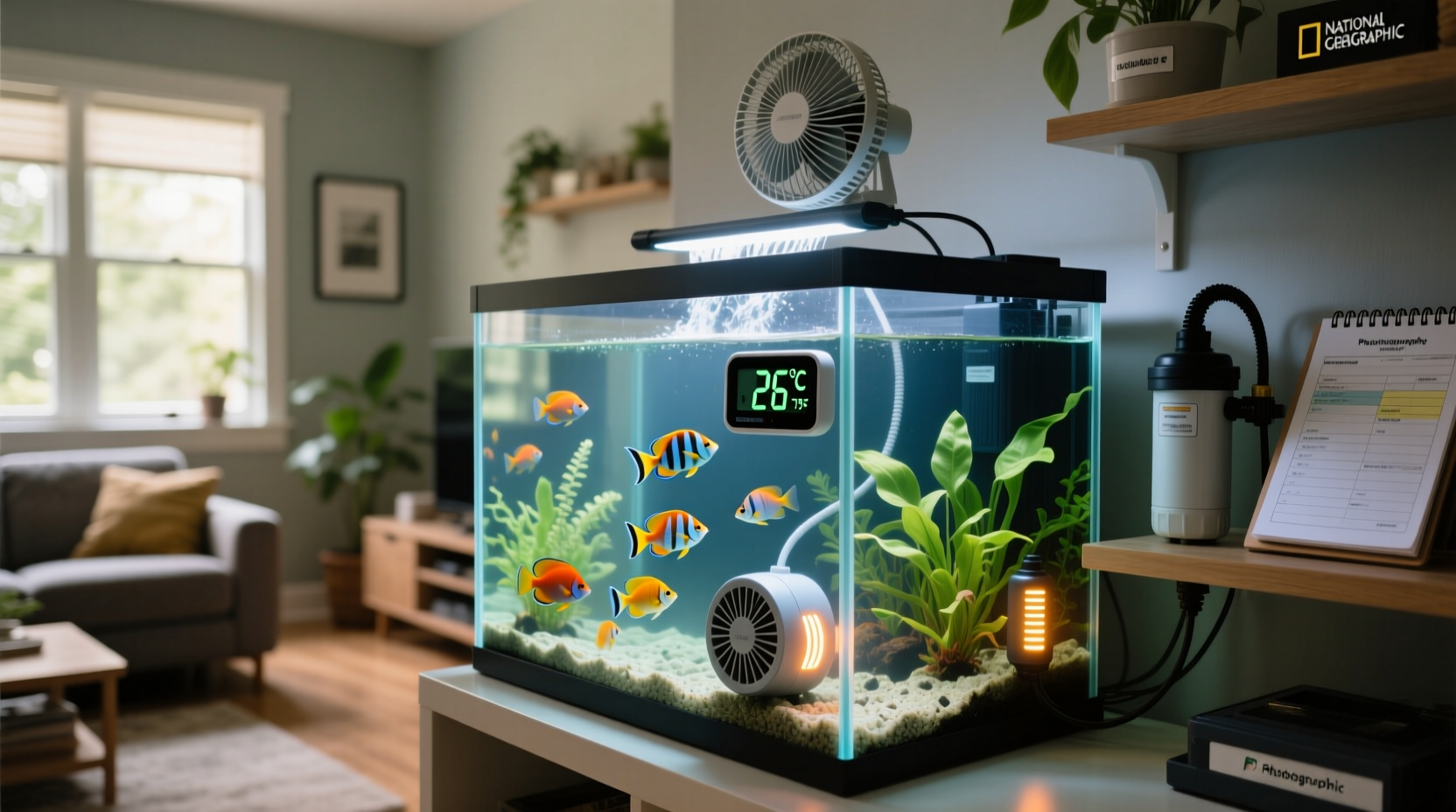
Fish species have evolved to thrive within specific temperature ranges. Tropical fish, such as guppies, angelfish, and tetras, typically require water between 75°F and 80°F (24°C–27°C). Coldwater species like goldfish do best at cooler temperatures, usually between 65°F and 72°F (18°C–22°C). Deviating from these ranges—even briefly—can cause physiological stress.
Temperature affects oxygen solubility in water: warmer water holds less dissolved oxygen. Overheating an aquarium can lead to oxygen depletion, especially in densely stocked tanks. Conversely, cold water slows metabolism, reducing appetite and activity levels. Knowing your fish’s ideal range is the first step toward stability.
“Stable temperature is more important than hitting the exact number. Fish adapt better to a consistent 77°F than to swings between 74°F and 80°F.” — Dr. Lena Torres, Aquatic Veterinarian
Choosing and Using the Right Equipment
The foundation of temperature control lies in reliable equipment. Submersible heaters with built-in thermostats are the standard for most home aquariums. When selecting a heater, match wattage to tank size—typically 3 to 5 watts per gallon. For example, a 20-gallon tank requires a 75-watt to 100-watt heater.
Modern heaters often include safety features like auto-shutoff if removed from water or overheating. Digital models offer precision temperature display and adjustable settings down to 0.5°F increments. Pair your heater with a separate, calibrated thermometer for accuracy—many aquarium thermometers are notoriously unreliable.
Tip: Mount the heater horizontally near the filter output to promote even heat distribution throughout the tank.Preventing Temperature Fluctuations
Room temperature changes, direct sunlight, and seasonal shifts can all impact aquarium conditions. Placing your tank away from windows, exterior doors, and air vents minimizes exposure to drafts and solar heating. During summer months, excessive room heat may push water beyond safe limits. In winter, uninsulated walls can cause rapid cooling.
To combat external influences:
- Use a tank cover or glass hood to reduce evaporation and insulate surface heat.
- Install a smart thermostat that monitors room climate and alerts you to sudden changes.
- Consider a secondary backup heater for larger tanks to ensure redundancy.
In multi-tank setups, avoid placing heaters directly next to each other across shared walls, as this can create localized hot spots.
Step-by-Step Guide to Temperature Management
Maintaining optimal temperature isn’t a one-time setup—it requires ongoing attention. Follow this timeline to ensure consistency:
- Daily: Check the thermometer reading at the same time each day. Note any deviations.
- Weekly: Inspect the heater for algae buildup or mineral deposits; clean gently with a soft cloth if needed.
- Monthly: Test heater accuracy by turning it off and monitoring how quickly the temperature drops. Then restart and verify it reheats to the set point.
- Seasonally: Adjust heater settings gradually as room temperatures shift. Never change more than 2°F per day.
- Emergency: If the heater fails, wrap hot water bottles in towels and float them in the tank temporarily while sourcing a replacement.
“Sudden temperature drops are more dangerous than gradual increases. Always acclimate new fish slowly over 30–60 minutes.” — Mark Reynolds, Professional Aquarist & Tank Designer
Do’s and Don’ts: Temperature Maintenance Table
| Do’s | Don’ts |
|---|---|
| Use a digital thermometer with high accuracy | Trust the heater’s built-in dial without verification |
| Place heater in high-flow area for even distribution | Install heater in a corner with poor circulation |
| Gradually adjust temperature when necessary | Change water temperature rapidly during water changes |
| Unplug heater before performing maintenance | Leave heater running during major cleaning or draining |
| Have a battery-powered thermometer as backup | Rely solely on visual cues like fish lethargy to detect issues |
Real-World Example: Preventing a Winter Crisis
Jamie, a hobbyist in northern Michigan, lost two discus fish during a power outage in January. Her 55-gallon tank dropped from 80°F to 68°F overnight. After researching, she implemented several safeguards: she purchased a 150-watt backup heater on a UPS battery system, added insulation panels behind the tank, and began using a remote temperature monitor with smartphone alerts. The following winter, when another storm hit, her tank remained stable at 79°F. She credits proactive planning for saving her remaining fish.
This case illustrates that preparation—not just equipment—is key. Environmental risks vary by location, but awareness and redundancy can prevent disaster.
Essential Checklist for Stable Aquarium Temperature
Checklist:- ✅ Verify species-specific temperature requirements
- ✅ Install a properly sized, submersible heater with thermostat
- ✅ Use a separate, accurate thermometer (digital preferred)
- ✅ Position heater near filter outflow for circulation
- ✅ Monitor daily and log readings weekly
- ✅ Clean heater monthly to prevent scaling
- ✅ Prepare emergency plan for power outages or heater failure
- ✅ Insulate tank during extreme weather
Frequently Asked Questions
How do I know if my heater is malfunctioning?
Signs include consistently rising or falling temperatures, visible cracks in the glass, or the heater staying hot even after being turned off. If fish cluster at the surface or hide in cooler corners, it may indicate uneven heating or overheating.
Can I use two smaller heaters instead of one large one?
Yes—and it’s often recommended. Using two heaters set to the same temperature provides redundancy. If one fails, the other maintains stability, and heat distribution improves across the tank.
Is it safe to leave the heater on 24/7?
Yes, modern aquarium heaters are designed for continuous operation. As long as they’re properly submerged, correctly rated for the tank size, and paired with a functioning thermostat, they will cycle on and off automatically to maintain the set temperature.
Final Thoughts and Action Steps
A stable aquarium temperature isn’t a luxury—it’s a necessity. Fish depend on consistent conditions to thrive, and small oversights can lead to big consequences. By investing in quality equipment, establishing daily monitoring habits, and preparing for emergencies, you significantly increase your chances of maintaining a healthy, vibrant tank.
Start today: check your current thermometer against a known-accurate one, review your heater’s wattage, and write down your target temperature range. Share your experience or ask questions in the community forums—your insight could help another aquarist avoid a common mistake.
💬 Your fish rely on you for a stable environment. Take action now to fine-tune your aquarium’s temperature control—you’ll see the results in brighter colors, active swimming, and fewer health issues.








