Sharing your home with both a cat and a dog can be joyful, but feeding them presents unique challenges—especially when your dog has an insatiable appetite. Dogs are naturally opportunistic eaters, and many will go to great lengths to steal cat food, which is often more aromatic and calorie-dense. This behavior not only disrupts mealtimes but can also lead to health issues for both pets. Cats may become stressed or undernourished if they’re consistently interrupted, while dogs can suffer from digestive upset or obesity by consuming inappropriate food. The key to harmony lies in proactive planning, environmental management, and understanding the distinct dietary needs of each animal.
Understanding the Risks of Shared Feeding Spaces
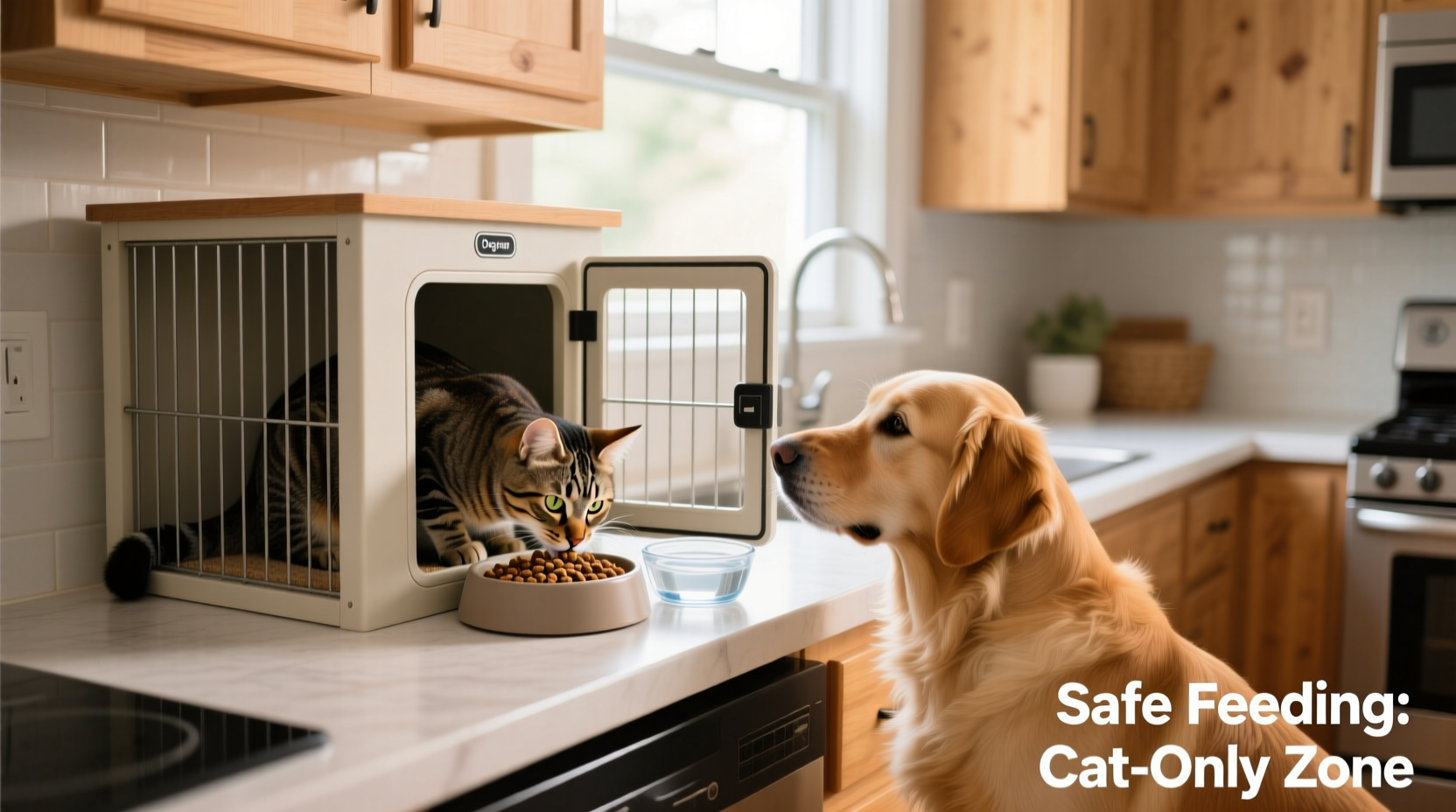
Cats and dogs have vastly different nutritional requirements. Cat food is typically higher in protein, fat, and certain amino acids like taurine, which dogs don’t need in the same concentrations. When dogs regularly consume cat food, they risk pancreatitis, weight gain, and nutrient imbalances. Conversely, if a dog monopolizes feeding areas, cats may eat too quickly, skip meals, or develop anxiety around food. Chronic stress can contribute to feline lower urinary tract disease (FLUTD) and other behavioral issues.
Moreover, feeding both animals in the same space encourages competition. Even a friendly dog’s enthusiastic approach can intimidate a more reserved cat. Over time, this dynamic may lead to avoidance behaviors, where the cat stops eating altogether during scheduled times, risking hepatic lipidosis—a potentially fatal liver condition in cats that results from prolonged fasting.
“Cats are obligate carnivores with precise dietary needs, while dogs are scavenging omnivores. Mixing their feeding routines without safeguards can compromise both their health and relationship.” — Dr. Lena Patel, DVM, Feline Nutrition Specialist
Strategic Feeding Zones: Location Matters
The most effective way to prevent food theft is spatial separation. Designate completely separate feeding areas for your cat and dog, ideally in different rooms with controlled access. Choose locations that align with each pet’s temperament—cats often prefer quiet, elevated, or secluded spots, while dogs are comfortable in open family areas.
Tip: Feed your cat on a high surface like a countertop, shelf, or sturdy piece of furniture that the dog cannot reach. Most dogs won’t jump to get food if trained otherwise, and cats naturally prefer elevated vantage points.If space is limited, consider using baby gates or pet barriers that allow the cat to pass but block the dog. Install the gate in a doorway leading to a spare room, bathroom, or laundry area where the cat can eat undisturbed. Ensure the opening is wide enough for the cat but too narrow or high for the dog to squeeze through.
Step-by-Step: Creating a Safe Feeding Routine
- Evaluate your home layout to identify two distinct feeding zones.
- Choose a quiet, low-traffic area for the cat—ideally with vertical access (e.g., near a cat tree).
- Position the dog’s bowl in a common area, away from the cat’s zone.
- Establish consistent feeding times to reduce scavenging behavior.
- Supervise initial meals to reinforce boundaries and correct unwanted behavior.
- Gradually phase out supervision once both pets reliably follow the routine.
Leveraging Technology and Feeding Tools
Modern pet tech offers innovative solutions for households with competitive eaters. Consider investing in one of the following tools:
- Microchip or RFID pet feeders: These smart bowls unlock only when your cat’s microchip or collar tag is detected, preventing dog access entirely.
- Automatic feeders with timers: Program meals at specific times, reducing the window for food theft.
- Slow feeder bowls for dogs: Encourage mindful eating and extend meal duration, giving the cat time to finish first.
- Enclosed feeding stations: Small cabinets or enclosures with entry flaps sized for cats only.
| Solution | Best For | Limitations |
|---|---|---|
| RFID Feeder | Homes with tech-savvy owners and microchipped cats | High upfront cost; requires maintenance |
| Elevated Feeding | Most households with agile cats | Not suitable for elderly or disabled cats |
| Room Separation | Flexible floor plans with multiple rooms | Requires door management or gates |
| Timed Automatic Feeder | Owners with irregular schedules | Dog may still attempt to raid after release |
Behavioral Training and Mealtime Management
Training plays a crucial role in long-term success. Teach your dog a solid “leave it” command and reinforce it during feeding times. Use positive reinforcement—treats, praise, or toys—to reward calm behavior when the cat is eating nearby. Consistency is key; every family member must respond the same way to prevent confusion.
For cats, minimize stress by keeping their routine predictable. Serve meals at the same time daily, avoid sudden changes in food type or location, and never punish a cat for hiding or hesitating to eat. If your cat is particularly anxious, try feeding during times when the dog is occupied—such as after a walk or during chew toy sessions.
Tip: Use puzzle feeders or food-dispensing toys for your cat to make eating more engaging and mentally stimulating, especially if mealtimes are short due to dog presence.Mini Case Study: The Thompson Family’s Solution
The Thompsons adopted a rescue cat, Luna, into a home already shared with Max, a Labrador mix known for his food obsession. Initially, Max would bark and paw at Luna’s bowl, causing her to flee mid-meal. After consulting their vet, the family implemented a three-part strategy: they began feeding Luna on the kitchen counter, installed a baby gate between the kitchen and living room, and trained Max to go to his mat during cat feeding times. Within two weeks, both pets adapted. Luna gained weight healthily, and Max stopped begging—mealtime became peaceful. The family credits consistency and environmental modification as the turning point.
Essential Checklist for Safe Multi-Pet Feeding
- ✅ Designate separate feeding zones for cat and dog
- ✅ Elevate the cat’s food bowl out of the dog’s reach
- ✅ Use baby gates or barriers to restrict access
- ✅ Feed pets at the same times daily for predictability
- ✅ Train the dog with “leave it” and “stay” commands
- ✅ Consider a microchip-activated feeder for high-risk homes
- ✅ Monitor both pets during transitions to new routines
- ✅ Avoid feeding in high-traffic or stressful areas
Frequently Asked Questions
Can dogs get sick from eating cat food regularly?
Yes. Cat food is formulated with higher levels of protein, fat, and certain nutrients that can cause gastrointestinal upset, obesity, and even pancreatitis in dogs if consumed regularly. Occasional licks are unlikely to cause harm, but consistent access should be prevented.
What if my cat won’t eat unless I’m watching?
This is common in shy or anxious cats. Try sitting quietly nearby during meals to provide reassurance. Gradually increase distance over time. If the issue persists, consult a veterinarian or veterinary behaviorist to rule out underlying stress or medical causes.
Is it okay to feed both pets at the same time?
Yes, but only if they are in completely separate areas. Synchronized feeding helps maintain routine and prevents one pet from waiting near the other’s bowl. Just ensure physical separation and no line of sight that could trigger begging or intimidation.
Take Control of Your Pet’s Mealtimes Today
Feeding a cat safely in a dog-dominated household isn’t about constant vigilance—it’s about smart systems. By combining physical separation, behavioral training, and modern tools, you can create a stress-free environment where both pets thrive. Start small: pick one strategy from this guide and implement it today. Whether it’s elevating the cat’s bowl or teaching your dog a new command, every step builds toward lasting peace at mealtime. Share your own success stories or challenges in the comments—your experience could help another pet owner find balance.
💬 Have a clever solution for feeding pets with competing appetites? We’d love to hear how you’ve created harmony in your multi-pet home. Leave a comment and inspire others!








