Dog barking is a natural form of communication, but excessive or inappropriate barking can strain relationships with neighbors, disrupt household peace, and even signal underlying stress in your pet. While it’s unrealistic to eliminate barking entirely, you can significantly reduce unwanted vocalizations through consistent training, environmental adjustments, and a deeper understanding of your dog’s triggers. The key lies not in suppression, but in redirection and management grounded in empathy and positive reinforcement.
Understanding Why Dogs Bark
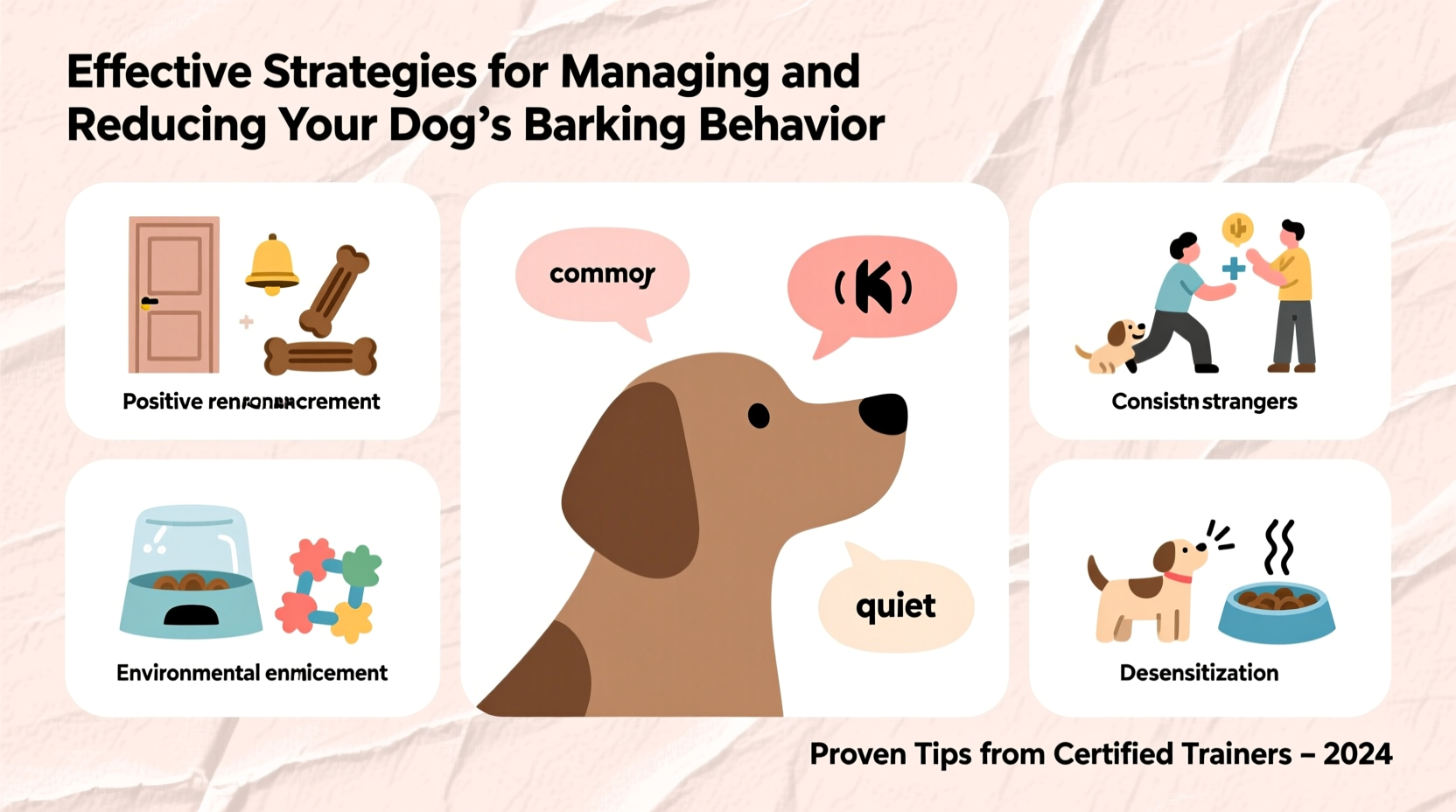
Barking serves multiple purposes: alerting, expressing excitement, seeking attention, responding to fear, or reacting to boredom. Before addressing the behavior, identify the root cause. A dog barking at the mail carrier may be exhibiting territorial instincts, while one barking at night could be experiencing separation anxiety or loneliness. Misinterpreting the motivation leads to ineffective solutions. For example, scolding a fearful dog for barking may increase anxiety rather than reduce noise.
- Attention-seeking: Barking stops when ignored, resumes when acknowledged.
- Alarm barking: Triggered by doorbells, strangers, or sudden noises.
- Separation-related: Occurs when left alone; often paired with destructive behavior.
- Play/excitement: High-pitched, repetitive barks during walks or greetings.
- Compulsive barking: Repetitive, out of context—may require behavioral intervention.
Proven Training Techniques to Reduce Barking
Effective bark management relies on teaching alternative behaviors and reinforcing calm responses. Positive reinforcement—not punishment—is the most sustainable approach. Dogs learn fastest when rewarded for desired actions rather than punished for undesired ones.
Step-by-Step Guide: Teaching the “Quiet” Command
- Wait for your dog to bark (e.g., someone rings the doorbell).
- Once barking begins, say “Quiet” in a calm, firm tone.
- The moment the barking stops—even briefly—immediately reward with a treat and praise.
- Repeat consistently over several sessions. Gradually increase the quiet duration before rewarding.
- Practice in low-distraction environments first, then progress to real-world scenarios.
This method conditions your dog to associate silence with positive outcomes. Avoid yelling “Quiet!” as raised voices can escalate arousal. Consistency across all family members is essential—mixed signals confuse the dog.
Redirecting Excess Energy
Dogs with unmet physical or mental needs often bark out of frustration. Daily exercise tailored to breed and age helps regulate energy levels. A tired dog is generally a quieter dog.
Tip: Combine physical activity with mental stimulation—try puzzle feeders, scent games, or obedience drills before bedtime to reduce nighttime barking.Environmental Modifications That Work
Controlling your dog’s environment reduces exposure to common triggers. This doesn’t mean isolation—it means thoughtful design that supports calm behavior.
| Trigger | Solution | Expected Outcome |
|---|---|---|
| Seeing passersby through windows | Cover lower window sections with privacy film or close blinds | Reduces visual stimulation and territorial reactivity |
| Hearing delivery trucks or doorbells | Use white noise machines or calming music | Muffles external sounds that prompt alert barking |
| Being left alone | Provide long-lasting chews or food-dispensing toys | Occupies the dog and reduces anxiety-driven vocalization |
| Yard access leading to fence-running barking | Limit unsupervised outdoor time or install visual barriers | Breaks the cycle of reactivity to neighborhood activity |
Expert Insight: What Trainers Recommend
“Barking isn’t the problem—it’s the symptom. Address the emotion behind it: fear, excitement, or frustration. Punishing the bark without addressing the cause only teaches the dog to hide distress.” — Dr. Karen Ramirez, Certified Canine Behaviorist
Professional trainers emphasize observation and patience. A reactive dog isn’t being defiant; they’re communicating discomfort. Desensitization and counter-conditioning are gold-standard methods for fear-based barking. For example, if your dog barks at cyclists, start by exposing them to bikes at a distance where they remain calm, pairing the sight with treats. Over time, gradually decrease the distance as positive associations build.
Mini Case Study: Reducing Nighttime Barking in a Rescue Dog
Luna, a two-year-old Border Collie mix adopted from a shelter, began barking intensely between 2–4 a.m. Her owners initially assumed she needed to go outside, but vet checks ruled out medical issues. A barking log revealed no correlation with bathroom needs. Instead, Luna was alone in a basement bedroom with no windows, minimal bedding, and silence.
Using the strategies above, her owners made changes: moved her crate upstairs near their room, added a nightlight, introduced a stuffed Kong before bed, and played soft classical music overnight. They also increased daytime mental engagement with training games. Within three weeks, nighttime barking ceased. The solution wasn’t training commands—but addressing isolation anxiety through environmental enrichment and proximity.
Checklist: 7 Steps to Manage Excessive Barking
- ✅ Identify the specific trigger(s) using a barking journal
- ✅ Rule out medical causes with a veterinary checkup
- ✅ Increase daily physical and mental exercise
- ✅ Teach the “Quiet” command using positive reinforcement
- ✅ Modify the environment to reduce exposure to triggers
- ✅ Use desensitization for fear- or excitement-based barking
- ✅ Ensure consistency among all household members in responses
Frequently Asked Questions
Can I use anti-bark collars to stop my dog from barking?
While devices like citronella or vibration collars exist, they should be used cautiously and only under professional guidance. These tools address symptoms, not causes, and may increase anxiety. Positive training methods are safer and more effective long-term solutions.
How long does it take to reduce excessive barking?
Improvement timelines vary. Some dogs respond within a few weeks with consistent training; others, especially those with deep-seated anxiety or reactivity, may take months. Patience and persistence are critical. Progress is rarely linear—setbacks are normal.
Is it normal for older dogs to bark more at night?
Increased nighttime vocalization in senior dogs can be linked to cognitive decline, hearing loss, or discomfort. If a previously quiet dog starts barking excessively at night, consult your veterinarian. Age-related changes may require medical or environmental support beyond behavioral training.
Conclusion: Building a Quieter, Calmer Life Together
Managing your dog’s barking isn’t about enforcing silence—it’s about fostering understanding and communication. By identifying triggers, applying consistent training, and adjusting the environment, you create conditions where calm behavior becomes the default. Every dog is different, and what works for one may need adaptation for another. The goal is not perfection, but progress: fewer barks, clearer signals, and a stronger bond built on trust.
💬 Have a barking success story or challenge? Share your experience in the comments—your insight could help another dog owner find peace and balance.








