Dogs often react to mealtime with intense excitement—barking, lunging, or even growling if another pet or person comes near. While enthusiasm may seem harmless, it can escalate into resource guarding, stress-related digestive issues, or aggression. Teaching your dog to eat calmly isn’t just about manners; it’s about emotional regulation, safety, and long-term well-being. With consistency, patience, and the right techniques, any dog—regardless of age or breed—can learn to approach meals with calm focus.
Why Calm Eating Matters
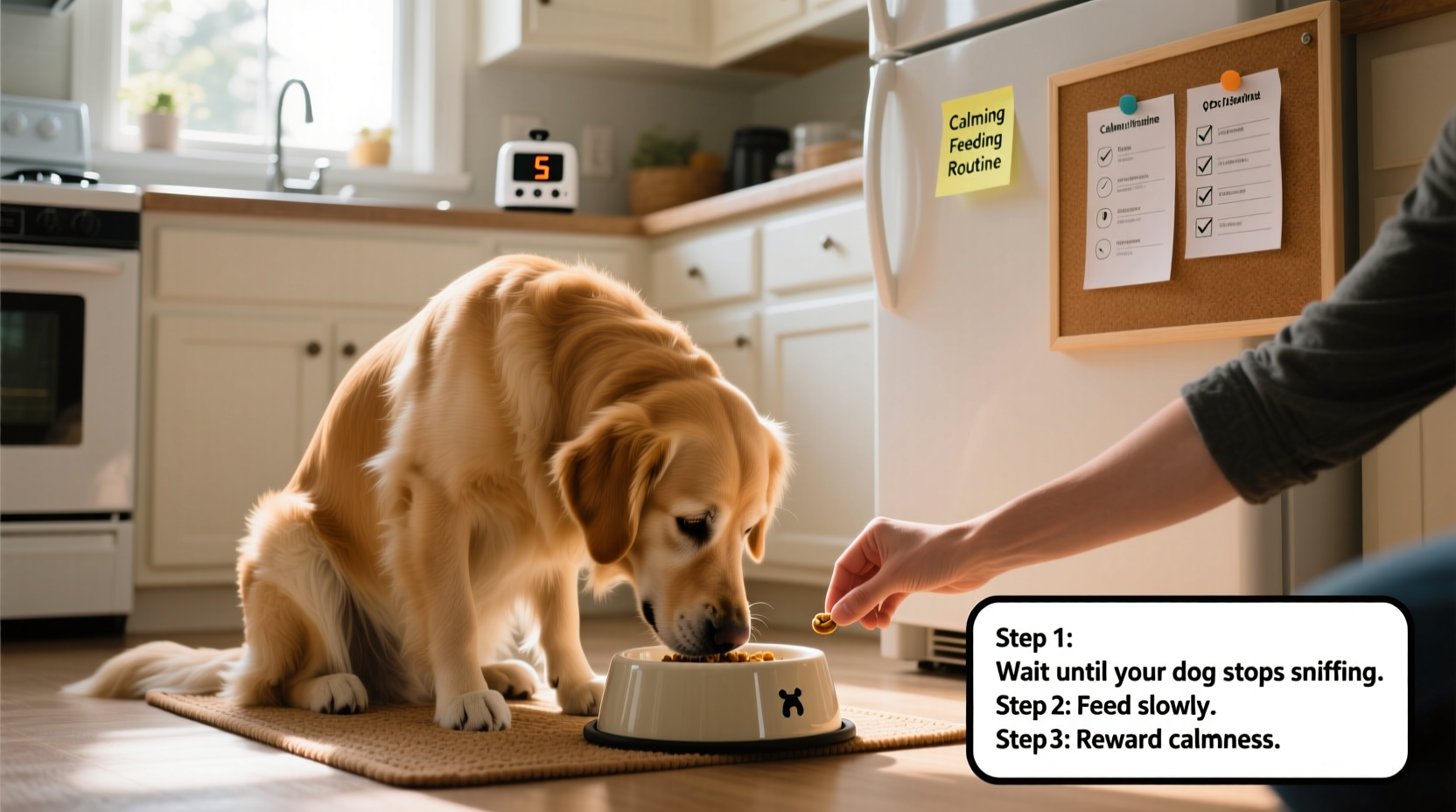
A dog that rushes through meals doesn’t just risk choking or indigestion—they’re often in a heightened state of arousal. This mental state can reinforce anxiety around food and lead to behavioral problems like possessiveness or reactivity. Calm eating supports better digestion, reduces stress, and strengthens the bond between dog and owner by fostering trust during vulnerable moments.
Moreover, dogs who are overly excited at mealtimes may begin to associate people approaching their bowl with threat—even if no conflict occurs. This subtle conditioning can lay the groundwork for future guarding behaviors. Training calmness early prevents these issues before they start.
“Dogs don’t misbehave out of defiance—they respond to what they’ve learned. Calm feeding routines teach them that peace brings rewards.” — Dr. Lisa Peterson, Veterinary Behaviorist
Step-by-Step Guide to Training Calm Mealtime Behavior
Training your dog to eat calmly is not a one-time fix but a structured process built on repetition and positive reinforcement. Follow this timeline to create lasting change:
- Assess current behavior: Observe how your dog reacts when you prepare food. Do they jump? Whine? Block access to the bowl?
- Start with hand-feeding: For 3–5 days, feed small portions directly from your hand while asking your dog to sit and wait. This builds impulse control and reinforces your role as provider.
- Introduce the bowl with supervision: Place the bowl on the floor while holding it slightly elevated. If your dog lunges, lift it and wait. Reward only when all four paws are on the ground and the body is relaxed.
- Practice “wait” commands: After placing the bowl, say “wait” and take a step back. If your dog remains still for 2–3 seconds, release with “okay” and allow eating. Gradually increase wait time.
- Add distractions gradually: Once your dog waits reliably, walk nearby, toss treats away from the bowl, or have another person pass by. Reinforce calmness each time.
- Maintain consistency across all meals: Apply the same rules every day. Never skip training phases just because progress seems fast.
Common Mistakes That Undermine Progress
Even well-intentioned owners can accidentally reinforce undesirable behaviors. Below are frequent errors and their solutions:
| Common Mistake | Why It’s Harmful | Better Alternative |
|---|---|---|
| Feeding immediately upon excitement | Reinforces jumping and barking as effective strategies | Wait for four paws on floor and eye contact before serving |
| Allowing free-feeding (food always available) | Removes structure and opportunity for training | Limited meal windows (15–20 minutes) build routine |
| Punishing food guarding after it starts | Increases fear and suppresses warning signs | Prevent guarding with proactive calm training |
| Inconsistent rules between household members | Confuses the dog and weakens learning | Agree on cues and routines; practice together |
Mini Case Study: Transforming Max’s Mealtime Chaos
Max, a three-year-old Australian Shepherd, would bark frantically and snap at the air whenever his owner opened the pantry. He’d bolt to his bowl, inhale his food in under 30 seconds, and then pace anxiously afterward. His owner feared he might bite someone who approached during meals.
Working with a trainer, they began hand-feeding all meals for five days. Max learned to sit and stay before receiving kibble—one piece at a time—for staying calm. They reintroduced the bowl slowly, using the “wait” command and rewarding pauses. Within two weeks, Max sat quietly beside his bowl until released. By week four, family members could walk within two feet without triggering a reaction. The transformation wasn’t just behavioral—it reduced Max’s post-meal panting and restlessness, indicating lower stress levels.
Essential Checklist for Calm Feeding Success
- ✅ Designate a quiet, low-traffic feeding area
- ✅ Use a non-slip bowl mat to prevent sliding and reduce frustration
- ✅ Train the “sit” and “stay” commands before introducing food
- ✅ Practice “leave it” and “wait” daily, even outside mealtimes
- ✅ Feed at consistent times to build predictability
- ✅ Avoid sudden changes in diet or location during training
- ✅ Involve all household members in the same protocol
- ✅ Monitor interactions with other pets during meals
Frequently Asked Questions
What if my dog growls when I approach their bowl?
Growling is a warning sign, not aggression itself. Stop approaching and consult a certified dog behaviorist. Do not punish the growl—it suppresses communication and may lead to unprovoked bites. Instead, use counter-conditioning: drop a high-value treat near the bowl and leave, repeating at increasing proximity over time.
Can older dogs learn to eat calmly?
Absolutely. While puppies absorb training more quickly, adult dogs are fully capable of learning new behaviors. The key is consistency and understanding that lifelong habits take longer to reshape. Start where your dog is, not where you wish they were.
How long should I expect to see results?
Most dogs show improvement within 7–10 days with daily practice. Full reliability—especially around distractions—may take 3–6 weeks. Setbacks are normal; resume training at the last successful step without frustration.
Building a Peaceful Feeding Culture
Calm eating isn’t just about obedience—it reflects a deeper sense of security. Dogs thrive on predictability and clear leadership. When mealtime becomes a ritual of patience and trust, it strengthens the entire human-dog relationship. Over time, your dog will not only eat calmly but also carry that self-control into other areas: greeting guests, walking on leash, and responding to commands under distraction.
The most effective training happens not in isolated sessions but woven into daily life. Each meal is an opportunity to reinforce boundaries, reward focus, and deepen mutual respect. These small moments accumulate into profound behavioral change.
“Training isn’t about controlling your dog—it’s about guiding them toward confidence. A calm eater is a confident learner.” — Carlos Mendez, Certified Professional Dog Trainer
Conclusion
Transforming your dog’s relationship with food begins with intention. By applying structured steps, avoiding common pitfalls, and committing to consistency, you can replace chaos with calm. Your dog doesn’t need to be perfect—just progressively better. Start today with one meal, one sit-stay, one moment of patience. Over time, those choices will add up to a quieter, safer, and more harmonious home.
💬 Have success stories or challenges with training your dog to eat calmly? Share your experience below��your insights could help another pet parent find peace at mealtime.








