
Finding chewing gum tangled in your dog’s fur is a frustrating and delicate situation. Unlike humans, dogs can't spit out what they’ve picked up, and their thick coats make gum removal especially challenging. Attempting to pull it out by hand can cause pain, matting, or even skin damage. However, with the right tools and techniques, you can safely and effectively free your pet from sticky entanglements—without causing stress or injury.
Gum is particularly problematic because of its adhesive nature and the potential toxicity of certain ingredients, especially xylitol, a common artificial sweetener. Even small amounts of xylitol can lead to hypoglycemia, liver failure, or worse in dogs. Therefore, prompt and careful action is essential—not just for comfort, but for health.
Why Chewing Gum Is Dangerous for Dogs
Beyond the physical challenge of removing gum from fur, there are serious health risks involved. The primary concern is ingestion. If your dog has chewed or swallowed gum, especially sugar-free varieties, immediate veterinary attention is required. Xylitol is highly toxic to dogs, and symptoms such as vomiting, weakness, seizures, or collapse can appear within 10–60 minutes of ingestion.
Even if the gum remains in the fur, your dog may lick at it during grooming, leading to accidental ingestion. Additionally, gum trapped in fur can attract dirt, cause skin irritation, or restrict blood flow if wrapped tightly around a limb or ear.
“Any exposure to xylitol-containing products should be treated as a medical emergency in dogs.” — Dr. Lena Torres, DVM, Veterinary ToxicologistTip: Always check the packaging of any gum found near your dog. If it contains xylitol, contact your vet immediately—even if the gum was only on the fur.
Step-by-Step Guide to Safely Remove Gum from Dog Fur
The key to successful gum removal is minimizing discomfort while loosening the adhesive bond. Never use sharp objects or aggressive pulling. Follow this methodical approach:
- Assess the Situation: Determine how much gum is present, where it’s located, and whether your dog seems distressed. If multiple clumps are spread across the body or near sensitive areas (eyes, mouth, genitals), consider professional help.
- Restrain Gently: Have a helper hold your dog calmly. Use treats and soothing words to keep them relaxed. Avoid forcing stillness, which increases anxiety.
- Cool the Gum: Apply an ice cube wrapped in a thin cloth directly to the gum for 30–60 seconds. This hardens the gum, making it less sticky and easier to break apart.
- Pry Off Large Chunks: Once hardened, gently lift the edges with a butter knife or blunt comb. Break off pieces slowly rather than pulling.
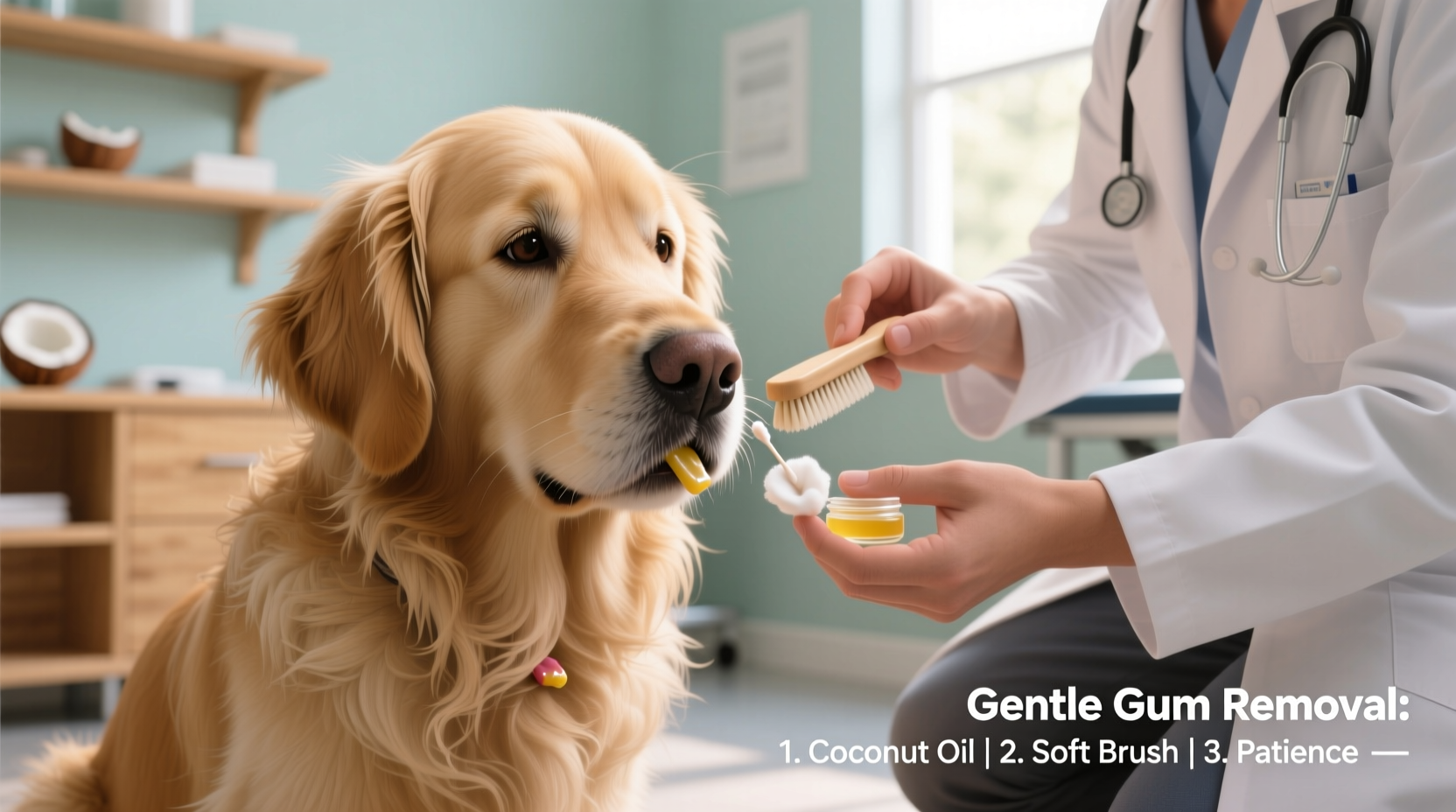
- Apply a Safe Solvent: For residue, apply a small amount of peanut butter (xylitol-free), vegetable oil, coconut oil, or olive oil to the area. Massage gently to dissolve stickiness.
- Comb Through: Use a fine-toothed flea comb or de-matting tool to separate strands. Work slowly from tip to root to avoid tugging live hair.
- Wash the Area: Clean with mild dog shampoo to remove oily residue. Rinse thoroughly and towel dry.
- Monitor Skin: Check for redness, sores, or signs of irritation over the next 24 hours.
Best Household Products for Gum Removal
Not all solvents are safe for pets. The following table compares common household items based on safety, effectiveness, and ease of cleanup:
| Product | Safety for Dogs | Effectiveness | Cleanup Required |
|---|---|---|---|
| Ice | Excellent – no chemicals | Moderate – works best on fresh gum | None |
| Peanut Butter (xylitol-free) | Good – palatable and safe | High – dissolves gum quickly | Shampoo wash needed |
| Coconut Oil | Excellent – natural and non-toxic | High – softens gum effectively | Shampoo wash needed |
| Olive or Vegetable Oil | Good – safe if licked | High | Requires thorough washing |
| Hairspray or WD-40 | Poor – toxic if ingested | High | Avoid – not recommended |
When to Seek Professional Help
While many cases can be handled at home, some situations require a veterinarian or professional groomer:
- The gum is matted into large sections of fur, especially near joints or underarms.
- Your dog becomes aggressive or overly stressed during removal attempts.
- The gum contains xylitol and may have been partially ingested.
- You suspect skin damage, infection, or embedded debris.
- The gum is located near the eyes, ears, or paws where precision is critical.
In these cases, sedation or clipping may be necessary. Veterinarians often use specialized detangling agents and sterile tools to ensure safe extraction.
Mini Case Study: Bella the Beagle
Bella, a curious 3-year-old beagle, found a discarded wad of gum at the park and rolled in it. Her owner noticed several sticky clumps in her hind legs and tail. After confirming the gum did not contain xylitol, she applied ice to two larger pieces, which broke off easily. For the remaining residue, she rubbed in coconut oil and used a flea comb. The process took about 20 minutes, and Bella remained calm with treat rewards. She was later bathed with oatmeal shampoo to soothe her skin. No further issues occurred, and Bella now wears a muzzle on walks to prevent scavenging.
Prevention Tips and Long-Term Care
Preventing gum encounters is far easier than treating them. Consider the following proactive measures:
- Train your dog to respond to “leave it” commands during walks.
- Avoid high-litter areas like sidewalks, parks, or picnic zones until recall training is solid.
- Use a muzzle for dogs with strong scavenging instincts.
- Check your yard regularly for litter.
- Carry dog-safe wipes or a small bottle of oil in your walking bag for emergencies.
“Prevention is always better than treatment. A well-trained dog is less likely to pick up dangerous items.” — Sarah Kim, Certified Pet Behavior Consultant
FAQ
Can I cut the gum out of my dog’s fur?
Only as a last resort and with extreme caution. Use rounded-tip scissors and only cut the gum itself—not the fur. If the gum is close to the skin or matted, do not attempt cutting. It’s safer to soften the gum first or seek professional help.
Is peanut butter safe for removing gum?
Yes, as long as it’s labeled xylitol-free. Many brands add xylitol for sweetness, so always read the ingredient list. Natural, unsalted peanut butter without additives is safest.
What if my dog licks the oil or peanut butter used?
Small amounts of coconut oil, olive oil, or xylitol-free peanut butter are generally safe. However, excessive oil can cause diarrhea. Use sparingly and monitor for digestive upset.
Conclusion
Removing chewing gum from your dog’s fur doesn’t have to be a traumatic experience. With patience, the right materials, and a calm approach, you can resolve the issue safely and humanely. Prioritize your dog’s comfort, avoid toxic substances, and act swiftly—especially if xylitol is involved. By understanding the risks and mastering simple techniques, you protect both your pet’s well-being and peace of mind.
💬 Have a story about gum removal or a trusted trick? Share your experience below to help fellow pet owners navigate this sticky challenge!








