
Nitrate buildup is one of the most common yet overlooked issues in both freshwater and saltwater aquariums. While less toxic than ammonia or nitrite, elevated nitrate levels can stress fish, trigger algae blooms, and compromise long-term aquatic health. Left unchecked, chronic exposure to high nitrates weakens immune systems, reduces breeding success, and shortens lifespans. Fortunately, several proven strategies exist to reduce and manage nitrate concentrations effectively. Understanding the sources, risks, and practical removal techniques empowers aquarists to maintain clean, stable water conditions that support thriving aquatic ecosystems.
Understanding Nitrates in Aquariums
Nitrates (NO₃⁻) are the end product of the nitrogen cycle, formed when beneficial bacteria convert ammonia (from fish waste and decaying matter) into nitrite, then into nitrate. Unlike ammonia and nitrite, which are highly toxic even at low levels, nitrates accumulate gradually. Most freshwater tanks should aim for nitrate levels below 40 ppm, while sensitive species—such as discus, shrimp, or reef tanks—require levels under 10–20 ppm. Marine aquariums, especially those with corals, benefit from near-zero nitrate readings to prevent nuisance algae and promote coral coloration.
The primary contributors to nitrate accumulation include overfeeding, overcrowding, inadequate filtration, insufficient water changes, and excessive organic debris in the substrate or filter media. Live plants can help mitigate nitrates by absorbing them as nutrients, but they are not a complete solution in heavily stocked tanks.
Tip: Test your aquarium water weekly using a reliable liquid test kit to monitor nitrate trends before they reach problematic levels.Top Methods to Reduce Nitrate Levels
1. Regular Partial Water Changes
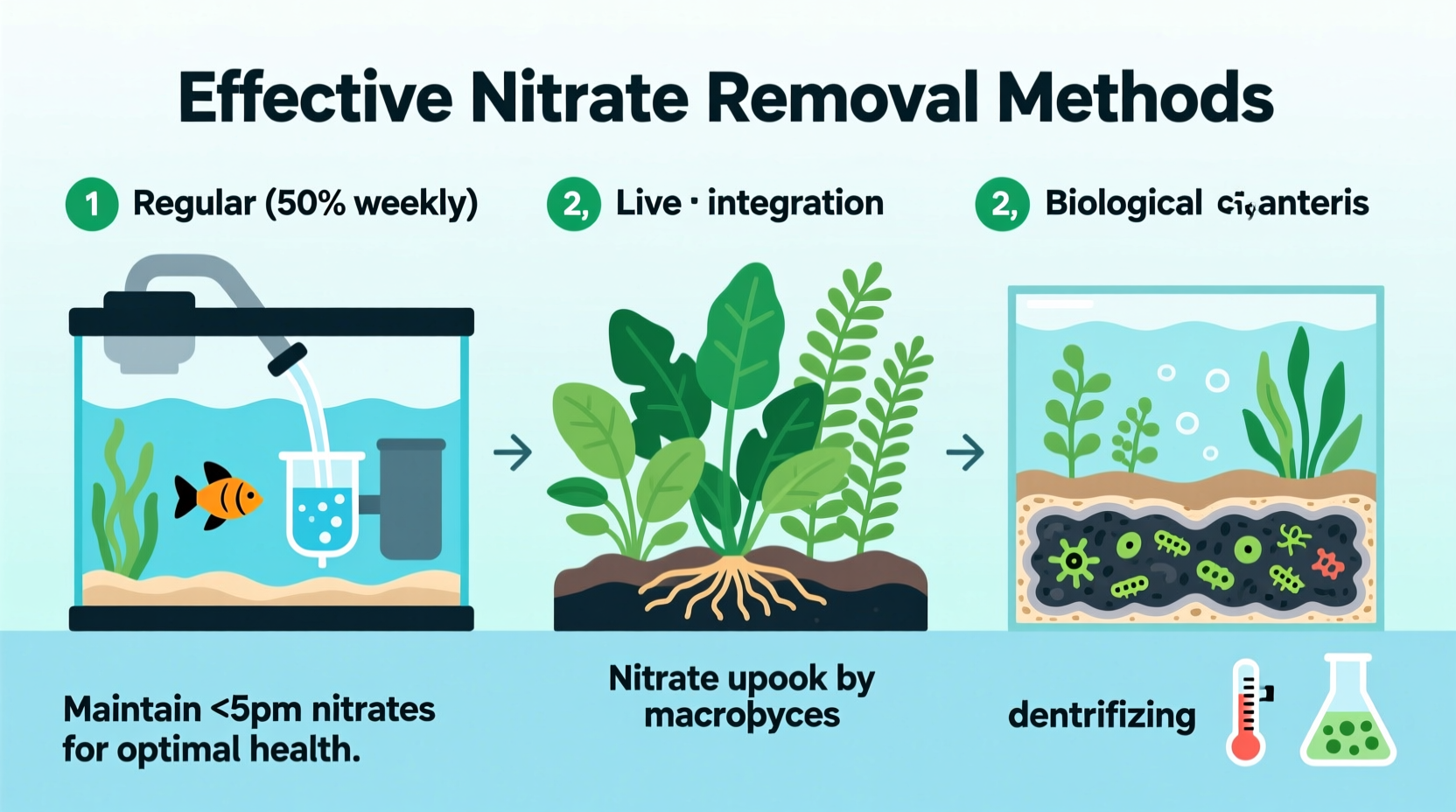
The most direct and effective way to lower nitrates is through consistent partial water changes. Replacing 20–30% of the tank volume weekly dilutes accumulated nitrates and replenishes essential minerals. For tanks with persistently high levels, increasing frequency or volume temporarily can help regain control. Always use dechlorinated water matched closely in temperature and pH to minimize stress on livestock.
2. Optimize Mechanical and Biological Filtration
Efficient filtration prevents organic waste from breaking down into nitrates in the first place. Use mechanical filter media like sponges or floss to trap detritus before it decomposes. Additionally, consider incorporating denitrifying bio-media such as porous lava rock, bioceramic rings, or specialized anaerobic filter substrates that host bacteria capable of converting nitrates into nitrogen gas—a process known as denitrification.
3. Introduce Nitrate-Absorbing Substrates
Certain substrates actively bind or facilitate the removal of nitrates. Deep sand beds (DSBs), particularly in marine setups, create anaerobic zones where denitrifying bacteria thrive. Similarly, products like Seachem Matrix or ADA Aqua Soil are designed with high surface area and porosity to support beneficial microbial colonies that consume nitrates. These substrates work best when combined with proper water flow and maintenance.
4. Utilize Live Aquatic Plants
Fast-growing aquatic plants—including hornwort, duckweed, wisteria, and floating water lettuce—absorb nitrates directly as a nutrient source. In planted tanks, this natural uptake significantly reduces nitrate accumulation. Rooted plants like Amazon sword or Vallisneria benefit from nutrient-rich substrates, while floating species excel at rapid nitrate consumption due to unrestricted access to light and CO₂.
“Live plants aren’t just decorative—they’re functional components of biological balance. A well-planted tank often requires fewer water changes because plants act as living filters.” — Dr. Lisa Tran, Aquatic Biologist
5. Employ Chemical Media and Reactors
Specialized chemical filtration media offer targeted nitrate reduction. Products like Seachem Denitrate, Poly-Filter, or granular ferric oxide (GFO) bind or facilitate the breakdown of nitrates. These are typically used in canister filters or reactor chambers. Denitrate, for example, supports anaerobic bacteria growth within its pores, enabling sustained conversion of nitrate to nitrogen gas. While effective, chemical media must be monitored and replaced regularly to avoid saturation and potential leaching.
Step-by-Step Guide to Lowering High Nitrate Levels
If your tank tests above 60 ppm nitrate, follow this structured approach to restore balance safely:
- Test and Confirm: Use a trusted liquid test kit to verify current nitrate levels. Strip tests can be inaccurate.
- Perform Immediate Water Change: Replace 50% of the water with treated, temperature-matched water. Repeat after 48 hours if needed.
- Clean Substrate Thoroughly: Vacuum gravel or sand to remove trapped detritus and uneaten food.
- Inspect Feeding Habits: Reduce feeding to once daily and only what fish consume in 2–3 minutes.
- Add Nitrate-Reducing Media: Install denitrifying media in your filter or reactor system.
- Incorporate Fast-Growing Plants: Introduce floating or stem plants to boost natural uptake.
- Monitor Weekly: Track progress with regular testing and adjust maintenance routines accordingly.
Common Mistakes That Worsen Nitrate Buildup
- Overstocking the tank: More fish produce more waste, accelerating nitrate production.
- Infrequent maintenance: Skipping water changes or filter cleanings allows organics to accumulate.
- Over-reliance on test strips: Many strips lack accuracy for nitrates; use liquid kits instead.
- Ignoring dead plant matter: Decaying leaves contribute significantly to nitrate load.
- Using tap water high in nitrates: Some municipal water supplies contain elevated nitrates—test your source water.
Checklist: Daily, Weekly, and Monthly Nitrate Management
| Frequency | Action | Purpose |
|---|---|---|
| Daily | Observe fish behavior and remove visible debris | Early detection of stress or excess waste |
| Weekly | Test water, perform 20–30% water change, vacuum substrate | Dilute nitrates, remove organics |
| Monthly | Clean filter media, trim dying plant leaves, check equipment | Maintain filtration efficiency and reduce decay |
| As Needed | Replace chemical media, prune fast-growing plants | Sustain long-term nitrate control |
Mini Case Study: Reducing Nitrates in a Planted Community Tank
A hobbyist maintaining a 55-gallon planted freshwater tank noticed recurring algae outbreaks and sluggish behavior in neon tetras. Testing revealed nitrate levels at 75 ppm despite biweekly 25% water changes. Upon inspection, the filter was clogged, and several plants had begun to decay. The owner upgraded to a canister filter with Seachem Denitrate media, began weekly 30% water changes, added floating water lettuce, and started trimming plants monthly. Within four weeks, nitrate levels dropped to 25 ppm, algae diminished, and fish activity improved noticeably. This case highlights how combining mechanical, biological, and botanical methods yields better results than relying on water changes alone.
FAQ
Can I completely eliminate nitrates from my aquarium?
While it’s possible to achieve near-zero levels—especially in reef tanks with advanced filtration—it’s neither necessary nor always beneficial. Low, stable levels (under 20 ppm in freshwater, under 5 ppm in reef tanks) are ideal. Complete elimination isn't required and may disrupt nutrient balance in planted systems.
Is reverse osmosis (RO) water necessary for nitrate control?
RO water is highly effective if your tap water contains high nitrates. It provides a clean base for mixing with remineralized additives. However, for most municipal supplies with acceptable nitrate levels (<10 ppm), properly conditioned tap water suffices when paired with good husbandry.
Do nitrate-reducing pads work?
Some filter pads claim to reduce nitrates, but many rely on ion exchange resins that become saturated quickly and require frequent replacement. They can supplement other methods but shouldn’t be relied upon as a primary solution.
Conclusion
Maintaining low nitrate levels is a cornerstone of responsible aquarium care. By combining routine water changes, efficient filtration, live plants, and targeted media, aquarists can create a stable, healthy environment where fish, invertebrates, and plants flourish. Prevention is always easier than correction—consistent monitoring and proactive maintenance prevent crises before they occur. The effort invested in managing nitrates pays off in vibrant colors, active behavior, and long-lived aquatic companions.
🚀 Start today: Test your water, schedule your next water change, and evaluate one upgrade—whether a new plant, media, or maintenance habit—that will improve your tank’s nitrate management. Share your progress or questions in the community forums and inspire others to keep their aquariums cleaner and safer.








