Water hardness is one of the most critical yet often overlooked aspects of maintaining a thriving aquarium. It refers to the concentration of dissolved minerals—primarily calcium and magnesium—in the water. While some fish species thrive in hard water, many popular tropical fish, such as tetras, angelfish, and discus, require soft or moderately soft conditions to flourish. High water hardness can stress fish, impair reproduction, hinder nutrient absorption, and disrupt biological filtration. Addressing this issue proactively ensures long-term health for your aquatic inhabitants.
Understanding Water Hardness: GH vs KH
Before implementing corrective measures, it's essential to understand the two primary types of water hardness:
- General Hardness (GH): Measures the concentration of calcium and magnesium ions. This directly affects osmoregulation in fish—their ability to balance internal fluids with their environment.
- Carbonate Hardness (KH): Also known as alkalinity, KH measures bicarbonate and carbonate levels. It stabilizes pH by buffering against sudden drops but does not directly affect fish physiology like GH does.
Aquarists should test both parameters regularly using liquid test kits. Ideal GH levels vary by species, but most soft-water fish prefer 3–6 dGH (degrees of general hardness), while KH between 4–8 dKH helps maintain stable pH without contributing excessive mineral content.
Tip: Always acclimate fish slowly when adjusting water hardness, as rapid changes in mineral content can cause osmotic shock.Effective Methods to Reduce Aquarium Water Hardness
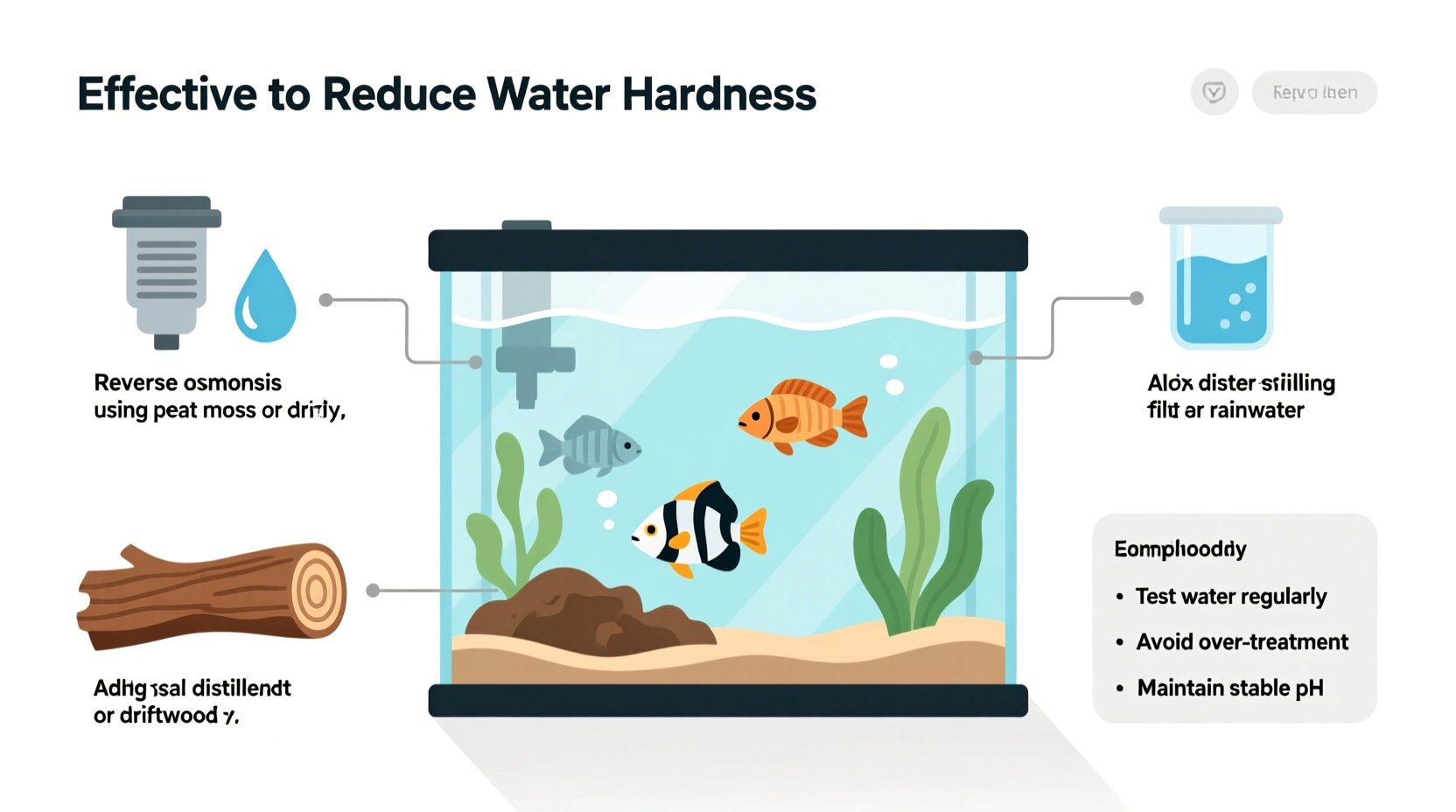
Reducing water hardness requires consistent effort and monitoring. Below are proven techniques used by experienced aquarists to achieve and maintain ideal conditions.
1. Use Reverse Osmosis (RO) Water
Reverse osmosis is one of the most reliable ways to remove up to 99% of dissolved minerals from tap water. An RO unit forces water through a semi-permeable membrane, filtering out calcium, magnesium, chlorine, and other impurities.
For best results, mix RO water with a portion of dechlorinated tap water to reach target hardness levels. For example, blending 50% RO water with 50% tap water typically reduces GH by half.
“RO systems offer unparalleled control over water chemistry, making them indispensable for serious planted and soft-water aquariums.” — Dr. Alan Reed, Aquatic Biologist
2. Add Peat Moss
Peat moss naturally softens water by releasing organic acids (humic and fulvic acids) that bind with calcium and magnesium ions. It also slightly lowers pH, creating ideal conditions for blackwater-style tanks.
To use peat effectively:
- Rinse thoroughly before use.
- Place in a mesh bag inside the filter compartment.
- Replace every 4–6 weeks as its effectiveness diminishes.
Note: Peat may discolor water with a tea-like tint, which some aquarists find aesthetically pleasing and beneficial for certain species.
3. Introduce Driftwood
Natural driftwood gradually releases tannins into the water, which help lower both GH and KH over time. While the effect is milder than peat or RO water, it provides continuous softening and creates a more natural habitat.
Tip: Boil new driftwood for 1–2 hours before adding it to your tank to sterilize it and accelerate tannin leaching.4. Utilize Rainwater (With Caution)
In areas with clean air and proper collection methods, rainwater can be an excellent source of soft water. However, it must be collected away from pollutants such as roof runoff, industrial emissions, or bird droppings.
Always test rainwater for contaminants and pathogens before use. Store in food-grade containers and treat with a UV sterilizer if possible.
5. Employ Water Softening Resins
Ionic exchange resins, such as those found in products like Seachem Purigen or specialized softening pillows, actively remove calcium and magnesium ions from water. These resins are placed in filter baskets and regenerate periodically.
They are particularly useful for small to medium tanks where full RO systems may be impractical.
Step-by-Step Guide to Safely Lower Water Hardness
Adjusting water hardness should never be rushed. Follow this timeline to avoid stressing your fish:
- Test Current Levels: Use a reliable liquid test kit to measure GH and KH.
- Determine Target Range: Research your fish species’ ideal hardness requirements.
- Choose a Method: Select one or more techniques based on your setup size and maintenance capacity.
- Prepare Treated Water: If using RO or rainwater, pre-mix with tap water to reach desired hardness.
- Perform Gradual Water Changes: Replace 10–15% of tank water daily with softened water over 5–7 days.
- Monitor Fish Behavior: Watch for signs of stress such as lethargy, gasping, or clamped fins.
- Re-Test After Adjustment: Confirm stability before introducing new livestock.
Do’s and Don’ts When Reducing Water Hardness
| Do’s | Don’ts |
|---|---|
| Test water parameters weekly | Change water hardness too quickly |
| Use RO water mixed with tap for precision | Add untreated peat or driftwood directly |
| Acclimate sensitive fish slowly | Rely solely on commercial \"softening\" additives |
| Boil decorative wood before use | Ignore KH when adjusting GH |
| Maintain regular partial water changes | Assume all bottled water is soft |
Mini Case Study: Reviving a Stressed Discus Tank
A hobbyist in Atlanta maintained a 55-gallon discus aquarium using unfiltered city tap water with a GH of 12 dGH and KH of 9 dKH. Over several months, fish showed reduced appetite, faded coloration, and failed breeding attempts. After testing confirmed high mineral content, the owner installed a reverse osmosis system and began mixing 70% RO water with 30% tap water for weekly changes.
Within six weeks, GH dropped to 5 dGH. Discus resumed normal feeding, colors intensified, and a pair successfully spawned for the first time. The key was consistency and gradual adjustment—no fish were lost during the transition.
Frequently Asked Questions
Can I use distilled water instead of RO water?
Yes, distilled water lacks minerals and can be used similarly to RO water. However, it’s more expensive and less environmentally sustainable due to packaging waste. Ensure it’s stored properly to prevent contamination.
Will lowering water hardness affect my aquarium plants?
Some plants, especially those requiring calcium (like Anubias or Java fern), may struggle in very soft water. Monitor growth and consider supplementing trace elements if deficiencies appear. Most common stem plants and carpeting species thrive in softer conditions.
How often should I retest water hardness after making adjustments?
Test GH and KH at least once a week after initial correction. Once stable for three consecutive weeks, bi-weekly or monthly testing is sufficient unless adding new hardscape or changing water sources.
Checklist: How to Maintain Soft Water Conditions
- ☑ Test GH and KH weekly
- ☑ Use RO or rainwater for top-offs and changes
- ☑ Place peat moss in filter media
- ☑ Include driftwood in aquascaping
- ☑ Avoid limestone rocks or coral substrates
- ☑ Perform 10–20% water changes weekly with softened water
- ☑ Observe fish for behavioral changes
- ☑ Replace softening media as recommended
Conclusion
Maintaining appropriate water hardness is not optional—it’s fundamental to replicating the natural environments of many beloved aquarium species. Whether you're keeping delicate neon tetras or majestic discus, controlling mineral content leads to stronger immune systems, better coloration, and successful breeding. By combining tested methods like reverse osmosis, peat filtration, and natural decor, you create a balanced ecosystem that supports long-term vitality.
💬 Ready to optimize your aquarium’s water quality? Start testing today, implement one softening method, and observe the transformation in your fish’s health and behavior. Share your journey or questions below—we’re all learning together.








