
Maintaining stable water chemistry is essential for the well-being of aquarium fish. Among the most critical parameters is pH—the measure of acidity or alkalinity in water. While many freshwater species thrive between 6.5 and 7.5, some fish such as African cichlids, livebearers, and certain brackish water species require higher pH levels (7.8–8.5) to flourish. When pH drops too low due to organic decay, peat-based substrates, or soft source water, corrective action may be necessary. However, adjusting pH must be done carefully to avoid stressing or harming aquatic life. This guide outlines proven, safe strategies to gradually and effectively raise aquarium pH while preserving biological balance.
Understanding pH and Its Importance in Aquariums
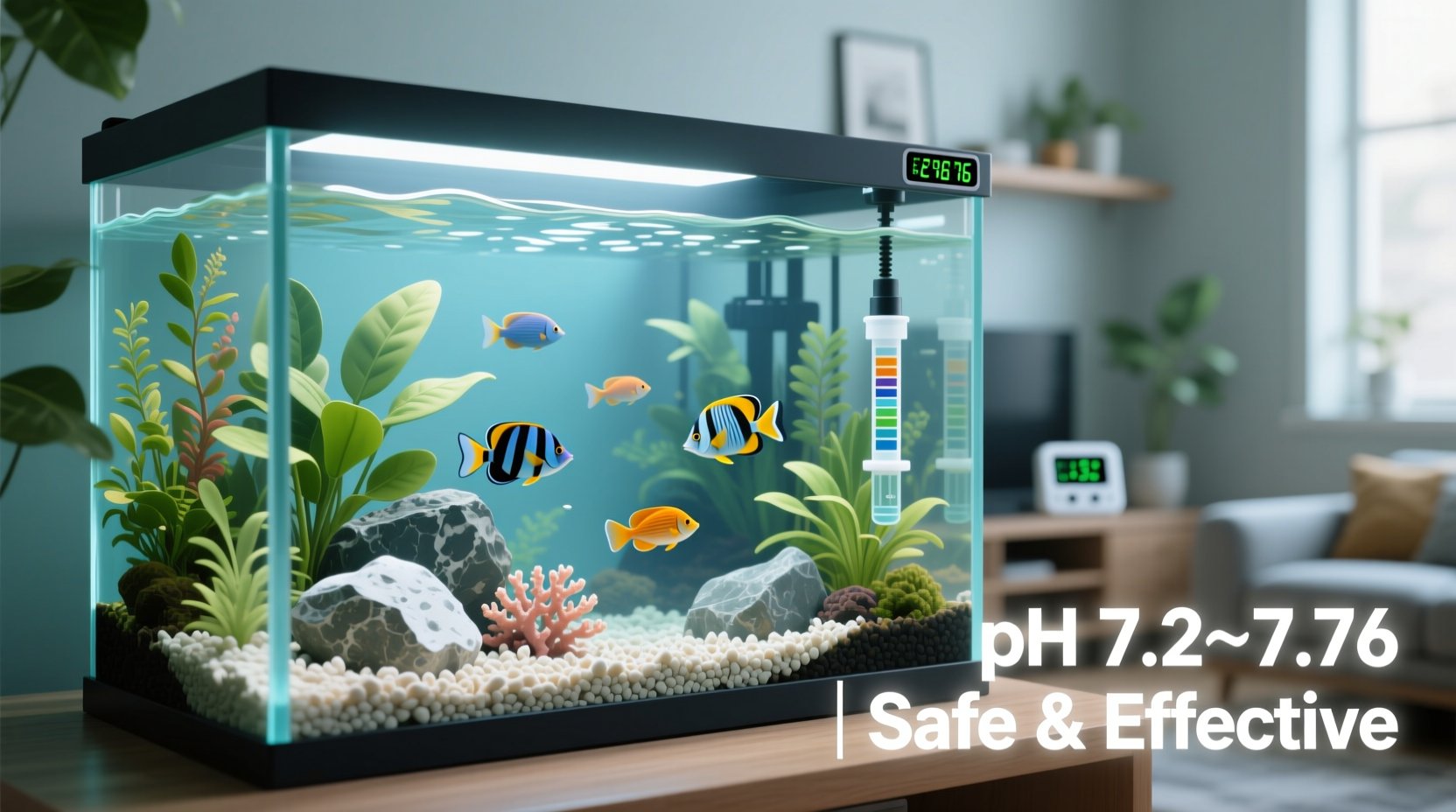
pH influences everything from fish respiration to nitrifying bacteria efficiency. A sudden shift—even by 0.5 units—can trigger stress, disease, or death. The ideal pH depends on the species: discus prefer soft, acidic water (pH 6.0–6.5), while Malawi cichlids need hard, alkaline conditions (pH 7.8–8.6). Before attempting to raise pH, confirm that your target level aligns with your fish’s natural habitat.
It's also important to distinguish between pH, general hardness (GH), and carbonate hardness (KH). KH, or alkalinity, acts as a buffer that stabilizes pH. Low KH leads to pH instability—even if you raise pH temporarily, it will drift downward again unless buffering capacity is increased. Therefore, raising pH sustainably requires enhancing KH, not just altering the water’s acidity directly.
“Never chase pH numbers blindly. Stability and compatibility with livestock matter more than hitting an arbitrary value.” — Dr. Tim Hovanec, Aquatic Microbiologist and Founder of Aquarium Science
Safe Methods to Raise Aquarium pH
The safest approaches increase both pH and KH gradually using natural or mineral-based additives. Avoid harsh chemicals like sodium hydroxide or rapid fixes that destabilize the tank.
1. Use Crushed Coral or Aragonite Substrate
Crushed coral, aragonite sand, or oyster shell gravel slowly dissolve in slightly acidic water, releasing calcium carbonate and raising KH and pH over time. These materials can be used as a full substrate or placed in filter media bags for controlled application.
Tip: Place crushed coral in a mesh filter bag inside your canister or hang-on-back filter. This allows easier removal if pH rises too high.2. Add Limestone or Decorative Rocks
Calcium-rich rocks like limestone, Texas holey rock, or dolomite naturally leach minerals into the water. Test rocks first by dripping vinegar on them—if they fizz, they contain carbonates and will affect pH. Rinse thoroughly before adding to the tank.
3. Perform Water Changes with Hardened Water
If your tap water has moderate KH and pH above 7.0, regular water changes will slowly raise overall tank pH. For soft tap water, pre-treat replacement water by mixing in crushed coral or using a re-mineralizing salt blend designed for planted or rift lake tanks.
4. Use Commercial pH Buffers
Products like Seachem Alkaline Buffer or API Proper pH 8.2 are formulated to raise and stabilize pH in a controlled manner. Follow dosage instructions carefully and never adjust more than 0.2–0.3 pH units per day. Always dissolve in a bucket of new water before adding to the tank.
5. Aerate to Release Dissolved CO₂
Excess dissolved CO₂ lowers pH. Increasing surface agitation through air stones, spray bars, or stronger filtration encourages gas exchange, allowing CO₂ to escape and pH to rise naturally. This method is especially useful in heavily stocked or planted tanks where respiration increases CO₂ at night.
Step-by-Step Guide to Raising pH Safely
Raising pH should be a gradual process spanning several days. Rapid shifts damage gill tissues and disrupt microbial colonies. Follow this timeline:
- Test current levels: Use a reliable liquid test kit to measure pH, KH, and GH. Record baseline values.
- Determine target pH: Match the needs of your fish species. Don’t exceed 8.5 unless required.
- Increase KH first: Add crushed coral to the filter or use a buffer to raise KH to 4–6 dKH. This stabilizes future pH.
- Monitor daily: Check pH and KH every 24 hours. Allow 2–3 days for stabilization after each adjustment.
- Adjust incrementally: If needed, apply half-dose of buffer or add more mineral media. Never raise pH more than 0.3 units per day.
- Maintain consistency: Once target is reached, continue weekly testing and partial water changes with buffered or remineralized water.
Common Mistakes and What to Avoid
Many aquarists inadvertently harm their tanks by using improper techniques. The following table outlines key do’s and don’ts when adjusting pH.
| Do | Don’t |
|---|---|
| Test KH alongside pH to ensure stability | Use baking soda (sodium bicarbonate) excessively—it can spike pH and increase sodium levels |
| Make changes gradually over several days | Attempt to correct pH in one day |
| Use natural mineral buffers like crushed coral | Add household chemicals like bleach, lye, or vinegar |
| Observe fish behavior during adjustments | Ignore signs of stress like gasping, lethargy, or darting |
| Pre-dissolve any additive in a separate container | Pour powders or liquids directly into the main tank |
Real Example: Correcting Low pH in a Cichlid Tank
A hobbyist in central Florida maintained a 55-gallon African cichlid tank using reverse osmosis (RO) water. Despite weekly water changes, pH dropped from 7.8 to 7.0 within two weeks. Fish showed reduced activity and faded coloration. Testing revealed near-zero KH.
The solution was multi-step: First, RO water was mixed with tap water (which had KH of 5 dKH) to create a blend with 3 dKH. Then, a mesh bag of crushed aragonite was added to the filter. After five days, pH rose to 7.6 and stabilized. Within two weeks, fish regained vibrancy and began displaying natural territorial behaviors. The owner now maintains KH between 4–6 dKH and performs biweekly tests to prevent regression.
Frequently Asked Questions
Can I use baking soda to raise pH quickly?
Baking soda (sodium bicarbonate) raises KH and thus stabilizes pH, but it should be used cautiously. Dose at 1/2 teaspoon per 50 gallons, pre-dissolved in water. Frequent or excessive use increases sodium and can harm sensitive species. It’s better suited for emergency buffering than long-term management.
Why does my pH keep dropping even after treatment?
Continuous pH decline usually indicates insufficient KH or ongoing acidification from decaying organics, peat filtration, or acidic decor. Address the root cause: replace peat, clean substrate, and boost buffering capacity with mineral media. Also consider whether your tap water is naturally soft and acidic.
Is it safe to mix different pH-raising products?
No. Combining commercial buffers can lead to unpredictable chemical reactions and unstable parameters. Stick to one method—preferably a natural mineral approach—and monitor results before introducing anything new.
Checklist for Raising Aquarium pH Safely
- ✅ Test current pH, KH, and GH
- ✅ Identify fish species’ ideal pH range
- ✅ Choose a slow, sustainable method (e.g., crushed coral or buffer)
- ✅ Limit daily pH change to less than 0.3 units
- ✅ Pre-dissolve additives in new water before adding to tank
- ✅ Monitor fish for signs of stress
- ✅ Re-test KH and pH daily until stable
- ✅ Maintain with consistent water changes using buffered or hard water
Conclusion: Stability Over Speed
Raising aquarium pH isn’t about quick fixes—it’s about creating a stable, species-appropriate environment. The health of your fish depends more on consistency than on achieving a perfect number. By focusing on increasing carbonate hardness and using gentle, tested methods like mineral substrates or controlled buffering, you can safely elevate pH without risking your aquatic ecosystem.
💬 Have experience raising pH in a planted tank or cichlid aquarium? Share your method and results in the comments to help fellow aquarists maintain balanced, thriving habitats.








