Unwanted cats in your garden or outdoor space can lead to scratched furniture, fouled lawns, and disrupted peace. While traditional deterrents like motion-activated sprinklers or physical barriers work, they often come with drawbacks—noise, visual clutter, or inefficiency. Sonic cat repellers offer a modern alternative: non-invasive, humane, and designed to operate quietly while effectively discouraging stray or neighbor’s cats from entering your property.
The key challenge lies in balancing effectiveness with discretion. A truly useful sonic repeller must be powerful enough to deter persistent animals but subtle enough not to disturb humans or pets indoors. This guide explores the science behind ultrasonic technology, evaluates top-performing models, and provides practical advice for deploying these devices where they’ll work best—all while remaining unobtrusive.
How Sonic Cat Repellers Work
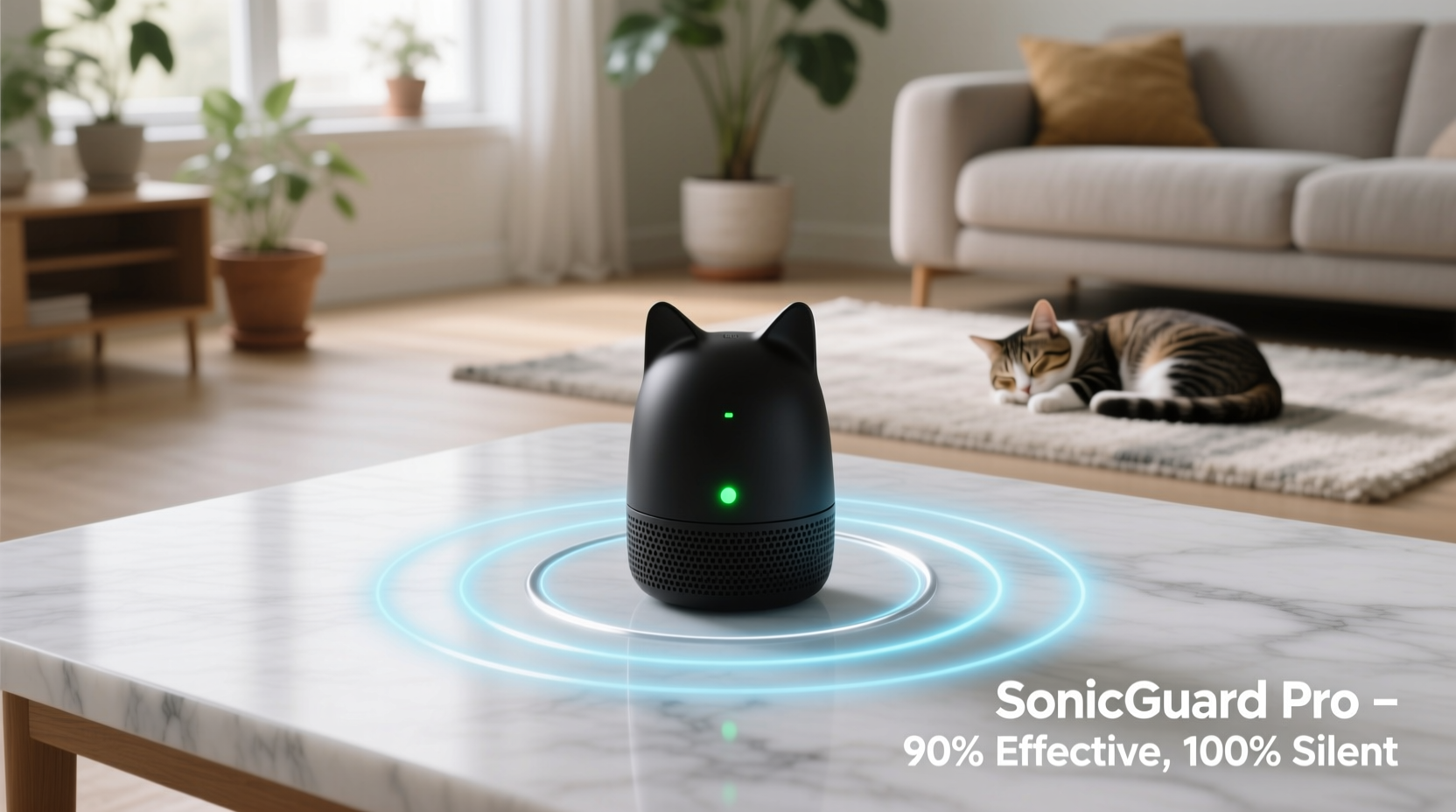
Sonic and ultrasonic cat repellers emit high-frequency sound waves—typically between 20,000 and 25,000 Hz—that are audible to cats but largely inaudible to most adults. These sounds mimic distress signals or predator cues, triggering an instinctive avoidance response in felines. Unlike loud alarms or sprays, ultrasonic devices operate silently to human ears, making them ideal for residential areas where noise pollution is a concern.
Most units are motion-activated, using passive infrared (PIR) sensors to detect movement within a range of 8–12 meters. Once triggered, the device emits short bursts of sound for 30–60 seconds before resetting. This intermittent activation conserves battery life and prevents habituation—the process by which animals become desensitized to constant stimuli.
Tip: Position your sonic repeller at cat-height (around 30–40 cm off the ground) for optimal detection and sound projection.Top Features of Effective & Quiet Models
Not all sonic repellers deliver on both performance and silence. The best models combine advanced sensor technology, weather resistance, and intelligent sound modulation. Here’s what sets high-quality units apart:
- Adjustable frequency range – Some cats may ignore fixed frequencies over time; models with variable output reduce habituation.
- Low-noise design – Even within ultrasound ranges, poorly shielded speakers can produce faint buzzing audible up close.
- Wide-angle coverage – Units with 100°+ detection arcs cover more ground with fewer installations.
- Weatherproof casing (IPX5 or higher) – Essential for reliable outdoor use across seasons.
- Energy efficiency – Solar-powered options with rechargeable batteries minimize maintenance.
“Ultrasonic deterrents are among the most humane and sustainable tools for managing nuisance wildlife.” — Dr. Lena Patel, Urban Wildlife Behavior Specialist
Comparison of Leading Quiet Sonic Repellers
| Model | Range | Noise Level | Power Source | Best For |
|---|---|---|---|---|
| PetSafe Outdoor Ultrasonic Repeller | Up to 11 m | Nearly silent (inaudible beyond 1m) | Battery (D-cell) | Small gardens, patios |
| Terathor S1500 Solar Deterrent | Up to 15 m | Faint hum only when active | Solar + rechargeable | Larger yards, perimeter control |
| CatStop Pro MK4 | Up to 12 m | Inaudible to humans | 9V battery | Precision targeting, sensitive areas |
| Defenders 360 Degree Ultrasonic Unit | Up to 10 m radius | Completely silent operation | AA batteries | Circular zones, flower beds |
The Terathor S1500 stands out for its solar efficiency and wide detection field, while the CatStop Pro MK4 excels in environments requiring precise directional control. For general use, the PetSafe model offers proven reliability at a reasonable price point.
Real-World Application: A Garden Owner’s Experience
Sarah M., a homeowner in Bristol, struggled for months with neighboring cats using her raised vegetable bed as a litter box. She tried citrus peels and netting, but the problem persisted. After installing two Terathor S1500 units—one facing the fence line, another near the compost bin—she noticed a significant reduction within 72 hours.
\"I was skeptical at first,\" Sarah said. \"But after the third night with no paw prints in the soil, I knew it was working. The best part? My husband didn’t even notice the devices were there. No noise, no eyesores—just results.\"
She emphasizes placement: “I angled them slightly downward and made sure nothing blocked the sensor. It’s been four months now, and we haven’t had a single incident.”
Step-by-Step Guide to Installing Your Sonic Repeller
- Assess entry points: Walk around your property and note where cats typically enter or linger.
- Choose mounting locations: Install units within 10 meters of target zones, clear of obstructions like tall grass or shrubs.
- Set height and angle: Mount at approximately knee-height, tilted slightly downward to focus on ground-level activity.
- Avoid reflective surfaces: Don’t place directly against walls or fences that could bounce sound back and reduce coverage.
- Test and adjust: Activate the unit and walk through the zone to ensure motion detection triggers reliably.
- Monitor for 7–10 days: Observe changes in cat activity and reposition if necessary.
Common Mistakes That Reduce Effectiveness
- Placing units too high – Cats stay low; sensors miss them if mounted above 50 cm.
- Ignoring environmental interference – Dense foliage or heavy rain can block both motion detection and sound waves.
- Using dead batteries – Weak power leads to inconsistent triggering and lower volume output.
- Expecting instant results – It may take 3–5 days for cats to fully avoid the area.
- Over-relying on one device – Large properties require multiple units for full coverage.
FAQ
Will a sonic cat repeller harm my own pet?
No. These devices are designed to be non-harmful and stress-minimizing. If you have an indoor cat that doesn’t go outside, it won’t be affected. For outdoor-access pets, gradual exposure usually prevents distress. Most manufacturers recommend supervised introduction if your cat frequents the treated area.
Can humans hear sonic repellers?
Most adults cannot hear frequencies above 20,000 Hz. However, some younger people or individuals with heightened hearing may perceive a faint high-pitched tone when standing very close (within 1 meter). The sound is brief and not harmful, similar to a distant smoke alarm chirp.
How long do these devices last?
Quality units last 3–5 years with proper maintenance. Solar models with replaceable batteries tend to have the longest service life. Regular cleaning of the sensor lens and checking for corrosion will extend performance.
Final Recommendations
For homeowners seeking a discreet, humane, and lasting solution to cat intrusion, modern sonic repellers represent a smart investment. Prioritize models with adjustable frequencies, solid build quality, and proven track records in independent reviews. Combine strategic placement with periodic rotation of deterrent methods to maintain long-term effectiveness.
Remember: consistency matters. A single well-placed unit can transform a problem zone, but sustained success comes from thoughtful setup and ongoing evaluation. Whether protecting a garden, patio, or children’s play area, quiet sonic repellers offer peace of mind without sacrificing neighborhood harmony.
🚀 Ready to reclaim your outdoor space? Choose a top-rated sonic repeller today, install it with precision, and enjoy a cat-free yard—quietly and effectively.








