
Uninvited cats wandering into your home, garden, or porch can be more than a nuisance—they may damage property, leave behind odors, or trigger allergies. While it’s natural to feel frustrated, the solution lies not in punishment or harm, but in smart, compassionate deterrence. With the right combination of environmental adjustments, scent-based repellents, and behavioral understanding, you can create a cat-resistant space that respects animal welfare while protecting your peace.
Understanding Why Cats Enter Your Space
Cats don’t wander into homes or yards without reason. Outdoor or feral cats are typically searching for food, shelter, or territory. Indoor cats that escape may be disoriented or exploring. Stray cats often return to areas where they’ve found resources before—like an open garage, a warm basement window, or a neighbor who feeds them.
Before implementing deterrents, assess what might be attracting cats in the first place:
- Accessible entry points (gaps under doors, open windows)
- Food sources (pet bowls left outside, unsecured trash)
- Sheltered spots (under decks, in sheds, behind bushes)
- Familiar scents (previous cat urine or marking)
Addressing these root causes is essential. Deterrents work best when combined with prevention.
Tip: Check your property at dusk—the most active time for cats—to identify access routes and behavior patterns.Humane Deterrent Methods That Work
Effective cat control doesn’t require traps or harsh chemicals. Modern solutions focus on sensory discomfort—using textures, sounds, and smells that cats naturally avoid. These methods are safe, legal, and ethical.
Scent-Based Repellents
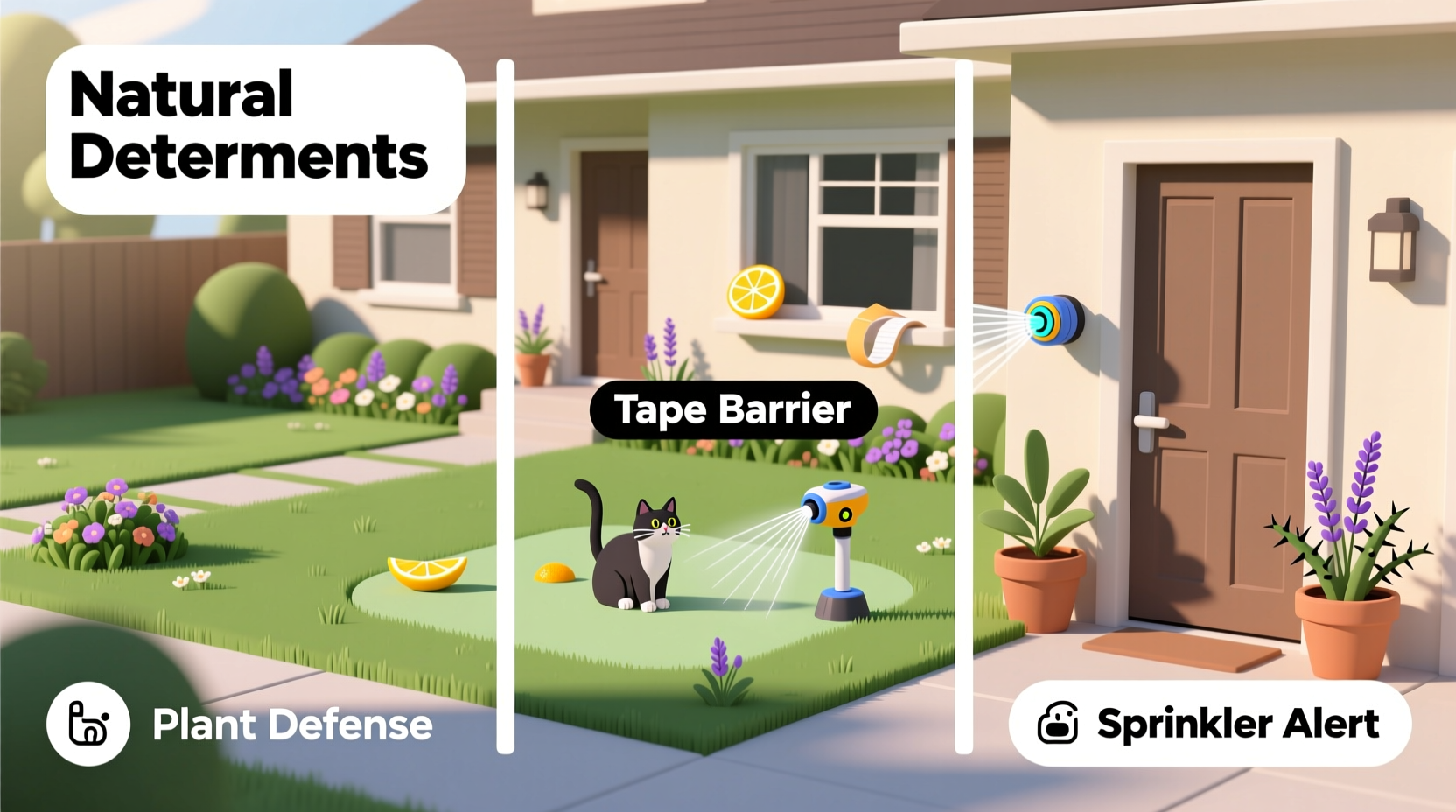
Cats have highly sensitive noses. Certain scents signal danger or discomfort, prompting them to avoid an area. Use natural, non-toxic options such as:
- Citrus peels (orange, lemon, grapefruit) placed around entry zones
- Essential oils like citronella, eucalyptus, or lavender (diluted and used sparingly)
- Commercial sprays containing bitter apple or garlic extract
Avoid direct application on plants or surfaces that pets or children may contact. Reapply after rain or every few days for continued effect.
Physical Barriers and Textures
Cats dislike walking on certain textures. Strategic placement of uncomfortable surfaces discourages loitering:
- Double-sided tape on window sills or ledges
- Plastic carpet runners (nub-side up) near doors or patios
- Metal sheeting or chicken wire under decks or crawl spaces
These materials aren’t harmful but create enough discomfort to redirect feline movement.
Electronic and Motion-Activated Devices
Ultrasonic repellers emit high-frequency sounds only audible to animals. When triggered by motion, they startle cats without causing pain. Place them near doorways, gardens, or porches.
Some models combine sound with a short burst of water—a dual deterrent that’s especially effective in outdoor areas.
“Consistency is key. A single device won’t solve the problem overnight, but used correctly, ultrasonic units reduce cat visits by up to 80% within three weeks.” — Dr. Lena Patel, Wildlife Behavior Specialist
Step-by-Step Guide to Cat-Proofing Your Home
Follow this timeline to systematically eliminate cat access and discourage repeat visits.
- Week 1: Survey and Seal
Walk around your home and identify all potential entry points. Seal gaps under doors with draft excluders, install door sweeps, and close off crawl spaces with mesh fencing. - Week 2: Remove Attractants
Bring pet food indoors, secure trash bins with locking lids, and clean any soiled areas with enzyme-based cleaners to remove lingering urine odor. - Week 3: Deploy Deterrents
Install motion-activated sprinklers near entrances. Lay down textured mats or citrus peels at common access points. Apply natural sprays along fences or window edges. - Week 4: Monitor and Adjust
Observe whether cat activity decreases. If footprints or droppings remain, shift devices or reinforce barriers. Rotate scents to prevent habituation. - Ongoing: Maintain Vigilance
Continue inspections monthly. Replace worn tapes or refilled repellents. Communicate with neighbors about stray feeding practices.
Do’s and Don’ts of Humane Cat Management
| Do’s | Don’ts |
|---|---|
| Use motion-activated devices to startle, not harm | Never use physical traps without contacting animal control |
| Clean soiled areas with enzymatic cleaners | Avoid ammonia-based cleaners—they mimic urine and attract cats |
| Communicate with neighbors about stray cats | Don’t shout at or chase cats—it increases stress and scattering |
| Support local TNR (Trap-Neuter-Return) programs | Don’t poison or use illegal repellents |
| Provide alternative shelter elsewhere (if permitted) | Don’t block exits if a cat is already inside—allow safe egress |
Real Example: How a Suburban Home Reduced Cat Intrusions by 90%
In Portland, Oregon, homeowner Maria Thompson struggled with persistent cat visits—especially at night—around her back patio and basement entrance. After finding feces near her child’s playset, she decided to act humanely but decisively.
Maria began by sealing a small gap under her garage door and switching to lidded trash bins. She installed a motion-activated sprinkler near the deck and applied a diluted citronella spray along fence lines. Within ten days, sightings dropped. She also spoke with two neighbors who had been feeding strays; together, they arranged for a local rescue to trap and neuter three regular visitors.
After six weeks, no new signs of cats appeared. Maria continues using intermittent sprays and checks her perimeter monthly. “It wasn’t about hating cats,” she said. “It was about setting boundaries respectfully.”
FAQ: Common Questions About Keeping Cats Away
Will vinegar keep cats away?
Yes, white vinegar can act as a temporary deterrent due to its strong smell. Spray it on problem areas or soak rags and place them strategically. However, rain washes it away quickly, and cats may grow accustomed to the scent over time. Use it as part of a broader strategy, not a standalone solution.
Is it legal to keep cats off my property?
Yes, property owners have the right to deter animals humanely. However, laws vary by location. In many areas, harming or trapping cats without permits is illegal. Always check local ordinances and consider collaborating with animal services for stray management.
What if the cat belongs to a neighbor?
Approach the conversation politely. Share concerns about hygiene or pets and suggest keeping their cat indoors or using a bell collar. Some cities offer “cat curfew” guidelines. Documentation (photos, dates) helps if mediation becomes necessary.
Final Thoughts and Call to Action
Creating a cat-free zone doesn’t mean declaring war on animals. It means designing a space that naturally discourages intrusion while aligning with humane values. The most lasting results come from combining physical barriers, sensory deterrents, and community awareness.
Start today: walk your property, identify vulnerabilities, and implement one or two strategies. Track changes over time. Share what works with neighbors—collective action leads to better outcomes for everyone, including the cats.
💬 Have a success story or tip for keeping cats away? Share your experience in the comments below and help others find peaceful, compassionate solutions.








