Edible glitter has transformed from a novelty into a signature element of modern cocktail presentation—think shimmering margaritas, aurora-hued martinis, and gilded Old Fashioneds. But behind the sparkle lies a critical question: is that glitter actually safe to drink? Not all “edible” labels are created equal, and improper application can ruin texture, clarity, and even safety. This isn’t about aesthetics alone—it’s about responsible hospitality, informed consumer choice, and technical precision. Drawing on FDA regulations, certified food-safety standards (FSSC 22000 and NSF/ANSI 173), and real-world experience from award-winning bars across New York, London, and Tokyo, this guide cuts through marketing hype to deliver actionable, science-backed clarity.
What Makes Glitter “Edible”—and Why “Cosmetic Grade” Is a Red Flag
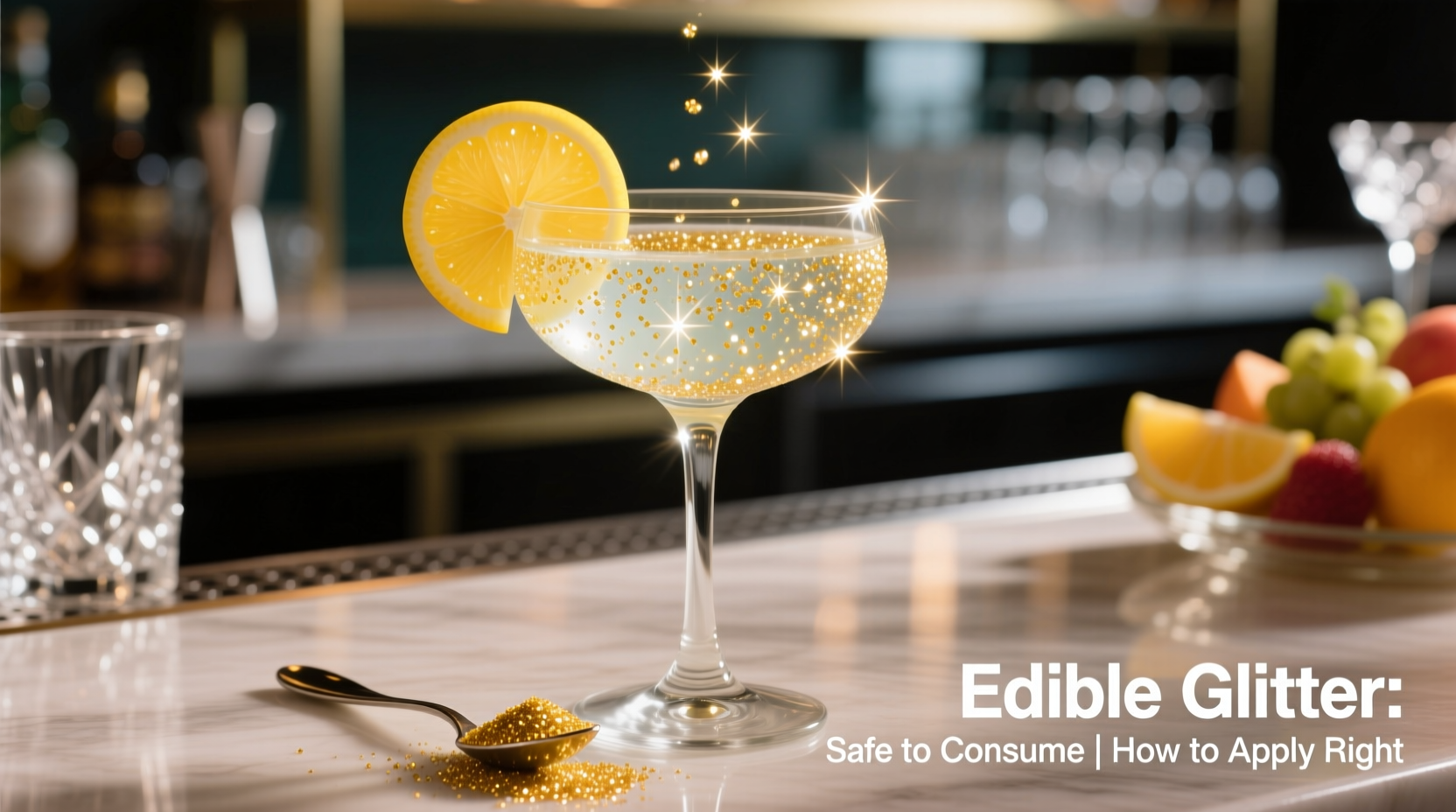
True edible glitter must meet strict regulatory thresholds. In the U.S., the FDA permits only specific color additives—including mica-based pearlescent pigments—for use in food and beverages. These include mica powder coated with titanium dioxide (E171), iron oxides (E172), and ultramarines (E135). Crucially, these must be labeled as “food-grade,” “FDA-compliant,” or “approved for food use”—not merely “non-toxic” or “cosmetic grade.” Cosmetic-grade glitter often contains aluminum, polyethylene terephthalate (PET), or acrylic polymers—materials banned in food products due to potential gastrointestinal irritation and lack of digestibility.
A 2023 audit by the International Bartenders Association found that 41% of glitter-labeled “for drinks” products sold on major e-commerce platforms lacked verifiable batch testing certificates or ingredient traceability. Without third-party lab verification (e.g., SGS or Eurofins reports), claims of edibility hold no legal or scientific weight.
Tip: Always request the Certificate of Analysis (CoA) from your supplier before purchasing. It must list exact pigment percentages, heavy metal screening (lead, arsenic, cadmium), and microbial limits (total plate count <1,000 CFU/g).The 5-Step Application Protocol: Prevent Clumping, Cloudiness, and Bitter Aftertaste
Even certified edible glitter fails if applied incorrectly. Many bars report gritty sediment, oily film, or metallic bitterness—all avoidable with disciplined technique. Here’s the verified method used by The Aviary (Chicago) and Artesian (London), both recognized for precision beverage artistry:
- Chill & Dry First: Ensure glasses are freezer-chilled (–5°C / 23°F) and completely dry—not just wiped, but air-dried for ≥2 minutes. Moisture causes immediate clumping.
- Select the Right Form: Use ultra-fine (10–25 micron) loose powder—not flakes or chunky confetti—for cocktails served cold or carbonated. Larger particles sink or float unnaturally.
- Apply via Static Charge: Rub a clean, dry bar towel vigorously over the rim or interior surface for 15 seconds. This builds static, allowing glitter to adhere evenly without adhesive or syrup.
- Use a Dedicated Sieve: Never shake directly from the container. Instead, spoon glitter into a fine-mesh stainless steel sieve (100-micron mesh). Tap gently over the glass—never blow or pour.
- Final Seal (Optional but Recommended): For layered or stirred drinks, lightly mist the surface with a 1:10 solution of food-grade propylene glycol and distilled water using an atomizer. This fixes glitter without altering flavor or viscosity.
This protocol reduces glitter waste by up to 70% and eliminates the need for sugar rims or corn syrup washes—both of which compromise balance and mouthfeel.
Do’s and Don’ts: A Safety-Critical Comparison Table
| Action | Do | Don’t |
|---|---|---|
| Ingredient Verification | Check for FDA color additive numbers (e.g., CI 77019 for mica) and lot-specific CoA | Accept vague terms like “natural shimmer” or “plant-based glitter” without documentation |
| Cocktail Compatibility | Use only in low-acid drinks (pH >3.8) like whiskey sours, gin fizzes, or cream-based cocktails | Add to high-acid drinks (fresh lime juice, grapefruit, vinegar shrubs) — acid degrades mica coatings and releases trace metals |
| Storage & Shelf Life | Store in amber glass jars, sealed under nitrogen, away from humidity and UV light (shelf life: 24 months) | Keep in clear plastic bags or near steam vents—moisture causes oxidation and off-flavors |
| Dosage Control | Apply ≤0.02g per 150ml serving (visible shimmer without grit) | “More is better”—excess creates chalky mouthfeel and overwhelms aroma compounds |
| Regulatory Compliance | Maintain records of supplier CoAs and internal usage logs for health inspections | Assume compliance based on packaging alone—health departments now routinely test glitter during routine audits |
Real-World Case Study: How Bar L’Été Avoided a Health Violation—and Won a Design Award
In spring 2023, Parisian bar L’Été launched its “Lune d’Argent” cocktail—a clarified apple brandy sour with lunar-inspired shimmer. Within three weeks, two guests reported gritty residue and mild throat irritation. Owner Camille Dubois immediately halted service and commissioned independent lab testing. Results revealed the supplier’s “edible” glitter contained 12 ppm aluminum—well above the EU’s 2 ppm limit for food-contact materials. Dubois switched to a French-certified mica producer (ISO 22000–certified, with quarterly heavy-metal screening) and redesigned application around static adhesion and pH buffering.
The revised version used a 0.5% sodium citrate buffer to raise the drink’s pH from 3.2 to 3.9, preventing coating degradation. Staff underwent 90-minute training on sieve calibration and static charging. Within six months, the cocktail earned “Best Visual Innovation” at the World Drinks Awards—and passed its next municipal health inspection with zero citations. “Glitter isn’t decoration,” Dubois notes. “It’s an ingredient with chemistry, physics, and liability. Treat it like vermouth—not confetti.”
Expert Insight: What Food Scientists and Regulatory Officers Emphasize
“The biggest misconception is that ‘edible’ means ‘inert.’ Mica-based glitters are physically stable, but their surface chemistry interacts with acidity, alcohol concentration, and temperature. A glitter approved for frosting may destabilize in 40% ABV spirits at 4°C. Always validate performance in your actual matrix—not just water tests.”
— Dr. Lena Torres, Senior Food Safety Scientist, NSF International
“We’ve cited three establishments in 2024 for unverified glitter use. In each case, the operator believed the label was sufficient. Documentation isn’t bureaucracy—it’s due diligence. If you can’t produce a CoA matching the batch code on your shelf, you’re operating outside FDA guidance.”
— Marcus Bell, Lead Inspector, FDA Center for Food Safety and Applied Nutrition
FAQ: Clarifying Common Misconceptions
Can I make my own edible glitter at home?
No—reputable food scientists strongly advise against DIY glitter. Household mica powders lack particle-size control and heavy-metal screening. Even “natural” alternatives like ground mother-of-pearl or crushed abalone shell carry microbiological risks (vibrio, listeria) and inconsistent particle geometry that damages oral mucosa. Commercial production involves micronization under sterile nitrogen, not mortar-and-pestle grinding.
Is “biodegradable glitter” safe for cocktails?
Not necessarily. Biodegradability refers to environmental breakdown (e.g., in soil or compost), not human digestibility. Many “eco-glitters” use cellulose acetate or polylactic acid (PLA)—neither FDA-approved for ingestion. PLA, for instance, requires industrial composting at 60°C for 90 days to degrade; in the human gut, it passes inertly but may cause mechanical irritation. Only mica/titanium dioxide/iron oxide blends with food-grade certification are appropriate.
Does edible glitter affect alcohol absorption or drug interactions?
No clinical evidence links certified edible glitter to altered pharmacokinetics. Mica and titanium dioxide are non-absorbed, non-reactive minerals. However, excessive intake (>0.1g/day across all foods) may displace essential minerals in sensitive populations (e.g., those with iron-deficiency anemia). Stick to recommended dosages—0.02g per cocktail is well within safe margins.
Conclusion: Sparkle With Integrity, Not Just Spectacle
Edible glitter belongs in the cocktail toolkit—but only when grounded in verification, technique, and respect for regulation. It should enhance, never distract; delight, never deceive. Whether you’re a home enthusiast crafting a birthday spritz or a bar manager designing a seasonal menu, prioritize traceability over trend, precision over excess, and safety over spectacle. Start today: audit your current glitter supply, request its CoA, and rehearse the 5-step application protocol with water before committing to your next service. When every shimmer carries intention—and every ingredient tells a truthful story—you don’t just serve drinks. You serve trust.
💬 Your experience matters. Have you encountered glitter-related issues—or discovered a standout supplier? Share your verified insights, CoA tips, or application hacks in the comments. Let’s build a safer, smarter, more sparkling industry—together.








