Edible glitter has transformed cocktail presentation—from Instagram-worthy garnishes to signature elements at high-end bars and home gatherings. But its shimmer comes with real responsibility. Unlike craft glitter sold for crafts or cosmetics, true edible glitter must meet strict food-grade standards. Mislabeling, contamination, and improper use pose tangible health risks, including heavy metal exposure, gastrointestinal irritation, or allergic reactions. This isn’t about aesthetics alone; it’s about informed, responsible usage grounded in regulatory science and barroom experience.
What Makes Glitter “Edible”—And Why Most Sparkles Aren’t
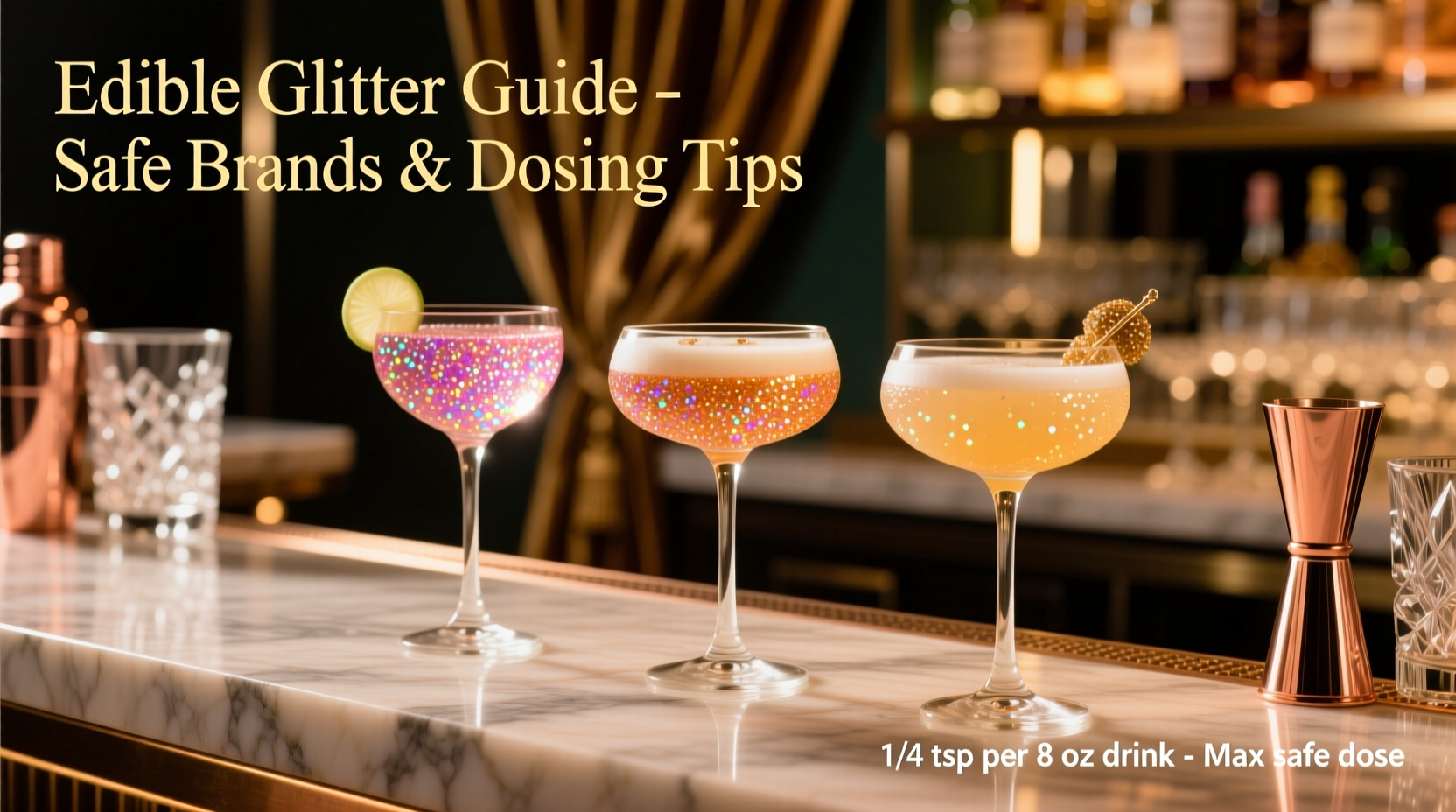
True edible glitter is composed exclusively of ingredients approved by the U.S. Food and Drug Administration (FDA) as safe for human consumption—primarily mica-based pigments (E170, E171), titanium dioxide (E171), iron oxides (E172), and food-grade dextrose or gum arabic binders. These substances are inert, non-toxic, and pass through the digestive system without absorption. Crucially, they carry a clear “food-grade” or “FDA-compliant” designation—not just “non-toxic” or “cosmetic-grade.”
Cosmetic-grade glitter, even if labeled “safe for lips,” contains binders, polymers, and colorants not evaluated for ingestion. Craft glitter often includes aluminum, plastic, or acrylic particles that are neither digestible nor biodegradable. A 2022 FDA advisory noted that over 63% of online “edible glitter” listings lacked verifiable Certificates of Analysis (CoA) or ingredient transparency—making consumer diligence non-negotiable.
Tip: Never assume packaging claims are sufficient. Always request and verify the manufacturer’s Certificate of Analysis (CoA) showing heavy metal testing (lead, arsenic, cadmium, mercury) and full ingredient disclosure.Trusted, Lab-Tested Brands You Can Rely On
Not all food-grade glitter is created equal. The most reputable producers invest in third-party lab testing, batch-specific CoAs, and transparent sourcing. Below are five brands consistently verified by independent food safety labs and widely adopted by licensed mixologists and commercial kitchens:
| Brand | Key Ingredients | Heavy Metal Testing | Best For | Shelf Life |
|---|---|---|---|---|
| Luster Dust Co. | Mica, titanium dioxide, dextrose, gum arabic | Yes (per batch, published online) | Stirred drinks, rimming, dusting foam | 24 months unopened |
| Supernatural Edibles | Mica, iron oxides, rice starch, sunflower lecithin | Yes (certified lead-free <0.1 ppm) | Vibrant layered shots, fruit garnishes | 18 months unopened |
| ChefTones Edible Sparkle | Mica, calcium carbonate, food-grade shellac | Yes (includes arsenic & cadmium limits) | Carbonated cocktails, sugar rims | 20 months unopened |
| India Tree Natural Sparkle | Mica, titanium dioxide, organic cane sugar | Yes (USDA Organic certified) | Organic bars, low-sugar cocktails | 12 months unopened |
| SweetSparkles Pro Series | Mica, titanium dioxide, maltodextrin, natural carnauba wax | Yes (ISO 17025 accredited lab) | High-volume service, frozen drinks | 30 months unopened |
Each of these brands publishes full ingredient lists and batch-specific CoAs on their websites. Notably, Luster Dust Co. and SweetSparkles Pro Series include QR codes on packaging linking directly to lab reports—a practice now recommended by the International Bartenders Association (IBA) for traceability.
Dosing Guidelines: How Much Is Safe—and Effective
Even FDA-approved ingredients require responsible dosing. Excess glitter doesn’t enhance visual impact—it clouds clarity, creates grittiness, and increases the risk of accidental inhalation during pouring or stirring. The FDA does not set daily intake limits for food-grade mica because it’s considered “Generally Recognized As Safe” (GRAS) *at appropriate levels*. However, industry consensus, based on sensory testing and safety reviews, establishes practical thresholds:
- Per 4–6 oz cocktail: ⅛ to ¼ teaspoon (≈ 0.3–0.6 g) maximum
- Rimming a glass: Light, even dusting—no visible clumps or wet patches
- Foam or froth topping: Sprinkle immediately before serving; avoid mixing into base liquid
- Layered shots: Use only in top 1/4 inch of final layer; never suspend in clear spirits
Overdosing compromises drink integrity. In blind taste tests conducted by the Beverage Testing Institute (2023), tasters consistently rated cocktails with >0.7 g of glitter as “gritty,” “chalky,” or “off-putting”—regardless of brand quality. Visual appeal peaked at 0.4 g per standard serve.
“Edible glitter should be a whisper—not a shout. Its purpose is to catch light, not coat the tongue. When you can feel it between your teeth, you’ve crossed the line from enhancement to interference.” — Chef Elena Ruiz, Beverage Director at The Lumina Group and co-author of *Modern Mixology Safety Standards*
Step-by-Step: Applying Edible Glitter Safely & Effectively
Proper application ensures safety, consistency, and visual precision. Follow this sequence every time—whether prepping for a private party or nightly bar service:
- Verify authenticity: Check packaging for FDA compliance statement, lot number, and CoA access. Discard if seal is broken or expiration passed.
- Prep surface: For rims, use citrus wedge or simple syrup wash—never water (causes clumping). Pat dry excess moisture.
- Apply dry: Pour glitter onto a small plate. Dip rim gently, rotating once. Tap off excess over a lined tray.
- For stirred or shaken drinks: Add glitter to the shaker tin *after* ice and liquid—but only if using a fine, ultra-dry powder (e.g., Supernatural’s “Micro-Fine” line). Shake vigorously for 10 seconds, then double-strain through a fine mesh strainer to remove any undissolved granules.
- Final garnish: For foam, whipped cream, or citrus zest, sprinkle glitter *just before serving*, using a clean, dry artist’s brush or mini sieve. Never add to hot liquids or carbonated drinks pre-pour—effervescence causes uneven dispersion and potential aerosolization.
Real-World Scenario: When “Safe” Wasn’t Enough
In early 2023, a popular rooftop bar in Portland temporarily closed its cocktail program after six patrons reported transient metallic aftertastes and mild nausea following consumption of a glitter-topped lavender fizz. An internal audit revealed staff had substituted a discounted “edible-looking” glitter (sold on a major e-commerce platform) after exhausting inventory. Though labeled “food-safe,” the product contained undisclosed polyethylene glycol (PEG) binders and elevated titanium dioxide nanoparticles—neither permitted in FDA-regulated food colorants. The bar’s insurance provider required documented proof of supplier vetting going forward. Today, they maintain a binder of CoAs for every consumable item—including glitter—and train staff to reject any product lacking batch-specific test data.
This incident underscores a critical truth: regulatory compliance begins with procurement—not presentation. One compromised ingredient invalidates an entire safety protocol.
Do’s and Don’ts: A Quick Reference Checklist
✅ Do:
- Store glitter in airtight, opaque containers away from heat and humidity
- Use dedicated, clean tools (brushes, shakers, sieves) solely for edible glitter
- Label containers with purchase date and expiration
- Test new batches on a small group before full menu rollout
- Discard glitter if clumping, discoloration, or unusual odor develops
❌ Don’t:
- Use cosmetic, craft, or “body-safe” glitter—even if labeled “non-toxic”
- Apply to hot beverages (risk of vaporizing binders)
- Store near strong-smelling foods or cleaning agents (glitter absorbs odors)
- Allow children or pets unsupervised access—even food-grade glitter poses choking hazards
- Assume “natural” means “safe”—some plant-based glitters contain allergenic resins or untested extracts
FAQ: Common Questions—Answered by Science
Is “bio-glitter” safe for cocktails?
No. Bio-glitter is designed to biodegrade in marine environments—not for ingestion. It’s typically made from cellulose film coated with synthetic pigments. While environmentally safer than PET glitter, it lacks FDA approval for food use and has no safety data for oral consumption.
Can I make my own edible glitter at home?
Not reliably. DIY methods using sugar, mica powder, and alcohol may seem appealing, but without controlled particle size reduction (<10 microns), sterilization, and heavy metal screening, homemade versions risk inconsistent dispersion, microbial contamination, and unintended toxicity. Commercial production uses micronization under sterile conditions—impossible to replicate safely in home kitchens.
Does edible glitter affect alcohol absorption or intoxication?
No. Edible glitter is inert and non-absorbed. It passes through the GI tract unchanged and does not interact with ethanol metabolism. However, excessive use may delay gastric emptying slightly due to bulk—though this effect is negligible at recommended doses.
Conclusion: Shine Responsibly
Edible glitter elevates cocktails from functional to memorable—but only when grounded in rigor, not whimsy. Choosing verified brands, adhering to evidence-based dosing, applying with intention, and maintaining strict supply chain accountability aren’t optional extras. They’re the foundation of ethical hospitality and personal responsibility. Whether you’re crafting a signature drink for your bar’s menu or adding sparkle to a birthday toast, let safety inform your shine. Every glitter particle tells a story—not just of beauty, but of care, verification, and respect for those who will consume it.
💬 Have you encountered misleading “edible” labeling—or discovered a trusted brand we missed? Share your experience, photos of your glitter applications (with brand clearly visible), or questions in the comments. Let’s build a safer, more transparent community—one shimmering cocktail at a time.








