
Every year, millions of plastic cat litter boxes end up in landfills, contributing to long-term environmental pollution. Most are made from non-biodegradable polypropylene or polystyrene, which can take over 500 years to decompose. Yet, with a little creativity and mindful planning, these durable containers don’t have to be discarded after their original use ends. By learning how to recycle responsibly and repurpose thoughtfully, pet owners can significantly reduce household waste while supporting a circular economy at home.
Recycling and repurposing cat litter boxes isn’t just about sustainability—it’s also an opportunity to innovate within your living space. Whether you're looking for practical storage solutions, garden upgrades, or DIY projects, there are numerous ways to give these sturdy plastic bins a second life.
Understanding the Materials: Can Cat Litter Boxes Be Recycled?
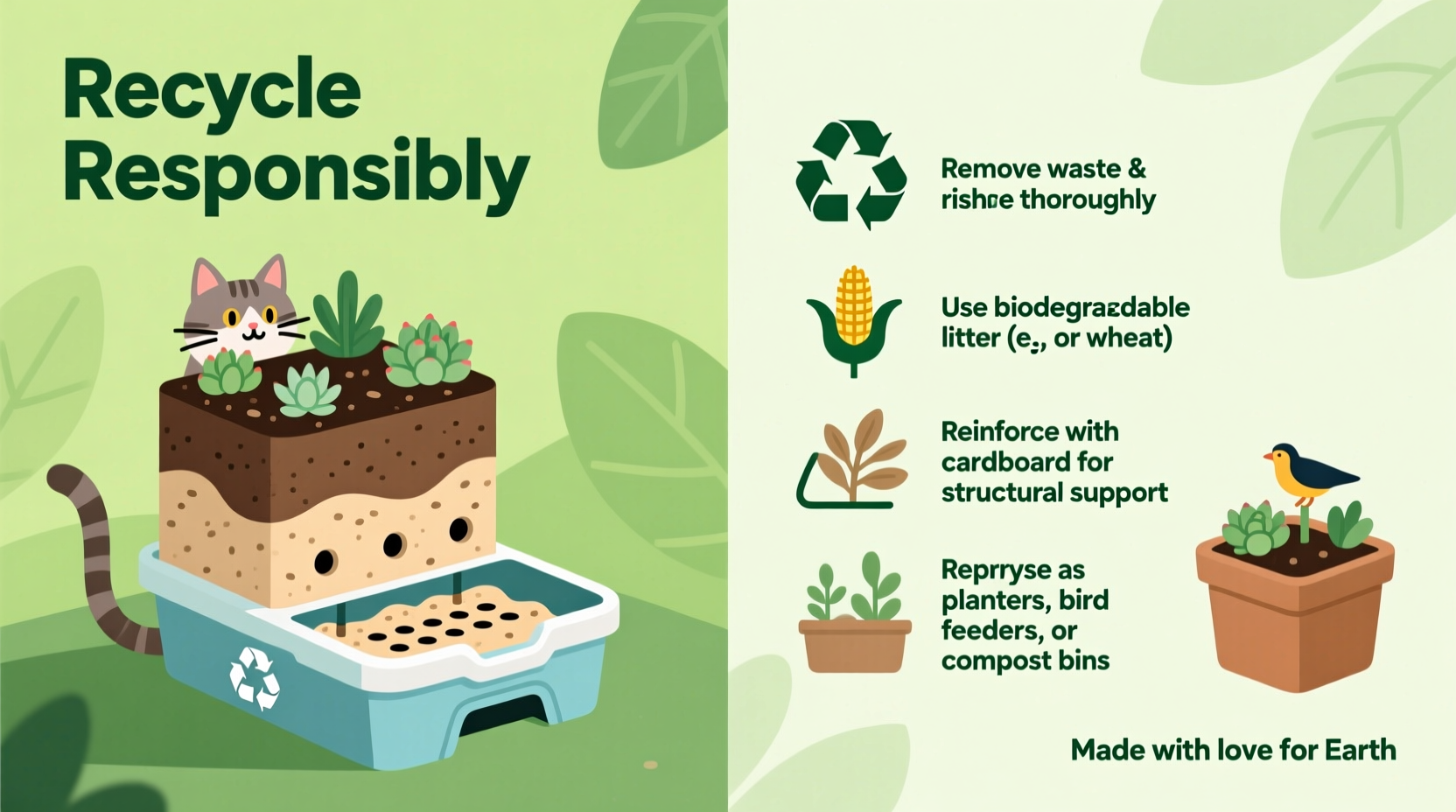
The first step in responsible disposal is knowing what your litter box is made of. Most commercial litter boxes are molded from #5 polypropylene (PP) or #6 polystyrene (PS), both of which are technically recyclable but not always accepted by curbside programs due to contamination risks and low market demand.
Polypropylene is more widely accepted than polystyrene because it’s tougher and easier to process. However, recycling facilities often reject litter boxes if they’re contaminated with urine residue, clay dust, or clumping agents—even small traces can compromise entire batches of recyclable material.
“Plastic recycling only works when materials are clean and sorted correctly. A contaminated litter box can derail an entire load.” — Dr. Lena Torres, Waste Management Specialist, GreenCycle Institute
Before assuming your local facility accepts used pet products, check municipal guidelines. Some cities require rigid plastics to be labeled and separated, while others prohibit any item associated with animal waste regardless of cleaning.
Step-by-Step Guide: How to Prepare a Cat Litter Box for Recycling
If your area accepts #5 plastics and you intend to recycle your old litter box, follow this thorough cleaning and preparation process:
- Empty completely: Remove all remaining litter using gloves and seal it in a compostable or biodegradable bag before disposal.
- Scrub with enzyme cleaner: Use a pet-safe enzymatic cleaner to break down organic residues like ammonia and uric acid. Let sit for 10–15 minutes.
- Wash thoroughly: Rinse with hot water and mild dish soap. Scrub all corners and edges with a stiff brush.
- Rinse again: Ensure no odor or film remains. Residual scent indicates lingering contaminants.
- Dry completely: Air-dry upside down for 24–48 hours to prevent mold and moisture buildup.
- Check local rules: Confirm whether your municipality requires removal of labels, stickers, or non-plastic parts (e.g., rubber feet).
- Drop off or schedule pickup: Deliver to a designated recycling center if curbside isn’t available.
Creative Ways to Repurpose Old Cat Litter Boxes
When recycling isn't feasible, repurposing offers a zero-waste alternative. Thanks to their durability, size, and shallow depth, cat litter boxes are ideal for various household and outdoor uses.
1. Garden Seedling Trays
Use cleaned litter boxes as seed-starting trays. Their depth holds soil well, and drainage holes can be easily drilled. Group multiple boxes under grow lights indoors during early spring.
2. Outdoor Sand Play Table
Transform into a child-safe sandpit by filling with clean play sand. Add toy trucks, shovels, and sifters for sensory play. Cover when not in use to keep out debris and animals.
4. Tool Organizer for Garage or Shed
Divide gardening tools, screws, nails, or paintbrushes into sections using cardboard dividers or small containers. The high sides prevent spills and make transport easy.
5. Pet Bathing Station
Larger models work as elevated bathing trays for cats or small dogs. Place a non-slip mat inside and position near a hose or bathtub for easy cleanup.
6. Craft Storage Bins
Perfect for storing fabric scraps, yarn, or art supplies. Label each compartment for quick access. Stackable designs maximize vertical storage.
7. Emergency Water Catchment
In regions prone to drought or power outages, place under gutters to collect rainwater for non-potable uses like plant watering or car washing.
Tip: Drill small holes in the bottom to convert a litter box into a drip tray for potted plants.Do’s and Don’ts of Repurposing Cat Litter Boxes
| Do’s | Don’ts |
|---|---|
| Thoroughly disinfect before repurposing | Repurpose for food storage or cooking without deep sanitization |
| Label repurposed boxes clearly (e.g., “Garden Only”) | Assume odors are gone just because you can’t smell them |
| Use outdoors or in utility areas when possible | Reuse cracked or warped boxes that may harbor bacteria |
| Add lids or covers to control dust or pests | Dispose of in regular trash if recycling or donation is available |
Mini Case Study: From Litter Box to Community Garden Hub
In Portland, Oregon, resident Maria Lin turned five retired litter boxes into modular herb starters for her neighborhood garden project. After scrubbing each with vinegar and baking soda, she drilled drainage holes and filled them with organic potting mix. Each box was assigned to a different herb—basil, thyme, parsley, cilantro, and mint—to prevent cross-rooting.
Mounted on wheeled platforms, the boxes became mobile growing stations, allowing seasonal rotation and sun optimization. When winter approached, two were converted into insulated housing for delicate seedlings. The success inspired a workshop where locals learned how to safely repurpose household pet items into urban farming tools.
“It’s not about perfection,” Maria said. “It’s about reimagining what we already have. These boxes kept my herbs alive through frost—and kept plastic out of landfills.”
Checklist: Eco-Friendly Disposal & Reuse Plan
- ☑ Identify the resin type (#5 or #6) on the bottom of the box
- ☑ Empty and deep-clean with enzyme-based cleaner
- ☑ Check local recycling policies via municipal website or call center
- ☑ If recyclable, dry fully and deliver to approved facility
- ☑ If not recyclable, brainstorm repurposing options based on size and condition
- ☑ Sanitize and modify for new function (drill holes, add labels, paint)
- ☑ Donate usable boxes to shelters or rescue groups if still functional
Frequently Asked Questions
Can I compost a biodegradable litter box?
Only if it's certified compostable and free of synthetic coatings. Most \"biodegradable\" litter boxes still contain plastic linings or dyes unsuitable for home compost. Industrial composting facilities may accept them—check certification labels like BPI or OK Compost.
Is it safe to reuse a cat litter box for children’s activities?
Yes, provided it has been deeply sanitized and never stored toxic litter types (e.g., crystal desiccants or chemical-heavy clays). Always designate repurposed boxes for non-food uses and supervise young children.
Where can I donate gently used litter boxes?
Animal shelters, foster networks, and TNR (Trap-Neuter-Return) programs often welcome donations. Call ahead to confirm needs and cleanliness standards. Some organizations prefer new boxes only due to hygiene protocols.
Final Thoughts: Turning Waste into Worth
Every cat owner will eventually face the question of what to do with an outdated litter box. Instead of defaulting to disposal, consider the potential locked within its structure. With proper cleaning, informed recycling, and imaginative reuse, this common household item can contribute to a more sustainable lifestyle.
Sustainability starts not with grand gestures, but with small, consistent choices—like choosing to drill a few holes and grow herbs in a container once used for waste. These acts accumulate into meaningful environmental impact. The next time you replace a litter box, pause before trashing it. Ask: What else could this become?
💬 Have you repurposed a cat litter box in an unexpected way? Share your story in the comments and inspire others to think beyond the bin!








