Sudden or persistent crackling sounds in the ear when swallowing are more common than many realize. While often harmless, these noises can be unsettling and may signal an underlying condition affecting the ear, nose, or throat. The sensation typically stems from pressure changes within the middle ear, most frequently linked to the function—or malfunction—of the Eustachian tube. Understanding why this happens, how to manage it, and when to consult a healthcare provider is essential for both comfort and long-term ear health.
Understanding the Ear’s Anatomy and Swallowing Mechanics
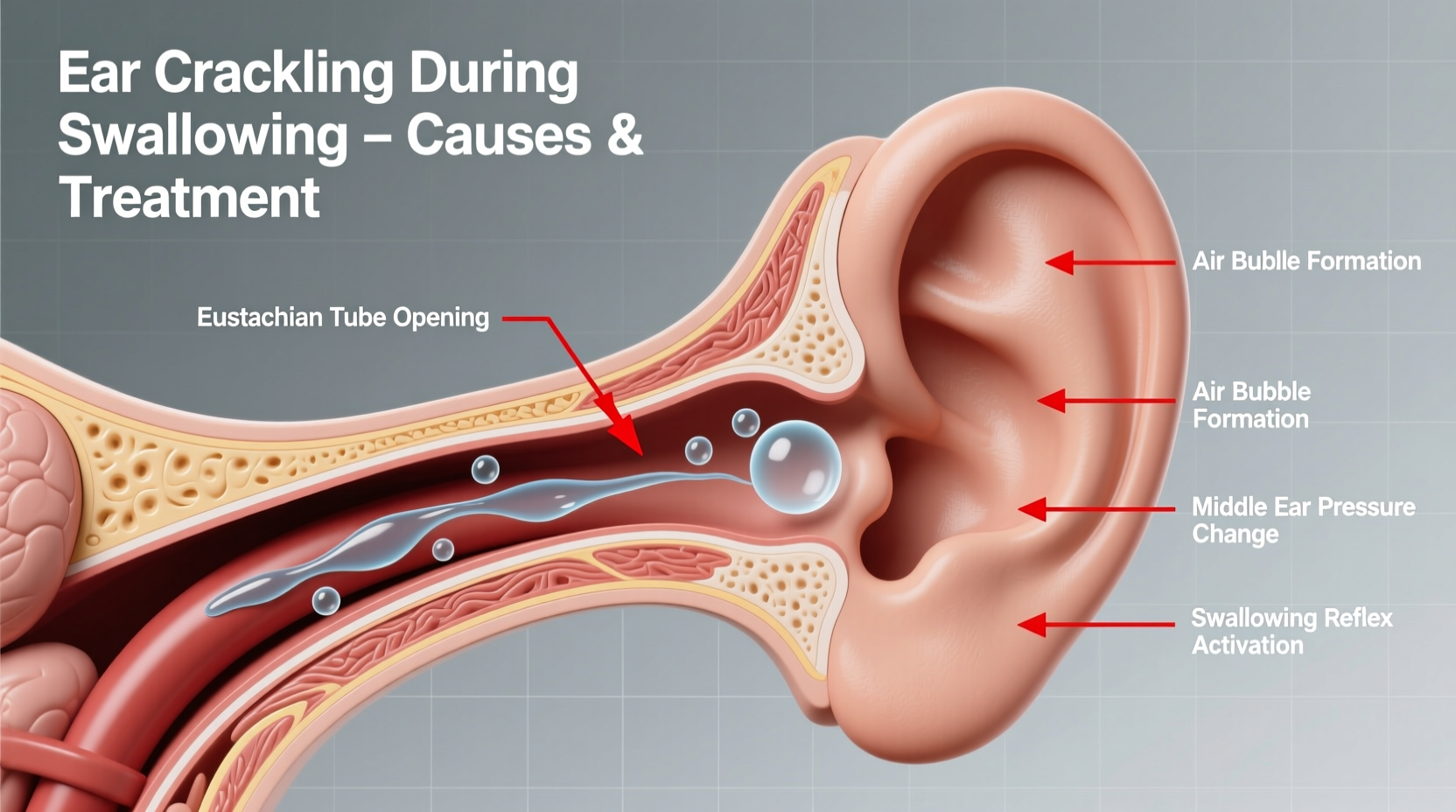
The human ear is divided into three parts: outer, middle, and inner. The middle ear, an air-filled cavity behind the eardrum, houses tiny bones that transmit sound vibrations. This chamber connects to the back of the nasal cavity via the Eustachian tube—a narrow passage responsible for equalizing air pressure on both sides of the eardrum.
Swallowing triggers muscle contractions in the throat, including those around the Eustachian tube. These contractions briefly open the tube, allowing air to flow in or out of the middle ear, which stabilizes pressure. When this process occurs unevenly or with resistance, it can produce popping, clicking, or crackling sounds—often described as similar to crumpling cellophane.
In healthy individuals, these sounds are occasional and resolve quickly. However, persistent or painful crackling may point to dysfunction or obstruction.
Common Causes of Ear Crackling During Swallowing
Several factors can interfere with normal Eustachian tube function, leading to abnormal auditory sensations during swallowing:
- Eustachian Tube Dysfunction (ETD): The most frequent cause. Inflammation or blockage from allergies, colds, or sinus infections prevents the tube from opening properly, resulting in pressure imbalance and crackling.
- Allergies: Nasal congestion from allergic rhinitis can swell tissues around the Eustachian tube, impairing its ability to regulate pressure.
- Upper Respiratory Infections: Colds, flu, or sinusitis increase mucus production and inflammation, both of which obstruct the tube.
- Barotrauma: Rapid altitude changes—such as during air travel or scuba diving—can create pressure differences that strain the Eustachian tube.
- Temporomandibular Joint (TMJ) Disorders: Jaw joint issues near the ear can generate clicking sounds mistaken for ear crackling, especially during chewing or swallowing.
- Earwax Impaction: Excessive wax pressing against the eardrum may alter sound conduction and mimic internal noise.
- Patulous Eustachian Tube: A rare condition where the tube remains abnormally open, causing autophony (hearing your own voice or breathing loudly) and crackling with each swallow.
Treatment Options Based on Underlying Cause
Effective treatment depends on identifying the root cause. Most cases resolve with conservative measures, but some require medical intervention.
Home Remedies and Self-Care
Mild ETD or temporary congestion often improves with simple techniques that promote Eustachian tube opening:
- Swallowing and yawning: Frequent swallowing activates muscles that open the tube.
- Valsalva maneuver: Gently blow out while pinching your nostrils closed and keeping your mouth shut. Do not force it—excessive pressure can damage the eardrum.
- Toynbee maneuver: Pinch your nose and swallow repeatedly to create negative pressure and encourage tube opening.
- Nasal irrigation: Use a saline spray or neti pot to flush allergens and mucus from nasal passages.
- Decongestants and antihistamines: Over-the-counter options like pseudoephedrine or loratadine can reduce swelling and mucus if caused by allergies or infection.
Medical Treatments
If symptoms persist beyond a few days or worsen, professional care may be necessary:
- Nasal corticosteroids: Prescription sprays like fluticasone reduce chronic inflammation in the nasal passages and Eustachian tube lining.
- Antibiotics: Only prescribed if a bacterial ear infection (otitis media) is confirmed.
- Pressure equalization tubes: For chronic ETD, small tubes may be surgically placed in the eardrum to ventilate the middle ear.
- TMJ therapy: If jaw joint dysfunction is the source, dental splints or physical therapy may be recommended.
“Persistent ear fullness and crackling shouldn’t be ignored—especially if accompanied by hearing loss or pain. Early evaluation can prevent complications like chronic fluid buildup.” — Dr. Lena Patel, Otolaryngologist
When to See a Doctor: Warning Signs
While transient crackling is usually benign, certain symptoms warrant prompt medical attention:
| Symptom | May Indicate | Action |
|---|---|---|
| Pain in the ear | Infection or acute barotrauma | Seek evaluation within 24–48 hours |
| Hearing loss or muffled sound | Fluid buildup or eardrum issues | Consult ENT specialist |
| Dizziness or vertigo | Inner ear involvement | Urgent assessment needed |
| Symptoms lasting over 2 weeks | Chronic ETD or structural issue | Diagnostic testing recommended |
Mini Case Study: Resolving Chronic Crackling After a Cold
Sarah, a 34-year-old teacher, noticed persistent ear crackling two weeks after recovering from a sinus infection. The sound occurred every time she swallowed and was accompanied by mild pressure. Over-the-counter decongestants provided brief relief, but symptoms returned.
She visited an ENT specialist who diagnosed residual Eustachian tube dysfunction due to lingering inflammation. Sarah was prescribed a nasal steroid spray and advised to perform daily Toynbee maneuvers. After three weeks of consistent use, her symptoms resolved completely. Follow-up audiometry showed no hearing loss, confirming full recovery.
Prevention and Long-Term Management Checklist
To minimize recurrence of ear crackling, especially for those prone to allergies or sinus issues, follow this actionable checklist:
- ✔️ Treat allergies promptly with antihistamines or immunotherapy
- ✔️ Avoid rapid altitude changes when congested
- ✔️ Practice good nasal hygiene using saline rinses weekly
- ✔️ Stay well-hydrated to maintain thin mucous secretions
- ✔️ Manage TMJ symptoms with stress reduction and jaw exercises if applicable
- ✔️ Quit smoking—tobacco smoke irritates the Eustachian tube lining
- ✔️ Use filtered air systems at home to reduce airborne allergens
Frequently Asked Questions
Can ear crackling when swallowing lead to permanent hearing loss?
Typically, no. Temporary Eustachian tube dysfunction does not damage hearing. However, untreated chronic fluid accumulation (otitis media with effusion) can cause conductive hearing loss over time. Prompt treatment prevents long-term effects.
Is it safe to use ear candles or cotton swabs when experiencing crackling?
No. Cotton swabs can push wax deeper and risk eardrum injury. Ear candles are ineffective and potentially dangerous. Stick to external cleaning and consult a doctor for internal concerns.
Why do I only hear the crackling in one ear?
Asymmetrical symptoms are common. One Eustachian tube may be more affected due to localized inflammation, positional drainage issues, or unilateral wax buildup. It doesn’t necessarily indicate a serious problem unless other red flags are present.
Final Thoughts and Next Steps
Crackling in the ear during swallowing is usually a temporary response to pressure changes or minor congestion. With proper self-care, most people find relief within days. However, ignoring persistent symptoms can delay diagnosis of conditions like chronic ETD or TMJ disorders, which benefit greatly from early intervention.
If you're experiencing ongoing discomfort, don't hesitate to consult an ear, nose, and throat specialist. Simple tests like tympanometry or a nasal endoscopy can pinpoint the cause and guide effective treatment.
💬 Have you experienced ear crackling when swallowing? Share your story or questions below—your experience could help others find clarity and solutions.








