
Dogs are creatures of habit. When a once-confident pet suddenly hesitates or refuses to use the stairs, it can be both puzzling and concerning for their owners. This change in behavior rarely appears without cause. Whether due to physical discomfort, environmental shifts, or emotional stress, understanding the root of your dog’s fear is essential before attempting any corrective measures. The good news is that with patience, observation, and positive reinforcement, most dogs can overcome their anxiety and return to navigating stairs comfortably.
This guide explores the most common reasons behind a sudden fear of stairs in dogs, offers practical steps for diagnosis and reassurance, and provides structured, humane training methods to rebuild confidence—without force or frustration.
Why Dogs Develop a Sudden Fear of Stairs
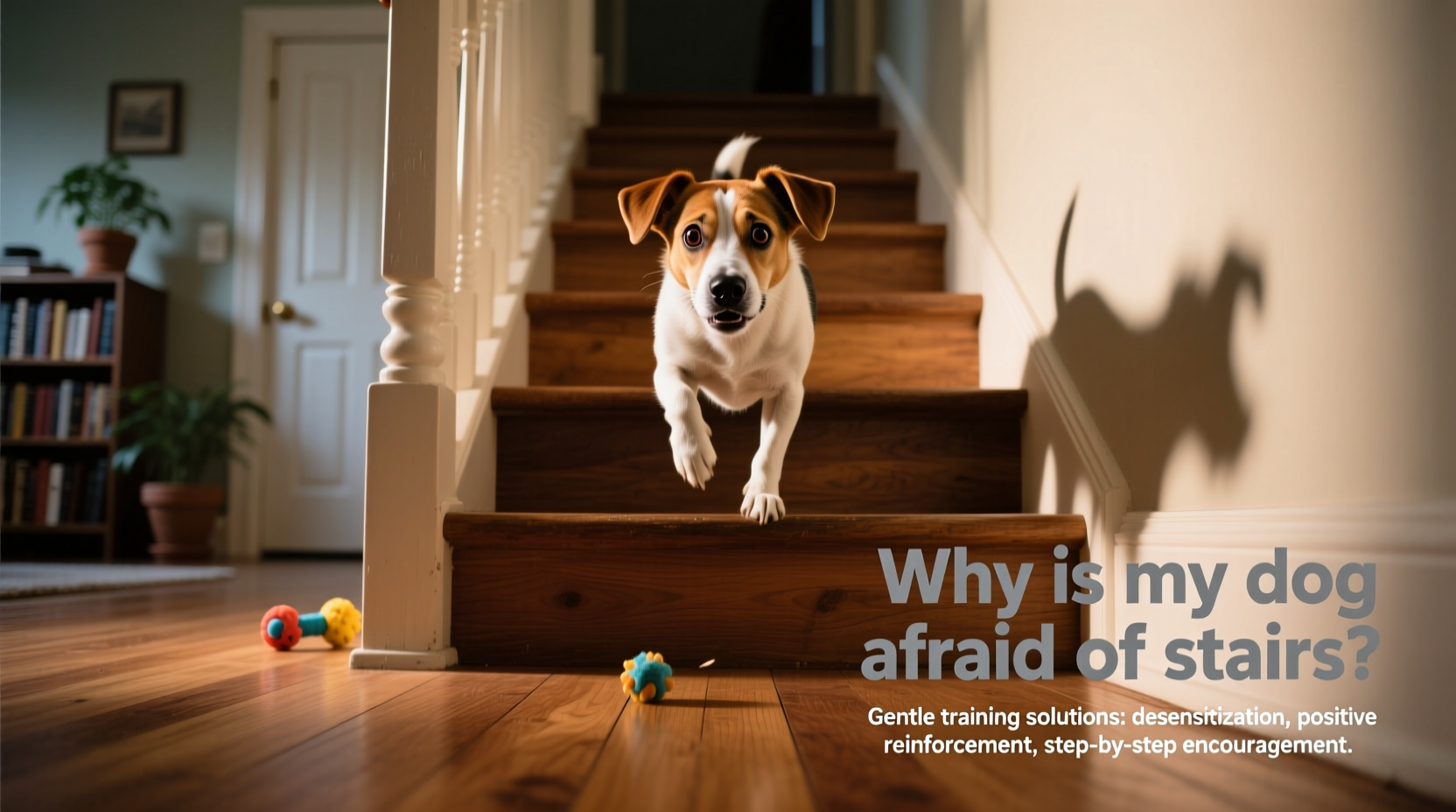
A dog who previously used stairs without hesitation but now avoids them is likely responding to an underlying trigger. Unlike learned behaviors formed over time, sudden changes often point to acute issues—physical, sensory, or psychological. Identifying the category of cause helps determine the appropriate response.
Physical Pain or Discomfort
One of the most overlooked yet common causes is pain. As dogs age—or even in younger dogs after injury—the act of climbing or descending stairs places significant strain on joints, hips, and limbs. Conditions such as arthritis, hip dysplasia, patellar luxation, or spinal issues can make each step painful. A dog may not vocalize discomfort but will avoid activities that trigger pain.
Signs to watch for include:
- Limping or favoring one leg
- Slower movement on flat surfaces
- Whining when rising from a lying position
- Reluctance to jump onto furniture
- Stiffness after rest
Sensory Changes
Hearing or vision loss can dramatically affect spatial awareness. Older dogs, in particular, may begin losing visual acuity or depth perception, making stairs appear as a confusing drop-off rather than a gradual incline. Similarly, reduced hearing might prevent them from localizing sounds near stairwells, increasing uncertainty.
Glaucoma, cataracts, or sudden retinal degeneration can develop rapidly, turning familiar environments into disorienting spaces. A dog that once bounded upstairs may now pause at the edge, sniffing cautiously, unsure if the next step exists.
Environmental or Routine Shifts
Changes in the home environment—even minor ones—can unsettle sensitive dogs. New flooring, added rugs, or polished wood can make stairs slippery. A loud noise near the staircase (like a slamming door or appliance hum) might have startled your dog once, creating lasting negative association.
Additionally, household disruptions—such as new pets, visitors, construction, or rearranged furniture—can heighten general anxiety, which then manifests around challenging tasks like stair navigation.
Past Trauma or Negative Experience
If a dog slipped, fell, or was rushed down the stairs—even just once—they may form a lasting aversion. Some dogs generalize fear quickly; a single bad experience can lead to avoidance behavior that persists for months.
In multi-pet homes, competition or dominance dynamics might also play a role. A submissive dog may avoid stairs if another pet guards the area or has chased them there before.
“Sudden behavioral changes in dogs should always prompt a veterinary check first. What looks like fear may actually be pain.” — Dr. Lena Torres, DVM, Canine Behavior Specialist
Step-by-Step Assessment: Is It Pain or Fear?
Before beginning any training, rule out medical causes. Here’s how to conduct a preliminary assessment:
- Visit the Veterinarian: Schedule a full physical exam, including joint evaluation and possibly X-rays if mobility issues are suspected.
- Monitor Movement: Watch how your dog walks on level ground. Are they stiff? Do they struggle to stand?
- Test Sensory Function: Gently toss a soft toy nearby to see if they react to sound. Place an object in their path to assess depth perception.
- Inspect the Stairs: Check for loose treads, glare from lighting, slick surfaces, or loud echoes. Test traction by walking barefoot.
- Review Recent Events: Did anything unusual happen near the stairs recently? A fall? A loud noise? Home renovation?
If pain is diagnosed, treatment (e.g., anti-inflammatory medication, supplements, or physical therapy) should precede behavioral training. Never push a dog through pain—it deepens fear and damages trust.
Gentle Training Solutions to Rebuild Confidence
Once medical issues are ruled out or managed, you can begin retraining. The goal isn’t to force compliance but to rebuild positive associations with the staircase through incremental exposure and reward-based learning.
1. Create a Safe, Non-Pressured Environment
Remove urgency. Never call your dog to come upstairs if they’re hesitant. Avoid pulling, pushing, or carrying them up and down unless absolutely necessary (e.g., for safety). These actions can increase dependency or fear.
Instead, allow your dog to explore the area around the stairs at their own pace. Sit nearby with treats, reading or watching TV, so the space becomes neutral and calm.
2. Use High-Value Treats Strategically
Select a treat your dog loves—something rare and strongly motivating, like small pieces of chicken, cheese, or freeze-dried liver. Begin by feeding these treats several feet away from the stairs, then gradually move closer over multiple sessions.
The objective: Let your dog connect the proximity to stairs with positive outcomes.
3. Shape Behavior Incrementally (Luring & Clicker Training)
Use shaping—a technique where you reward successive approximations toward the desired behavior. Break the process into tiny steps:
- Standing near the bottom step (reward)
- Looking at the first step (reward)
- Touching the step with a paw (reward)
- Placing one paw up (reward)
- Two paws up (reward)
- Full ascent of one step (reward and praise)
Work at your dog’s pace. Some dogs progress in days; others take weeks. End each session on a positive note, even if you haven’t advanced far.
A clicker can enhance precision. Click the exact moment your dog performs the desired action, then immediately give a treat. This clarity speeds up learning.
4. Modify the Staircase for Safety and Traction
Improve physical conditions to reduce anxiety:
- Add non-slip treads or carpeted stair runners
- Install night lights at top and bottom for visibility
- Reduce echo with rugs or wall hangings nearby
- Block off alternate staircases temporarily to focus training
For older or arthritic dogs, consider installing a ramp as a long-term alternative, especially if stairs are steep.
5. Practice Descent Separately
Going down stairs is often harder than going up. Dogs must lower their body weight carefully, which requires coordination and trust in footing.
To train descent:
- Start at the top with your dog sitting beside you.
- Lure one paw down to the first step using a treat.
- Reward immediately.
- Gradually increase steps as comfort grows.
Never let your dog rush or leap down. Guide them slowly to build muscle memory and balance.
Tip: Practice during relaxed times of day, not when you're in a hurry. Stress from the owner transfers to the dog and hinders progress.Training Checklist: Regaining Stair Confidence
Follow this actionable checklist to ensure consistent, compassionate training:
- ✅ Rule out medical causes with a vet visit
- ✅ Assess stairs for slipperiness, lighting, and noise
- ✅ Choose high-value, soft treats for motivation
- ✅ Begin luring near—but not on—the stairs
- ✅ Reward every small advance (even eye contact toward stairs)
- ✅ Keep sessions short (3–5 minutes), 2–3 times daily
- ✅ Use a clicker or verbal marker (“Yes!”) for precise timing
- ✅ Add non-slip treads or carpet strips if needed
- ✅ Train ascent and descent separately
- ✅ Celebrate progress, no matter how slow
Real-Life Example: Bella, the Senior Cocker Spaniel
Bella, a 12-year-old Cocker Spaniel, had used the basement stairs her entire life. But one winter, she stopped going down entirely. Her owner, Maria, initially thought Bella was just being stubborn. After ruling out vision problems, the vet discovered early-stage arthritis in her knees.
Maria began a dual approach: prescribed joint supplements and a gentle training plan. She laid down a rubber-backed runner on the stairs and started rewarding Bella for simply approaching the top. Over three weeks, using tiny bits of boiled chicken, she shaped Bella’s behavior—one paw, then two, then a full step down.
By week six, Bella descended the full flight with minimal hesitation. Maria now keeps treats by the stairs and uses them occasionally to reinforce confidence. “She’ll never bound down like she did at five,” Maria says, “but she’s comfortable again. That’s what matters.”
Do’s and Don’ts: Navigating Your Dog’s Fear
| Do | Don’t |
|---|---|
| Consult a veterinarian first | Assume it’s “just behavior” without checking for pain |
| Use high-value treats and praise | Force, drag, or carry your dog up/down repeatedly |
| Break training into micro-steps | Expect rapid progress or punish hesitation |
| Modify stairs for safety (treads, lighting) | Leave slippery or poorly lit stairs unchanged |
| Stay calm and patient during sessions | Show frustration or impatience |
Frequently Asked Questions
Can old dogs learn to use stairs again after developing a fear?
Yes, provided there are no untreated medical issues. Older dogs may move slower, but with consistent, reward-based training, many regain partial or full use of stairs. Modifications like ramps or stair lifts can also support long-term mobility.
How long does it take to retrain a dog afraid of stairs?
It varies widely. Some dogs show improvement within a week; others require several months. Success depends on the cause, the dog’s temperament, and the consistency of training. Patience is key—progress is rarely linear.
Should I carry my dog up and down the stairs?
Only if medically necessary or for short-term safety. Frequent carrying can weaken muscles and reinforce dependency. If you must carry them, do so gently and supplement with strength-building exercises on flat ground.
Conclusion: Patience, Observation, and Kindness Lead the Way
A dog’s sudden fear of stairs is a signal—not defiance, but communication. Whether rooted in pain, sensory change, or anxiety, the solution lies not in correction, but in understanding. By approaching the issue with empathy, eliminating physical barriers, and using gentle, science-backed training methods, you restore not only your dog’s ability to navigate stairs but also their sense of security in their environment.
Every small step forward is a victory. Celebrate them. Stay consistent. And remember: the goal isn’t perfect stair-climbing, but a happier, more confident companion.
💬 Has your dog overcome a fear of stairs? Share your story or tips in the comments—your experience could help another pet parent find hope and solutions.








